Bali: Difference between revisions
imported>Jauhsekali mNo edit summary |
imported>InternetArchiveBot Rescuing 0 sources and tagging 1 as dead.) #IABot (v2.0.9.5 |
||
| Line 1: | Line 1: | ||
{{Short description|Province in Lesser Sunda Islands, Indonesia}} | {{Short description|Province in Lesser Sunda Islands, Indonesia}} | ||
{{Other uses}} | {{Other uses}} | ||
{{Use dmy dates|date=December 2022}} | {{Use dmy dates|date=December 2022}} | ||
{{Use Australian English|date=July 2020}} | {{Use Australian English|date=July 2020}} | ||
{{Infobox settlement | {{Infobox settlement | ||
| name | | name = Bali | ||
| type | | type = [[Provinces of Indonesia|Province]] | ||
| official_name | | official_name = Province of Bali<br />{{nobold|{{lang|id|Provinsi Bali}}}} | ||
| image_shield | | image_shield = Official_seal_of_the_Province_of_Bali.png | ||
| | | shield_link = Armorial of Indonesia#Provincial | ||
| image_flag | | image_flag = | ||
| shield_size | | shield_size = 110px | ||
| flag_size | | flag_size = | ||
| image_map | | image_map = Bali in Indonesia (special marker).svg | ||
| map_alt | | map_alt = | ||
| map_caption | | map_caption = {{centre|{{Legend inline|#C41E3A|outline=red}} '''Bali''' in {{Legend inline|#FFFDD0|outline=silver}} '''[[Indonesia]]'''}} | ||
| coordinates | | coordinates = {{coord|8|20|06|S|115|05|17|E|region:ID-BA_type:adm1st_scale:1000000|display=inline,title}} | ||
| coor_pinpoint | | coor_pinpoint = | ||
| coordinates_footnotes = | | coordinates_footnotes = | ||
| subdivision_type | | subdivision_type = Country | ||
| subdivision_name | | subdivision_name = {{flag|Indonesia}} | ||
| established_title | | established_title = Established | ||
| established_date | | established_date = 14 August 1958<ref>{{Cite web|url=http://www.dpr.go.id/jdih/index/id/1304|title=Pembentukan Daerah-daerah Tingkat I Bali, Nusa Tenggara Barat Dan Nusa Tenggara Timur|website=dpr.go.id|access-date=29 January 2020|archive-date=29 October 2020|archive-url=https://web.archive.org/web/20201029171156/http://www.dpr.go.id/jdih/index/id/1304}}</ref> | ||
| subdivision_type2 | | subdivision_type2 = [[Subdivisions of Indonesia|Regencies and cities]] | ||
| subdivision_type1 | | subdivision_type1 = [[Regions of Indonesia|Region]] | ||
| subdivision_name1 | | subdivision_name1 = [[Lesser Sunda Islands]] | ||
| subdivision_name2 | | subdivision_name2 = {{Collapsible list | ||
| title = [[List of regencies and cities in Bali|List]] | | title = [[List of regencies and cities in Bali|List]] | ||
| frame_style = border:yes; padding:0 | | frame_style = border:yes; padding:0 | ||
| list_style = text-align:left; display:yes | | list_style = text-align:left; display:yes | ||
| 1= [[Jembrana Regency|Jembrana]] | | 1= [[Jembrana Regency|Jembrana]] | ||
| 2= [[Tabanan Regency|Tabanan]] | | 2= [[Tabanan Regency|Tabanan]] | ||
| 3= [[Badung Regency|Badung]] | | 3= [[Badung Regency|Badung]] | ||
| Line 38: | Line 38: | ||
| 8 = [[Buleleng Regency|Buleleng]] | | 8 = [[Buleleng Regency|Buleleng]] | ||
| 9 = [[Denpasar City|Denpasar]]}} | | 9 = [[Denpasar City|Denpasar]]}} | ||
| founder | | founder = | ||
| named_for | | named_for = | ||
| seat_type | | seat_type = Capital<br />{{nobold|and largest city}} | ||
| seat | | seat = [[Denpasar]] | ||
| government_footnotes = | | government_footnotes = | ||
| governing_body | | governing_body = Bali Provincial Government | ||
| leader_title | | leader_title = [[Governor of Bali|Governor]] | ||
| leader_name | | leader_name = [[I Wayan Koster]] ([[Indonesian Democratic Party of Struggle|PDI-P]]) | ||
| leader_title2 | | leader_title2 = [[Vice Governor of Bali|Vice Governor]] | ||
| leader_name2 | | leader_name2 = [[I Nyoman Giri Prasta]] | ||
| leader_title3 | | leader_title3 = [[Regional House of Representatives|Legislature]] | ||
| leader_name3 | | leader_name3 = [[Bali Regional House of Representatives]] (DPRD) | ||
| unit_pref | | unit_pref = Metric<!-- or US or UK --> | ||
| area_total_km2 | | area_total_km2 = 5590.15 | ||
| area_rank | | area_rank = [[Provinces of Indonesia|36th in Indonesia]] | ||
| elevation_max_ft | | elevation_max_ft = 9944 | ||
| elevation_max_point = [[Mount Agung]] | | elevation_max_point = [[Mount Agung]] | ||
| population_total | | population_total = 4461260 | ||
| population_as_of | | population_as_of = mid 2024 estimate | ||
| population_footnotes = <ref name="Badan Pusat Statistik 2025">Badan Pusat Statistik, Jakarta, 28 February 2025, ''Provinsi Bali Dalam Angka 2025'' [Bali Province In Numbers 2025] (Katalog-BPS 1102001.51)</ref> | | population_footnotes = <ref name="Badan Pusat Statistik 2025">Badan Pusat Statistik, Jakarta, 28 February 2025, ''Provinsi Bali Dalam Angka 2025'' [Bali Province In Numbers 2025] (Katalog-BPS 1102001.51)</ref> | ||
| population_density_km2 = auto | | population_density_km2 = auto | ||
| population_demonym = [[List of adjectivals and demonyms for subcontinental regions#Asia|Balinese]] | |||
| demographics_type1 = Demographics | | demographics_type1 = Demographics | ||
| demographics1_footnotes = <!-- for references: use<ref>tags --> | | demographics1_footnotes = <!-- for references: use<ref>tags --> | ||
| demographics1_title1 = [[Ethnic groups in Indonesia|Ethnic groups]] {{nobold|(2010)}}<ref name="SUKU">{{cite web|url=https://www.bps.go.id/publication/2012/05/23/55eca38b7fe0830834605b35/kewarganegaraan-suku-bangsa-agama-dan-bahasa-sehari-hari-penduduk-indonesia.htm|title=Citizenship, Tribes, Religions, and Everyday Languages of the Indonesian Population|website=www.bps.go.id|pages= | | demographics1_title1 = [[Ethnic groups in Indonesia|Ethnic groups]] {{nobold|(2010)}}<ref name="SUKU">{{cite web|url=https://www.bps.go.id/publication/2012/05/23/55eca38b7fe0830834605b35/kewarganegaraan-suku-bangsa-agama-dan-bahasa-sehari-hari-penduduk-indonesia.htm|title=Citizenship, Tribes, Religions, and Everyday Languages of the Indonesian Population|website=www.bps.go.id|pages=36–41|access-date=22 September 2021|format=pdf|archive-date=2021-03-25|archive-url=https://web.archive.org/web/20210325171828/https://www.bps.go.id/publication/2012/05/23/55eca38b7fe0830834605b35/kewarganegaraan-suku-bangsa-agama-dan-bahasa-sehari-hari-penduduk-indonesia.htm|url-status=live}}</ref> | ||
| timezone1 | | timezone1 = [[Time in Indonesia|WITA]] | ||
| utc_offset1 | | utc_offset1 = +08 | ||
| iso_code | | iso_code = ID-BA | ||
| website | | website = {{URL|www.baliprov.go.id/|baliprov.go.id}} | ||
| demographics1_info1 = {{ublist | | demographics1_info1 = {{ublist | ||
|85.97% [[Balinese people|Balinese]] | |85.97% [[Balinese people|Balinese]] | ||
| Line 71: | Line 72: | ||
|4.43% [[ethnic groups in Indonesia|others]] | |4.43% [[ethnic groups in Indonesia|others]] | ||
|}} | |}} | ||
| demographics1_title2 = [[Religion in Indonesia|Religion]] {{nobold|(2024)}}<ref>https://gis.dukcapil.kemendagri.go.id/peta/ {{Webarchive|url=https://web.archive.org/web/20220705211227/http://gis.dukcapil.kemendagri.go.id/peta/ |date=5 July 2022 }} (visual)</ref> | | demographics1_title2 = [[Religion in Indonesia|Religion]] {{nobold|(2024)}}<ref name="auto">https://gis.dukcapil.kemendagri.go.id/peta/ {{Webarchive|url=https://web.archive.org/web/20220705211227/http://gis.dukcapil.kemendagri.go.id/peta/ |date=5 July 2022 }} (visual)</ref> | ||
| demographics1_info2 = {{ublist|item_style=white-space:nowrap; | | demographics1_info2 = {{ublist|item_style=white-space:nowrap; | ||
|86.40% [[Hinduism in Bali|Hinduism]] | |86.40% [[Hinduism in Bali|Hinduism]] | ||
| Line 82: | Line 83: | ||
|0.68% [[Buddhism in Indonesia|Buddhism]] | |0.68% [[Buddhism in Indonesia|Buddhism]] | ||
|0.02% [[Religion in Indonesia|other]]}} | |0.02% [[Religion in Indonesia|other]]}} | ||
| demographics1_title3 = [[Languages of Indonesia|Languages]]<ref>{{Cite web|url=https://www.bali.com/bali-languages-translation.html|title=Languages Spoken in Bali|last=bali.com|website=bali.com|language=en|access-date=16 September 2018 | | demographics1_title3 = [[Languages of Indonesia|Languages]]<ref>{{Cite web|url=https://www.bali.com/bali-languages-translation.html|title=Languages Spoken in Bali|last=bali.com|website=bali.com|language=en|access-date=16 September 2018|archive-url=https://web.archive.org/web/20131222052007/https://www.bali.com/bali-languages-translation.html|archive-date=22 December 2013}}</ref> | ||
| demographics1_info3 = {{ublist|item_style=white-space:nowrap; | | demographics1_info3 = {{ublist|item_style=white-space:nowrap; | ||
|[[Indonesian language|Indonesian]] (official) | |[[Indonesian language|Indonesian]] (official) | ||
| Line 88: | Line 89: | ||
| [[Balinese Malay]] | | [[Balinese Malay]] | ||
| [[#Languages|other]] | | [[#Languages|other]] | ||
<!-- English is not used as main speech method in Bali [[English language|English]] -->}} | <!-- Do not added English, English is not used as main speech method in Bali [[English language|English]] -->}} | ||
| nicknames | | nicknames = {{lang|id|Pulau Dewata}}<br />"Island of the [[Hindu deities|Gods]]"<br/>{{lang|id|Pulau Seribu Pura}}<br/>"Island of a Thousand [[Balinese temple|Temples]]"<ref>[https://guideyourtravel.com/nickname-bali-island-of-the-gods/ Nickname Bali Island Of The Gods] Guide Your Travel 2 March 2023</ref>{{efn|Other like the ''Paradise Island''<ref>https://balisuta.com/articles</ref><br> and ''The Last Paradise''<ref>https://balithelastparadise.com/</ref>}} | ||
| motto | | motto = {{nativename|ban|Bali Dwipa Jaya}}{{efn|Written in a mixture of [[Sanskrit]] and Balineseized Sanskrit Dvīpa —> Dwipa ('island')}}<br />{{Script/Bali|ᬩᬮᬶᬤ᭄ᬯᬷᬧᬚᬬ}}<br />"Victorious Bali Island"{{force singular}} | ||
| mapframe = yes | |||
| blank_name | | mapframe-zoom = 8 | ||
| blank_info | | blank_name = GDP (nominal) | ||
| blank1_name | | blank_info = 2022 | ||
| blank1_info | | blank1_name = - Total<ref name="bpsgdpdata2022">{{Cite web |author=Badan Pusat Statistik |author-link=Statistics Indonesia |year=2023 |title=Produk Domestik Regional Bruto (Milyar Rupiah), 2022 |url=https://www.bps.go.id/id/statistics-table/3/WkdVMWRYVnBkMnBvVEhKSVkyWXhNblZtTjJSbmR6MDkjMw==/produk-domestik-regional-bruto-atas-dasar-harga-berlaku--menurut-provinsi--miliar-rupiah-.html?year=2022 |publisher=Badan Pusat Statistik |location=Jakarta |language=id}}</ref> | ||
| blank2_name | | blank1_info = [[Indonesian rupiah|Rp]] 245.2 trillion ([[List of Indonesian provinces by GDP|19th]])<br />[[USD|US$]] 16.5 billion<br />[[Int$]] 51.5 billion ([[Purchasing power parity|PPP]]) | ||
| blank2_info | | blank2_name = - Per capita<ref name="bpspercapitadata">{{Cite web |author=Badan Pusat Statistik |author-link=Statistics Indonesia |year=2023 |title=Produk Domestik Regional Bruto Per Kapita (Ribu Rupiah), 2022 |url=https://www.bps.go.id/id/statistics-table/3/YWtoQlRVZzNiMU5qU1VOSlRFeFZiRTR4VDJOTVVUMDkjMw==/produk-domestik-regional-bruto-per-kapita-atas-dasar-harga-berlaku-menurut-provinsi--ribu-rupiah-.html?year=2022 |publisher=Badan Pusat Statistik |location=Jakarta |language=id}}</ref> | ||
| blank3_name | | blank2_info = [[Indonesian rupiah|Rp]] 55.5 million ([[List of Indonesian provinces by GRP per capita|20th]])<br />[[USD|US$]] 3,741<br />[[Int$]] 11,673 ([[Purchasing power parity|PPP]]) | ||
| blank3_info | | blank3_name = - Growth<ref name="bappenas2022">{{Cite web |author=Badan Pembangunan Nasional |author-link=Ministry of National Development Planning (Indonesia) |year=2023 |title=Capaian Indikator Utama Pembangunan |url=https://simreg.bappenas.go.id/home/pemantauan/lpe |publisher=Badan Pembangunan Nasional |location=Jakarta |language=id}}</ref> | ||
| blank4_name | | blank3_info = {{Increase}} 4.84% | ||
| blank4_info | | blank4_name = [[Human Development Index|HDI]] {{nobold|(2024)}} | ||
| module | | blank4_info = {{increase}} 0.786<ref>{{Cite web|url=https://www.bps.go.id/id/pressrelease/2024/11/15/2296/indeks-pembangunan-manusia--ipm--indonesia-tahun-2024-mencapai-75-02--meningkat-0-63-poin-atau-0-85-persen-dibandingkan-tahun-sebelumnya-yang-sebesar-74-39-.html|title=Indeks Pembangunan Manusia 2024|publisher=[[Statistics Indonesia]]|date=2024|language=id|access-date=15 November 2024}}</ref> ([[List of Indonesian provinces by Human Development Index|5th]]) – <span style=color:#090>high</span> | ||
| child | | module = {{Infobox UNESCO World Heritage Site | ||
| official_name | | child = yes | ||
| criteria | | official_name = Cultural Landscape of Bali Province: the Subak System as a Manifestation of the Tri Hita Karana Philosophy | ||
| ID | | criteria = {{UNESCO WHS type|(iii), (v), (vi)}}(iii), (v), (vi) | ||
| year | | ID = 1194 | ||
| area | | year = 2012 | ||
| buffer_zone | | area = {{convert|19,519.9|ha|acre|abbr=on}} | ||
| population_rank | | buffer_zone = {{convert|1,454.8|ha|acre|abbr=on}}}} | ||
| population_rank = [[Provinces of Indonesia|16th in Indonesia]] | |||
| registration_plate = [[Vehicle registration plates of Indonesia|DK]] | | registration_plate = [[Vehicle registration plates of Indonesia|DK]] | ||
}} | }} | ||
{{Contains special characters|Balinese}} | {{Contains special characters|Balinese}} | ||
Bali is | '''Bali''' (<small>English:</small> {{IPAc-en|ˈ|b|ɑː|l|i|audio=LL-Q1860 (eng)-Vealhurl-Bali.wav}}; {{IPA|id|'bali|lang}}; [[Balinese language|Balinese]]: {{script/Bali|ᬩᬮᬶ}}) is an [[Indonesia|Indonesian]] [[List of islands of Indonesia|island]] and [[Provinces of Indonesia|province]] and the westernmost of the [[Lesser Sunda Islands]]. East of [[Java]] and west of [[Lombok]], the province includes the island of Bali and a few smaller offshore islands, notably [[Nusa Penida]], [[Nusa Lembongan]], and [[Nusa Ceningan]] to the southeast. The provincial capital, [[Denpasar]],<ref>{{Cite web|title=Denpasar {{!}} Indonesia|url=https://www.britannica.com/place/Denpasar|access-date=18 September 2021|website=Encyclopædia Britannica|language=en}}</ref> is the [[List of Indonesian cities by population|most populous city]] in the Lesser Sunda Islands and the second-largest, after [[Makassar]], in [[Eastern Indonesia]]. The [[Denpasar metropolitan area]] is the extended metropolitan area around Denpasar. The upland town of [[Ubud]] in Greater Denpasar is considered as Bali's cultural centre. The province is Indonesia's main tourist destination, with a significant rise in [[Tourism in Bali|tourism]] since the 1980s, and has become the country's area of [[overtourism]].<ref>{{Cite book|url=https://books.google.com/books?id=y17MAgAAQBAJ|title=Bali: A Paradise Created|last=Vickers|first=Adrian|date=13 August 2013|publisher=Tuttle Publishing|isbn=978-1-4629-0008-4|language=en}}</ref> Tourism-related business makes up 80% of the Bali economy.<ref name="tourism" /> | ||
Bali is part of the [[Coral Triangle]], an area with high diversity of marine species, | Bali is the only [[Hinduism in Indonesia|Hindu-majority province]] in Indonesia, with 86.40% of the population adhering to [[Balinese Hinduism]].<ref name="auto"/> It is renowned for its highly developed arts, including traditional and modern dance, sculpture, painting, leather, metalworking, and music. The Indonesian International Film Festival is held every year in Bali. Other international events that have been held in Bali include [[Miss World 2013]], the 2018 [[Annual Meetings of the International Monetary Fund and the World Bank Group]], and the [[2022 G20 Bali summit|2022 G20 summit]]. In March 2017, [[Tripadvisor]] named Bali as the world's top destination in its Traveler's Choice award, which it earned once again in January 2021<ref>{{cite news|url=http://www.nzherald.co.nz/travel/news/article.cfm?c_id=7&objectid=11823142|title=Bali named as best destination in the world by TripAdvisor|work=The New Zealand Herald |date=22 March 2017|access-date=30 April 2017}}</ref><ref>{{cite news|url=https://coconuts.co/bali/lifestyle/bali-named-most-popular-destination-on-tripadvisors-2021-travelers-choice-awards/|title=Bali named most popular destination on Tripadvisor's 2021 Travelers' Choice Awards|work=Coconuts Bali|date=28 January 2021|access-date=1 February 2021}}</ref> and 2026.<ref>{{cite news|url=https://www.ndtv.com/lifestyle/bali-is-worlds-top-travel-destination-for-2026-says-tripadvisor-10781768|title=Bali Is World's Top Travel Destination For 2026, Says TripAdvisor|work=NDTV Lifesyle |date=19 January 2026|access-date=19 January 2026}}</ref><ref>{{cite news|url=https://coconuts.co/bali/lifestyle/bali-named-most-popular-destination-on-tripadvisors-2021-travelers-choice-awards/|title=Bali Named No.1 Travel Destination In The World For 2026 By TripAdvisor|work=The Bali Sun|date=15 January 2026|access-date=19 January 2026}}</ref><ref>{{cite news|url=https://www.travelmarketreport.com/canada/destinations/articles/bali-high-tripadvisor-names-best-of-the-best-destinations-for-2026|title=Bali High: TripAdvisor Names ‘Best of the Best’ Destinations for 2026|work=Travel Market Report|date=15 January 2026|access-date=19 January 2026}}</ref> | ||
Bali is part of the [[Coral Triangle]], an area with high diversity of marine species, mainly fish and turtles.<ref>{{Cite book|url=https://books.google.com/books?id=-wDJBQAAQBAJ|title=Arguments for Protected Areas: Multiple Benefits for Conservation and Use|last1=Dudley|first1=Nigel|last2=Stolton|first2=Sue|date=12 August 2010|publisher=[[Routledge]]|isbn=978-1-136-54292-3|language=en}}</ref> In this area alone, over 500 reef-building coral species can be found. For comparison, this is about seven times as many as in the entire [[Caribbean]].<ref>{{cite web|url=http://coralreef.noaa.gov/aboutcorals/facts/coral_species.html |title=Species diversity by ocean basin |publisher=NOAA Coral Reef Conservation Program |date=9 May 2014 |archive-url=https://web.archive.org/web/20140512230756/http://coralreef.noaa.gov/aboutcorals/facts/coral_species.html |archive-date=12 May 2014 }}</ref> Bali is the home of the [[Subak (irrigation)|Subak irrigation system]], a [[UNESCO]] [[World Heritage Site]].<ref>{{Cite news|url=http://www.abc.net.au/news/2012-06-27/an-balis-subak-world-heritage-listed/4096016|title=World heritage listing for Bali's 'Subak' tradition|last=Evans|first=Kate|date=27 June 2012|publisher=ABC News|access-date=14 September 2017|language=en-AU}}</ref> It is also home to a unified confederation of kingdoms composed of [[List of current non-sovereign Asian monarchs#Indonesia|10 traditional royal Balinese houses]], each house ruling a specific geographic area. The confederation is the successor of the [[Bali Kingdom]]. The royal houses, which originated before [[Dutch East Indies|Dutch colonisation]], are not recognised by the government of Indonesia.<ref>{{Cite book|url=https://books.google.com/books?id=m3Gfir3Ju70C|title=The Dark Side of Paradise: Political Violence in Bali|last=Robinson|first=Geoffrey|date=1995|publisher=Cornell University Press|isbn=0-8014-8172-4|language=en}}</ref> | |||
==Etymology== | |||
The name ''Bali'' is attested in ancient Balinese inscriptions as part of the compound *Vāli-dvīpa* (or *Wāli-dvīpa*), where [[Sanskrit]] **dvīpa** (Sanskrit: द्वीप) means "island".<ref>{{cite journal |last=Damais |first=Louis-Charles |year=1947 |title=Études balinaises: I. La colonnette de Sanur (Belanjong Pillar) |journal={{transl|fr|Bulletin de l'École française d'Extrême-Orient}} |volume=47 |pages=127–130}}</ref> | |||
One of the earliest attestations of *Vāli-dvīpa* occurs in the [[Belanjong pillar|Belanjong (Blanjong) pillar]] inscription, dated to [[Balinese saka calendar|Saka year]] 835 / Phalguna month, under King [[Sri Kesari Warmadewa]] (c. 914 CE).<ref>{{cite journal |last=Damais |first=Louis-Charles |year=1947 |title=Études balinaises: I. La colonnette de Sanur |journal={{transl|fr|Bulletin de l'École française d'Extrême-Orient}} |volume=47 |issue=2 |pages=127–130}}</ref> | |||
The precise meaning of the element *Vāli* (or *Bali*) in *Vāli-dvīpa* is not certain. Some hypothesized interpretations include: | |||
* That *Bali* derives from Sanskrit *bali* (बलि), meaning "offering", "tribute", or "sacrifice", thus rendering *Bali-dvīpa* as "Island of offerings" or "Island of sacrifice". | |||
* That *Vāli* may relate to terms signifying "power", or "force", or possibly be a phonetic variation (i.e., alternation of *b* and *v*) common in epigraphy, which would suggest meanings such as "Island of strength" or similar. | |||
===References=== | |||
* Damais, Louis-Charles. "Études balinaises: I. La colonnette de Sanur (Belanjong Pillar)". *Bulletin de l'École française d'Extrême-Orient*. Vol. 47, 1947, pp. 127–130. | |||
* Bernet Kempers, A. J. *Monumental Bali: Introduction to Balinese Archaeology & Guide to the Monuments*. Periplus Editions, 1991, pp. 35–36. | |||
== History == | == History == | ||
{{Main|History of Bali}} | {{Main|History of Bali}} | ||
=== Ancient === | === Ancient === | ||
[[File:Bali panorama.jpg|thumb|[[Subak (irrigation)|Subak]] irrigation system | [[File:Bali panorama.jpg|thumb|The [[Subak (irrigation)|Subak]] irrigation system has existed since the 9th century.|left]] | ||
Bali was inhabited around 2000 BC by [[Austronesian | Bali was inhabited around 2000 BC by [[Austronesian peoples]] who migrated originally from the island of [[Taiwan]] to Southeast Asia and [[Oceania]] through [[Maritime Southeast Asia]].<ref>[[#Taylor|Taylor]], pp. 5, 7</ref><ref name=Hinzler /> Culturally and linguistically, the Balinese are closely related to the people of the [[Indonesia]]n archipelago, [[Malaysia]], [[Brunei]], the [[Philippines]], and Oceania.<ref name=Hinzler /> Stone tools dating from this time have been found near the village of Cekik in the island's west.<ref>[[#Taylor|Taylor]], p. 12</ref><ref name=Lonely /> | ||
In ancient Bali, nine Hindu sects existed | In ancient Bali, nine Hindu sects existed: the [[Pashupata Shaivism|Pasupata]], [[Siddharthanagar|Bhairawa]], Siwa Shidanta, [[Vaishnava]], [[Bodha]], [[Brahma]], Resi, Sora, and [[Ganapatya]]. Each sect revered a specific deity as its personal Godhead.<ref>{{cite web|url=http://www.thejakartapost.com/news/2011/04/28/the-birthplace-balinese-hinduism.html |title=The birthplace of Balinese Hinduism |work=The Jakarta Post |date=28 April 2011 |access-date=30 December 2012}}</ref> | ||
Inscriptions from 896 and 911 do not mention a king | Inscriptions from 896 and 911 do not mention a king until 914, when Sri Kesarivarma, a contemporary of the Kesari dynasty in the [[Kalingga kingdom|Kalinga Kingdom]] of ancient India, is mentioned. They also reveal an independent Bali, with a distinct dialect, being influenced by the Sanskrit and Pali languages, where [[Buddhism]] and [[Shaivism]] were practiced simultaneously. [[Mpu Sindok]]'s great-granddaughter, [[Mahendradatta]] (Gunapriyadharmapatni), married the Bali king [[Udayana Warmadewa]] (Dharmodayanavarmadeva) around 989, giving birth to [[Airlangga]] around 1001. This marriage also brought more [[Hinduism]] and Javanese culture to Bali. Princess Sakalendukirana appeared in 1098. Suradhipa reigned from 1115 to 1119, and Jayasakti from 1146 until 1150. Jayapangus appears on inscriptions between 1178 and 1181, while Adikuntiketana and his son Paramesvara appear in 1204.<ref name=indianized>{{Cite book | ||
| last = Cœdès | | last = Cœdès | ||
| first = George | | first = George | ||
| Line 139: | Line 155: | ||
| isbn =978-0-8248-0368-1 }}</ref>{{rp|129,144,168,180}} | | isbn =978-0-8248-0368-1 }}</ref>{{rp|129,144,168,180}} | ||
Balinese culture was strongly influenced by Indian, Chinese, and particularly [[Hindu]] culture, beginning around the 1st century AD.<ref>{{Cite web |title=Balinese {{!}} Culture, Religion & Language {{!}} Britannica |url=https://www.britannica.com/topic/Balinese-people |access-date=2025-02-17 |website=www.britannica.com |language=en}}</ref> The name ''Bali dwipa'' ("Bali island") has been discovered from various inscriptions, including the Blanjong pillar inscription written by [[Sri Kesari Warmadewa]] in 914 AD and mentioning '''Walidwipa'''. It was during this time that the people developed their complex irrigation system ''[[Subak (irrigation)|subak]]'' to grow rice in [[wet-field cultivation]]. Some religious and cultural traditions still | Balinese culture was strongly influenced by Indian, Chinese, and particularly Kalinga [[Hindus|Hindu]] culture, beginning around the 1st century AD.<ref>{{Cite web |title=Balinese {{!}} Culture, Religion & Language {{!}} Britannica |url=https://www.britannica.com/topic/Balinese-people |access-date=2025-02-17 |website=www.britannica.com |language=en}}</ref> The name ''Bali dwipa'' ("Bali island") has been discovered from various inscriptions, including the Blanjong pillar inscription written by [[Sri Kesari Warmadewa]] in 914 AD, and mentioning '''Walidwipa'''. It was during this time that the people developed their complex irrigation system, ''[[Subak (irrigation)|subak]],'' to grow rice in [[Paddy field|wet-field cultivation]]. Some religious and cultural traditions still practiced today can be traced to this period. | ||
The Hindu-Buddhist [[Majapahit Empire]] (1293–1520 AD) on eastern [[ | The Hindu-Buddhist [[Majapahit|Majapahit Empire]] (1293–1520 AD) on eastern [[Java]] founded a Balinese colony in 1343. The uncle of [[Hayam Wuruk]] is mentioned in the charters of 1384–86. Mass Javanese immigration to Bali occurred in the next century when the Majapahit Empire fell in 1520.<ref name=indianized />{{rp|234,240}} Bali's government then became an independent collection of Hindu kingdoms, which led to a Balinese national identity and major enhancements in culture, arts, and economy. The nation with various kingdoms became independent for up to 386 years until 1906, when the Dutch subjugated and repulsed the natives for economic control and took it over.<ref>[[#Barski|Barski]], p. 46</ref> | ||
=== Portuguese contacts === | === Portuguese contacts === | ||
The first known [[European | The first known [[European people|European]] contact with Bali is thought to have been made in 1512, when a Portuguese expedition led by Antonio Abreu and [[Francisco Serrão]] sighted its northern shores. It was the first expedition of a series of bi-annual fleets to the Moluccas, which, throughout the 16th century, travelled along the coasts of the Sunda Islands. Bali was also mapped in 1512, in the chart of Francisco Rodrigues, aboard the expedition.<ref>{{cite book | ||
| last = Cortesão | | last = Cortesão | ||
| first = Jaime | | first = Jaime | ||
| Line 151: | Line 167: | ||
| year = 1975 | | year = 1975 | ||
| location = Coimbra | | location = Coimbra | ||
| page = 288 }} "...''passing the island of 'Balle', on whose heights the nau Sabaia, of Francisco Serrão, was lost''" – from Antonio de Abreu, and in [[João de Barros]] and Antonio Galvão's chronicles. [https://books.google.com/books?id=2PbNS0LHn60C&pg=PA288 Google Books]</ref> In 1585, a ship foundered off the [[Bukit Peninsula]] and left a few Portuguese in the service of [[Dewa Agung]].<ref>Hanna, Willard A. (2004) ''Bali Chronicles''. Periplus, Singapore, {{ISBN|0-7946-0272-X}}, p. 32</ref> | | page = 288 }} "...'' passing the island of 'Balle', on whose heights the nau Sabaia, of Francisco Serrão, was lost''" – from Antonio de Abreu, and in [[João de Barros]] and Antonio Galvão's chronicles. [https://books.google.com/books?id=2PbNS0LHn60C&pg=PA288 Google Books]</ref> In 1585, a ship foundered off the [[Bukit Peninsula]] and left a few Portuguese in the service of [[Dewa Agung]].<ref>Hanna, Willard A. (2004) ''Bali Chronicles''. Periplus, Singapore, {{ISBN|0-7946-0272-X}}, p. 32</ref> | ||
=== Dutch East Indies === | === Dutch East Indies === | ||
| Line 158: | Line 174: | ||
In 1597, the Dutch merchant-explorer [[Cornelis de Houtman]] arrived at Bali, and the [[Dutch East India Company]] was established in 1602. The Dutch government expanded its control across the Indonesian archipelago during the second half of the 19th century. Dutch political and economic control over Bali began in the 1840s on the island's north coast when the Dutch pitted various competing Balinese realms against each other.<ref name="ctpqur" /> In the late 1890s, struggles between Balinese kingdoms on the island's south were exploited by the Dutch to increase their control. | In 1597, the Dutch merchant-explorer [[Cornelis de Houtman]] arrived at Bali, and the [[Dutch East India Company]] was established in 1602. The Dutch government expanded its control across the Indonesian archipelago during the second half of the 19th century. Dutch political and economic control over Bali began in the 1840s on the island's north coast when the Dutch pitted various competing Balinese realms against each other.<ref name="ctpqur" /> In the late 1890s, struggles between Balinese kingdoms on the island's south were exploited by the Dutch to increase their control. | ||
In June 1860, the famous Welsh naturalist, [[Alfred Russel Wallace]], travelled to Bali from [[ | In June 1860, the famous Welsh naturalist, [[Alfred Russel Wallace]], travelled to Bali from [[Singapore in the Straits Settlements|Singapore]], landing at [[Buleleng, Bali|Buleleng]] on the north coast of the island. Wallace's trip to Bali was instrumental in helping him devise his [[Wallace Line]] theory. The Wallace Line is a faunal boundary that runs through the strait between Bali and [[Lombok]]. It is a boundary between species. In his travel memoir ''[[The Malay Archipelago]],'' Wallace wrote of his experience in Bali, which includes a strong mention of the [[Subak (irrigation)|unique Balinese irrigation methods]]: | ||
<blockquote>I was astonished and delighted; as my visit to Java was some years later, I had never beheld so beautiful and well-cultivated a district out of Europe. A slightly undulating plain extends from the seacoast about {{convert|10|or|12|mi|km|spell=in|abbr=off}} inland, where it is bounded by a fine range of wooded and cultivated hills. Houses and villages, marked out by dense clumps of [[coconut palms]], [[tamarind]] and other fruit trees, are dotted about in every direction; while between them extend luxurious rice grounds, watered by an elaborate system of irrigation that would be the pride of the best-cultivated parts of Europe.<ref>{{cite book|last=Wallace|first=Alfred Russel|title=The Malay Archipelago|year=1869|isbn=978-0-7946-0563-6|page=116|publisher=Periplus Editions (HK) Limited }}</ref> </blockquote> | <blockquote>I was astonished and delighted; as my visit to Java was some years later, I had never beheld so beautiful and well-cultivated a district out of Europe. A slightly undulating plain extends from the seacoast about {{convert|10|or|12|mi|km|spell=in|abbr=off}} inland, where it is bounded by a fine range of wooded and cultivated hills. Houses and villages, marked out by dense clumps of [[Coconut|coconut palms]], [[tamarind]] and other fruit trees, are dotted about in every direction; while between them extend luxurious rice grounds, watered by an elaborate system of irrigation that would be the pride of the best-cultivated parts of Europe.<ref>{{cite book|last=Wallace|first=Alfred Russel|title=The Malay Archipelago|year=1869|isbn=978-0-7946-0563-6|page=116|publisher=Periplus Editions (HK) Limited }}</ref> </blockquote> | ||
The Dutch mounted large naval and ground [[Dutch intervention in Bali (1906)|assaults at the Sanur region]] in 1906 and were met by the thousands of members of the royal family and their followers who rather than yield to the superior Dutch force committed ritual suicide (''[[puputan]]'') to avoid the humiliation of surrender.<ref name="ctpqur" /> Despite Dutch demands for surrender, an estimated 200 Balinese killed themselves rather than surrender.<ref>[[#Haer|Haer]], p. 38.</ref> In the [[Dutch intervention in Bali (1908)|Dutch intervention in Bali]], a similar mass suicide occurred in the face of a Dutch assault in [[Klungkung]]. | The Dutch mounted large naval and ground [[Dutch intervention in Bali (1906)|assaults at the Sanur region]] in 1906 and were met by the thousands of members of the royal family and their followers, who, rather than yield to the superior Dutch force, committed ritual suicide (''[[puputan]]'') to avoid the humiliation of surrender.<ref name="ctpqur" /> Despite Dutch demands for surrender, an estimated 200 Balinese killed themselves rather than surrender.<ref>[[#Haer|Haer]], p. 38.</ref> In the [[Dutch intervention in Bali (1908)|Dutch intervention in Bali]], a similar mass suicide occurred in the face of a Dutch assault in [[Klungkung Regency|Klungkung]]. Afterward, the Dutch governors exercised administrative control over the island, but local control over religion and culture generally remained intact. Dutch rule over Bali came later and was never as well established as in other parts of Indonesia, such as Java and [[Maluku Islands|Maluku]]. | ||
In the 1930s, anthropologists [[Margaret Mead]] and [[Gregory Bateson]], artists [[Miguel Covarrubias]] and [[Walter Spies]], and musicologist [[Colin McPhee]] all spent time here. Their accounts of the island and its peoples created a | In the 1930s, anthropologists [[Margaret Mead]] and [[Gregory Bateson]], artists [[Miguel Covarrubias]] and [[Walter Spies]], and musicologist [[Colin McPhee]] all spent time here. Their accounts of the island and its peoples created a Western image of Bali as "an enchanted land of [[Aestheticism|aesthetes]] at peace with themselves and nature". Soon after, Western tourists began to visit the island.<ref name=Friend>Friend, Theodore. ''Indonesian Destinies'', Harvard University Press, 2003 {{ISBN|0-674-01137-6}}, p. 111.</ref> The sensuous image of Bali was enhanced in the West by a quasi-pornographic 1932 documentary, ''Virgins of Bali'', about a day in the lives of two teenage Balinese girls, who the film's narrator Deane Dickason notes in the first scene "bathe their shamelessly nude bronze bodies."<ref name=doherty>Doherty, Thomas ''Pre-Code Hollywood: Sex, Immorality, and Insurrection in American Cinema, 1930–1934'', New York: Columbia University Press, 1999. {{isbn| 0231110952}}</ref>{{rp|134}} Under the looser version of the [[Hays code]] that existed up to 1934, nudity involving "civilised" (i.e., white) women was banned, but permitted with "uncivilised" (i.e., all non-white women), a loophole that was exploited by the producers of ''Virgins of Bali''.<ref name=doherty/>{{rp|133}} The film, which mostly consisted of scenes of topless Balinese women, was a great success in 1932, and was perhaps the main catalyst for the popularity of Bali among tourists.<ref name=doherty/>{{rp|135}} The Dutch also dedicated significant efforts to implement ''Baliseering'' ({{lit|{{ill|Balinization|id|Balinisasi}}}}) politics to maintain traditions on the island, as well as preventing the [[Spread of Islam|Islamization]] of the Islamic sultanates from [[Java]] and banning [[Christian mission|Christian missionaries]]' activities. | ||
[[Imperial Japan]] occupied Bali during World War II. It was not originally a target in their Netherlands East Indies Campaign; however, as the airfields on [[Borneo]] were inoperative due to heavy rains, the [[Imperial Japanese Army]] decided to occupy Bali, which did not suffer from comparable weather. The island had no regular [[Royal Netherlands East Indies Army]] (KNIL) troops. There was only a Native Auxiliary Corps ''Prajoda'' (Korps Prajoda) consisting of about 600 native soldiers and several Dutch KNIL officers under the command of KNIL Lieutenant Colonel W.P. Roodenburg. On 19 February 1942, the Japanese forces landed near the town of Sanoer (Sanur) and the island was quickly captured.<ref>{{cite web |author= Klemen, L |url= https://warfare.gq/dutcheastindies/bali.html |title= The Capture of Bali Island, February 1942 |date= 1999–2000 |work= Forgotten Campaign: The Dutch East Indies Campaign 1941–1942 |access-date= 30 March 2021 |archive-date= 25 March 2012 |archive-url= https://web.archive.org/web/20120325051425/http://www.dutcheastindies.webs.com/bali.html | [[Empire of Japan|Imperial Japan]] occupied Bali during World War II. It was not originally a target in their Netherlands East Indies Campaign; however, as the airfields on [[Borneo]] were inoperative due to heavy rains, the [[Imperial Japanese Army]] decided to occupy Bali, which did not suffer from comparable weather. The island had no regular [[Royal Netherlands East Indies Army]] (KNIL) troops. There was only a Native Auxiliary Corps ''Prajoda'' (Korps Prajoda) consisting of about 600 native soldiers and several Dutch KNIL officers under the command of KNIL Lieutenant Colonel W.P. Roodenburg. On 19 February 1942, the Japanese forces landed near the town of Sanoer (Sanur) and the island was quickly captured.<ref>{{cite web |author= Klemen, L |url= https://warfare.gq/dutcheastindies/bali.html |title= The Capture of Bali Island, February 1942 |date= 1999–2000 |work= Forgotten Campaign: The Dutch East Indies Campaign 1941–1942 |access-date= 30 March 2021 |archive-date= 25 March 2012 |archive-url= https://web.archive.org/web/20120325051425/http://www.dutcheastindies.webs.com/bali.html }}</ref> | ||
During the Japanese occupation, a Balinese military officer, [[I Gusti Ngurah Rai]], formed a Balinese 'freedom army'. The harsh treatment of the Balinese by the Japanese occupation forces fomented more resentment | During the Japanese occupation, a Balinese military officer, [[I Gusti Ngurah Rai]], formed a Balinese 'freedom army'. The harsh treatment of the Balinese by the Japanese occupation forces fomented more resentment than the former Dutch colonial rulers.<ref>[[#Haer|Haer]], pp. 39–40.</ref> | ||
=== Independence from the Dutch === | === Independence from the Dutch === | ||
In 1945, Bali was liberated by the British [[5th Infantry Division (India)|5th | In 1945, Bali was liberated by the British [[5th Infantry Division (India)|5th Infantry Division]] under the command of Major-General [[Robert Mansergh]], who took the Japanese surrender. Once Japanese forces had been repatriated, the island was handed over to the Dutch the following year.<ref>{{Cite web |title=Dutch terror camps in Bali – Inside Indonesia: The peoples and cultures of Indonesia |url=https://www.insideindonesia.org/editions/edition-150-oct-dec-2022/dutch-terror-camps-in-bali |access-date=2025-02-17 |website=www.insideindonesia.org}}</ref> | ||
In 1946, the Dutch constituted Bali as one of the 13 administrative districts of the newly proclaimed [[State of East Indonesia]], a rival state to the Republic of Indonesia, which was proclaimed and headed by [[Sukarno]] and [[Mohammad Hatta|Hatta]]. Bali was included in the "[[Republic of the United States of Indonesia]]" when the Netherlands recognised Indonesian independence on 29 December 1949.<ref>[[#Barski|Barski]], p. 51</ref> The first governor of Bali, [[Anak Agung Bagus Suteja]], was appointed by President Sukarno in 1958, when Bali became a province.<ref>[[#Pringle|Pringle]], p. 167</ref> | In 1946, the Dutch constituted Bali as one of the 13 administrative districts of the newly proclaimed [[State of East Indonesia]], a rival state to the Republic of Indonesia, which was proclaimed and headed by [[Sukarno]] and [[Mohammad Hatta|Hatta]]. Bali was included in the "[[Republic of the United States of Indonesia]]" when the Netherlands recognised Indonesian independence on 29 December 1949.<ref>[[#Barski|Barski]], p. 51</ref> The first governor of Bali, [[Anak Agung Bagus Suteja]], was appointed by President Sukarno in 1958, when Bali became a province.<ref>[[#Pringle|Pringle]], p. 167</ref> | ||
| Line 177: | Line 193: | ||
=== Contemporary === | === Contemporary === | ||
[[File:Bali memorial.jpg|thumb|[[2002 Bali bombings]] memorial]] | [[File:Bali memorial.jpg|thumb|[[2002 Bali bombings]] memorial]] | ||
The 1963 eruption of [[Mount Agung]] killed thousands, created economic havoc, and forced many displaced Balinese to be [[Transmigration | The 1963 eruption of [[Mount Agung]] killed thousands, created economic havoc, and forced many displaced Balinese to be [[Transmigration program|transmigrated]] to other parts of Indonesia. Mirroring the widening of social divisions across Indonesia in the 1950s and early 1960s, Bali saw conflict between supporters of the traditional [[Caste|caste system]] and those rejecting this system. Politically, the opposition was represented by supporters of the [[Communist Party of Indonesia|Indonesian Communist Party]] (PKI) and the [[Indonesian National Party|Indonesian Nationalist Party]] (PNI), with tensions and ill-feeling further increased by the PKI's land reform programmes.<ref name="ctpqur" /> [[30 September Movement|A purported coup attempt]] in Jakarta was averted by forces led by General Suharto. | ||
The army became the dominant power as it instigated [[Indonesian killings of 1965–66|a violent anti-communist purge]], in which the army blamed the PKI for the coup. Most estimates suggest that at least 500,000 people were killed across Indonesia, with an estimated 80,000 killed in Bali, equivalent to 5% of the island's population.<ref name="ctpqur" /><ref name=Friend /><ref name=Ricklefs /> With no Islamic forces involved as in Java and Sumatra, upper-caste PNI landlords led the extermination of PKI members.<ref name=Ricklefs /> | The army became the dominant power as it instigated [[Indonesian mass killings of 1965–66|a violent anti-communist purge]] backed by Western powers, in which the army blamed the PKI for the coup. Most estimates suggest that at least 500,000 people were killed across Indonesia, with an estimated 80,000 killed in Bali, equivalent to 5% of the island's population.<ref name="ctpqur" /><ref name=Friend /><ref name=Ricklefs /> With no Islamic forces involved as in Java and Sumatra, upper-caste PNI landlords led the extermination of PKI members.<ref name=Ricklefs /> | ||
As a result of the 1965–66 | As a result of the 1965–66 massacres, [[Suharto]] was able to manoeuvre Sukarno [[Transition to the New Order|out of the presidency]]. His [[New Order (Indonesia)|"New Order"]] government re-established relations with Western countries. The pre-war Bali, as "paradise," was revived in a modern form. The resulting large growth in tourism has led to a dramatic increase in Balinese standards of living and significant foreign exchange earned for the country.<ref name="ctpqur" /> | ||
[[2002 Bali bombings|A bombing in 2002]] by militant [[ | [[2002 Bali bombings|A bombing in 2002]] by militant [[Islamism|Islamists]] in the tourist area of [[Kuta, Bali|Kuta]] killed 202 people, mostly foreigners. This attack, and [[2005 Bali bombings|another in 2005]], severely reduced tourism, producing much economic hardship on the island. | ||
On | On [[2008 Bali gubernatorial election|9 July 2008]], for the first time in Bali's history, the election for [[Governor of Bali|governor]] and [[Vice Governor of Bali|vice governor of Bali]] was democratically elected by the people of Bali directly. | ||
On 27 November 2017, Mount Agung erupted five times, causing the evacuation of thousands, disrupting air travel, and causing much environmental damage. [[2017–2019 eruptions of Mount Agung|Further eruptions]] also occurred between 2018 and 2019.<ref>{{Cite news|url=https://www.bbc.com/news/world-asia-42133502|title=A volcanologist explains Bali eruption photos|date=27 November 2017|work=BBC News|access-date=28 November 2017}}</ref> | On 27 November 2017, Mount Agung erupted five times, causing the evacuation of thousands, disrupting air travel, and causing much environmental damage. [[2017–2019 eruptions of Mount Agung|Further eruptions]] also occurred between 2018 and 2019.<ref>{{Cite news|url=https://www.bbc.com/news/world-asia-42133502|title=A volcanologist explains Bali eruption photos|date=27 November 2017|work=BBC News|access-date=28 November 2017}}</ref> | ||
| Line 199: | Line 215: | ||
Bali's central mountains include several peaks over {{convert|2000|m|ft|abbr=off}} in elevation and active volcanoes such as [[Mount Batur]]. The highest is [[Mount Agung]] ({{convert|3031|m|ft|abbr=on|disp=semicolon}}), known as the "mother mountain", which is an active [[volcano]] rated as one of the world's most likely sites for a massive eruption within the next 100 years.<ref>{{cite web|url=http://www.volcanocafe.org/romantic-paradise-destination-the-new-decade-volcano-program-6-bali/|title=Romantic Paradise Destination – The New Decade Volcano Program #6, Bali|date=10 July 2015}}</ref> In late 2017, [[Mount Agung#2017 seismic activity and eruption|Mount Agung started erupting]] and large numbers of people were evacuated, temporarily closing the island's airport.<ref>{{cite news|url=https://www.bbc.co.uk/news/world-asia-42132912|title=Mount Agung: Bali volcano alert raised to highest level|date=27 November 2017|access-date=8 May 2018|work=BBC News}}</ref> Mountains range from centre to the eastern side, with Mount Agung the easternmost peak. Bali's volcanic nature has contributed to its exceptional fertility, and its tall mountain ranges provide the high rainfall that supports the highly productive agricultural sector. South of the mountains is a broad, steadily descending area where most of Bali's large rice crop is grown. The northern side of the mountains slopes more steeply to the sea and is the main coffee-producing area of the island, along with rice, vegetables, and cattle. The longest river, [[Ayung River]], flows approximately {{cvt|75|km|mi}} (see [[List of rivers of Bali]]). | Bali's central mountains include several peaks over {{convert|2000|m|ft|abbr=off}} in elevation and active volcanoes such as [[Mount Batur]]. The highest is [[Mount Agung]] ({{convert|3031|m|ft|abbr=on|disp=semicolon}}), known as the "mother mountain", which is an active [[volcano]] rated as one of the world's most likely sites for a massive eruption within the next 100 years.<ref>{{cite web|url=http://www.volcanocafe.org/romantic-paradise-destination-the-new-decade-volcano-program-6-bali/|title=Romantic Paradise Destination – The New Decade Volcano Program #6, Bali|date=10 July 2015}}</ref> In late 2017, [[Mount Agung#2017 seismic activity and eruption|Mount Agung started erupting]] and large numbers of people were evacuated, temporarily closing the island's airport.<ref>{{cite news|url=https://www.bbc.co.uk/news/world-asia-42132912|title=Mount Agung: Bali volcano alert raised to highest level|date=27 November 2017|access-date=8 May 2018|work=BBC News}}</ref> Mountains range from centre to the eastern side, with Mount Agung the easternmost peak. Bali's volcanic nature has contributed to its exceptional fertility, and its tall mountain ranges provide the high rainfall that supports the highly productive agricultural sector. South of the mountains is a broad, steadily descending area where most of Bali's large rice crop is grown. The northern side of the mountains slopes more steeply to the sea and is the main coffee-producing area of the island, along with rice, vegetables, and cattle. The longest river, [[Ayung River]], flows approximately {{cvt|75|km|mi}} (see [[List of rivers of Bali]]). | ||
The island is surrounded by [[coral reefs]]. Beaches in the south tend to have white sand, while those in the north and west have [[black sand]]. Bali has no major waterways, although the Ho River is navigable by small ''[[sampan]]'' boats. Black sand beaches between Pasut and Klatingdukuh are being developed for tourism, but apart from the seaside temple of [[Tanah Lot]], they are not yet used for significant tourism. | The island is surrounded by [[Coral reef|coral reefs]]. Beaches in the south tend to have white sand, while those in the north and west have [[black sand]]. Bali has no major waterways, although the Ho River is navigable by small ''[[sampan]]'' boats. Black sand beaches between Pasut and Klatingdukuh are being developed for tourism, but apart from the seaside temple of [[Tanah Lot]], they are not yet used for significant tourism. | ||
[[File:Wonderfull Nusa Penida.jpg|thumb|The cliff of [[Nusa Penida]] with Kelingking | [[File:Wonderfull Nusa Penida.jpg|thumb|The cliff of [[Nusa Penida]] with {{ill|Kelingking Beach|id|Pantai Kelingking}} in the foreground]] | ||
The largest city is the provincial capital, [[Denpasar]], near the southern coast. Its population is around 755,600 (in mid 2024).<ref name="Badan Pusat Statistik 2025" | The largest city is the provincial capital, [[Denpasar]], near the southern coast. Its population is around 755,600 (in mid 2024).<ref name="Badan Pusat Statistik 2025"/> Bali's second-largest city is the old colonial capital, [[Singaraja]], which is located on the north coast and whose urban area is home to around 150,000 people in 2024.<ref>{{Cite news|url=http://www.express.co.uk/travel/beach/829926/Bali-holiday-travel-tips-beach|title=Picture perfect beaches, romantic sunsets and delicious Asian food: Discover Bali|last=Stafford|first=Stephanie|date=22 July 2017|work=Daily Express|access-date=14 September 2017|language=en}}</ref> Other important cities include the beach resort, [[Kuta, Bali|Kuta]], which is practically part of Denpasar's urban area, and [[Ubud]], situated at the north of Denpasar, which is regarded as the island's cultural centre.<ref>{{cite news |last1=Sutcliffe |first1=Theodora |title=Indonesia beginners' guide: Bali, Lombok, Java and Flores |url=https://www.theguardian.com/travel/2016/apr/09/indonesia-holiday-guide-bali-lombok-java-flores |work=The Guardian |date=9 April 2016 }}</ref> | ||
Three small islands lie to the immediate south-east and all are administratively part of the [[Klungkung]] regency of Bali: [[Nusa Penida]], [[Nusa Lembongan]] and [[Nusa Ceningan]]. These islands are separated from Bali by the [[Badung Strait]]. | Three small islands lie to the immediate south-east and all are administratively part of the [[Klungkung Regency|Klungkung]] regency of Bali: [[Nusa Penida]], [[Nusa Lembongan]] and [[Nusa Ceningan]]. These islands are separated from Bali by the [[Badung Strait]]. | ||
To the east, the [[Lombok Strait]] separates Bali from [[Lombok]] and marks the [[Biogeography|biogeographical]] division between the fauna of the [[Indomalayan realm]] and the distinctly different fauna of [[Australasian realm|Australasia]]. The transition is known as the [[Wallace Line]], named after [[Alfred Russel Wallace]], who first proposed a transition zone between these two major [[biome]]s. When sea levels dropped during the [[quaternary glaciation|Pleistocene ice age]], Bali was connected to Java and [[Sumatra]] and to the mainland of Asia and shared the Asian fauna, but the deep water of the Lombok Strait continued to keep Lombok Island and the [[Lesser Sunda Islands|Lesser Sunda archipelago]] isolated. | To the east, the [[Lombok Strait]] separates Bali from [[Lombok]] and marks the [[Biogeography|biogeographical]] division between the fauna of the [[Indomalayan realm]] and the distinctly different fauna of [[Australasian realm|Australasia]]. The transition is known as the [[Wallace Line]], named after [[Alfred Russel Wallace]], who first proposed a transition zone between these two major [[biome]]s. When sea levels dropped during the [[quaternary glaciation|Pleistocene ice age]], Bali was connected to Java and [[Sumatra]] and to the mainland of Asia and shared the Asian fauna, but the deep water of the Lombok Strait continued to keep Lombok Island and the [[Lesser Sunda Islands|Lesser Sunda archipelago]] isolated. | ||
=== Climate === | === Climate === | ||
Being just 8 degrees south of the equator, Bali has a fairly even climate all year round. Average year-round temperature stands at around {{convert|30|°C}} with a humidity level of about 85%.<ref>{{cite web |url=https://www.bali.com/news_weather.html |archive-url=https://web.archive.org/web/20030609235930/http://bali.com/news_weather.html | Being just 8 degrees south of the equator, Bali has a fairly even climate all year round. Average year-round temperature stands at around {{convert|30|°C}} with a humidity level of about 85%.<ref>{{cite web |url=https://www.bali.com/news_weather.html |archive-url=https://web.archive.org/web/20030609235930/http://bali.com/news_weather.html |archive-date=9 June 2003 |title=Climate of Bali |publisher=bali.com |access-date=10 October 2017 }}</ref> | ||
Daytime temperatures at low elevations vary between {{convert|20|and|33|°C|°F}}, but the temperatures decrease significantly with increasing elevation. | Daytime temperatures at low elevations vary between {{convert|20|and|33|°C|°F}}, but the temperatures decrease significantly with increasing elevation. | ||
The west monsoon is in place from approximately October to April, and this can bring significant rain, particularly from December to March. During the rainy season, there are comparatively fewer tourists seen in Bali.{{citation needed|date=June 2025}} During the Easter and Christmas holidays, the weather is very unpredictable. Outside of the monsoon period, humidity is relatively low and any rain is unlikely in lowland areas. | The west monsoon is in place from approximately October to April, and this can bring significant rain, particularly from December to March. During the rainy season, there are comparatively fewer tourists seen in Bali.{{citation needed|date=June 2025}} During the Easter and Christmas holidays, the weather is very unpredictable. Outside of the monsoon period, humidity is relatively low and any rain is unlikely in lowland areas. | ||
{{Weather box | |||
| location = Bali (Island / Province average) | |||
| single line = yes | |||
| metric first = yes | |||
| width = auto | |||
| source = Climates to Travel (1991-2020 averages) | |||
| Jan high C = 30.8 | Jan mean C = 27.8 | Jan low C = 24.8 | Jan precipitation mm = 350 | Jan precipitation days = 19 | |||
| Feb high C = 31.0 | Feb mean C = 27.9 | Feb low C = 24.8 | Feb precipitation mm = 280 | Feb precipitation days = 18 | |||
| Mar high C = 31.1 | Mar mean C = 27.9 | Mar low C = 24.8 | Mar precipitation mm = 215 | Mar precipitation days = 20 | |||
| Apr high C = 31.2 | Apr mean C = 28.0 | Apr low C = 24.8 | Apr precipitation mm = 90 | Apr precipitation days = 12 | |||
| May high C = 30.7 | May mean C = 27.6 | May low C = 24.5 | May precipitation mm = 75 | May precipitation days = 8 | |||
| Jun high C = 29.9 | Jun mean C = 27.0 | Jun low C = 24.1 | Jun precipitation mm = 70 | Jun precipitation days = 7 | |||
| Jul high C = 29.2 | Jul mean C = 26.5 | Jul low C = 23.8 | Jul precipitation mm = 50 | Jul precipitation days = 4 | |||
| Aug high C = 29.2 | Aug mean C = 26.4 | Aug low C = 23.5 | Aug precipitation mm = 15 | Aug precipitation days = 3 | |||
| Sep high C = 30.1 | Sep mean C = 26.8 | Sep low C = 23.6 | Sep precipitation mm = 40 | Sep precipitation days = 3 | |||
| Oct high C = 31.1 | Oct mean C = 27.7 | Oct low C = 24.4 | Oct precipitation mm = 90 | Oct precipitation days = 6 | |||
| Nov high C = 31.7 | Nov mean C = 28.3 | Nov low C = 25.0 | Nov precipitation mm = 150 | Nov precipitation days = 10 | |||
| Dec high C = 31.0 | Dec mean C = 28.0 | Dec low C = 25.1 | Dec precipitation mm = 290 | Dec precipitation days = 16 | |||
| unit precipitation days = days | |||
| year high C = 31.7 | |||
| year mean C = 27.45 | |||
| year low C = 23.5 | |||
| year precipitation mm = 1,715 | |||
| year precipitation days = 126 | |||
}} | |||
{{Weather box | |||
| location = Bali Province (Denpasar region) | |||
| single line = yes | |||
| metric first = yes | |||
| width = auto | |||
| source = Climate-Data / Weather-Atlas / Weather2Travel / JICA | |||
| Jan high C = 30.8 | Jan mean C = 27.1 | Jan low C = 24.3 | Jan precipitation mm = 296 | Jan precipitation days = 20 | |||
| Feb high C = 31.0 | Feb mean C = 27.3 | Feb low C = 24.3 | Feb precipitation mm = 244 | Feb precipitation days = 18 | |||
| Mar high C = 31.1 | Mar mean C = 27.4 | Mar low C = 24.3 | Mar precipitation mm = 210 | Mar precipitation days = 19 | |||
| Apr high C = 31.2 | Apr mean C = 27.5 | Apr low C = 24.6 | Apr precipitation mm = 131 | Apr precipitation days = 16 | |||
| May high C = 30.7 | May mean C = 27.2 | May low C = 24.6 | May precipitation mm = 74 | May precipitation days = 14 | |||
| Jun high C = 29.9 | Jun mean C = 26.5 | Jun low C = 24.0 | Jun precipitation mm = 57 | Jun precipitation days = 12 | |||
| Jul high C = 29.2 | Jul mean C = 26.0 | Jul low C = 23.3 | Jul precipitation mm = 53 | Jul precipitation days = 13 | |||
| Aug high C = 29.2 | Aug mean C = 25.8 | Aug low C = 22.9 | Aug precipitation mm = 42 | Aug precipitation days = 11 | |||
| Sep high C = 30.1 | Sep mean C = 26.3 | Sep low C = 23.0 | Sep precipitation mm = 53 | Sep precipitation days = 11 | |||
| Oct high C = 31.1 | Oct mean C = 27.1 | Oct low C = 23.6 | Oct precipitation mm = 68 | Oct precipitation days = 14 | |||
| Nov high C = 31.7 | Nov mean C = 27.7 | Nov low C = 25.5 | Nov precipitation mm = 237 | Nov precipitation days = 20 | |||
| Dec high C = 31.0 | Dec mean C = 27.5 | Dec low C = 25.8 | Dec precipitation mm = 298 | Dec precipitation days = 23 | |||
| unit precipitation days = days | |||
| year high C = 31.7 | |||
| year mean C = 26.8 | |||
| year low C = 22.9 | |||
| year precipitation mm = ~2,078 | |||
| year precipitation days = ~178 | |||
}} | |||
== Flora and fauna == | == Flora and fauna == | ||
{{See also|Conservation in Indonesia}} | {{See also|Conservation in Indonesia}} | ||
[[File:Bali_Starling_-_Bali_Barat_MG_8974_(29654702785).jpg|thumb|[[Bali myna]] | [[File:Bali_Starling_-_Bali_Barat_MG_8974_(29654702785).jpg|thumb|[[Bali myna]] (Jalak Bali) is one of the protected birds located in [[West Bali National Park]]]] | ||
[[File:Bali – Uluwatu Sunset Temple (2688001517).jpg|thumb|[[Crab-eating macaque|Crab-eating macaque monkeys]] in [[Uluwatu]]]] | [[File:Bali – Uluwatu Sunset Temple (2688001517).jpg|thumb|[[Crab-eating macaque|Crab-eating macaque monkeys]] in [[Uluwatu]]]] | ||
Bali lies just to the west of the [[Wallace Line]],<ref>{{cite journal |last1=Tänzler |first1=Rene |last2=Toussaint |first2=Emmanuel F. A. |last3=Suhardjono |first3=Yayuk R. |last4=Balke |first4=Michael |last5=Riedel |first5=Alexander |title=Multiple transgressions of Wallace's Line explain diversity of flightless Trigonopterus weevils on Bali |journal=Proceedings of the Royal Society B: Biological Sciences |date=7 May 2014 |volume=281 |issue=1782 |article-number=20132528 |doi=10.1098/rspb.2013.2528 |pmc=3973253 |pmid=24648218 }}</ref> and thus has a fauna that is Asian in character, with very little Australasian influence, and has more in common with Java than with Lombok.<ref>{{cite book |last1=Davison |first1=Julian |title=Balinese Flora & Fauna |date=1999 |publisher=Periplus |isbn=978-962-593-197-5 }}{{page needed|date=July 2024}}</ref> An exception is the [[yellow-crested cockatoo]], a member of a primarily Australasian family. There are around 280 species of birds, including the critically endangered [[Bali myna]], which is [[endemism|endemic]]. Others include [[barn swallow]], [[black-naped oriole]], [[black racket-tailed treepie]], [[crested serpent-eagle]], [[crested treeswift]], [[dollarbird]], [[Java sparrow]], [[lesser adjutant]], [[long-tailed shrike]], [[milky stork]], [[Pacific swallow]], [[red-rumped swallow]], [[sacred kingfisher]], [[Sea eagle (bird)|sea eagle]], [[woodswallow]], [[savanna nightjar]], [[stork-billed kingfisher]], [[yellow-vented bulbul]] and [[great egret]]. | |||
Until the early 20th century, Bali was possibly home to several [[Megafauna|large mammals]]: [[banteng]], [[leopard]] and the endemic [[Bali tiger]]. The banteng still occurs in its domestic form, whereas leopards are found only in neighbouring Java, and the Bali tiger is extinct. The last definite record of a tiger on Bali dates from 1937 when one was shot, though the subspecies may have survived until the 1940s or 1950s.<ref name="P.tigris">{{cite iucn |author= Jackson, P.|author2= Nowell, K. |name-list-style=amp |title= ''Panthera tigris'' ssp. ''balica'' |year= 2008|article-number= e.T41682A10510320 |doi=10.2305/IUCN.UK.2008.RLTS.T41682A10510320.en |access-date= 18 January 2020}}</ref> Pleistocene and Holocene megafaunas include [[banteng]] and [[giant tapir]] (based on speculations that they might have reached up to the [[Wallace Line]]),<ref name=chazine>{{cite journal |last1=Chazine |first1=J.-M. (Jean-Michel) |title=Rock Art, Burials, and Habitations: Caves in East Kalimantan |journal=Asian Perspectives |date=March 2005 |volume=44 |issue=1 |pages=219–230 |id={{Project MUSE|185391}} |doi=10.1353/asi.2005.0006 |hdl=10125/17232 |s2cid=53372873 |hdl-access=free }}</ref> and [[rhinoceros]].<ref>{{cite book |doi=10.1016/B978-044452739-4/50002-4 |chapter=Geography and Geology |title=Ecology of Insular Southeast Asia |date=2006 |last1=Göltenboth |first1=Friedhelm |last2=Erdelen |first2=Walter |pages=3–16 |isbn=978-0-444-52739-4 }}</ref> | |||
[[File:Monkey Forest.jpg|thumb|[[Ubud Monkey Forest]]]] | [[File:Monkey Forest.jpg|thumb|[[Ubud Monkey Forest]]]] | ||
[[Squirrel]]s are quite commonly encountered, less often is the [[Asian palm civet]], which is also kept in coffee farms to produce [[kopi luwak]]. [[Bat]]s are well represented, perhaps the most famous place to encounter them remaining is the Goa Lawah (Temple of the Bats) where they are worshipped by the locals and also constitute a tourist attraction. They also occur in other cave temples, for instance at Gangga Beach. Two species of [[Old World monkey|monkey]] occur. The [[crab-eating macaque]], known locally as "kera", is quite common around human settlements and temples, where it becomes accustomed to being fed by humans, particularly in any of the three "monkey forest" temples, such as the popular one in the [[Ubud]] area. They are also quite often kept as pets by locals. The second monkey, endemic to Java and some surrounding islands such as Bali, is far rarer and more elusive and is the [[Javan langur]], locally known as "lutung". They occur in a few places apart from the [[West Bali National Park]]. They are born an orange colour, though they would have already changed to a more blackish colouration by their first year.<ref>{{Cite web |last=Miller |first=Zoë |title=12 baby animals that grow up to look totally different |url=https://www.businessinsider.com/baby-animals-that-grow-up-to-look-different-2019-2 |access-date=2025-02-17 |website=Business Insider |language=en-US}}</ref> In Java, however, there is more of a tendency for this species to retain its juvenile orange colour into adulthood, and a mixture of black and orange monkeys can be seen together as a family. Other rarer mammals include the [[Sunda leopard cat]], [[Sunda pangolin]] and [[black giant squirrel]]. Snakes include the [[king cobra]] and [[reticulated python]]. The [[Asian water monitor|water monitor]] can grow to at least {{convert|1.5|m|ft|abbr=on}} in length and {{convert|50|kg|lb|abbr=on}}<ref>{{cite web |title=Water Monitor (Varanus salvator) |url=http://www.waza.org/en/zoo/choose-a-species/reptiles/lizards-and-tuatara/varanus-salvator |publisher=World Association of Zoos and Aquariums |access-date=6 October 2012}}</ref> and can move quickly. | [[Squirrel]]s are quite commonly encountered, less often is the [[Asian palm civet]], which is also kept in coffee farms to produce [[kopi luwak]]. [[Bat]]s are well represented, perhaps the most famous place to encounter them remaining is the Goa Lawah (Temple of the Bats) where they are worshipped by the locals and also constitute a tourist attraction. They also occur in other cave temples, for instance at Gangga Beach. Two species of [[Old World monkey|monkey]] occur. The [[crab-eating macaque]], known locally as "kera", is quite common around human settlements and temples, where it becomes accustomed to being fed by humans, particularly in any of the three "monkey forest" temples, such as the popular one in the [[Ubud]] area. They are also quite often kept as pets by locals. The second monkey, endemic to Java and some surrounding islands such as Bali, is far rarer and more elusive and is the [[Javan langur]], locally known as "lutung". They occur in a few places apart from the [[West Bali National Park]]. They are born an orange colour, though they would have already changed to a more blackish colouration by their first year.<ref>{{Cite web |last=Miller |first=Zoë |title=12 baby animals that grow up to look totally different |url=https://www.businessinsider.com/baby-animals-that-grow-up-to-look-different-2019-2 |access-date=2025-02-17 |website=Business Insider |language=en-US}}</ref> In Java, however, there is more of a tendency for this species to retain its juvenile orange colour into adulthood, and a mixture of black and orange monkeys can be seen together as a family. Other rarer mammals include the [[Sunda leopard cat]], [[Sunda pangolin]] and [[black giant squirrel]]. Snakes include the [[king cobra]] and [[reticulated python]]. The [[Asian water monitor|water monitor]] can grow to at least {{convert|1.5|m|ft|abbr=on}} in length and {{convert|50|kg|lb|abbr=on}}<ref>{{cite web |title=Water Monitor (Varanus salvator) |url=http://www.waza.org/en/zoo/choose-a-species/reptiles/lizards-and-tuatara/varanus-salvator |publisher=World Association of Zoos and Aquariums |access-date=6 October 2012}}</ref> and can move quickly. | ||
The rich coral reefs around the coast, particularly around popular diving spots such as [[Tulamben]], [[Amed (Bali)|Amed]], [[Menjangan Island|Menjangan]] or neighbouring [[Nusa Penida]], host a wide range of marine life, for instance [[hawksbill turtle]], [[Mola mola|giant sunfish]], [[Manta ray|giant manta ray]], [[giant moray]] eel, [[bumphead parrotfish]], [[hammerhead shark]], [[Grey reef shark|reef shark]], [[barracuda]], and [[sea snake]]s. Dolphins are commonly encountered on the north coast near [[Singaraja]] and [[Lovina]].<ref>{{Cite news|url=https://www.asiaholidayretreats.com/bali-wildlife/|title=About Bali's Wildlife|date=6 September 2017|work=Asia Holiday Retreats|access-date=14 September 2017|archive-url=https://web.archive.org/web/20170914081727/https://www.asiaholidayretreats.com/bali-wildlife/|archive-date=14 September 2017|language=en-GB | The rich coral reefs around the coast, particularly around popular diving spots such as [[Tulamben]], [[Amed (Bali)|Amed]], [[Menjangan Island|Menjangan]] or neighbouring [[Nusa Penida]], host a wide range of marine life, for instance [[hawksbill turtle]], [[Mola mola|giant sunfish]], [[Manta ray|giant manta ray]], [[giant moray]] eel, [[bumphead parrotfish]], [[hammerhead shark]], [[Grey reef shark|reef shark]], [[barracuda]], and [[sea snake]]s. Dolphins are commonly encountered on the north coast near [[Singaraja]] and [[Lovina]].<ref>{{Cite news|url=https://www.asiaholidayretreats.com/bali-wildlife/|title=About Bali's Wildlife|date=6 September 2017|work=Asia Holiday Retreats|access-date=14 September 2017|archive-url=https://web.archive.org/web/20170914081727/https://www.asiaholidayretreats.com/bali-wildlife/|archive-date=14 September 2017|language=en-GB}}</ref> | ||
A team of scientists surveyed from 29 April 2011, to 11 May 2011, at 33 sea sites around Bali. They discovered 952 species of reef fish of which 8 were new discoveries at Pemuteran, Gilimanuk, [[Nusa Dua]], [[Tulamben]] and [[Candidasa]], and 393 coral species, including two new ones at [[Padangbai]] and between Padangbai and [[Amed (Bali)|Amed]].<ref>{{cite web|url=http://www.thejakartapost.com/news/2011/05/13/new-fish-coral-species-found.html |title=New fish, coral species found |work=The Jakarta Post |date=13 May 2011 |access-date=30 December 2012}}</ref> The average coverage level of healthy coral was 36% (better than in [[Raja Ampat]] and [[Halmahera]] by 29% or in [[Fakfak]] and [[Kaimana]] by 25%) with the highest coverage found in Gili Selang and Gili Mimpang in [[Candidasa]], [[Karangasem Regency]].<ref>{{cite | A team of scientists surveyed from 29 April 2011, to 11 May 2011, at 33 sea sites around Bali. They discovered 952 species of reef fish of which 8 were new discoveries at Pemuteran, Gilimanuk, [[Nusa Dua]], [[Tulamben]] and [[Candidasa]], and 393 coral species, including two new ones at [[Padangbai]] and between Padangbai and [[Amed (Bali)|Amed]].<ref>{{cite web|url=http://www.thejakartapost.com/news/2011/05/13/new-fish-coral-species-found.html |title=New fish, coral species found |work=The Jakarta Post |date=13 May 2011 |access-date=30 December 2012}}</ref> The average coverage level of healthy coral was 36% (better than in [[Raja Ampat]] and [[Halmahera]] by 29% or in [[Fakfak]] and [[Kaimana]] by 25%) with the highest coverage found in Gili Selang and Gili Mimpang in [[Candidasa]], [[Karangasem Regency]].<ref>{{cite web |url=https://www.mytripjournal.com/travel-940334 |title= | ||
Bali (Benoa), Indonesia |author= <!--Staff writer(s); no by-line.--> |publisher= MyTripJournal |access-date=October 23, 2025 |url-status=live | |||
|archive-url= https://web.archive.org/web/20251023052643/https://www.mytripjournal.com/travel-940334 |archive-date=October 23, 2025 }}</ref> Among the larger trees the most common are: [[banyan]] trees, [[jackfruit]], [[coconut]]s, [[bamboo]] species, [[acacia]] trees and also endless rows of coconuts and banana species. Numerous flowers can be seen: [[hibiscus]], [[frangipani]], [[bougainvillea]], [[poinsettia]], [[oleander]], [[jasmine]], [[Nymphaeaceae|water lily]], [[Nelumbo|lotus]], [[rose]]s, [[begonia]]s, orchids and [[hydrangea]]s exist. On higher grounds that receive more moisture, for instance, around [[Kintamani, Bali|Kintamani]], certain species of [[fern]] trees, [[mushroom]]s and even [[pine]] trees thrive well. Rice comes in many varieties. Other plants with agricultural value include: [[salak]], [[mangosteen]], [[Maize|corn]], Kintamani orange, coffee and [[water spinach]].<ref>{{Cite web|url=https://www.balitours.co.id/bali-island-ecology#ad-image-0|title=Bali Ecology – Ecology in Bali|website=balitours.co.id|access-date=24 February 2019|archive-date=27 December 2021|archive-url=https://web.archive.org/web/20211227204415/https://www.balitours.co.id/bali-island-ecology#ad-image-0}}</ref> | |||
== Environment == | == Environment == | ||
[[File: | [[File:Global Forest Change tree-cover loss year in Bali, 2001-2024.png|thumb|right|upright=1.1|alt=Map of Bali showing tree-cover loss years, with forest remaining since 2000 in green and loss years shaded yellow through purple.|Tree-cover loss year in Bali, 2001-2024, from the [[Global Forest Change dataset]].]] | ||
[[File:[email protected]|thumb|[[ | [[File:[email protected]|thumb|[[Uluwatu]]]] | ||
[[File:DJI 0128 Bali Botanic Garden.jpg|thumb|[[Bali Botanic Garden]] in [[Bedugul]]]] | [[File:DJI 0128 Bali Botanic Garden.jpg|thumb|[[Bali Botanic Garden]] in [[Bedugul]]]] | ||
Over-exploitation by the [[tourism in Indonesia|tourist industry]] has led to 200 out of 400 rivers on the island drying up. Research suggests that the southern part of Bali would face a water shortage.<ref>{{cite news |url=http://www.thejakartapost.com/news/2011/09/02/bali-must-stop-over-exploiting-environment-tourism-activists.html |title=Bali must stop over-exploiting environment for tourism: Activists |date=2 September 2011}}</ref> To ease the shortage, the central government plans to build a water catchment and processing facility at Petanu River in Gianyar. The 300 litres capacity of water per second will be channelled to Denpasar, Badung and Gianyar in 2013.<ref>{{cite news |url=http://www.thejakartapost.com/news/2011/09/17/govt-build-water-catchment-petanu-river.html |title=Govt to build water catchment at Petanu River |date=17 September 2011}}</ref> | Over-exploitation by the [[tourism in Indonesia|tourist industry]] has led to 200 out of 400 rivers on the island drying up. Research suggests that the southern part of Bali would face a water shortage.<ref>{{cite news |url=http://www.thejakartapost.com/news/2011/09/02/bali-must-stop-over-exploiting-environment-tourism-activists.html |title=Bali must stop over-exploiting environment for tourism: Activists |date=2 September 2011}}</ref> To ease the shortage, the central government plans to build a water catchment and processing facility at Petanu River in Gianyar. The 300 litres capacity of water per second will be channelled to Denpasar, Badung and Gianyar in 2013.<ref>{{cite news |url=http://www.thejakartapost.com/news/2011/09/17/govt-build-water-catchment-petanu-river.html |title=Govt to build water catchment at Petanu River |date=17 September 2011}}</ref> | ||
A 2010 Environment Ministry report on its environmental quality index gave Bali a score of 99.65, which was the highest score of Indonesia's 33 provinces. The score considers the level of [[total suspended solids]], [[dissolved oxygen]], and [[chemical oxygen demand]] in water.<ref>Simamora, Adianto P. (15 June 2011) [https://web.archive.org/web/20120118114434/http://www.thejakartapost.com/news/2011/06/15/bali-named-ri%E2%80%99s-cleanest-province.html Bali named RI's cleanest province]. ''The Jakarta Post''.</ref> | A 2010 Environment Ministry report on its environmental quality index gave Bali a score of 99.65, which was the highest score of Indonesia's 33 provinces. The score considers the level of [[total suspended solids]], [[dissolved oxygen]], and [[chemical oxygen demand]] in water.<ref>Simamora, Adianto P. (15 June 2011) [https://web.archive.org/web/20120118114434/http://www.thejakartapost.com/news/2011/06/15/bali-named-ri%E2%80%99s-cleanest-province.html Bali named RI's cleanest province]. ''The Jakarta Post''.</ref> | ||
[[File:Taman_Nasional_Bali_Barat,_2019.jpg|thumb|[[West Bali National Park]]]] | |||
Erosion at Lebih Beach has seen {{convert|7|m|ft|spell=in|abbr=off}} of land lost every year. Decades ago, this beach was used for holy pilgrimages with more than 10,000 people, but they have now moved to [[Masceti Beach]].<ref>{{cite news|url=http://www.thejakartapost.com/news/2011/05/05/once-was-a-beach.html |title=Once was a beach |work=The Jakarta Post |date=5 May 2011 |access-date=30 December 2012}}</ref> | Erosion at Lebih Beach has seen {{convert|7|m|ft|spell=in|abbr=off}} of land lost every year. Decades ago, this beach was used for holy pilgrimages with more than 10,000 people, but they have now moved to [[Masceti Beach]].<ref>{{cite news|url=http://www.thejakartapost.com/news/2011/05/05/once-was-a-beach.html |title=Once was a beach |work=The Jakarta Post |date=5 May 2011 |access-date=30 December 2012}}</ref> | ||
In 2017, a year when Bali received nearly 5.7 million tourists, government officials declared a "garbage emergency" in response to the covering of 3.6-mile stretch of coastline in plastic waste brought in by the tide, amid concerns that the pollution could dissuade visitors from returning.<ref name="telegraph plastic">{{cite news|url=https://www.telegraph.co.uk/news/2018/03/06/british-diver-exposes-sea-plastic-rubbish-bali-coast/ |archive-url=https://ghostarchive.org/archive/20220110/https://www.telegraph.co.uk/news/2018/03/06/british-diver-exposes-sea-plastic-rubbish-bali-coast/ |archive-date=10 January 2022 |url-access=subscription |url-status=live |title=British diver exposes sea of plastic rubbish off Bali coast |work=The Daily Telegraph |date=6 March 2018 |access-date=6 March 2018|last1=Roughneen |first1=Simon }}{{cbignore}}</ref> Indonesia is one of the world's worst plastic polluters, with some estimates suggesting the country is the source of around 10 per cent of the world's plastic waste. | In 2017, a year when Bali received nearly 5.7 million tourists, government officials declared a "garbage emergency" in response to the covering of 3.6-mile stretch of coastline in plastic waste brought in by the tide, amid concerns that the pollution could dissuade visitors from returning.<ref name="telegraph plastic">{{cite news|url=https://www.telegraph.co.uk/news/2018/03/06/british-diver-exposes-sea-plastic-rubbish-bali-coast/ |archive-url=https://ghostarchive.org/archive/20220110/https://www.telegraph.co.uk/news/2018/03/06/british-diver-exposes-sea-plastic-rubbish-bali-coast/ |archive-date=10 January 2022 |url-access=subscription |url-status=live |title=British diver exposes sea of plastic rubbish off Bali coast |work=The Daily Telegraph |date=6 March 2018 |access-date=6 March 2018|last1=Roughneen |first1=Simon }}{{cbignore}}</ref> Indonesia is one of the world's worst plastic polluters, with some estimates suggesting the country is the source of around 10 per cent of the world's plastic waste. | ||
On 3 February 2026, Bali launched a major beach clean up after President Prabowo Subianto's criticisms of the Bali's growing waste problem. Hundreds of personnel from the Bali Police and the local military joined students and volunteers to collect rubbish from two of the island’s most popular tourist beaches: Kuta and Kedonganan in Badung Regency.<ref>{{Cite news |date=2026-02-06 |title=Bali launches major beach clean-up operation after Probowo ire |url=https://www.straitstimes.com/asia/se-asia/several-tonnes-of-rubbish-cleared-from-balis-beaches-after-criticism-from-prabowo |access-date=2026-02-06 |work=The Straits Times |language=en |issn=0585-3923}}</ref> | |||
==Government and politics== | ==Government and politics== | ||
[[File:Kantor Gubernur Bali (30857458522).jpg|thumb|center|800x600px|{{center|Bali Governor's Office}}]] | [[File:Kantor Gubernur Bali (30857458522).jpg|thumb|center|800x600px|{{center|Bali Governor's Office}}]] | ||
The [[governor of Bali|governor]] is the highest officeholder in the Bali provincial government with the [[Vice Governor of Bali|vice governor]] being the second highest officeholder. The Governor of Bali is responsible for the territory of the Province of Bali. The current governor in office in the province of Bali is [[I Wayan Koster]] who was first being elected in the [[2018 Bali gubernatorial election]] accompanied by his first running mate at that time [[Tjokorda Oka Artha Ardana Sukawati]] (Cok Ace). Koster is the 8th governor of Bali, since the province was formed into the province of Bali in 1958 based on Law Number 64 of 1958. Koster and Cok Ace were inaugurated by the [[President of Indonesia|president]] of the [[Republic of Indonesia]] at that time [[Joko Widodo]], at the [[Istana Negara (Jakarta)|State Palace]], [[Jakarta]] on September 5, 2018, for the five years term of office (2018–2023).<ref name="GOVERNOR">{{Cite news |url=https://radarbali.jawapos.com/politika/05/09/2018/dilantik-jokowi-bareng-8-gubernur-lain-koster-ace-resmi-pimpin-bali|title=Governor and Deputy Governor of North Sumatra Officially Inaugurated|date=September 5, 2018 |work=www.radarbali.jawapos.com|access-date=March 14, 2022|archive-date=2022-03-15|archive-url=https://web.archive.org/web/20220315205318/https://radarbali.jawapos.com/politika/05/09/2018/dilantik-jokowi-bareng-8-gubernur-lain-koster-ace-resmi-pimpin-bali|url-status=live}}</ref> After his term of office ended, [[:id:Sang Made Mahendra Jaya|Sang Made Mahendra Jaya]] was inaugurated as acting governor of Bali on September 5, 2023 with a limited authority in the government. After re-elected in [[2024 Bali gubernatorial election|2024]] [[I Wayan Koster]] and [[I Nyoman Giri Prasta]] was inaugurated on February 20, 2025 at the State Palace by the incumbent President of Indonesia [[Prabowo Subianto]] for the five years term of office (2025–2030). | The [[governor of Bali|governor]] is the highest officeholder in the Bali provincial government with the [[Vice Governor of Bali|vice governor]] being the second highest officeholder. The Governor of Bali is responsible for the territory of the Province of Bali. The current governor in office in the province of Bali is [[I Wayan Koster]] who was first being elected in the [[2018 Bali gubernatorial election]] accompanied by his first running mate at that time [[Tjokorda Oka Artha Ardana Sukawati]] (Cok Ace). Koster is the 8th governor of Bali, since the province was formed into the province of Bali in 1958 based on Law Number 64 of 1958. Koster and Cok Ace were inaugurated by the [[President of Indonesia|president]] of the [[Republic of Indonesia]] at that time [[Joko Widodo]], at the [[Istana Negara (Jakarta)|State Palace]], [[Jakarta]] on September 5, 2018, for the five years term of office (2018–2023).<ref name="GOVERNOR">{{Cite news |url=https://radarbali.jawapos.com/politika/05/09/2018/dilantik-jokowi-bareng-8-gubernur-lain-koster-ace-resmi-pimpin-bali|title=Governor and Deputy Governor of North Sumatra Officially Inaugurated|date=September 5, 2018 |work=www.radarbali.jawapos.com|access-date=March 14, 2022|archive-date=2022-03-15|archive-url=https://web.archive.org/web/20220315205318/https://radarbali.jawapos.com/politika/05/09/2018/dilantik-jokowi-bareng-8-gubernur-lain-koster-ace-resmi-pimpin-bali|url-status=live}}</ref> After his term of office ended, [[:id:Sang Made Mahendra Jaya|Sang Made Mahendra Jaya]] was inaugurated as acting governor of Bali on September 5, 2023 with a limited authority in the government. After re-elected in [[2024 Bali gubernatorial election|2024]] [[I Wayan Koster]] and [[I Nyoman Giri Prasta]] was inaugurated on February 20, 2025 at the State Palace by the incumbent President of Indonesia [[Prabowo Subianto]] for the five years term of office (2025–2030).[[File:Gedung_Utama_DPRD_Provinsi_Bali_-_panoramio.jpg|thumb|Bali's [[Bali Regional House of Representatives|parliament]] (DPRD) building]]In the [[People's Representative Council|national legislature]], Bali is represented by nine members,<ref name="borong">{{cite news |title=PDIP Borong 6 Kursi DPR RI di Dapil Bali, Demokrat Disisakan 1 Kursi |url=https://www.merdeka.com/politik/pdip-borong-6-kursi-dpr-ri-di-dapil-bali-demokrat-disisakan-1-kursi.html |access-date=5 April 2023 |work=Merdeka |date=31 August 2019 |language=id}}</ref> with a single electoral district covering the whole province.<ref>{{cite news |title=KPU Bali Tetapkan 3.208.249 Pemilih di Pemilu 2019 |url=https://www.beritasatu.com/nasional/510625/kpu-bali-tetapkan-3208249-pemilih-di-pemilu-2019 |access-date=18 April 2023 |work=beritasatu.com |date=15 September 2018 |language=id}}</ref> The [[Bali Regional House of Representatives]] (DPRD), the provincial legislature, has 55 members.<ref>{{cite news |title=KPU Bali: Dapil DPRD Bali Masih 55 Kursi - Redaksi9.com |url=https://www.redaksi9.com/read/9294/kpu-bali:-dapil-dprd-bali-masih-55-kursi.html |access-date=5 April 2023 |work=redaksi9.com |date=3 March 2023 |language=id}}</ref> The province's politics has historically been dominated by the [[Indonesian Democratic Party of Struggle]] (PDI-P), which has won by far the most votes in every election in Bali since the [[1999 Indonesian legislative election|first free elections in 1999]], it currently forms the ruling government in the province.<ref>{{cite news |last1=Teguh |first1=Irfan |title=Bagaimana Bali Menjadi Basis Kuat PNI dan PDI Perjuangan |url=https://tirto.id/bagaimana-bali-menjadi-basis-kuat-pni-dan-pdi-perjuangan-egb7 |access-date=5 April 2023 |work=tirto.id |date=14 August 2019 |language=id}}</ref> | ||
In the [[People's Representative Council|national legislature]], Bali is represented by nine members,<ref name="borong">{{cite news |title=PDIP Borong 6 Kursi DPR RI di Dapil Bali, Demokrat Disisakan 1 Kursi |url=https://www.merdeka.com/politik/pdip-borong-6-kursi-dpr-ri-di-dapil-bali-demokrat-disisakan-1-kursi.html |access-date=5 April 2023 |work=Merdeka |date=31 August 2019 |language=id}}</ref> with a single electoral district covering the whole province.<ref>{{cite news |title=KPU Bali Tetapkan 3.208.249 Pemilih di Pemilu 2019 |url=https://www.beritasatu.com/nasional/510625/kpu-bali-tetapkan-3208249-pemilih-di-pemilu-2019 |access-date=18 April 2023 |work=beritasatu.com |date=15 September 2018 |language=id}}</ref> The [[Bali Regional House of Representatives]] (DPRD), the provincial legislature, has 55 members.<ref>{{cite news |title=KPU Bali: Dapil DPRD Bali Masih 55 Kursi - Redaksi9.com |url=https://www.redaksi9.com/read/9294/kpu-bali:-dapil-dprd-bali-masih-55-kursi.html |access-date=5 April 2023 |work=redaksi9.com |date=3 March 2023 |language=id}}</ref> The province's politics has historically been dominated by the [[Indonesian Democratic Party of Struggle]] (PDI-P), which has won by far the most votes in every election in Bali since the [[1999 Indonesian legislative election|first free elections in 1999]], currently | |||
=== Administrative divisions === | === Administrative divisions === | ||
{{main|List of regencies and cities in Bali|List of districts of Bali}} | {{main|List of regencies and cities in Bali|List of districts of Bali}} | ||
[[File:Peta Kecamatan Provinsi Bali.png|thumb|Map of [[Districts of Indonesia|districts]] (''kecamatan'') of Bali]] | [[File:Peta Kecamatan Provinsi Bali.png|thumb|Map of [[Districts of Indonesia|districts]] (''kecamatan'') of Bali]] | ||
The province is divided into eight [[Regencies of Indonesia|regencies]] (''kabupaten'') and one [[Cities of Indonesia|city]] (''kota'') together divided into 57 [[Kecamatan|districts]] (''kecamatan''), in turn sub-divided into 80 [[kelurahan|urban villages]] (''kelurahan'') and 636 [[Desa (Indonesia)|rural villages]] (''desa''); all the regencies were originally inaugurated on 9 August 1958,<ref>{{Citation| author=[[Government of Indonesia]]| url=http://www.djpp.depkumham.go.id/incl-php/buka.php?d=1900+58&f=uu69-1958.htm |title=Establishment of the Second-level Administrative Regions under the First-level Administrative Region of Bali, West Nusa Tenggara and East Nusa Tenggara |edition=in [[Indonesian language|Indonesian]] |id=UU No. 69/1958 |date=9 August 1958 | access-date=2007-08-24 |publisher=Indonesia Ministry of Law and Justice}} {{dead link|date=September 2010|bot=H3llBot}}</ref> while the city of Denpasar were created from part of Badung Regency on 15 January 1992. They are tabulated below with their areas and their populations at the 2010 census<ref name="Biro Pusat Statistik 2011">Biro Pusat Statistik, Jakarta, 2011.</ref> and the 2020 census,<ref name="Badan Pusat Statistik 2021">Badan Pusat Statistik, Jakarta, 2021.</ref> together with the official estimates as at mid 2024<ref name="Badan Pusat Statistik 2025" | The province is divided into eight [[Regencies of Indonesia|regencies]] (''kabupaten'') and one [[Cities of Indonesia|city]] (''kota'') together divided into 57 [[Kecamatan|districts]] (''kecamatan''), in turn sub-divided into 80 [[kelurahan|urban villages]] (''kelurahan'') and 636 [[Desa (Indonesia)|rural villages]] (''desa''); all the regencies were originally inaugurated on 9 August 1958,<ref>{{Citation| author=[[Government of Indonesia]]| url=http://www.djpp.depkumham.go.id/incl-php/buka.php?d=1900+58&f=uu69-1958.htm |title=Establishment of the Second-level Administrative Regions under the First-level Administrative Region of Bali, West Nusa Tenggara and East Nusa Tenggara |edition=in [[Indonesian language|Indonesian]] |id=UU No. 69/1958 |date=9 August 1958 | access-date=2007-08-24 |publisher=Indonesia Ministry of Law and Justice}} {{dead link|date=September 2010|bot=H3llBot}}</ref> while the city of Denpasar were created from part of Badung Regency on 15 January 1992. They are tabulated below with their areas and their populations at the 2010 census<ref name="Biro Pusat Statistik 2011">Biro Pusat Statistik, Jakarta, 2011.</ref> and the 2020 census,<ref name="Badan Pusat Statistik 2021">Badan Pusat Statistik, Jakarta, 2021.</ref> together with the official estimates as at mid 2024<ref name="Badan Pusat Statistik 2025"/> and the Human Development Index for each regency and city. | ||
{| class="wikitable sortable" style="margin-bottom: 0;" | {| class="wikitable sortable" style="margin-bottom: 0;" | ||
|- | |- | ||
! Kode <br>Wilayah|| Name of <br>City or<br>Regency!! Capital !! Area<br /> in <br /> km<sup>2</sup> !! Pop'n <br /> 2000 <br />Census !! Pop'n <br /> 2010 <br />Census !! Pop'n <br /> 2020 <br />Census !! Pop'n <br /> mid 2024 <br />Estimate !! [[Human Development Index|HDI]]<ref>{{Cite web |title=Badan Pusat Statistik Provinsi Bali |trans-title=Statistics Indonesia Bali Province |url=https://bali.bps.go.id/indicator/26/30/1/indeks-pembangunan-manusia-provinsi-bali-menurut-kabupaten-kota.html |access-date=2023-12-02 |website=bali.bps.go.id}}</ref><br />2023 estimate | ! Kode <br />Wilayah|| Name of <br />City or<br />Regency!! Capital !! Area<br /> in <br /> km<sup>2</sup> !! Pop'n <br /> 2000 <br />Census !! Pop'n <br /> 2010 <br />Census !! Pop'n <br /> 2020 <br />Census !! Pop'n <br /> mid 2024 <br />Estimate !! [[Human Development Index|HDI]]<ref>{{Cite web |title=Badan Pusat Statistik Provinsi Bali |trans-title=Statistics Indonesia Bali Province |url=https://bali.bps.go.id/indicator/26/30/1/indeks-pembangunan-manusia-provinsi-bali-menurut-kabupaten-kota.html |access-date=2023-12-02 |website=bali.bps.go.id}}</ref><br />2023 estimate | ||
|- | |- | ||
| 51.01 || [[Jembrana Regency]] || [[Negara, Bali|Negara]] ||align="right"| {{formatnum: 849.13}} ||align="right"| {{formatnum: 231806}} ||align="right"| {{formatnum: 261638}} ||align="right"| {{formatnum: 317064}} ||align="right"| {{formatnum: 325600}} || 0.740 ({{fontcolor|green|High}}) | | 51.01 || [[Jembrana Regency]] || [[Negara, Bali|Negara]] ||align="right"| {{formatnum: 849.13}} ||align="right"| {{formatnum: 231806}} ||align="right"| {{formatnum: 261638}} ||align="right"| {{formatnum: 317064}} ||align="right"| {{formatnum: 325600}} || 0.740 ({{fontcolor|green|High}}) | ||
| Line 283: | Line 363: | ||
== Economy == | == Economy == | ||
In the 1970s, the Balinese economy was largely agriculture-based in terms of both output and employment.<ref>{{Cite book|url=https://books.google.com/books?id=lfPJAwAAQBAJ|title=The Territories of Indonesia|last=Brown|first=Iem|date=17 June 2004|publisher=Routledge|isbn=978-1-135-35541-8| | In the 1970s, the Balinese economy was largely agriculture-based in terms of both output and employment.<ref>{{Cite book|url=https://books.google.com/books?id=lfPJAwAAQBAJ|title=The Territories of Indonesia|last=Brown|first=Iem|date=17 June 2004|publisher=Routledge|isbn=978-1-135-35541-8|page=149|language=en}}</ref> Tourism is now the largest single industry in terms of income, and as a result, Bali is one of Indonesia's wealthiest regions. In 2003, around 80% of Bali's economy was tourism related.<ref name="tourism">[https://web.archive.org/web/20080821140830/http://www.time.com/time/magazine/article/0,9171,393799,00.html Desperately Seeking Survival] ''Time''. 25 November 2002.</ref> By the end of June 2011, the rate of [[non-performing loan]]s of all banks in Bali were 2.23%, lower than the average of Indonesian banking industry non-performing loan rates (about 5%).<ref>{{cite web|url=http://www.thejakartapost.com/news/2011/07/25/only-223-percent-loans-bali-are-bad.html |title=Only 2.23 percent of loans in Bali are bad |work=The Jakarta Post |date=25 July 2011 |access-date=30 December 2012}}</ref> The economy, however, suffered significantly as a result of the terrorist bombings in [[2002 Bali bombing|2002]] and [[2005 Bali bombing|2005]]. The tourism industry has since recovered from these events. | ||
=== Agriculture === | === Agriculture === | ||
| Line 290: | Line 370: | ||
Although tourism produces the GDP's largest output, agriculture is still the island's biggest employer.<ref>On the history of rice-growing related to museology and the rice terraces as part of Bali's cultural heritage see Marc-Antonio Barblan, "D'Orient en Occident: Histoire de la riziculture et muséologie" in ''ICOFOM Study Series'', Vol.35 (2006), pp.114–131. [https://archive.today/20120805230658/http://www.lrz-muenchen.de/~iims/icofom/press.htm LRZ-Muenchen.de] and "Dans la lumière des terrasses: paysage culturel balinais, ''Subek Museum'' et patrimoine mondial (1er volet) "in ''Le Banian'' (Paris), juin 2009, pp.80–101, [http://pasarmalam.free.fr/ Pasarmalam.free.fr]</ref> Fishing also provides a significant number of jobs. Bali is also famous for its [[artisan]]s who produce a vast array of handicrafts, including [[batik]] and [[ikat]] [[Bali Nusra Tangi|cloth and clothing]], [[Woodworking|wooden carvings]], stone carvings, painted art and silverware. Notably, individual villages typically adopt a single product, such as wind chimes or wooden furniture. | Although tourism produces the GDP's largest output, agriculture is still the island's biggest employer.<ref>On the history of rice-growing related to museology and the rice terraces as part of Bali's cultural heritage see Marc-Antonio Barblan, "D'Orient en Occident: Histoire de la riziculture et muséologie" in ''ICOFOM Study Series'', Vol.35 (2006), pp.114–131. [https://archive.today/20120805230658/http://www.lrz-muenchen.de/~iims/icofom/press.htm LRZ-Muenchen.de] and "Dans la lumière des terrasses: paysage culturel balinais, ''Subek Museum'' et patrimoine mondial (1er volet) "in ''Le Banian'' (Paris), juin 2009, pp.80–101, [http://pasarmalam.free.fr/ Pasarmalam.free.fr]</ref> Fishing also provides a significant number of jobs. Bali is also famous for its [[artisan]]s who produce a vast array of handicrafts, including [[batik]] and [[ikat]] [[Bali Nusra Tangi|cloth and clothing]], [[Woodworking|wooden carvings]], stone carvings, painted art and silverware. Notably, individual villages typically adopt a single product, such as wind chimes or wooden furniture. | ||
The [[Coffea arabica|Arabica coffee]] production region is the highland region of [[Kintamani, Bali|Kintamani]] near [[Mount Batur]]. Generally, Balinese coffee is processed using the wet method. This results in a sweet, soft coffee with good consistency. Typical flavours include lemon and other citrus notes.<ref name="SCAI">{{cite web|url=http://www.sca-indo.org/diverse-coffees-indonesia/ |title=Diverse coffees of Indonesia |work=Specialty Coffee Association of Indonesia |access-date=8 August 2008 |archive-url=https://web.archive.org/web/20080802030333/http://www.sca-indo.org/diverse-coffees-indonesia/ |archive-date=2 August 2008 | The [[Coffea arabica|Arabica coffee]] production region is the highland region of [[Kintamani, Bali|Kintamani]] near [[Mount Batur]]. Generally, Balinese coffee is processed using the wet method. This results in a sweet, soft coffee with good consistency. Typical flavours include lemon and other citrus notes.<ref name="SCAI">{{cite web|url=http://www.sca-indo.org/diverse-coffees-indonesia/ |title=Diverse coffees of Indonesia |work=Specialty Coffee Association of Indonesia |access-date=8 August 2008 |archive-url=https://web.archive.org/web/20080802030333/http://www.sca-indo.org/diverse-coffees-indonesia/ |archive-date=2 August 2008 }}</ref> Many coffee farmers in Kintamani are members of a traditional farming system called [[Subak (irrigation)|Subak Abian]], which is based on the [[Hindu]] philosophy of "[[Tri Hita Karana]]". According to this philosophy, the three causes of happiness are good relations with [[God]], other people, and the environment. The Subak Abian system is ideally suited to the production of [[fair trade coffee|fair trade]] and [[organic coffee]] production. Arabica coffee from Kintamani is the first product in Indonesia to request a [[geographical indication]].<ref name="BaliKintamani">"Book of Requirements for Kopi Kintamani Bali", page 12, July 2007</ref> | ||
=== Tourism === | === Tourism === | ||
In 2025, Bali received 6,948,754 international tourists, an increase of 9.72% compared to 2024.<ref>{{cite web |title=Bali's foreign tourist arrivals rise nearly 10 pct in 2025: BPS says |url=https://en.antaranews.com/news/402594/balis-foreign-tourist-arrivals-rise-nearly-10-pct-in-2025-bps-says |publisher=Antara News |language=en}}</ref>. | |||
{| class="wikitable plainrowheaders floatright" | {| class="wikitable plainrowheaders floatright" | ||
|+ Number of tourists by nationality | |+ Number of tourists by nationality in 2025 | ||
|- | |- | ||
!scope=col|No. | !scope=col|No. | ||
| Line 302: | Line 385: | ||
|align=center|1 | |align=center|1 | ||
|align=left|{{flagcountry|Australia}} | |align=left|{{flagcountry|Australia}} | ||
|align=center|1, | |align=center|1,630,000 | ||
|- | |- | ||
|align=center|2 | |align=center|2 | ||
|align=left|{{flagcountry| | |align=left|{{flagcountry|India}} | ||
|align=center| | |align=center|569,260 | ||
|- | |- | ||
|align=center|3 | |align=center|3 | ||
|align=left|{{flagcountry| | |align=left|{{flagcountry|China}} | ||
|align=center| | |align=center|537,380 | ||
|- | |- | ||
|align=center|4 | |align=center|4 | ||
|align=left|{{flagcountry| | |align=left|{{flagcountry|South Korea}} | ||
|align=center| | |align=center|346,680 | ||
|- | |- | ||
|align=center|5 | |align=center|5 | ||
|align=left|{{flagcountry|United | |align=left|{{flagcountry|United Kingdom}} | ||
|align=center| | |align=center|317,520 | ||
|- | |- | ||
|align=center|6 | |align=center|6 | ||
|align=left|{{flagcountry| | |align=left|{{flagcountry|France}} | ||
|align=center| | |align=center|279,120 | ||
|- | |- | ||
|align=center|7 | |align=center|7 | ||
|align=left|{{flagcountry| | |align=left|{{flagcountry|United States}} | ||
|align=center| | |align=center|274,610 | ||
|- | |- | ||
|align=center|8 | |align=center|8 | ||
|align=left|{{flagcountry| | |align=left|{{flagcountry|Malaysia}} | ||
|align=center| | |align=center|251,160 | ||
|- | |- | ||
|align=center|9 | |align=center|9 | ||
|align=left|{{flagcountry| | |align=left|{{flagcountry|Singapore}} | ||
|align=center| | |align=center|211,330 | ||
|- | |- | ||
|align=center|10 | |align=center|10 | ||
|align=left|{{flagcountry| | |align=left|{{flagcountry|Japan}} | ||
|align=center| | |align=center|208,620 | ||
|- | |- | ||
| colspan="3" style="border-bottom: none; border-left: none; border-right: none; font-size:80%; text-align:center"|''As of | | colspan="3" style="border-bottom: none; border-left: none; border-right: none; font-size:80%; text-align:center"|''As of 2025''<ref>{{cite web |title=Bali's foreign tourist arrivals rise nearly 10 pct in 2025: BPS says |url=https://en.antaranews.com/news/402594/balis-foreign-tourist-arrivals-rise-nearly-10-pct-in-2025-bps-says |publisher=Antara News |language=en}}</ref> | ||
|} | |} | ||
[[File:Kuta Beach (6924448550).jpg|thumb|[[Kuta Beach]] is a popular tourist spot.]] | [[File:Kuta Beach (6924448550).jpg|thumb|[[Kuta Beach]] is a popular tourist spot.]] | ||
[[File:Nyepifest auf Bali.jpg|thumb|''[[Ogoh-ogoh]]'' procession on the eve of ''[[Nyepi]]'']] | [[File:Nyepifest auf Bali.jpg|thumb|''[[Ogoh-ogoh]]'' procession on the eve of ''[[Nyepi]]'']] | ||
In 1963 the Bali Beach Hotel in [[Sanur, Bali|Sanur]] was built by [[Sukarno]] and boosted tourism in Bali. Before the Bali Beach Hotel construction, there were only three significant tourist-class hotels on the island.<ref name="Vickers89">Adrian Vickers: Bali. A Paradise Created, Periplus 1989, p. 252, {{ISBN|0-945971-28-1}}.</ref> Construction of hotels and restaurants began to spread throughout Bali. Tourism further increased in Bali after the [[Ngurah Rai International Airport]] opened in 1970. The Buleleng regency government encouraged the tourism sector as one of the mainstays for economic progress and social welfare. | [[File:Dolphins_and_Sunrise_in_Lovina,_Indonesia_Bali_-_panoramio.jpg|thumb|[[Dolphins]] and sunrise in [[Lovina]]]] | ||
In 1963, the Bali Beach Hotel in [[Sanur, Bali|Sanur]] was built by [[Sukarno]] and boosted tourism in Bali. Before the Bali Beach Hotel construction, there were only three significant tourist-class hotels on the island.<ref name="Vickers89">Adrian Vickers: Bali. A Paradise Created, Periplus 1989, p. 252, {{ISBN|0-945971-28-1}}.</ref> Construction of hotels and restaurants began to spread throughout Bali. Tourism further increased in Bali after the [[Ngurah Rai International Airport]] opened in 1970. The Buleleng regency government encouraged the tourism sector as one of the mainstays for economic progress and social welfare. | |||
The [[tourism industry]] is primarily focused in the south, while also significant in the other parts of the island. The prominent tourist locations are the town of [[Kuta, Bali|Kuta]] (with its beach), and its outer suburbs of [[Legian]] and [[Seminyak]] (which were once independent townships), the east coast town of [[Sanur (Bali)|Sanur]] (once the only tourist hub), [[Ubud]] towards the centre of the island, to the south of the [[Ngurah Rai International Airport]], [[Jimbaran]] and the newer developments of [[Nusa Dua]] and [[Pecatu]]. | The [[tourism industry]] is primarily focused in the south, while also significant in the other parts of the island. The prominent tourist locations are the town of [[Kuta, Bali|Kuta]] (with its beach), and its outer suburbs of [[Legian]] and [[Seminyak]] (which were once independent townships), the east coast town of [[Sanur (Bali)|Sanur]] (once the only tourist hub), [[Ubud]] towards the centre of the island, to the south of the [[Ngurah Rai International Airport]], [[Jimbaran]] and the newer developments of [[Nusa Dua]] and [[Pecatu]]. | ||
The United States government lifted its travel warnings in 2008. The Australian government issued an advisory on Friday, 4 May 2012, with the overall level of this advisory lowered to 'Exercise a high degree of caution'. The Swedish government issued a new warning on Sunday, 10 June 2012, because of one tourist who died from methanol poisoning.<ref>{{cite web|url=http://www.makemyholidaytrips.com/|title=Make My Holiday Trips|date=30 June 2012|publisher=thelocal.se|url-status=bot: unknown|archive-url=https://web.archive.org/web/20191018181134/http://www.makemyholidaytrips.com/|archive-date=18 October 2019|access-date=2 November 2019}}</ref>{{failed verification|date=January 2024}} Australia last issued an advisory on Monday, 5 January 2015, due to new terrorist threats.<ref>{{cite web|url=http://www2.smartraveller.gov.au/siteassets/indonesia/index.htm |publisher=Australian Government |title=Smart Traveller |date=15 January 2015 | The United States government lifted its travel warnings in 2008. The Australian government issued an advisory on Friday, 4 May 2012, with the overall level of this advisory lowered to 'Exercise a high degree of caution'. The Swedish government issued a new warning on Sunday, 10 June 2012, because of one tourist who died from methanol poisoning.<ref>{{cite web|url=http://www.makemyholidaytrips.com/|title=Make My Holiday Trips|date=30 June 2012|publisher=thelocal.se|url-status=bot: unknown|archive-url=https://web.archive.org/web/20191018181134/http://www.makemyholidaytrips.com/|archive-date=18 October 2019|access-date=2 November 2019}}</ref>{{failed verification|date=January 2024}} Australia last issued an advisory on Monday, 5 January 2015, due to new terrorist threats.<ref>{{cite web|url=http://www2.smartraveller.gov.au/siteassets/indonesia/index.htm |publisher=Australian Government |title=Smart Traveller |date=15 January 2015 |archive-url=https://web.archive.org/web/20150115201907/http://www2.smartraveller.gov.au/siteassets/indonesia/index.htm |archive-date=15 January 2015 }}</ref> | ||
An offshoot of tourism is the growing real estate industry. Bali's real estate has been rapidly developing in the main tourist areas of Kuta, Legian, Seminyak, and Oberoi. Most recently, high-end 5-star projects are under development on the Bukit peninsula, on the island's south side. Expensive villas are being developed along the cliff sides of south Bali, with commanding panoramic ocean views. Foreign and domestic, many [[Jakarta]] individuals and companies are fairly active, and investment into other areas of the island also continues to grow. Land prices, despite the worldwide economic crisis, have remained stable. | An offshoot of tourism is the growing real estate industry. Bali's real estate has been rapidly developing in the main tourist areas of Kuta, Legian, Seminyak, and Oberoi. Most recently, high-end 5-star projects are under development on the Bukit peninsula, on the island's south side. Expensive villas are being developed along the cliff sides of south Bali, with commanding panoramic ocean views. Foreign and domestic, many [[Jakarta]] individuals and companies are fairly active, and investment into other areas of the island also continues to grow. Land prices, despite the worldwide economic crisis, have remained stable.{{cn|date=April 2026}} | ||
In the last half of 2008, Indonesia's currency had dropped approximately 30% against the US dollar, providing many overseas visitors with improved value for their currencies. | In the last half of 2008, Indonesia's currency had dropped approximately 30% against the US dollar, providing many overseas visitors with improved value for their currencies. | ||
| Line 357: | Line 442: | ||
Bali's tourism economy survived the terrorist bombings of 2002 and 2005, and the tourism industry has slowly recovered and surpassed its pre-terrorist bombing levels; the long-term trend has been a steady increase in visitor arrivals. In 2010, Bali received 2.57 million foreign tourists, which surpassed the target of 2.0–2.3 million tourists. The average occupancy of starred hotels achieved 65%, so the island still should be able to accommodate tourists for some years without any addition of new rooms/hotels,<ref>{{cite web|url=http://www.thebalitimes.com/2011/02/17/up-to-2-8m-foreign-tourists-this-year/ |title=Up to 2.8m Foreign Tourists This Year |publisher=Thebalitimes.com |date=17 February 2011 |access-date=30 December 2012}}</ref> although at the peak season some of them are fully booked. | Bali's tourism economy survived the terrorist bombings of 2002 and 2005, and the tourism industry has slowly recovered and surpassed its pre-terrorist bombing levels; the long-term trend has been a steady increase in visitor arrivals. In 2010, Bali received 2.57 million foreign tourists, which surpassed the target of 2.0–2.3 million tourists. The average occupancy of starred hotels achieved 65%, so the island still should be able to accommodate tourists for some years without any addition of new rooms/hotels,<ref>{{cite web|url=http://www.thebalitimes.com/2011/02/17/up-to-2-8m-foreign-tourists-this-year/ |title=Up to 2.8m Foreign Tourists This Year |publisher=Thebalitimes.com |date=17 February 2011 |access-date=30 December 2012}}</ref> although at the peak season some of them are fully booked. | ||
Bali received the Best Island award from [[Travel and Leisure]] in 2010.<ref>{{cite web|url=http://amarigepanache.com/2010/10/16/travel-all-we-want-for-christmas-a-spa-voucher/ |title=The Best Search Links on the Net |publisher=amarigepanache.com |date=16 October 2010 |access-date=30 December 2012 | Bali received the Best Island award from [[Travel and Leisure]] in 2010.<ref>{{cite web|url=http://amarigepanache.com/2010/10/16/travel-all-we-want-for-christmas-a-spa-voucher/ |title=The Best Search Links on the Net |publisher=amarigepanache.com |date=16 October 2010 |access-date=30 December 2012 |archive-url=https://web.archive.org/web/20120426061733/http://amarigepanache.com/2010/10/16/travel-all-we-want-for-christmas-a-spa-voucher/ |archive-date=26 April 2012 }}</ref> Bali won because of its attractive surroundings (both mountain and coastal areas), diverse tourist attractions, excellent international and local restaurants, and the friendliness of the local people. The Balinese culture and its religion are also considered the main factor of the award. One of the most prestigious events that symbolize a strong relationship between a god and its followers is [[Kecak]] dance. According to BBC Travel released in 2011, Bali is one of the World's Best Islands, ranking second after [[Santorini]], Greece.<ref>{{cite web|url=http://beatmag.com/daily/latest-news/bali-named-as-one-of-the-five-best-islands-in-the-world.html |title=Bali Named as One of the Five Best Islands in the World |work=The Beat Magazine (Jakarta) |date=1 December 2011 |archive-url=https://web.archive.org/web/20111204030756/http://beatmag.com/daily/latest-news/bali-named-as-one-of-the-five-best-islands-in-the-world.html |archive-date=4 December 2011 }}</ref> | ||
In 2006, [[Elizabeth Gilbert]]'s memoir ''[[Eat Pray Love (book)|Eat, Pray, Love]]'' was published, and in August 2010 it was adapted into the film ''[[Eat Pray Love]]''. It took place at Ubud and [[Padang Padang Beach|Padang-Padang Beach]] in Bali. Both the book and the film fuelled a boom in tourism in Ubud, the hill town and cultural and tourist centre that was the focus of Gilbert's quest for balance and love through traditional spirituality and healing.<ref>{{cite web|url=http://www.atimes.com/atimes/Southeast_Asia/LH18Ae01.html |archive-url=https://web.archive.org/web/20100820031853/http://atimes.com/atimes/Southeast_Asia/LH18Ae01.html |url-status=unfit |archive-date=20 August 2010 |title=Southeast Asia news and business from Indonesia, Philippines, Thailand, Malaysia and Vietnam |work=Asia Times |date=18 August 2010 |access-date=30 December 2012}}</ref> | In 2006, [[Elizabeth Gilbert]]'s memoir ''[[Eat Pray Love (book)|Eat, Pray, Love]]'' was published, and in August 2010 it was adapted into the film ''[[Eat Pray Love]]''. It took place at Ubud and [[Padang Padang Beach|Padang-Padang Beach]] in Bali. Both the book and the film fuelled a boom in tourism in Ubud, the hill town and cultural and tourist centre that was the focus of Gilbert's quest for balance and love through traditional spirituality and healing.<ref>{{cite web|url=http://www.atimes.com/atimes/Southeast_Asia/LH18Ae01.html |archive-url=https://web.archive.org/web/20100820031853/http://atimes.com/atimes/Southeast_Asia/LH18Ae01.html |url-status=unfit |archive-date=20 August 2010 |title=Southeast Asia news and business from Indonesia, Philippines, Thailand, Malaysia and Vietnam |work=Asia Times |date=18 August 2010 |access-date=30 December 2012}}</ref> | ||
| Line 363: | Line 448: | ||
In January 2016, after musician [[David Bowie]] died, it was revealed that in his [[Will and testament|will]], Bowie asked for his ashes to be scattered in Bali, conforming to [[Buddhist]] rituals. He had visited and performed in several [[Southeast Asian]] cities early in his career, including [[Bangkok]] and [[Singapore]].<ref>[http://www.smh.com.au/entertainment/music/ashes-to-ashes-david-bowie-rests-in-bali-as-details-of-will-revealed-20160130-gmhm9y.html David Bowie rests in Bali], date:31 January 2016</ref> | In January 2016, after musician [[David Bowie]] died, it was revealed that in his [[Will and testament|will]], Bowie asked for his ashes to be scattered in Bali, conforming to [[Buddhist]] rituals. He had visited and performed in several [[Southeast Asian]] cities early in his career, including [[Bangkok]] and [[Singapore]].<ref>[http://www.smh.com.au/entertainment/music/ashes-to-ashes-david-bowie-rests-in-bali-as-details-of-will-revealed-20160130-gmhm9y.html David Bowie rests in Bali], date:31 January 2016</ref> | ||
Since 2011, China has displaced Japan as the second-largest supplier of tourists to Bali, while Australia still tops the list while India has also emerged as a greater | Since 2011, China has displaced Japan as the second-largest supplier of tourists to Bali, while Australia still tops the list while India has also emerged as a greater supplier of tourists. | ||
Chinese tourists increased by 17% in 2011 from 2010 due to the impact of [[ASEAN–China Free Trade Area|ACFTA]] and new direct flights to Bali.<ref>{{cite web |url=http://www.thejakartapost.com/news/2012/01/06/china-now-2nd-largest-source-isle-tourists.html |title=China now 2nd-largest source of isle tourists|work=The Jakarta Post |date=6 January 2012}}</ref> | Chinese tourists increased by 17% in 2011 from 2010 due to the impact of [[ASEAN–China Free Trade Area|ACFTA]] and new direct flights to Bali.<ref>{{cite web |url=http://www.thejakartapost.com/news/2012/01/06/china-now-2nd-largest-source-isle-tourists.html |title=China now 2nd-largest source of isle tourists|work=The Jakarta Post |date=6 January 2012}}</ref> | ||
In January 2012, Chinese tourists increased by 222.18% compared to January 2011, while Japanese tourists declined by 23.54% year on year.<ref>{{cite web|url=http://www.antaranews.com/en/news/80355/chinese-tourist-arrivals-in-bali-up-222 |title=Chinese tourist arrivals in Bali up 222% |work=Antara News |date=3 March 2012 | In January 2012, Chinese tourists increased by 222.18% compared to January 2011, while Japanese tourists declined by 23.54% year on year.<ref>{{cite web|url=http://www.antaranews.com/en/news/80355/chinese-tourist-arrivals-in-bali-up-222 |title=Chinese tourist arrivals in Bali up 222% |work=Antara News |date=3 March 2012 |archive-url=https://web.archive.org/web/20120304203358/http://www.antaranews.com/en/news/80355/chinese-tourist-arrivals-in-bali-up-222 |archive-date=4 March 2012 }}</ref> Bali is a very popular tourist destination for Indians.<ref>{{cite web |title=Bali Tourism |url=https://www.ndtv.com/travel/why-bali-is-one-of-the-most-popular-holiday-destinations-for-indian-travellers-8798739 |website=NDTV |access-date=3 September 2025}}</ref> | ||
Bali authorities reported the island had 2.88 million foreign tourists and 5 million domestic tourists in 2012, marginally surpassing the expectations of 2.8 million foreign tourists.<ref name=balitourism>{{Cite news | Bali authorities reported the island had 2.88 million foreign tourists and 5 million domestic tourists in 2012, marginally surpassing the expectations of 2.8 million foreign tourists.<ref name=balitourism>{{Cite news | ||
| Line 375: | Line 460: | ||
| archive-date = 3 October 2013 | | archive-date = 3 October 2013 | ||
| archive-url = https://web.archive.org/web/20131003155914/http://investvine.com/bali-seeks-cleanup-amid-high-arrivals/ | | archive-url = https://web.archive.org/web/20131003155914/http://investvine.com/bali-seeks-cleanup-amid-high-arrivals/ | ||
}}</ref> | }}</ref> | ||
Based on a [[Bank Indonesia]] survey in May 2013, 34.39 per cent of tourists are upper-middle class, spending between $1,286 and $5,592, and are dominated by Australia, India, France, China, Germany and the UK. Some Chinese tourists have increased their levels of spending from previous years. 30.26 per cent of tourists are middle class, spending between $662 and $1,285.<ref>{{cite web|url=http://www.thejakartapost.com/bali-daily/2013-09-12/upper-middle-class-dominates-bali-s-foreign-tourists.html |title=Upper-middle class dominates Bali's foreign tourists |date=12 September 2013 | Based on a [[Bank Indonesia]] survey in May 2013, 34.39 per cent of tourists are upper-middle class, spending between $1,286 and $5,592, and are dominated by Australia, India, France, China, Germany and the UK. Some Chinese tourists have increased their levels of spending from previous years. 30.26 per cent of tourists are middle class, spending between $662 and $1,285.<ref>{{cite web|url=http://www.thejakartapost.com/bali-daily/2013-09-12/upper-middle-class-dominates-bali-s-foreign-tourists.html |title=Upper-middle class dominates Bali's foreign tourists |date=12 September 2013 |archive-url=https://web.archive.org/web/20131003082025/http://www.thejakartapost.com/bali-daily/2013-09-12/upper-middle-class-dominates-bali-s-foreign-tourists.html |archive-date=3 October 2013 }}</ref> In 2017 it was expected that [[Chinese people|Chinese]] tourists would outnumber [[Australian people|Australian]] tourists. | ||
In January 2020, 10,000 Chinese tourists cancelled trips to Bali due to the [[COVID-19 pandemic]].<ref>{{Cite web|url=https://www.thejakartapost.com/news/2020/01/31/10000-chinese-tourists-cancel-trips-to-bali-over-coronavirus-fears-travel-group.html|title=10,000 Chinese tourists cancel trips to Bali over coronavirus fears: Travel group|website=The Jakarta Post|language=en|access-date=3 February 2020}}</ref> Because of the COVID-19 pandemic travel restrictions, Bali welcomed 1.07 million international travelers in 2020, most of them between January and March, which is | In January 2020, 10,000 Chinese tourists cancelled trips to Bali due to the [[COVID-19 pandemic]].<ref>{{Cite web|url=https://www.thejakartapost.com/news/2020/01/31/10000-chinese-tourists-cancel-trips-to-bali-over-coronavirus-fears-travel-group.html|title=10,000 Chinese tourists cancel trips to Bali over coronavirus fears: Travel group|website=The Jakarta Post|language=en|access-date=3 February 2020}}</ref> Because of the COVID-19 pandemic travel restrictions, Bali welcomed 1.07 million international travelers in 2020, most of them between January and March, which is −87% compared to 2019. In the first half of 2021, they welcomed 43 international travelers.<ref>{{Cite web|url=https://www.newsendip.com/from-millions-to-45-international-travelers-in-bali-indonesia-tourism-covid/|title=From millions to dozens international travelers in Bali|date=17 December 2021}}</ref> The pandemic presented a major blow on Bali's tourism-dependent economy. On 3 February 2022, Bali reopened again for the first foreign tourists after 2 years of being closed due to the pandemic.<ref>{{Cite web|url=https://www.dailysabah.com/business/tourism/bali-reopens-doors-to-first-foreign-tourist-flight-after-2-years|title=Bali reopens doors to first foreign tourist flight after 2 years|website=[[Daily Sabah]] |date=3 February 2022}}</ref> | ||
In 2022 Indonesia's Minister of Health, Budi Sadikin, stated that the tourism industry in Bali will be complemented by the [[medical tourism|medical industry]].<ref>{{Cite web |date=Jul 9, 2022 |title=Kini, Bali Siap Kembangkan Industri Kesehatan Selain Pariwisata - Vibizmedia.com |url=https://www.vibizmedia.com/2022/07/09/kini-bali-siap-kembangkan-industri-kesehatan-selain-pariwisata/ |archive-url=https://web.archive.org/web/20220815000009/https://www.vibizmedia.com/2022/07/09/kini-bali-siap-kembangkan-industri-kesehatan-selain-pariwisata/ |archive-date=2022-08-15 |access-date=2024-11-26 |website=Vibizmedia}}</ref> | In 2022 Indonesia's Minister of Health, Budi Sadikin, stated that the tourism industry in Bali will be complemented by the [[medical tourism|medical industry]].<ref>{{Cite web |date=Jul 9, 2022 |title=Kini, Bali Siap Kembangkan Industri Kesehatan Selain Pariwisata - Vibizmedia.com |url=https://www.vibizmedia.com/2022/07/09/kini-bali-siap-kembangkan-industri-kesehatan-selain-pariwisata/ |archive-url=https://web.archive.org/web/20220815000009/https://www.vibizmedia.com/2022/07/09/kini-bali-siap-kembangkan-industri-kesehatan-selain-pariwisata/ |archive-date=2022-08-15 |access-date=2024-11-26 |website=Vibizmedia}}</ref> | ||
At the beginning of 2023, the governor of Bali demanded a ban on the use of motorcycles by tourists. This happened after a series of accidents. Wayan Koster proposed to cancel the violators' visas. The move sparked widespread outrage on social media.<ref>{{Cite web|url=https://www.delicious.com.au/travel/travel-news/article/indonesian-governor-proposes-ban-bikes-bali/uhgmoc3u|title=This potential Bali bike ban is revving up locals and tourists alike|date=2023-03-14|website=delicious.com.au}}</ref> | At the beginning of 2023, the governor of Bali demanded a ban on the use of motorcycles by tourists. This happened after a series of accidents. Wayan Koster proposed to cancel the violators' visas. The move sparked widespread outrage on social media.<ref>{{Cite web|url=https://www.delicious.com.au/travel/travel-news/article/indonesian-governor-proposes-ban-bikes-bali/uhgmoc3u|title=This potential Bali bike ban is revving up locals and tourists alike|date=2023-03-14|website=delicious.com.au}}{{Dead link|date=May 2026 |bot=InternetArchiveBot }}</ref> | ||
== Transportation == | == Transportation == | ||
| Line 392: | Line 476: | ||
The [[Ngurah Rai Airport|Ngurah Rai International Airport]] is located near Jimbaran, on the [[isthmus]] at the southernmost part of the island. [[Lt. Col. Wisnu Airfield]] is in northwest Bali. | The [[Ngurah Rai Airport|Ngurah Rai International Airport]] is located near Jimbaran, on the [[isthmus]] at the southernmost part of the island. [[Lt. Col. Wisnu Airfield]] is in northwest Bali. | ||
A coastal road circles the island, and three major two-lane arteries cross the central mountains at passes reaching 1,750 m in height (at Penelokan). The Ngurah Rai Bypass is a four-lane expressway that partly encircles Denpasar. Bali has no railway lines. There is a car ferry between Gilimanuk on the west coast of Bali to Ketapang on [[Java]]. | A coastal road circles the island, and three major two-lane arteries cross the central mountains at passes reaching 1,750 m in height (at Penelokan). The Ngurah Rai Bypass is a four-lane expressway that partly encircles Denpasar. Bali has no railway lines. There is a car ferry between Gilimanuk on the west coast of Bali to Ketapang on [[Java]] which started running in the 1930s.<ref>{{Cite book |last=Pringle |first=Robert |title=A short history of Bali: Indonesia's Hindu realm |date=2004 |publisher=Allen & Unwin |isbn=978-1-86508-863-1 |series=Short history of Asia series |location=Crows Nest, N.S.W}}</ref>{{Reference page|page=143}} | ||
Two bus systems exist: [[Trans Sarbagita]] and [[Trans Metro Dewata]].<ref>{{Cite web |last= |first= |date=2025-04-21 |title=Bali’s Public Bus System Back Up And Running But Tourists Warned To Use Service Fairly |url=https://thebalisun.com/balis-public-bus-system-back-up-and-running-but-tourists-warned-to-use-service-fairly/ |access-date=2026-03-30 |website=The Bali Sun |language=en-US}}</ref><ref>{{Cite web |last=Samudero |first=Rizki Setyo |title=Penyesuaian Jam Operasional Bus Sarbagita-Trans Metro Dewata Saat Pengerupukan |url=https://www.detik.com/bali/berita/d-8401522/penyesuaian-jam-operasional-bus-sarbagita-trans-metro-dewata-saat-pengerupukan?page=2 |access-date=2026-03-30 |website=detikbali |language=id-ID}}</ref> | |||
In December 2010 the Government of Indonesia invited investors to build a new Tanah Ampo Cruise Terminal at [[Karangasem Regency|Karangasem]], Bali with a projected worth of $30 million.<ref>{{cite web|url=http://www.thejakartaglobe.com/business/infrastructure-projects-in-indonesia-thrown-open-for-bids/412805 |title=Infrastructure Projects in Indonesia Thrown Open for Bids |work=Jakarta Globe |date=20 December 2010 |access-date=30 December 2012 | In December 2010 the Government of Indonesia invited investors to build a new Tanah Ampo Cruise Terminal at [[Karangasem Regency|Karangasem]], Bali with a projected worth of $30 million.<ref>{{cite web|url=http://www.thejakartaglobe.com/business/infrastructure-projects-in-indonesia-thrown-open-for-bids/412805 |title=Infrastructure Projects in Indonesia Thrown Open for Bids |work=Jakarta Globe |date=20 December 2010 |access-date=30 December 2012 |archive-url=https://web.archive.org/web/20110922045049/http://www.thejakartaglobe.com/business/infrastructure-projects-in-indonesia-thrown-open-for-bids/412805 |archive-date=22 September 2011 }}</ref> On 17 July 2011, the first cruise ship ([[Pacific World|Sun Princess]]) anchored about {{convert|400|m|ft|abbr=off}} away from the wharf of Tanah Ampo harbour. The current pier is only {{convert|154|m|ft|abbr=off}} but will eventually be extended to {{convert|300|to(-)|350|m|ft|abbr=off}} to accommodate international cruise ships. The harbour is safer than the existing facility at Benoa and has a scenic backdrop of east Bali mountains and green rice fields.<ref>{{cite web|url=https://www.thejakartapost.com/news/2011/07/11/tanah-ampo-prepares-welcome-first-cruise-ship.html |title=Tanah Ampo prepares to welcome first cruise ship |work=The Jakarta Post |date=11 July 2011 |access-date=30 December 2012}}</ref> The tender for improvement was subject to delays, and as of July 2013 the situation was unclear with cruise line operators complaining and even refusing to use the existing facility at Tanah Ampo.<ref>{{cite web|url=http://www.thejakartapost.com/news/2013/07/04/tender-tanah-ampo-set-next-month.html |title=Tender for Tanah Ampo set for next month |work=The Jakarta Post |date=4 July 2013 |access-date=14 July 2015}}</ref> | ||
[[File:Trans Sarbagita bus.JPG|thumb|left|[[Trans Sarbagita]] bus]] | [[File:Trans Sarbagita bus.JPG|thumb|left|[[Trans Sarbagita]] bus]] | ||
A memorandum of understanding was signed by two ministers, Bali's governor and [[PT Kereta Api|Indonesian Train Company]] to build {{convert|565|km|mi|abbr=off}} of railway along the coast around the island. As of July 2015, no details of these proposed railways have been released.<ref>[https://web.archive.org/web/20110107075258/http://goodnewsfromindonesia.org/2011/01/05/what-train-bali/ What? Train? Bali?] goodnewsfromindonesia.org (5 January 2011).</ref><ref>{{Cite web|url=https://www.mybaliguide.com/|title=My Bali Guide | Your Ultimate Connection With Bali|website=My Bali Guide}}</ref> In 2019 it was reported in ''Gapura Bali'' that [[Wayan Koster]], governor of Bali, "is keen to improve Bali's transportation infrastructure and is considering plans to build an electric rail network across the island".<ref>{{cite web|url=https://www.gapurabali.com/news/2019/05/22/all-aboard-electric-rail-network-bali-feasible/1558487367|title=All aboard! Is an electric rail network in Bali feasible?|website=Gapura Bali|date=22 May 2019|access-date=5 June 2019}}</ref> | A memorandum of understanding was signed by two ministers, Bali's governor and [[PT Kereta Api|Indonesian Train Company]] to build {{convert|565|km|mi|abbr=off}} of railway along the coast around the island. {{As of|July 2015}}, no details of these proposed railways have been released.<ref>[https://web.archive.org/web/20110107075258/http://goodnewsfromindonesia.org/2011/01/05/what-train-bali/ What? Train? Bali?] goodnewsfromindonesia.org (5 January 2011).</ref><ref>{{Cite web|url=https://www.mybaliguide.com/|title=My Bali Guide | Your Ultimate Connection With Bali|website=My Bali Guide}}</ref> In 2019 it was reported in ''Gapura Bali'' that [[Wayan Koster]], governor of Bali, "is keen to improve Bali's transportation infrastructure and is considering plans to build an electric rail network across the island".<ref>{{cite web|url=https://www.gapurabali.com/news/2019/05/22/all-aboard-electric-rail-network-bali-feasible/1558487367|title=All aboard! Is an electric rail network in Bali feasible?|website=Gapura Bali|date=22 May 2019|access-date=5 June 2019}}</ref> | ||
On 16 March 2011 (Tanjung) Benoa port received the "Best Port Welcome 2010" award from London's "Dream World Cruise Destination" magazine.<ref>{{cite web|url=http://english.kompas.com/read/2011/03/21/15463549/.Best.Port.Welcome.Awarded.to.Balis.Benoa.Port |title="Best Port Welcome" Awarded to Bali's Benoa Port |publisher=KOMPAS.com |date=16 March 2011 |access-date=30 December 2012}}</ref> Government plans to expand the role of Benoa port as export-import port to boost Bali's trade and industry sector.<ref>{{cite web|url=http://www.thejakartapost.com/news/2011/06/20/government-mulls-plan-expand-benoa.html |title=Government mulls plan to expand Benoa |work=The Jakarta Post |date=20 June 2011 |access-date=30 December 2012}}</ref> In 2013, The Tourism and Creative Economy Ministry advised that 306 cruise liners were scheduled to visit Indonesia, an increase of 43 per cent compared to the previous year.<ref>Jakarta Post (25 January 2013) {{usurped|1=[https://web.archive.org/web/20150402105332/http://www.jakpost.travel/news/cruise-ship-fever-hits-bali-82mTkgNqYIewXK4f.html Cruise ship fever hits Bali]}}</ref> | On 16 March 2011 (Tanjung) Benoa port received the "Best Port Welcome 2010" award from London's "Dream World Cruise Destination" magazine.<ref>{{cite web|url=http://english.kompas.com/read/2011/03/21/15463549/.Best.Port.Welcome.Awarded.to.Balis.Benoa.Port |title="Best Port Welcome" Awarded to Bali's Benoa Port |publisher=KOMPAS.com |date=16 March 2011 |access-date=30 December 2012}}</ref> Government plans to expand the role of Benoa port as export-import port to boost Bali's trade and industry sector.<ref>{{cite web|url=http://www.thejakartapost.com/news/2011/06/20/government-mulls-plan-expand-benoa.html |title=Government mulls plan to expand Benoa |work=The Jakarta Post |date=20 June 2011 |access-date=30 December 2012}}</ref> In 2013, The Tourism and Creative Economy Ministry advised that 306 cruise liners were scheduled to visit Indonesia, an increase of 43 per cent compared to the previous year.<ref>Jakarta Post (25 January 2013) {{usurped|1=[https://web.archive.org/web/20150402105332/http://www.jakpost.travel/news/cruise-ship-fever-hits-bali-82mTkgNqYIewXK4f.html Cruise ship fever hits Bali]}}</ref> | ||
In May 2011, an integrated Area Traffic Control System (ATCS) was implemented to reduce traffic jams at four crossing points: Ngurah Rai statue, Dewa Ruci Kuta crossing, Jimbaran crossing and Sanur crossing. ATCS is an integrated system connecting all [[traffic lights]], CCTVs and other traffic signals with a monitoring office at the police headquarters. It has successfully been implemented in other [[ASEAN]] countries and will be implemented at other crossings in Bali.<ref>{{cite web |url=http://komisikepolisianindonesia.com/kasus/read/3013/pemprov-bali-gunakan-teknologi-baru-atasi-kemacetan.html |archive-url=https://web.archive.org/web/20161221232915/http://komisikepolisianindonesia.com/kasus/read/3013/pemprov-bali-gunakan-teknologi-baru-atasi-kemacetan.html | In May 2011, an integrated Area Traffic Control System (ATCS) was implemented to reduce traffic jams at four crossing points: Ngurah Rai statue, Dewa Ruci Kuta crossing, Jimbaran crossing and Sanur crossing. ATCS is an integrated system connecting all [[traffic lights]], CCTVs and other traffic signals with a monitoring office at the police headquarters. It has successfully been implemented in other [[ASEAN]] countries and will be implemented at other crossings in Bali.<ref>{{cite web |url=http://komisikepolisianindonesia.com/kasus/read/3013/pemprov-bali-gunakan-teknologi-baru-atasi-kemacetan.html |archive-url=https://web.archive.org/web/20161221232915/http://komisikepolisianindonesia.com/kasus/read/3013/pemprov-bali-gunakan-teknologi-baru-atasi-kemacetan.html |archive-date=21 December 2016 |title=Pemprov Bali Gunakan Teknologi Baru Atasi Kemacetan |publisher=Media Indonesia |date=12 May 2011 |author=Dhae, Arnold |access-date=30 December 2012 }}</ref><ref>{{cite web|url=http://www.thejakartapost.com/news/2011/05/25/new-traffic-control-system-buses-hoped-ease-congestion.html |title=New traffic control system, buses hoped to ease congestion |work=The Jakarta Post |date=25 May 2011 |access-date=30 December 2012}}</ref> | ||
[[File:Tol Benoa-Jimbaran (27432911116).jpg|thumb| [[Bali Mandara Toll Road]] view above the sea]] | [[File:Tol Benoa-Jimbaran (27432911116).jpg|thumb| [[Bali Mandara Toll Road]] view above the sea]] | ||
On 21 December 2011, construction started on the Nusa Dua-Benoa-[[Ngurah Rai International Airport]] toll road, which will also provide a special lane for motorcycles. This has been done by seven state-owned enterprises led by PT Jasa Marga with 60% of the shares. PT Jasa Marga Bali Tol will construct the {{convert|9.91|km|mi|2|adj=mid|abbr=off|-long}} toll road (totally {{convert|12.7|km|mi|2|abbr=off}} with access road). The construction is estimated to cost Rp.2.49 trillion ($273.9 million). The project goes through {{convert|2|km|mi|0|abbr=off}} of mangrove forest and through {{convert|2.3|km|mi|1|abbr=off}} of beach, both within {{convert|5.4|ha|abbr=off}} area. The elevated toll road is built over the mangrove forest on 18,000 concrete pillars that occupied two hectares of mangrove forest. This was compensated by the planting of 300,000 mangrove trees along the road. On 21 December 2011, the Dewa Ruci {{convert|450|m|ft|adj=mid|abbr=off}} underpass has also started on the busy Dewa Ruci junction near Bali Kuta Galeria with an estimated cost of Rp136 billion ($14.9 million) from the state budget.<ref>{{cite web |url=http://www.thejakartapost.com/news/2011/09/05/new-toll-road-ease-congestion-increase-tourists.html |work=The Jakarta Post|title=New toll road to ease congestion, increase tourists |date=5 September 2011}}</ref><ref>{{cite web|url=http://www.indopos.co.id/index.php/arsip-berita-nasional/75-nasional-reviews/15994-tol-di-atas-laut-mulai-dikonstruksi.html |publisher=indopos.co.id |title=Tol di Atas Laut Mulai Dikonstruksi |access-date=4 October 2011 | On 21 December 2011, construction started on the Nusa Dua-Benoa-[[Ngurah Rai International Airport]] toll road, which will also provide a special lane for motorcycles. This has been done by seven state-owned enterprises led by PT Jasa Marga with 60% of the shares. PT Jasa Marga Bali Tol will construct the {{convert|9.91|km|mi|2|adj=mid|abbr=off|-long}} toll road (totally {{convert|12.7|km|mi|2|abbr=off}} with access road). The construction is estimated to cost Rp.2.49 trillion ($273.9 million). The project goes through {{convert|2|km|mi|0|abbr=off}} of mangrove forest and through {{convert|2.3|km|mi|1|abbr=off}} of beach, both within {{convert|5.4|ha|abbr=off}} area. The elevated toll road is built over the mangrove forest on 18,000 concrete pillars that occupied two hectares of mangrove forest. This was compensated by the planting of 300,000 mangrove trees along the road. On 21 December 2011, the Dewa Ruci {{convert|450|m|ft|adj=mid|abbr=off}} underpass has also started on the busy Dewa Ruci junction near Bali Kuta Galeria with an estimated cost of Rp136 billion ($14.9 million) from the state budget.<ref>{{cite web |url=http://www.thejakartapost.com/news/2011/09/05/new-toll-road-ease-congestion-increase-tourists.html |work=The Jakarta Post|title=New toll road to ease congestion, increase tourists |date=5 September 2011}}</ref><ref>{{cite web|url=http://www.indopos.co.id/index.php/arsip-berita-nasional/75-nasional-reviews/15994-tol-di-atas-laut-mulai-dikonstruksi.html |publisher=indopos.co.id |title=Tol di Atas Laut Mulai Dikonstruksi |access-date=4 October 2011 |archive-url=https://web.archive.org/web/20111007000802/http://www.indopos.co.id/index.php/arsip-berita-nasional/75-nasional-reviews/15994-tol-di-atas-laut-mulai-dikonstruksi.html |archive-date=7 October 2011 }}</ref><ref>{{cite web|url=http://www.thejakartapost.com/news/2011/12/22/bali-starts-construction-crucial-toll-road-underpass.html |work=The Jakarta Post |title=Bali starts construction on crucial toll road, underpass |date=22 December 2011 |archive-url=https://web.archive.org/web/20120114051111/http://www.thejakartapost.com/news/2011/12/22/bali-starts-construction-crucial-toll-road-underpass.html |archive-date=14 January 2012 }}</ref> On 23 September 2013, the [[Bali Mandara Toll Road]] was opened, with the Dewa Ruci Junction underpass being opened previously.<ref>{{cite web|url=http://www.antara.co.id/en/news/90837/president-officially-opens-bali-toll-road |title=President officially opens Bali toll road |date=23 September 2013 |archive-url=https://web.archive.org/web/20130925175139/http://www.antara.co.id/en/news/90837/president-officially-opens-bali-toll-road |archive-date=25 September 2013 }}</ref> | ||
To solve chronic traffic problems, the province will also build a toll road connecting Serangan with Tohpati, a toll road connecting Kuta, Denpasar, and Tohpati, and a flyover connecting Kuta and Ngurah Rai Airport.<ref>{{cite web|url=http://www.thejakartapost.com/news/2011/02/07/toll-road-cost-island-2-hectares-mangrove.html |title=Toll road to cost island 2 hectares of mangrove |work=The Jakarta Post |date=7 February 2011 |access-date=30 December 2012}}</ref> | To solve chronic traffic problems, the province will also build a toll road connecting Serangan with Tohpati, a toll road connecting Kuta, Denpasar, and Tohpati, and a flyover connecting Kuta and Ngurah Rai Airport.<ref>{{cite web|url=http://www.thejakartapost.com/news/2011/02/07/toll-road-cost-island-2-hectares-mangrove.html |title=Toll road to cost island 2 hectares of mangrove |work=The Jakarta Post |date=7 February 2011 |access-date=30 December 2012}}</ref> | ||
| Line 422: | Line 508: | ||
|2024 | 4461260 | |2024 | 4461260 | ||
|footnote=sources:<ref>http://www.bps.go.id/tab_sub/view.php?kat%3D1%26tabel1&daftar=1&id_subyek=12¬ab=1 {{Dead link|date=June 2025 |fix-attempted=yes |url=}}</ref> | |footnote=sources:<ref>http://www.bps.go.id/tab_sub/view.php?kat%3D1%26tabel1&daftar=1&id_subyek=12¬ab=1 {{Dead link|date=June 2025 |fix-attempted=yes |url=}}</ref> | ||
}}The population of Bali was 3,890,757 | }}The population of Bali was 3,890,757 according to the 2010 census, and 4,317,404 at the 2020 census; the official estimate as at mid 2024 was 4,461,260 (comprising 2,222,440 males and 2,210,820 females).<ref name="Badan Pusat Statistik 2025"/> In 2021, the Indonesian Ministry of Tourism estimated that there were 109,801 foreigners living on Bali, with most originating from Russia, United States, Australia, United Kingdom, Germany, Japan, France, Italy, India, and the Netherlands.<ref>{{cite web | url=https://balidiscovery.com/total-number-of-foreigners-in-bali/ | title=Total Number of Foreigners in Bali | Bali Discovery | date=27 June 2021 }}</ref> | ||
=== Ethnic groups === | === Ethnic groups === | ||
==== Ethnic origins ==== | ==== Ethnic origins ==== | ||
A DNA study in 2005 by Karafet et al., found that | A DNA study in 2005 by Karafet et al., found that 84% of Balinese [[Y-chromosome]]s are of likely [[Austronesian peoples|Austronesian]] origin, 12% of likely Indian origin and 2% of likely [[Melanesians|Melanesian]] origin.<ref>{{Cite journal |last1=Karafet |first1=Tatiana |last2=Lansing |first2=J. |last3=Redd |first3=Alan |last4=Reznikova |first4=Svetlana |date=2005 |title=Balinese Y-Chromosome Perspective on the Peopling of Indonesia: Genetic Contributions from Pre-Neolithic Hunter- Gatherers, Austronesian Farmers, and Indian Traders |url=https://digitalcommons.wayne.edu/humbiol/vol77/iss1/8 |journal=Human Biology |volume=77 |issue=1 |doi=10.1353/hub.2005.0030 |pmid=16114819 |at=Article 8|hdl=1808/13586 |hdl-access=free }}</ref> According to a recent genetic study, the Balinese, together with the [[Javanese people|Javanese]] and [[Sundanese people|Sundanese]], have a significant admixture of [[Austroasiatic]] and [[Austronesian peoples|Austronesian]] ancestries.<ref>{{cite web | title = Pemetaan Genetika Manusia Indonesia | work = Kompas.com | url = http://assets.kompas.com/data/photo/2015/10/12/1113035menyusuri-jejak-leluhur780x390.JPG | language = id }}</ref> | ||
==== Ethnicity ==== | ==== Ethnicity ==== | ||
The majority of the population inhabiting the province of Bali are the local ethnic, namely the [[Balinese people|Balinese]] and indigenous [[Bali Aga]] people. The Balinese have a cultural richness that is known worldwide, so that Bali is the main destination for foreign tourists to [[Indonesia]]. In addition to the rich beaches, the culture that is of interest in Bali is its dances, such as the [[Kecak dance|Kecak]] dance, festivals such as [[Ogoh-ogoh]], and others. The largest ethnic group outside the Balinese people is the [[Javanese people]]. | |||
The majority of the population inhabiting the province of Bali are the local | |||
Based on data from the [[2010 Indonesian census|2010 Indonesian | Based on data from the [[2010 Indonesian census|2010 Indonesian population census]], the following is the composition of ethnic groups in the province of Bali:<ref name="SUKU"/> | ||
{| class="wikitable sortable" style="font-size:90%;" | {| class="wikitable sortable" style="font-size:90%;" | ||
| Line 460: | Line 542: | ||
| 4 | | 4 | ||
| [[Malay Indonesians|Malays]] | | [[Malay Indonesians|Malays]] | ||
| style="text-align: right;" | 22 | | style="text-align: right;" | 22,926 | ||
| style="text-align: right;" | 0.59% | | style="text-align: right;" | 0.59% | ||
|- | |- | ||
| 5 | | 5 | ||
| [[Sasak people|Sasak]] | | [[Sasak people|Sasak]] | ||
| style="text-align: right;" | 22 | | style="text-align: right;" | 22,672 | ||
| style="text-align: right;" | 0.58% | | style="text-align: right;" | 0.58% | ||
|- | |- | ||
| 6 | | 6 | ||
| From [[East Nusa Tenggara]] | | From [[East Nusa Tenggara]] | ||
| style="text-align: right;" | 19 | | style="text-align: right;" | 19,698 | ||
| style="text-align: right;" | 0 | | style="text-align: right;" | 0.51% | ||
|- | |- | ||
| 7 | | 7 | ||
| [[Chinese | | [[Balinese Chinese|Chinese]] | ||
| style="text-align: right;" | 14 | | style="text-align: right;" | 14,970 | ||
| style="text-align: right;" | 0.38% | | style="text-align: right;" | 0.38% | ||
|- | |- | ||
| 8 | | 8 | ||
| [[Sundanese people|Sundanese]] | | [[Sundanese people|Sundanese]] | ||
| style="text-align: right;" | 11 | | style="text-align: right;" | 11,630 | ||
| style="text-align: right;" | 0.30% | | style="text-align: right;" | 0.30% | ||
|- | |- | ||
| 9 | | 9 | ||
| [[Bugis people|Bugis]] | | [[Bugis people|Bugis]] | ||
| style="text-align: right;" | 9 | | style="text-align: right;" | 9,287 | ||
| style="text-align: right;" | 0.24% | | style="text-align: right;" | 0.24% | ||
|- | |- | ||
| 10 | | 10 | ||
| [[Batak]] | | [[Batak]] | ||
| style="text-align: right;" | 6 | | style="text-align: right;" | 6,489 | ||
| style="text-align: right;" | 0.17% | | style="text-align: right;" | 0.17% | ||
|- | |- | ||
| 11 | | 11 | ||
| Others | | Others | ||
| style="text-align: right;" | 34 | | style="text-align: right;" | 34,609 | ||
| style="text-align: right;" | 0.89% | | style="text-align: right;" | 0.89% | ||
|- | |- | ||
! | ! | ||
! Bali Province | ! Bali Province | ||
! style="text-align: right;" | 3 | ! style="text-align: right;" | 3,880,724 | ||
! style="text-align: right;" | 100% | ! style="text-align: right;" | 100% | ||
|- | |- | ||
| Line 507: | Line 589: | ||
=== Caste system === | === Caste system === | ||
{{Main|Balinese caste system}} | {{Main|Balinese caste system}} | ||
The 19th-century scholars such as Crawfurd and Friederich suggested that the Balinese caste system had Indian origins, but Helen Creese states that scholars such as Brumund who had visited and stayed on the island | Pre-modern Bali had four castes, but with a "very strong tradition of communal decision-making and interdependence".<ref>{{cite book|author1=Jeff Lewis|author2=Belinda Lewis|title=Bali's silent crisis: desire, tragedy, and transition|url= https://books.google.com/books?id=yuNMcfJHeyUC |year= 2009|publisher= Lexington Books|isbn=978-0-7391-3243-2|pages=56, 83–86}}</ref> The four castes have been classified as Sudra ([[Shudra]]), Wesia ([[Vaishya]]s), [[Balinese Kshatriya|Satria]] ([[Kshatriya]]s) and Brahmana ([[Brahmin]]).<ref>{{cite book|author= Geoffrey Robinson|title= The Dark Side of Paradise: Political Violence in Bali|url= https://books.google.com/books?id=m3Gfir3Ju70C |year=1995| publisher= Cornell University Press|isbn= 0-8014-8172-4|page=32}}</ref> | ||
The 19th-century scholars such as Crawfurd and Friederich suggested that the Balinese caste system had Indian origins, but Helen Creese states that scholars such as Brumund who had visited and stayed on the island suggested that his field observations conflicted with the "received understandings concerning its Indian origins".<ref name="Creese2016p305">{{cite book|author=Helen M. Creese|title=Bali in the Early Nineteenth Century|url=https://books.google.com/books?id=tQpRDAAAQBAJ&pg=PA305 |year=2016|publisher=BRILL Academic|isbn=978-90-04-31583-9|pages=305 with footnotes}}</ref> In Bali, the Shudra (locally spelt ''Soedra'') has typically been the temple priests, though depending on the demographics, a temple priest may also be from the other three castes.<ref name=belo4 /> In most regions, it has been the Shudra who typically make offerings to the gods on behalf of the Hindu devotees, chant prayers, recite ''meweda'' (Vedas), and set the course of Balinese temple festivals.<ref name=belo4>Jane Belo (1953), Bali: Temple Festival, Monograph 22, American Ethnological Society, University of Washington Press, pages 4–5</ref> | |||
===Religion=== | ===Religion=== | ||
{{main|Balinese Hinduism}} | {{main|Balinese Hinduism}} | ||
{{Pie chart | {{Pie chart | ||
| thumb = left | | thumb = left | ||
| caption = Religion in Bali (2024)<ref | | caption = Religion in Bali (2024)<ref name="auto"/> | ||
| label1 = [[Hinduism]] | | label1 = [[Hinduism]] | ||
| value1 = 86.40 | | value1 = 86.40 | ||
| Line 535: | Line 617: | ||
}} | }} | ||
About 86.40% of Bali's population adheres to [[Balinese Hinduism]], formed as a combination of existing [[Balinese mythology|local beliefs]] and [[Hindu]] influences from mainland Southeast Asia and South Asia. Minority religions include [[Islam]] (10.16%), [[Christianity]] (2.55%) (1.76%: [[Protestantism]]; 0.86%: [[Catholicism]]), and [[Buddhism]] (0.68%) as for 2022.<ref name="AGAMA">{{cite web|url=https://data.kemenag.go.id/agamadashboard/statistik/umat|title=Statistik Umat Beragama Setiap Provinsi di Indonesia Tahun 2018|website=data.kemenag.go.id| | About 86.40% of Bali's population adheres to [[Balinese Hinduism]], formed as a combination of existing [[Balinese mythology|local beliefs]] and [[Hindu]] influences from mainland Southeast Asia and South Asia. Minority religions include [[Islam]] (10.16%), [[Christianity]] (2.55%) (1.76%: [[Protestantism]]; 0.86%: [[Catholicism]]), and [[Buddhism]] (0.68%) as for 2022.<ref name="AGAMA">{{cite web|url=https://data.kemenag.go.id/agamadashboard/statistik/umat|title=Statistik Umat Beragama Setiap Provinsi di Indonesia Tahun 2018|website=data.kemenag.go.id|access-date=28 March 2021|archive-date=3 September 2020|archive-url=https://web.archive.org/web/20200903221250/https://data.kemenag.go.id/agamadashboard/statistik/umat}}</ref><ref name="RELIGION">{{cite web|url=https://satudata.kemenag.go.id/dataset/detail/jumlah-penduduk-menurut-agama|title=Jumlah Penduduk Menurut Agama|publisher=[[Ministry of Religious Affairs (Indonesia)|Ministry of Religious Affairs]]|date=31 August 2022|access-date=29 October 2023|language=id}}</ref> | ||
The [[Balinese people]] and [[Bali Aga]] are generally [[Hindu]] with some being [[ | The [[Balinese people]] and [[Bali Aga]] are generally [[Hindu]] with some being [[Muslim]] (3.24%) and [[Christian]] (1.26%). The [[Javanese people|Javanese]], [[Sundanese people|Sundanese]], [[Sasak people|Sasak]], and [[Malay people|Malay]] people are generally [[Islam|Muslim]] and some are also Hindu or Christian.<ref>{{Cite news|url=https://www.liputan6.com/regional/read/2548055/uniknya-adonan-bali-dan-islam-di-desa-muslim-pegayaman|title=Uniknya Adonan Bali dan Islam di Desa Muslim Pegayaman|work=[[Liputan6.com]]|access-date=22 September 2021|language=id|editor-last2=Mahbub|editor-first2=Harun|editor-last=Syaiful|editor-first=Anri|archive-date=2022-03-15|archive-url=https://web.archive.org/web/20220315190924/https://www.liputan6.com/regional/read/2548055/uniknya-adonan-bali-dan-islam-di-desa-muslim-pegayaman|url-status=live}}</ref> Meanwhile, people from [[East Nusa Tenggara]], as well as people of the [[Western New Guinea|Papua]], [[Batak people|Batak]], [[Chinese Indonesians|Chinese]] and some other Indonesian ethnic groups that aren't traditionally Muslim are generally Christian, with small minority are Hindu and Muslim. The village of Blimbing Sari in the Melaya district of [[Jembrana Regency]], not far from {{ill|Gilimanuk Port|id|Pelabuhan Gilimanuk}}, is Christian, and the residents there are native Balinese, but the church is shaped like a Hindu temple.<ref>{{cite web |url=https://www.aboutbali.beritabali.com/read/2020/12/25/201512240002/uniknya-pura-gereja-desa-blimbingsari-jembrana|title=Uniknya Pura Gereja Desa Blimbingsari – Jembrana|website=www.aboutbali.beritabali.com |access-date=September 22, 2021|archive-date=2021-05-12|archive-url=https://web.archive.org/web/20210512235754/https://www.aboutbali.beritabali.com/read/2020/12/25/201512240002/uniknya-pura-gereja-desa-blimbingsari-jembrana}}</ref> | ||
[[File:Besakih Bali Indonesia Pura-Besakih-03.jpg|thumb|The [[Besakih Temple|Mother Temple of Besakih]], one of Bali's most significant [[Hindu temple]]s.<ref>{{Cite web |last=Pasha |first=Muhammad Ali |date=2024-10-15 |title=A Memorable Visit to Uluwatu Temple: Bali's Cliffside Gem | [[File:Besakih Bali Indonesia Pura-Besakih-03.jpg|thumb|The [[Besakih Temple|Mother Temple of Besakih]], one of Bali's most significant [[Hindu temple]]s.<ref>{{Cite web |last=Pasha |first=Muhammad Ali |date=2024-10-15 |title=A Memorable Visit to Uluwatu Temple: Bali's Cliffside Gem – The Europe Today |url=https://theeuropetoday.com/2024/10/15/a-memorable-visit-to-uluwatu-temple-balis-cliffside-gem/ |access-date=2024-12-09 |language=en-US}}</ref>]] | ||
The general beliefs and practices of ''Agama Hindu Dharma'' mix ancient traditions and contemporary pressures placed by Indonesian laws that permit only monotheist belief under the national ideology of [[Pancasila (politics)|''Pancasila'']].<ref name=junemcdaniel>{{cite journal|last=McDaniel|first=June|title=Agama Hindu Dharma Indonesia as a New Religious Movement: Hinduism Recreated in the Image of Islam| journal= Nova Religio|year= 2010|volume= 14|issue= 1|pages= 93–111|doi=10.1525/nr.2010.14.1.93}}</ref><ref name=syamashita>Shinji Yamashita (2002), Bali and Beyond: Explorations in the Anthropology of Tourism, Berghahn, {{ISBN|978-1571813275}}, pp. 57-65</ref> Traditionally, Hinduism in Indonesia had a pantheon of deities and that tradition of belief continues in practice; further, Hinduism in Indonesia granted freedom and flexibility to Hindus as to when, how and where to pray.<ref name=syamashita /> However, officially, the Indonesian government considers and advertises Indonesian Hinduism as a [[monotheistic religion]] with certain officially recognised beliefs that comply with its national ideology.<ref name=junemcdaniel /><ref name=syamashita /><ref>Michel Picard (2003), in Hinduism in Modern Indonesia (Editor: Martin Ramstedt), Routledge, {{ISBN|978-0700715336}}, pp. 56–72</ref> Indonesian school textbooks describe Hinduism as having one supreme being, Hindus offering three daily mandatory prayers, and Hinduism as having certain common beliefs that in part parallel those of Islam.<ref name=syamashita /><ref name=jmcdaniel2013>{{cite journal |last1=McDaniel |first1=J. |title=A Modern Hindu Monotheism: Indonesian Hindus as 'People of the Book' |journal=The Journal of Hindu Studies |date=November 2013 |volume=6 |issue=3 |pages=333–362 |doi=10.1093/jhs/hit030 }}</ref> Some scholars<ref name=syamashita /><ref>Anthony Forge (1980), Balinese Religion and Indonesian Identity, in Indonesia: The Making of a Culture (Editor: James Fox), Australian National University, {{ISBN|978-0909596590}}</ref><ref>Putu Setia (1992), Cendekiawan Hindu Bicara, Denpasar: Yayasan Dharma Naradha, {{ISBN|978-9798357008}}, pp. 217–229</ref>{{who|date=July 2024}} contest whether these Indonesian government recognised and assigned beliefs to reflect the traditional beliefs and practices of Hindus in Indonesia before Indonesia gained independence from Dutch colonial rule. | The general beliefs and practices of ''Agama Hindu Dharma'' mix ancient traditions and contemporary pressures placed by Indonesian laws that permit only monotheist belief under the national ideology of [[Pancasila (politics)|''Pancasila'']].<ref name=junemcdaniel>{{cite journal|last=McDaniel|first=June|title=Agama Hindu Dharma Indonesia as a New Religious Movement: Hinduism Recreated in the Image of Islam| journal= Nova Religio|year= 2010|volume= 14|issue= 1|pages= 93–111|doi=10.1525/nr.2010.14.1.93}}</ref><ref name=syamashita>Shinji Yamashita (2002), Bali and Beyond: Explorations in the Anthropology of Tourism, Berghahn, {{ISBN|978-1571813275}}, pp. 57-65</ref> Traditionally, Hinduism in Indonesia had a pantheon of deities and that tradition of belief continues in practice; further, Hinduism in Indonesia granted freedom and flexibility to Hindus as to when, how and where to pray.<ref name=syamashita /> However, officially, the Indonesian government considers and advertises Indonesian Hinduism as a [[monotheistic religion]] with certain officially recognised beliefs that comply with its national ideology.<ref name=junemcdaniel /><ref name=syamashita /><ref>Michel Picard (2003), in Hinduism in Modern Indonesia (Editor: Martin Ramstedt), Routledge, {{ISBN|978-0700715336}}, pp. 56–72</ref> Indonesian school textbooks describe Hinduism as having one supreme being, Hindus offering three daily mandatory prayers, and Hinduism as having certain common beliefs that in part parallel those of Islam.<ref name=syamashita /><ref name=jmcdaniel2013>{{cite journal |last1=McDaniel |first1=J. |title=A Modern Hindu Monotheism: Indonesian Hindus as 'People of the Book' |journal=The Journal of Hindu Studies |date=November 2013 |volume=6 |issue=3 |pages=333–362 |doi=10.1093/jhs/hit030 }}</ref> Some scholars<ref name=syamashita /><ref>Anthony Forge (1980), Balinese Religion and Indonesian Identity, in Indonesia: The Making of a Culture (Editor: James Fox), Australian National University, {{ISBN|978-0909596590}}</ref><ref>Putu Setia (1992), Cendekiawan Hindu Bicara, Denpasar: Yayasan Dharma Naradha, {{ISBN|978-9798357008}}, pp. 217–229</ref>{{who|date=July 2024}} contest whether these Indonesian government recognised and assigned beliefs to reflect the traditional beliefs and practices of Hindus in Indonesia before Indonesia gained independence from Dutch colonial rule. | ||
| Line 546: | Line 628: | ||
[[File:Pura Bratan Bali.jpg|right|thumb|[[Pura Ulun Danu Bratan]]]] | [[File:Pura Bratan Bali.jpg|right|thumb|[[Pura Ulun Danu Bratan]]]] | ||
The Bali tradition adopted the pre-existing animistic traditions of the indigenous people. This influence strengthened the belief that the gods and goddesses are present in all things. Every element of nature, therefore, possesses its power, which reflects the power of the gods. A rock, tree, dagger, or woven cloth is a potential home for spirits whose energy can be directed for good or evil. Balinese Hinduism is deeply interwoven with art and ritual. Ritualising states of self-control are a notable feature of religious expression among the people, who for this reason have become famous for their graceful and decorous | The Bali tradition adopted the pre-existing animistic traditions of the indigenous people. This influence strengthened the belief that the gods and goddesses are present in all things. Every element of nature, therefore, possesses its power, which reflects the power of the gods. A rock, tree, dagger, or woven cloth is a potential home for spirits whose energy can be directed for good or evil. Balinese Hinduism is deeply interwoven with art and ritual. Ritualising states of self-control are a notable feature of religious expression among the people, who for this reason have become famous for their graceful and decorous behavior.<ref>Slattum, J. (2003) ''Balinese Masks: Spirits of an Ancient Drama. Indonesia, Asia Pacific, Japan, North America, Latin America, and Europe'' Periplus Editions (H) Ltd</ref> | ||
Apart from the majority of Balinese Hindus, there also exist [[Balinese Chinese|Chinese]] immigrants whose traditions have melded with that of the locals. As a result, these Sino-Balinese embrace their original religion, which is a mixture of Buddhism, Christianity, Taoism, and Confucianism, and find a way to harmonise it with the local traditions. Hence, it is not uncommon to find local Sino-Balinese during the local temple's ''[[odalan]]''. Moreover, Balinese Hindu priests are invited to perform rites alongside a Chinese priest in the event of the death of a Sino-Balinese. Nevertheless, the Sino-Balinese claim to embrace Buddhism for administrative purposes, such as their Identity Cards.<ref>{{cite web|url=https://voicesoftheshadows.blogspot.com/2021/01/hectic-yet-void-week.html |title=Hectic, yet void, week |publisher=Voicesoftheshadows.blogspot.com |date=7 May 2009 |access-date=30 December 2012}}</ref> The [[Catholic Church in Indonesia|Roman Catholic community]] has a [[diocese]], the [[Roman Catholic Diocese of Denpasar|Diocese of Denpasar]] that encompasses the province of Bali and [[West Nusa Tenggara]] and has its [[cathedral]] located in [[Denpasar]]. | |||
<gallery class="center"> | <gallery class="center"> | ||
| Line 561: | Line 641: | ||
=== Languages === | === Languages === | ||
{{main|Balinese language}} | {{main|Balinese language}} | ||
[[English language|English]] and Chinese are the next most common languages (and the primary foreign languages) of many Balinese, owing to the requirements of the [[tourism industry]], as well as the English-speaking community and huge Chinese-Indonesian population. Other foreign languages, such as [[Japanese language|Japanese]], [[Korean language|Korean]], [[French language|French]], [[Russian language|Russian]] or [[German language|German]] are often used in multilingual signs for foreign tourists. | [[File:Balinese_greetings_on_a_class_entrance.JPG|thumb|Balinese greetings "Om Swastiastu, Semoga Rahayu" in [[Balinese script]], [[Latin script]] and [[Devanagari]] in one of the schools in Denpasar|left]][[Balinese language|Balinese]] and [[Indonesian language|Indonesian]] are the most widely spoken languages in Bali, and the vast majority of [[Balinese people]] are [[bilingual]] or [[trilingual]]. The most common spoken language around the tourist areas is Indonesian, as many people in the tourist sector are not solely Balinese, but migrants from [[Java]], [[Lombok]], [[Sumatra]], and other parts of Indonesia. The Balinese language is heavily [[Register (sociolinguistics)|stratified]] due to the [[Balinese caste system]].<ref>{{cite journal |author=I Wayan Arka |year=2005 |title=Speech Levels, Social Predicates and Pragmatic Structure in Balinese: A Lexical Approach |journal=Pragmatics |volume=15 |issue=2–3 |pages=169–203 |doi=10.1075/prag.15.2-3.02ark |doi-access=free}}</ref> [[Kawi language|Kawi]] and [[Sanskrit]] are also commonly used by some [[Hindu priest]]s in Bali, as [[Hindu literature]] was mostly written in Sanskrit.[[File:WIKITONGUES - Ni Luh speaking Balinese.webm|thumb|right|[[Balinese language]]]][[English language|English]] and Chinese are the next most common languages (and the primary foreign languages) of many Balinese, owing to the requirements of the [[tourism industry]], as well as the English-speaking community and huge Chinese-Indonesian population. Other foreign languages, such as [[Japanese language|Japanese]], [[Korean language|Korean]], [[French language|French]], [[Russian language|Russian]] or [[German language|German]], are often used in multilingual signs for foreign tourists. | ||
== Culture == | == Culture == | ||
{{See also|Balinese architecture|Balinese art|Balinese cuisine|Balinese dance|Music of Bali}} | {{See also|Balinese architecture|Balinese art|Balinese cuisine|Balinese dance|Music of Bali}} | ||
[[File:Bali cuisine.jpg|thumb|[[Balinese cuisine | [[File:Bali cuisine.jpg|thumb|[[Balinese cuisine]]]]Bali is renowned for its diverse and sophisticated art forms, such as painting, sculpture, woodcarving, handcrafts, and performing arts. [[Balinese cuisine]] is also distinctive, and unlike the rest of Indonesia, pork is commonly found in Balinese dishes such as [[Pig roast|Babi Guling]].<ref>{{Cite web |date=2023-04-16 |title=Where to eat what Anthony Bourdain called 'the best pig I have ever had' |url=https://www.scmp.com/magazines/post-magazine/food-drink/article/3217030/anthony-bourdain-loved-it-where-eat-best-spit-roasted-pork-bali-and-why-chef-called-it-best-pig-i |access-date=2023-10-07 |website=South China Morning Post |language=en}}</ref> Balinese percussion orchestra music, known as ''[[gamelan]]'', is highly developed and varied. Balinese performing arts often portray stories from Hindu epics such as the [[Ramayana]] but with heavy Balinese influence. Famous [[Balinese dance]]s include ''[[pendet]]'', ''[[legong]]'', ''[[baris (dance)|baris]]'', ''[[topeng]]'', ''[[barong (mythology)|barong]]'', ''[[Gamelan gong kebyar|gong kebyar]]'', and ''[[kecak]]'' (the monkey dance). Bali boasts one of the most diverse and innovative performing arts cultures in the world, with paid performances at thousands of temple festivals, private ceremonies, and public shows.<ref>{{cite book|title=Masked Performance: The Play of Self and Other in Ritual and Theatre|last=Emigh|first=John|author-link=John Emigh|year=1996|publisher=University of Pennsylvania Press|isbn=0-8122-1336-X}} The author is a Western theatre professor who has become a performer in Balinese [[topeng]] theatre himself.</ref> | ||
In 2018 Governor [[I Wayan Koster]] issued Bali Governor's Regulation No. 79 of 2018 which mandated that city officials wear traditional Balinese dress, such as that made of ''[[songket]]''. This was followed by Circular No. 4 of 2021 which specified the use of [[Balinese textiles#Endek|Endek fabrics]], and was expanded to high-ranking individuals in the private sector and other institutions.<ref>{{cite news |url=https://en.tempo.co/read/1687068/jokowi-lauds-bali-governor-over-mandatory-traditional-attire-every-tuesday-thursday |title=Jokowi Lauds Bali Governor over Mandatory Traditional Attire Every Tuesday, Thursday |author=M Julnis Firmansyah |work=Tempo |date=2 February 2023 |access-date=3 May 2024}}</ref> | In 2018 Governor [[I Wayan Koster]] issued Bali Governor's Regulation No. 79 of 2018 which mandated that city officials wear traditional Balinese dress, such as that made of ''[[songket]]''. This was followed by Circular No. 4 of 2021 which specified the use of [[Balinese textiles#Endek|Endek fabrics]], and was expanded to high-ranking individuals in the private sector and other institutions.<ref>{{cite news |url=https://en.tempo.co/read/1687068/jokowi-lauds-bali-governor-over-mandatory-traditional-attire-every-tuesday-thursday |title=Jokowi Lauds Bali Governor over Mandatory Traditional Attire Every Tuesday, Thursday |author=M Julnis Firmansyah |work=Tempo |date=2 February 2023 |access-date=3 May 2024}}</ref> | ||
=== Architecture === | === Architecture === | ||
[[File:Ulun Temple on Lake Bratan (7609679414).jpg|upright|thumb|The [[pagoda]]-like [[Meru tower|Pelinggih Meru]] shrine of [[Pura Ulun Danu Bratan]] is a distinctive feature of a Balinese temple.]] | |||
''Kaja'' and ''kelod'' are the Balinese equivalents of North and South, which refer to one's orientation between the island's largest mountain Gunung Agung (''kaja''), and the sea (''kelod''). In addition to spatial orientation, ''kaja'' and ''kelod'' have the connotation of good and evil; gods and ancestors are believed to live on the mountain whereas demons live in the sea. Buildings such as temples and residential homes are spatially oriented by having the most sacred spaces closest to the mountain and the unclean places nearest to the sea.<ref name=Herbst /><ref>[[#Gold|Gold]], p. 19.</ref> | ''Kaja'' and ''kelod'' are the Balinese equivalents of North and South, which refer to one's orientation between the island's largest mountain Gunung Agung (''kaja''), and the sea (''kelod''). In addition to spatial orientation, ''kaja'' and ''kelod'' have the connotation of good and evil; gods and ancestors are believed to live on the mountain whereas demons live in the sea. Buildings such as temples and residential homes are spatially oriented by having the most sacred spaces closest to the mountain and the unclean places nearest to the sea.<ref name=Herbst /><ref>[[#Gold|Gold]], p. 19.</ref> | ||
| Line 581: | Line 657: | ||
=== Dances === | === Dances === | ||
Tourism, Bali's chief industry, has provided the island with a foreign audience that is eager to pay for entertainment, thus creating new performance opportunities and more demand for performers. The impact of [[tourism in indonesia|tourism]] is controversial since before it became integrated into the economy, the Balinese performing arts did not exist as a capitalist venture, and were not performed for entertainment outside of their respective ritual context. Since the 1930s sacred rituals such as the ''[[barong (mythology)|barong]]'' [[Balinese dance|dance]] have been performed both in their original contexts, as well as exclusively for paying tourists. This has led to new versions of many of these performances that have developed according to the preferences of foreign audiences; some villages have a ''barong'' mask specifically for non-ritual performances and an older mask that is only used for sacred performances.<ref name=Sanger /> | [[File:Rejang Adat.jpg|thumb|''[[Rejang dance|Rejang]]'', a sacred Balinese dance to greet the gods that come down to the earth on the ceremony day]]Tourism, Bali's chief industry, has provided the island with a foreign audience that is eager to pay for entertainment, thus creating new performance opportunities and more demand for performers. The impact of [[tourism in indonesia|tourism]] is controversial since before it became integrated into the economy, the Balinese performing arts did not exist as a capitalist venture, and were not performed for entertainment outside of their respective ritual context. Since the 1930s sacred rituals such as the ''[[barong (mythology)|barong]]'' [[Balinese dance|dance]] have been performed both in their original contexts, as well as exclusively for paying tourists. This has led to new versions of many of these performances that have developed according to the preferences of foreign audiences; some villages have a ''barong'' mask specifically for non-ritual performances and an older mask that is only used for sacred performances.<ref name="Sanger" /> | ||
=== Festivals === | === Festivals === | ||
Throughout the year, there are many festivals celebrated locally or island-wide according to the traditional calendars.<ref>{{cite book|url=https://books.google.com/books?id=FaTTAAAAQBAJ&pg=PT25|title= Rough Guide to Bali & Lombok|isbn=978-1-4053-8135-2|publisher=[[Rough Guides]]|year=2011}}</ref> The Hindu New Year, ''[[Nyepi]]'', is celebrated in the spring by a day of silence. On this day everyone stays at home and tourists are encouraged (or required) to remain in their hotels. On the day before New Year, large and colourful sculptures of ''[[Ogoh-ogoh]]'' monsters are paraded and burned in the evening to drive away evil spirits. Other festivals throughout the year are specified by the Balinese ''[[pawukon]]'' [[calendar|calendrical]] system. | [[File:Lomba_Ogoh-ogoh_Kuta_2018.jpg|200px|thumb|Ogoh-ogoh Festival in [[Kuta, Bali|Kuta]] in 2018]]Throughout the year, there are many festivals celebrated locally or island-wide according to the traditional calendars.<ref>{{cite book|url=https://books.google.com/books?id=FaTTAAAAQBAJ&pg=PT25|title= Rough Guide to Bali & Lombok|isbn=978-1-4053-8135-2|publisher=[[Rough Guides]]|year=2011}}</ref> The Hindu New Year, ''[[Nyepi]]'', is celebrated in the spring by a day of silence. On this day everyone stays at home and tourists are encouraged (or required) to remain in their hotels. On the day before New Year, large and colourful sculptures of ''[[Ogoh-ogoh]]'' monsters are paraded and burned in the evening to drive away evil spirits. Other festivals throughout the year are specified by the Balinese ''[[pawukon]]'' [[calendar|calendrical]] system. | ||
Celebrations are held for many occasions such as a tooth-filing (coming-of-age ritual), [[Ngaben|cremation]] or ''odalan'' (temple festival). One of the most important concepts that Balinese ceremonies have in common is that of ''désa kala patra'', which refers to how ritual performances must be appropriate in both the specific and general social context.<ref name=Herbst /> Many ceremonial art forms such as ''[[wayang]] kulit'' and ''[[topeng]]'' are highly improvisatory, providing flexibility for the performer to adapt the performance to the current situation.<ref name=Foley /> Many celebrations call for a loud, boisterous atmosphere with much activity, and the resulting aesthetic, ''ramé'', is distinctively Balinese. Often two or more ''[[Music of Bali|gamelan]]'' ensembles will be performing well within earshot, and sometimes compete with each other to be heard. Likewise, the audience members talk amongst themselves, get up and walk around, or even cheer on the performance, which adds to the many layers of activity and the liveliness typical of ''ramé''.<ref>[[#Gold|Gold]], p. 8.</ref> | Celebrations are held for many occasions such as a tooth-filing (coming-of-age ritual), [[Ngaben|cremation]] or ''odalan'' (temple festival). One of the most important concepts that Balinese ceremonies have in common is that of ''désa kala patra'', which refers to how ritual performances must be appropriate in both the specific and general social context.<ref name=Herbst /> Many ceremonial art forms such as ''[[wayang]] kulit'' and ''[[topeng]]'' are highly improvisatory, providing flexibility for the performer to adapt the performance to the current situation.<ref name=Foley /> Many celebrations call for a loud, boisterous atmosphere with much activity, and the resulting aesthetic, ''ramé'', is distinctively Balinese. Often two or more ''[[Music of Bali|gamelan]]'' ensembles will be performing well within earshot, and sometimes compete with each other to be heard. Likewise, the audience members talk amongst themselves, get up and walk around, or even cheer on the performance, which adds to the many layers of activity and the liveliness typical of ''ramé''.<ref>[[#Gold|Gold]], p. 8.</ref> | ||
=== Tradition === | === Tradition === | ||
Balinese society continues to revolve around each family's ancestral village, to which the cycle of life and religion is closely tied.<ref name="NYT">{{cite news|last=Belford|first=Aubrey|title=Customary Law Revival Neglects Some Balinese|url=https://www.nytimes.com/2010/10/13/world/asia/13iht-bali.html|access-date=12 October 2010|newspaper=[[The New York Times]]|date=12 October 2010| archive-url= https://web.archive.org/web/20130207064353/http://www.nytimes.com/2010/10/13/world/asia/13iht-bali.html| archive-date=7 February 2013<!-- Bot retrieved archive -->| url-status=live}}</ref> Coercive aspects of traditional society, such as [[customary law]] sanctions imposed by traditional authorities such as village councils (including "[[kasepekang]]", or [[shunning]]) have risen in importance as a consequence of the democratisation and decentralisation of Indonesia since 1998.<ref name="NYT" /> | [[File:Ngaben di Nusa Penida.jpg|thumb|[[Ngaben|Cremation]] ceremony in [[Nusa Penida]]]]Balinese society continues to revolve around each family's ancestral village, to which the cycle of life and religion is closely tied.<ref name="NYT">{{cite news|last=Belford|first=Aubrey|title=Customary Law Revival Neglects Some Balinese|url=https://www.nytimes.com/2010/10/13/world/asia/13iht-bali.html|access-date=12 October 2010|newspaper=[[The New York Times]]|date=12 October 2010| archive-url= https://web.archive.org/web/20130207064353/http://www.nytimes.com/2010/10/13/world/asia/13iht-bali.html| archive-date=7 February 2013<!-- Bot retrieved archive -->| url-status=live}}</ref> Coercive aspects of traditional society, such as [[customary law]] sanctions imposed by traditional authorities such as village councils (including "[[kasepekang]]", or [[shunning]]) have risen in importance as a consequence of the democratisation and decentralisation of Indonesia since 1998.<ref name="NYT" /> | ||
Other than Balinese sacred rituals and festivals, the government presents [[Bali Arts Festival]] to showcase Bali's performing arts and various artworks produced by the local talents that they have. It is held once a year, from the second week of June until the end of July. Southeast Asia's biggest annual festival of words and ideas [[Ubud Writers and Readers Festival]] is held at [[Ubud]] in October, which is participated by the world's most celebrated writers, artists, thinkers, and performers.<ref>{{cite news|url=https://asiancorrespondent.com/2018/10/ubud-writers-readers-festival-2018-what-to-expect/|title=What to expect at Southeast Asia's biggest festival of words and ideas|newspaper=Asian Correspondent|access-date=26 October 2018|archive-date=11 October 2018|archive-url=https://web.archive.org/web/20181011120908/https://asiancorrespondent.com/2018/10/ubud-writers-readers-festival-2018-what-to-expect/ | Other than Balinese sacred rituals and festivals, the government presents [[Bali Arts Festival]] to showcase Bali's performing arts and various artworks produced by the local talents that they have. It is held once a year, from the second week of June until the end of July. Southeast Asia's biggest annual festival of words and ideas [[Ubud Writers and Readers Festival]] is held at [[Ubud]] in October, which is participated by the world's most celebrated writers, artists, thinkers, and performers.<ref>{{cite news|url=https://asiancorrespondent.com/2018/10/ubud-writers-readers-festival-2018-what-to-expect/|title=What to expect at Southeast Asia's biggest festival of words and ideas|newspaper=Asian Correspondent|access-date=26 October 2018|archive-date=11 October 2018|archive-url=https://web.archive.org/web/20181011120908/https://asiancorrespondent.com/2018/10/ubud-writers-readers-festival-2018-what-to-expect/}}</ref> | ||
One unusual tradition is the naming of children in Bali. In general, Balinese people [[Balinese name#Birth order|name their children]] depending on the order they are born, and the names are the same for both males and females. | One unusual tradition is the naming of children in Bali. In general, Balinese people [[Balinese name#Birth order|name their children]] depending on the order they are born, and the names are the same for both males and females. | ||
| Line 597: | Line 673: | ||
=== Beauty pageant === | === Beauty pageant === | ||
Bali was the host of [[Miss World 2013]] (63rd edition of the Miss World pageant). It was the first time Indonesia hosted an international beauty pageant. In 2022, Bali also co-hosted [[Miss Grand International 2022]] along with Jakarta, West Java, and Banten. | Bali was the host of [[Miss World 2013]] (63rd edition of the Miss World pageant). It was the first time Indonesia hosted an international beauty pageant. In 2022, Bali also co-hosted [[Miss Grand International 2022]] along with Jakarta, West Java, and Banten. | ||
== International conferences and summits == | |||
Bali has hosted several milestone regional and sectoral gatherings, including foundational [[ASEAN]] summits. Key agreements signed on the island include the 1976 Declaration of ASEAN Concord and the Treaty of Amity and Cooperation in Southeast Asia, as well as the Bali Concord II (2003) and Bali Concord III (2011).<ref name="asean1976">{{Cite web |title=The Declaration of ASEAN Concord, Bali, Indonesia, 24 February 1976 |url=https://asean.org/the-declaration-of-asean-concord-bali-indonesia-24-february-1976/ |website=Association of Southeast Asian Nations |access-date=2026-04-28}}</ref> It also serves as the venue for the East Asia Summit's "Bali Principles" for mutually beneficial relations.<ref name="eas_principles">{{Cite web|url=https://eastasiasummit.asean.org/storage/eas_statements_file/WMtc5OsrOpkdwjNGAI2tb5Pv51whqJuDQIwmfWLf.pdf|title=Declaration of the East Asia Summit on the Principles for Mutually Beneficial Relations |website=East Asia Summit |access-date=2026-04-28}}</ref> | |||
The province has been a focal point for global environmental and trade governance. It hosted the 2007 [[2007 United Nations Climate Change Conference|UNFCCC COP13]], which produced the Bali Road Map, and the 2013 [[Asia-Pacific Economic Cooperation|APEC]] Leaders' Week.<ref name="apec2013">{{Cite web |title=2013 Leaders' Declaration |url=https://www.apec.org/meeting-papers/leaders-declarations/2013/2013_aelm |access-date=2026-04-28 |website=APEC}}</ref> Additionally, the [[World Trade Organization|WTO]] Ninth Ministerial Conference adopted the "Bali Package" on trade facilitation in 2013.<ref name="wto_mc9">{{Cite web |title=WTO {{!}} Ministerial conferences – Ninth WTO Ministerial Conference |url=https://www.wto.org/english/thewto_e/minist_e/mc9_e/mc9_e.htm |access-date=2026-04-28 |website=World Trade Organization}}</ref> | |||
Bali also anchors regional governance architectures through recurring platforms like the Bali Process on people smuggling<ref name="baliprocess">{{Cite web |title=The Bali Process on People Smuggling, Trafficking in Persons and Related Transnational Crime |url=https://www.baliprocess.net/ |access-date=2026-04-28 |website=The Bali Process}}</ref> and the [[Bali Democracy Forum]].<ref name="bdf">{{Cite web |title=Bali Democracy Forum |url=https://www.un.org/pga/71/event-latest/bali-democracy-forum/ |access-date=2026-04-28 |website=United Nations}}</ref> In 2022, the UN’s Global Platform for Disaster Risk Reduction was held on the island.<ref name="undrr2022">{{Cite web |title=Global Platform for Disaster Risk Reduction 2022 |url=https://globalplatform.undrr.org/2022/ |access-date=2026-04-28 |website=UNDRR}}</ref> | |||
More recently, Bali has hosted the Multilateral Naval Exercise Komodo (MNEK). The 2025 iteration involved 38 countries and 19 foreign warships at [[Tanjung Benoa]]. These drills occurred amid regional tensions in the [[South China Sea]] regarding maritime claims, including China's "[[nine-dash line]]" which a 2016 arbitral tribunal under [[UNCLOS]] found had no legal basis.<ref name="reuters_mnek">{{Cite news |date=2023-05-31 |title=China to join Indonesia's multilateral naval drills despite rising tension |url=https://www.reuters.com/world/asia-pacific/china-join-indonesias-multilateral-naval-drills-despite-rising-tension-2023-05-31/ |access-date=2026-04-28 |work=Reuters}}</ref><ref name="pca_ruling">{{Cite web |title=The South China Sea Arbitration (The Republic of the Philippines v. The People’s Republic of China) |url=https://pca-cpa.org/en/cases/7/ |access-date=2026-04-28 |website=Permanent Court of Arbitration}}</ref> | |||
== Sports == | == Sports == | ||
| Line 604: | Line 689: | ||
As part of the [[Coral Triangle]], Bali, including [[Nusa Penida]], offers a wide range of dive sites with varying types of reefs, and tropical aquatic life. | As part of the [[Coral Triangle]], Bali, including [[Nusa Penida]], offers a wide range of dive sites with varying types of reefs, and tropical aquatic life. | ||
Bali was the host of [[2008 Asian Beach Games]].<ref>{{cite web|title=Olympic Council of Asia : Games|url=http://ocasia.org/Game/GameParticular.aspx?VKZk7uGbk/Bst5Hhk+WoCw==|access-date=8 April 2013|publisher=ocasia.org|archive-url=https://web.archive.org/web/20170719035703/http://ocasia.org/Game/GameParticular.aspx?VKZk7uGbk%2FBst5Hhk+WoCw=%3D|archive-date=19 July 2017 | Bali was the host of [[2008 Asian Beach Games]].<ref>{{cite web|title=Olympic Council of Asia: Games|url=http://ocasia.org/Game/GameParticular.aspx?VKZk7uGbk/Bst5Hhk+WoCw==|access-date=8 April 2013|publisher=ocasia.org|archive-url=https://web.archive.org/web/20170719035703/http://ocasia.org/Game/GameParticular.aspx?VKZk7uGbk%2FBst5Hhk+WoCw=%3D|archive-date=19 July 2017}}</ref> It was the second time Indonesia hosted an Asia-level [[multi-sport event]], after [[Jakarta]] held the [[1962 Asian Games]]. | ||
In 2023, Bali was the location for a major [[Esports|eSports]] event, the [[Dota 2]] Bali Major, the third and final Major of the [[Dota Pro Circuit]] season. The event was held at the Ayana Estate and the Champa Garden, and it was the first time that a Dota Pro Circuit Major was held in Indonesia.<ref>{{cite web|title=Dota 2 Bali Major: Everything you need to know about the 2023 DPC's final Major | In 2023, Bali was the location for a major [[Esports|eSports]] event, the [[Dota 2]] Bali Major, the third and final Major of the [[Dota Pro Circuit]] season. The event was held at the Ayana Estate and the Champa Garden, and it was the first time that a Dota Pro Circuit Major was held in Indonesia.<ref>{{cite web|title=Dota 2 Bali Major: Everything you need to know about the 2023 DPC's final Major | ||
| Line 617: | Line 702: | ||
== In popular culture == | == In popular culture == | ||
* ''[[Road to Bali]]'', a 1952 [[Cinema of the United States|Hollywood]] comedy film starring [[Bing Crosby]] and [[Bob Hope]] | * ''[[Road to Bali]]'', a 1952 [[Cinema of the United States|Hollywood]] comedy film starring [[Bing Crosby]] and [[Bob Hope]] | ||
* [[Eat Pray Love]], a 2010 [[Cinema of the United States|Hollywood]] drama film starring [[Julia Roberts]] | * ''[[Eat Pray Love]]'', a 2010 [[Cinema of the United States|Hollywood]] drama film starring [[Julia Roberts]] | ||
== Notable people == | |||
{{main category|People from Bali}} | |||
== See also == | == See also == | ||
| Line 626: | Line 714: | ||
== References == | == References == | ||
<references> | |||
<ref name=Foley>{{Cite journal | last1 = Foley | first1 = Kathy | last2 = Sedana | <ref name=Foley>{{Cite journal | last1 = Foley | first1 = Kathy | last2 = Sedana | ||
| first2 = I Nyoman | last3 = Sedana | first3 = I Nyoman | | first2 = I Nyoman | last3 = Sedana | first3 = I Nyoman | ||
| title = Mask Dance from the Perspective of a Master Artist: I Ketut Kodi on "Topeng" | | title = Mask Dance from the Perspective of a Master Artist: I Ketut Kodi on "Topeng" | ||
| journal = Asian Theatre Journal | volume = 22 | issue = 2 | pages = 199–213 (208) | | journal = Asian Theatre Journal | volume = 22 | issue = 2 | pages = 199–213 (208) | ||
| publisher = University of | | publisher = University of Hawaiʻi Press | date =Autumn 2005 | doi =10.1353/atj.2005.0031 | s2cid = 162336494 }}</ref> | ||
<ref name=Lonely>{{cite book | last1 = Greenway | first1 = Paul | last2 = Lyon | first2 = James | last3 = Wheeler | first3 = Tony | title = Bali and Lombok | publisher = Lonely Planet | year = 1999 | location = Melbourne | isbn = 0-86442-606-2 | page = [https://archive.org/details/balilombok00gree/page/15 15] | url = https://archive.org/details/balilombok00gree/page/15 }}</ref> | <ref name=Lonely>{{cite book | last1 = Greenway | first1 = Paul | last2 = Lyon | first2 = James | last3 = Wheeler | first3 = Tony | title = Bali and Lombok | publisher = Lonely Planet | year = 1999 | location = Melbourne | isbn = 0-86442-606-2 | page = [https://archive.org/details/balilombok00gree/page/15 15] | url = https://archive.org/details/balilombok00gree/page/15 }}</ref> | ||
| Line 640: | Line 727: | ||
<ref name=Hinzler>Hinzler, Heidi (1995) ''Artifacts and Early Foreign Influences''. From {{cite book | <ref name=Hinzler>Hinzler, Heidi (1995) ''Artifacts and Early Foreign Influences''. From {{cite book | ||
| editor-last = Oey | editor-first = Eric | | editor-last = Oey | editor-first = Eric | ||
| title = Bali | publisher = Periplus Editions | year = 1995 | location = Singapore | pages = 24–25 | isbn = | | title = Bali | publisher = Periplus Editions | year = 1995 | location = Singapore | pages = 24–25 | isbn = 962-593-028-0}}</ref> | ||
<ref name=Ricklefs>{{cite book | <ref name=Ricklefs>{{cite book | ||
| Line 652: | Line 739: | ||
<ref name="ctpqur">Vickers, Adrian (1995), From {{cite book | <ref name="ctpqur">Vickers, Adrian (1995), From {{cite book | ||
| editor-last = Oey | editor-first = Eric | title = Bali | publisher = Periplus Editions | year = 1995 | location = Singapore | pages = 26–35 | isbn = | | editor-last = Oey | editor-first = Eric | title = Bali | publisher = Periplus Editions | year = 1995 | location = Singapore | pages = 26–35 | isbn = 962-593-028-0}}</ref> | ||
</references> | |||
== Bibliography == | == Bibliography == | ||
| Line 708: | Line 795: | ||
* {{cite EB1911|wstitle=Bali|volume=3 |short=x}} | * {{cite EB1911|wstitle=Bali|volume=3 |short=x}} | ||
* {{official website|http://www.baliprov.go.id/|Bali provincial government official website}} | * {{official website|http://www.baliprov.go.id/|Bali provincial government official website}} | ||
* {{ | * {{OSM relation|1615621}} | ||
{{Provinces of Indonesia}} | {{Provinces of Indonesia}} | ||
Latest revision as of 04:10, 28 May 2026
Template:Use Australian English
Script error: No such module "Settlement short description".
.svg)


Bali (English: /ˈbɑːli/ (Audio file "LL-Q1860 (eng)-Vealhurl-Bali.wav" not found); id; Balinese: ᬩᬮᬶ) is an Indonesian island and province and the westernmost of the Lesser Sunda Islands. East of Java and west of Lombok, the province includes the island of Bali and a few smaller offshore islands, notably Nusa Penida, Nusa Lembongan, and Nusa Ceningan to the southeast. The provincial capital, Denpasar,[13] is the most populous city in the Lesser Sunda Islands and the second-largest, after Makassar, in Eastern Indonesia. The Denpasar metropolitan area is the extended metropolitan area around Denpasar. The upland town of Ubud in Greater Denpasar is considered as Bali's cultural centre. The province is Indonesia's main tourist destination, with a significant rise in tourism since the 1980s, and has become the country's area of overtourism.[14] Tourism-related business makes up 80% of the Bali economy.[15]
Bali is the only Hindu-majority province in Indonesia, with 86.40% of the population adhering to Balinese Hinduism.[7] It is renowned for its highly developed arts, including traditional and modern dance, sculpture, painting, leather, metalworking, and music. The Indonesian International Film Festival is held every year in Bali. Other international events that have been held in Bali include Miss World 2013, the 2018 Annual Meetings of the International Monetary Fund and the World Bank Group, and the 2022 G20 summit. In March 2017, Tripadvisor named Bali as the world's top destination in its Traveler's Choice award, which it earned once again in January 2021[16][17] and 2026.[18][19][20]
Bali is part of the Coral Triangle, an area with high diversity of marine species, mainly fish and turtles.[21] In this area alone, over 500 reef-building coral species can be found. For comparison, this is about seven times as many as in the entire Caribbean.[22] Bali is the home of the Subak irrigation system, a UNESCO World Heritage Site.[23] It is also home to a unified confederation of kingdoms composed of 10 traditional royal Balinese houses, each house ruling a specific geographic area. The confederation is the successor of the Bali Kingdom. The royal houses, which originated before Dutch colonisation, are not recognised by the government of Indonesia.[24]
Etymology
The name Bali is attested in ancient Balinese inscriptions as part of the compound *Vāli-dvīpa* (or *Wāli-dvīpa*), where Sanskrit **dvīpa** (Sanskrit: द्वीप) means "island".[25]
One of the earliest attestations of *Vāli-dvīpa* occurs in the Belanjong (Blanjong) pillar inscription, dated to Saka year 835 / Phalguna month, under King Sri Kesari Warmadewa (c. 914 CE).[26]
The precise meaning of the element *Vāli* (or *Bali*) in *Vāli-dvīpa* is not certain. Some hypothesized interpretations include:
- That *Bali* derives from Sanskrit *bali* (बलि), meaning "offering", "tribute", or "sacrifice", thus rendering *Bali-dvīpa* as "Island of offerings" or "Island of sacrifice".
- That *Vāli* may relate to terms signifying "power", or "force", or possibly be a phonetic variation (i.e., alternation of *b* and *v*) common in epigraphy, which would suggest meanings such as "Island of strength" or similar.
References
- Damais, Louis-Charles. "Études balinaises: I. La colonnette de Sanur (Belanjong Pillar)". *Bulletin de l'École française d'Extrême-Orient*. Vol. 47, 1947, pp. 127–130.
- Bernet Kempers, A. J. *Monumental Bali: Introduction to Balinese Archaeology & Guide to the Monuments*. Periplus Editions, 1991, pp. 35–36.
History
Ancient

Bali was inhabited around 2000 BC by Austronesian peoples who migrated originally from the island of Taiwan to Southeast Asia and Oceania through Maritime Southeast Asia.[27][28] Culturally and linguistically, the Balinese are closely related to the people of the Indonesian archipelago, Malaysia, Brunei, the Philippines, and Oceania.[28] Stone tools dating from this time have been found near the village of Cekik in the island's west.[29][30]
In ancient Bali, nine Hindu sects existed: the Pasupata, Bhairawa, Siwa Shidanta, Vaishnava, Bodha, Brahma, Resi, Sora, and Ganapatya. Each sect revered a specific deity as its personal Godhead.[31]
Inscriptions from 896 and 911 do not mention a king until 914, when Sri Kesarivarma, a contemporary of the Kesari dynasty in the Kalinga Kingdom of ancient India, is mentioned. They also reveal an independent Bali, with a distinct dialect, being influenced by the Sanskrit and Pali languages, where Buddhism and Shaivism were practiced simultaneously. Mpu Sindok's great-granddaughter, Mahendradatta (Gunapriyadharmapatni), married the Bali king Udayana Warmadewa (Dharmodayanavarmadeva) around 989, giving birth to Airlangga around 1001. This marriage also brought more Hinduism and Javanese culture to Bali. Princess Sakalendukirana appeared in 1098. Suradhipa reigned from 1115 to 1119, and Jayasakti from 1146 until 1150. Jayapangus appears on inscriptions between 1178 and 1181, while Adikuntiketana and his son Paramesvara appear in 1204.[32]: 129, 144, 168, 180
Balinese culture was strongly influenced by Indian, Chinese, and particularly Kalinga Hindu culture, beginning around the 1st century AD.[33] The name Bali dwipa ("Bali island") has been discovered from various inscriptions, including the Blanjong pillar inscription written by Sri Kesari Warmadewa in 914 AD, and mentioning Walidwipa. It was during this time that the people developed their complex irrigation system, subak, to grow rice in wet-field cultivation. Some religious and cultural traditions still practiced today can be traced to this period.
The Hindu-Buddhist Majapahit Empire (1293–1520 AD) on eastern Java founded a Balinese colony in 1343. The uncle of Hayam Wuruk is mentioned in the charters of 1384–86. Mass Javanese immigration to Bali occurred in the next century when the Majapahit Empire fell in 1520.[32]: 234, 240 Bali's government then became an independent collection of Hindu kingdoms, which led to a Balinese national identity and major enhancements in culture, arts, and economy. The nation with various kingdoms became independent for up to 386 years until 1906, when the Dutch subjugated and repulsed the natives for economic control and took it over.[34]
Portuguese contacts
The first known European contact with Bali is thought to have been made in 1512, when a Portuguese expedition led by Antonio Abreu and Francisco Serrão sighted its northern shores. It was the first expedition of a series of bi-annual fleets to the Moluccas, which, throughout the 16th century, travelled along the coasts of the Sunda Islands. Bali was also mapped in 1512, in the chart of Francisco Rodrigues, aboard the expedition.[35] In 1585, a ship foundered off the Bukit Peninsula and left a few Portuguese in the service of Dewa Agung.[36]
Dutch East Indies

In 1597, the Dutch merchant-explorer Cornelis de Houtman arrived at Bali, and the Dutch East India Company was established in 1602. The Dutch government expanded its control across the Indonesian archipelago during the second half of the 19th century. Dutch political and economic control over Bali began in the 1840s on the island's north coast when the Dutch pitted various competing Balinese realms against each other.[37] In the late 1890s, struggles between Balinese kingdoms on the island's south were exploited by the Dutch to increase their control.
In June 1860, the famous Welsh naturalist, Alfred Russel Wallace, travelled to Bali from Singapore, landing at Buleleng on the north coast of the island. Wallace's trip to Bali was instrumental in helping him devise his Wallace Line theory. The Wallace Line is a faunal boundary that runs through the strait between Bali and Lombok. It is a boundary between species. In his travel memoir The Malay Archipelago, Wallace wrote of his experience in Bali, which includes a strong mention of the unique Balinese irrigation methods:
I was astonished and delighted; as my visit to Java was some years later, I had never beheld so beautiful and well-cultivated a district out of Europe. A slightly undulating plain extends from the seacoast about ten or twelve miles (16 or 19 kilometres) inland, where it is bounded by a fine range of wooded and cultivated hills. Houses and villages, marked out by dense clumps of coconut palms, tamarind and other fruit trees, are dotted about in every direction; while between them extend luxurious rice grounds, watered by an elaborate system of irrigation that would be the pride of the best-cultivated parts of Europe.[38]
The Dutch mounted large naval and ground assaults at the Sanur region in 1906 and were met by the thousands of members of the royal family and their followers, who, rather than yield to the superior Dutch force, committed ritual suicide (puputan) to avoid the humiliation of surrender.[37] Despite Dutch demands for surrender, an estimated 200 Balinese killed themselves rather than surrender.[39] In the Dutch intervention in Bali, a similar mass suicide occurred in the face of a Dutch assault in Klungkung. Afterward, the Dutch governors exercised administrative control over the island, but local control over religion and culture generally remained intact. Dutch rule over Bali came later and was never as well established as in other parts of Indonesia, such as Java and Maluku.
In the 1930s, anthropologists Margaret Mead and Gregory Bateson, artists Miguel Covarrubias and Walter Spies, and musicologist Colin McPhee all spent time here. Their accounts of the island and its peoples created a Western image of Bali as "an enchanted land of aesthetes at peace with themselves and nature". Soon after, Western tourists began to visit the island.[40] The sensuous image of Bali was enhanced in the West by a quasi-pornographic 1932 documentary, Virgins of Bali, about a day in the lives of two teenage Balinese girls, who the film's narrator Deane Dickason notes in the first scene "bathe their shamelessly nude bronze bodies."[41]: 134 Under the looser version of the Hays code that existed up to 1934, nudity involving "civilised" (i.e., white) women was banned, but permitted with "uncivilised" (i.e., all non-white women), a loophole that was exploited by the producers of Virgins of Bali.[41]: 133 The film, which mostly consisted of scenes of topless Balinese women, was a great success in 1932, and was perhaps the main catalyst for the popularity of Bali among tourists.[41]: 135 The Dutch also dedicated significant efforts to implement Baliseering (Template:Lit) politics to maintain traditions on the island, as well as preventing the Islamization of the Islamic sultanates from Java and banning Christian missionaries' activities.
Imperial Japan occupied Bali during World War II. It was not originally a target in their Netherlands East Indies Campaign; however, as the airfields on Borneo were inoperative due to heavy rains, the Imperial Japanese Army decided to occupy Bali, which did not suffer from comparable weather. The island had no regular Royal Netherlands East Indies Army (KNIL) troops. There was only a Native Auxiliary Corps Prajoda (Korps Prajoda) consisting of about 600 native soldiers and several Dutch KNIL officers under the command of KNIL Lieutenant Colonel W.P. Roodenburg. On 19 February 1942, the Japanese forces landed near the town of Sanoer (Sanur) and the island was quickly captured.[42]
During the Japanese occupation, a Balinese military officer, I Gusti Ngurah Rai, formed a Balinese 'freedom army'. The harsh treatment of the Balinese by the Japanese occupation forces fomented more resentment than the former Dutch colonial rulers.[43]
Independence from the Dutch
In 1945, Bali was liberated by the British 5th Infantry Division under the command of Major-General Robert Mansergh, who took the Japanese surrender. Once Japanese forces had been repatriated, the island was handed over to the Dutch the following year.[44]
In 1946, the Dutch constituted Bali as one of the 13 administrative districts of the newly proclaimed State of East Indonesia, a rival state to the Republic of Indonesia, which was proclaimed and headed by Sukarno and Hatta. Bali was included in the "Republic of the United States of Indonesia" when the Netherlands recognised Indonesian independence on 29 December 1949.[45] The first governor of Bali, Anak Agung Bagus Suteja, was appointed by President Sukarno in 1958, when Bali became a province.[46]
Contemporary

The 1963 eruption of Mount Agung killed thousands, created economic havoc, and forced many displaced Balinese to be transmigrated to other parts of Indonesia. Mirroring the widening of social divisions across Indonesia in the 1950s and early 1960s, Bali saw conflict between supporters of the traditional caste system and those rejecting this system. Politically, the opposition was represented by supporters of the Indonesian Communist Party (PKI) and the Indonesian Nationalist Party (PNI), with tensions and ill-feeling further increased by the PKI's land reform programmes.[37] A purported coup attempt in Jakarta was averted by forces led by General Suharto.
The army became the dominant power as it instigated a violent anti-communist purge backed by Western powers, in which the army blamed the PKI for the coup. Most estimates suggest that at least 500,000 people were killed across Indonesia, with an estimated 80,000 killed in Bali, equivalent to 5% of the island's population.[37][40][47] With no Islamic forces involved as in Java and Sumatra, upper-caste PNI landlords led the extermination of PKI members.[47]
As a result of the 1965–66 massacres, Suharto was able to manoeuvre Sukarno out of the presidency. His "New Order" government re-established relations with Western countries. The pre-war Bali, as "paradise," was revived in a modern form. The resulting large growth in tourism has led to a dramatic increase in Balinese standards of living and significant foreign exchange earned for the country.[37]
A bombing in 2002 by militant Islamists in the tourist area of Kuta killed 202 people, mostly foreigners. This attack, and another in 2005, severely reduced tourism, producing much economic hardship on the island.
On 9 July 2008, for the first time in Bali's history, the election for governor and vice governor of Bali was democratically elected by the people of Bali directly.
On 27 November 2017, Mount Agung erupted five times, causing the evacuation of thousands, disrupting air travel, and causing much environmental damage. Further eruptions also occurred between 2018 and 2019.[48]
On 15–16 November 2022, with the 2022 G20 Bali summit, the seventeenth meeting of the Group of Twenty (G20) was held in Nusa Dua.[49]
Geography


The island of Bali lies 3.2 km (2.0 mi) east of Java, and is approximately 8 degrees south of the equator. Bali and Java are separated by the Bali Strait. East to west, the island is approximately 153 km (95 mi) wide and spans approximately 112 km (70 mi) north to south; administratively it covers 5,590.15 km2 (2,158.37 sq mi), or 5,387.31 km2 (2,080.05 sq mi) excluding offshore Nusa Penida District,[50] which comprises three small islands off the southeast coast of Bali. Its population density was roughly 798 people/km2 (2,070 people/sq mi) in mid 2024.

Bali's central mountains include several peaks over 2,000 metres (6,600 feet) in elevation and active volcanoes such as Mount Batur. The highest is Mount Agung (3,031 m (9,944 ft)*), known as the "mother mountain", which is an active volcano rated as one of the world's most likely sites for a massive eruption within the next 100 years.[51] In late 2017, Mount Agung started erupting and large numbers of people were evacuated, temporarily closing the island's airport.[52] Mountains range from centre to the eastern side, with Mount Agung the easternmost peak. Bali's volcanic nature has contributed to its exceptional fertility, and its tall mountain ranges provide the high rainfall that supports the highly productive agricultural sector. South of the mountains is a broad, steadily descending area where most of Bali's large rice crop is grown. The northern side of the mountains slopes more steeply to the sea and is the main coffee-producing area of the island, along with rice, vegetables, and cattle. The longest river, Ayung River, flows approximately 75 km (47 mi) (see List of rivers of Bali).
The island is surrounded by coral reefs. Beaches in the south tend to have white sand, while those in the north and west have black sand. Bali has no major waterways, although the Ho River is navigable by small sampan boats. Black sand beaches between Pasut and Klatingdukuh are being developed for tourism, but apart from the seaside temple of Tanah Lot, they are not yet used for significant tourism.

The largest city is the provincial capital, Denpasar, near the southern coast. Its population is around 755,600 (in mid 2024).[5] Bali's second-largest city is the old colonial capital, Singaraja, which is located on the north coast and whose urban area is home to around 150,000 people in 2024.[53] Other important cities include the beach resort, Kuta, which is practically part of Denpasar's urban area, and Ubud, situated at the north of Denpasar, which is regarded as the island's cultural centre.[54]
Three small islands lie to the immediate south-east and all are administratively part of the Klungkung regency of Bali: Nusa Penida, Nusa Lembongan and Nusa Ceningan. These islands are separated from Bali by the Badung Strait.
To the east, the Lombok Strait separates Bali from Lombok and marks the biogeographical division between the fauna of the Indomalayan realm and the distinctly different fauna of Australasia. The transition is known as the Wallace Line, named after Alfred Russel Wallace, who first proposed a transition zone between these two major biomes. When sea levels dropped during the Pleistocene ice age, Bali was connected to Java and Sumatra and to the mainland of Asia and shared the Asian fauna, but the deep water of the Lombok Strait continued to keep Lombok Island and the Lesser Sunda archipelago isolated.
Climate
Being just 8 degrees south of the equator, Bali has a fairly even climate all year round. Average year-round temperature stands at around 30 °C (86 °F) with a humidity level of about 85%.[55]
Daytime temperatures at low elevations vary between 20 and 33 °C (68 and 91 °F), but the temperatures decrease significantly with increasing elevation.
The west monsoon is in place from approximately October to April, and this can bring significant rain, particularly from December to March. During the rainy season, there are comparatively fewer tourists seen in Bali.[citation needed] During the Easter and Christmas holidays, the weather is very unpredictable. Outside of the monsoon period, humidity is relatively low and any rain is unlikely in lowland areas.
Flora and fauna
.jpg)
.jpg)
Bali lies just to the west of the Wallace Line,[56] and thus has a fauna that is Asian in character, with very little Australasian influence, and has more in common with Java than with Lombok.[57] An exception is the yellow-crested cockatoo, a member of a primarily Australasian family. There are around 280 species of birds, including the critically endangered Bali myna, which is endemic. Others include barn swallow, black-naped oriole, black racket-tailed treepie, crested serpent-eagle, crested treeswift, dollarbird, Java sparrow, lesser adjutant, long-tailed shrike, milky stork, Pacific swallow, red-rumped swallow, sacred kingfisher, sea eagle, woodswallow, savanna nightjar, stork-billed kingfisher, yellow-vented bulbul and great egret.
Until the early 20th century, Bali was possibly home to several large mammals: banteng, leopard and the endemic Bali tiger. The banteng still occurs in its domestic form, whereas leopards are found only in neighbouring Java, and the Bali tiger is extinct. The last definite record of a tiger on Bali dates from 1937 when one was shot, though the subspecies may have survived until the 1940s or 1950s.[58] Pleistocene and Holocene megafaunas include banteng and giant tapir (based on speculations that they might have reached up to the Wallace Line),[59] and rhinoceros.[60]

Squirrels are quite commonly encountered, less often is the Asian palm civet, which is also kept in coffee farms to produce kopi luwak. Bats are well represented, perhaps the most famous place to encounter them remaining is the Goa Lawah (Temple of the Bats) where they are worshipped by the locals and also constitute a tourist attraction. They also occur in other cave temples, for instance at Gangga Beach. Two species of monkey occur. The crab-eating macaque, known locally as "kera", is quite common around human settlements and temples, where it becomes accustomed to being fed by humans, particularly in any of the three "monkey forest" temples, such as the popular one in the Ubud area. They are also quite often kept as pets by locals. The second monkey, endemic to Java and some surrounding islands such as Bali, is far rarer and more elusive and is the Javan langur, locally known as "lutung". They occur in a few places apart from the West Bali National Park. They are born an orange colour, though they would have already changed to a more blackish colouration by their first year.[61] In Java, however, there is more of a tendency for this species to retain its juvenile orange colour into adulthood, and a mixture of black and orange monkeys can be seen together as a family. Other rarer mammals include the Sunda leopard cat, Sunda pangolin and black giant squirrel. Snakes include the king cobra and reticulated python. The water monitor can grow to at least 1.5 m (4.9 ft) in length and 50 kg (110 lb)[62] and can move quickly.
The rich coral reefs around the coast, particularly around popular diving spots such as Tulamben, Amed, Menjangan or neighbouring Nusa Penida, host a wide range of marine life, for instance hawksbill turtle, giant sunfish, giant manta ray, giant moray eel, bumphead parrotfish, hammerhead shark, reef shark, barracuda, and sea snakes. Dolphins are commonly encountered on the north coast near Singaraja and Lovina.[63]
A team of scientists surveyed from 29 April 2011, to 11 May 2011, at 33 sea sites around Bali. They discovered 952 species of reef fish of which 8 were new discoveries at Pemuteran, Gilimanuk, Nusa Dua, Tulamben and Candidasa, and 393 coral species, including two new ones at Padangbai and between Padangbai and Amed.[64] The average coverage level of healthy coral was 36% (better than in Raja Ampat and Halmahera by 29% or in Fakfak and Kaimana by 25%) with the highest coverage found in Gili Selang and Gili Mimpang in Candidasa, Karangasem Regency.[65] Among the larger trees the most common are: banyan trees, jackfruit, coconuts, bamboo species, acacia trees and also endless rows of coconuts and banana species. Numerous flowers can be seen: hibiscus, frangipani, bougainvillea, poinsettia, oleander, jasmine, water lily, lotus, roses, begonias, orchids and hydrangeas exist. On higher grounds that receive more moisture, for instance, around Kintamani, certain species of fern trees, mushrooms and even pine trees thrive well. Rice comes in many varieties. Other plants with agricultural value include: salak, mangosteen, corn, Kintamani orange, coffee and water spinach.[66]
Environment

![File:[email protected]](/w/index.php?title=Special:Upload&wpDestFile=Uluwatu@bali.jpg)

Over-exploitation by the tourist industry has led to 200 out of 400 rivers on the island drying up. Research suggests that the southern part of Bali would face a water shortage.[67] To ease the shortage, the central government plans to build a water catchment and processing facility at Petanu River in Gianyar. The 300 litres capacity of water per second will be channelled to Denpasar, Badung and Gianyar in 2013.[68]
A 2010 Environment Ministry report on its environmental quality index gave Bali a score of 99.65, which was the highest score of Indonesia's 33 provinces. The score considers the level of total suspended solids, dissolved oxygen, and chemical oxygen demand in water.[69]

Erosion at Lebih Beach has seen seven metres (23 feet) of land lost every year. Decades ago, this beach was used for holy pilgrimages with more than 10,000 people, but they have now moved to Masceti Beach.[70]
In 2017, a year when Bali received nearly 5.7 million tourists, government officials declared a "garbage emergency" in response to the covering of 3.6-mile stretch of coastline in plastic waste brought in by the tide, amid concerns that the pollution could dissuade visitors from returning.[71] Indonesia is one of the world's worst plastic polluters, with some estimates suggesting the country is the source of around 10 per cent of the world's plastic waste.
On 3 February 2026, Bali launched a major beach clean up after President Prabowo Subianto's criticisms of the Bali's growing waste problem. Hundreds of personnel from the Bali Police and the local military joined students and volunteers to collect rubbish from two of the island’s most popular tourist beaches: Kuta and Kedonganan in Badung Regency.[72]
Government and politics
.jpg)
The governor is the highest officeholder in the Bali provincial government with the vice governor being the second highest officeholder. The Governor of Bali is responsible for the territory of the Province of Bali. The current governor in office in the province of Bali is I Wayan Koster who was first being elected in the 2018 Bali gubernatorial election accompanied by his first running mate at that time Tjokorda Oka Artha Ardana Sukawati (Cok Ace). Koster is the 8th governor of Bali, since the province was formed into the province of Bali in 1958 based on Law Number 64 of 1958. Koster and Cok Ace were inaugurated by the president of the Republic of Indonesia at that time Joko Widodo, at the State Palace, Jakarta on September 5, 2018, for the five years term of office (2018–2023).[73] After his term of office ended, Sang Made Mahendra Jaya was inaugurated as acting governor of Bali on September 5, 2023 with a limited authority in the government. After re-elected in 2024 I Wayan Koster and I Nyoman Giri Prasta was inaugurated on February 20, 2025 at the State Palace by the incumbent President of Indonesia Prabowo Subianto for the five years term of office (2025–2030).

In the national legislature, Bali is represented by nine members,[74] with a single electoral district covering the whole province.[75] The Bali Regional House of Representatives (DPRD), the provincial legislature, has 55 members.[76] The province's politics has historically been dominated by the Indonesian Democratic Party of Struggle (PDI-P), which has won by far the most votes in every election in Bali since the first free elections in 1999, it currently forms the ruling government in the province.[77]
Administrative divisions

The province is divided into eight regencies (kabupaten) and one city (kota) together divided into 57 districts (kecamatan), in turn sub-divided into 80 urban villages (kelurahan) and 636 rural villages (desa); all the regencies were originally inaugurated on 9 August 1958,[78] while the city of Denpasar were created from part of Badung Regency on 15 January 1992. They are tabulated below with their areas and their populations at the 2010 census[79] and the 2020 census,[80] together with the official estimates as at mid 2024[5] and the Human Development Index for each regency and city.
| Kode Wilayah |
Name of City or Regency |
Capital | Area in km2 |
Pop'n 2000 Census |
Pop'n 2010 Census |
Pop'n 2020 Census |
Pop'n mid 2024 Estimate |
HDI[81] 2023 estimate |
|---|---|---|---|---|---|---|---|---|
| 51.01 | Jembrana Regency | Negara | 849.13 | 231,806 | 261,638 | 317,064 | 325,600 | 0.740 (High) |
| 51.02 | Tabanan Regency | Singasana | 849.31 | 376,030 | 420,913 | 461,630 | 467,700 | 0.774 (High) |
| 51.03 | Badung Regency | Mangupura | 398.75 | 345,863 | 543,332 | 548,191 | 568,500 | 0.831 (Very High) |
| 51.04 | Gianyar Regency | Gianyar | 364.36 | 393,155 | 469,777 | 515,344 | 527,100 | 0.792 (High) |
| 51.05 | Klungkung Regency | Semarapura | 313.96 | 155,262 | 170,543 | 206,925 | 209,300 | 0.731 (High) |
| 51.06 | Bangli Regency | Bangli | 526.76 | 193,776 | 215,353 | 258,721 | 262,300 | 0.708 (High) |
| 51.07 | Karangasem Regency | Amlapura | 839.32 | 360,486 | 396,487 | 492,402 | 502,300 | 0.709 (High) |
| 51.08 | Buleleng Regency | Singaraja | 1,322.68 | 558,181 | 624,125 | 791,813 | 814,800 | 0.740 (High) |
| 51.71 | Denpasar City | – | 125.87 | 532,440 | 788,589 | 725,314 | 755,600 | 0.847 (Very High) |
| Totals | 5,590.15 | 3,146,999 | 3,890,757 | 4,317,404 | 4,461,260 | 0.771 (High) |
The province forms one of Indonesia's 84 national electoral districts to elect members to the Indonesian parliament. The Bali Electoral District consists of all of the 8 regencies in the province, together with the city of Denpasar, and elects 9 members to the People's Representative Council.[82]
Economy
In the 1970s, the Balinese economy was largely agriculture-based in terms of both output and employment.[83] Tourism is now the largest single industry in terms of income, and as a result, Bali is one of Indonesia's wealthiest regions. In 2003, around 80% of Bali's economy was tourism related.[15] By the end of June 2011, the rate of non-performing loans of all banks in Bali were 2.23%, lower than the average of Indonesian banking industry non-performing loan rates (about 5%).[84] The economy, however, suffered significantly as a result of the terrorist bombings in 2002 and 2005. The tourism industry has since recovered from these events.
Agriculture

Although tourism produces the GDP's largest output, agriculture is still the island's biggest employer.[85] Fishing also provides a significant number of jobs. Bali is also famous for its artisans who produce a vast array of handicrafts, including batik and ikat cloth and clothing, wooden carvings, stone carvings, painted art and silverware. Notably, individual villages typically adopt a single product, such as wind chimes or wooden furniture.
The Arabica coffee production region is the highland region of Kintamani near Mount Batur. Generally, Balinese coffee is processed using the wet method. This results in a sweet, soft coffee with good consistency. Typical flavours include lemon and other citrus notes.[86] Many coffee farmers in Kintamani are members of a traditional farming system called Subak Abian, which is based on the Hindu philosophy of "Tri Hita Karana". According to this philosophy, the three causes of happiness are good relations with God, other people, and the environment. The Subak Abian system is ideally suited to the production of fair trade and organic coffee production. Arabica coffee from Kintamani is the first product in Indonesia to request a geographical indication.[87]
Tourism
In 2025, Bali received 6,948,754 international tourists, an increase of 9.72% compared to 2024.[88].
| No. | Country | Tourists |
|---|---|---|
| 1 | File:Flag of Australia (converted).svg Australia | 1,630,000 |
| 2 | File:Flag of India.svg India | 569,260 |
| 3 | File:Flag of the People's Republic of China.svg China | 537,380 |
| 4 | File:Flag of South Korea.svg South Korea | 346,680 |
| 5 | File:Flag of the United Kingdom.svg United Kingdom | 317,520 |
| 6 | File:Flag of France.svg France | 279,120 |
| 7 | File:Flag of the United States.svg United States | 274,610 |
| 8 | File:Flag of Malaysia.svg Malaysia | 251,160 |
| 9 | File:Flag of Singapore.svg Singapore | 211,330 |
| 10 | File:Flag of Japan.svg Japan | 208,620 |
| As of 2025[89] | ||
.svg)


.jpg)


In 1963, the Bali Beach Hotel in Sanur was built by Sukarno and boosted tourism in Bali. Before the Bali Beach Hotel construction, there were only three significant tourist-class hotels on the island.[90] Construction of hotels and restaurants began to spread throughout Bali. Tourism further increased in Bali after the Ngurah Rai International Airport opened in 1970. The Buleleng regency government encouraged the tourism sector as one of the mainstays for economic progress and social welfare.
The tourism industry is primarily focused in the south, while also significant in the other parts of the island. The prominent tourist locations are the town of Kuta (with its beach), and its outer suburbs of Legian and Seminyak (which were once independent townships), the east coast town of Sanur (once the only tourist hub), Ubud towards the centre of the island, to the south of the Ngurah Rai International Airport, Jimbaran and the newer developments of Nusa Dua and Pecatu.
The United States government lifted its travel warnings in 2008. The Australian government issued an advisory on Friday, 4 May 2012, with the overall level of this advisory lowered to 'Exercise a high degree of caution'. The Swedish government issued a new warning on Sunday, 10 June 2012, because of one tourist who died from methanol poisoning.[91][failed verification] Australia last issued an advisory on Monday, 5 January 2015, due to new terrorist threats.[92]
An offshoot of tourism is the growing real estate industry. Bali's real estate has been rapidly developing in the main tourist areas of Kuta, Legian, Seminyak, and Oberoi. Most recently, high-end 5-star projects are under development on the Bukit peninsula, on the island's south side. Expensive villas are being developed along the cliff sides of south Bali, with commanding panoramic ocean views. Foreign and domestic, many Jakarta individuals and companies are fairly active, and investment into other areas of the island also continues to grow. Land prices, despite the worldwide economic crisis, have remained stable.[citation needed]
In the last half of 2008, Indonesia's currency had dropped approximately 30% against the US dollar, providing many overseas visitors with improved value for their currencies.
Bali's tourism economy survived the terrorist bombings of 2002 and 2005, and the tourism industry has slowly recovered and surpassed its pre-terrorist bombing levels; the long-term trend has been a steady increase in visitor arrivals. In 2010, Bali received 2.57 million foreign tourists, which surpassed the target of 2.0–2.3 million tourists. The average occupancy of starred hotels achieved 65%, so the island still should be able to accommodate tourists for some years without any addition of new rooms/hotels,[93] although at the peak season some of them are fully booked.
Bali received the Best Island award from Travel and Leisure in 2010.[94] Bali won because of its attractive surroundings (both mountain and coastal areas), diverse tourist attractions, excellent international and local restaurants, and the friendliness of the local people. The Balinese culture and its religion are also considered the main factor of the award. One of the most prestigious events that symbolize a strong relationship between a god and its followers is Kecak dance. According to BBC Travel released in 2011, Bali is one of the World's Best Islands, ranking second after Santorini, Greece.[95]
In 2006, Elizabeth Gilbert's memoir Eat, Pray, Love was published, and in August 2010 it was adapted into the film Eat Pray Love. It took place at Ubud and Padang-Padang Beach in Bali. Both the book and the film fuelled a boom in tourism in Ubud, the hill town and cultural and tourist centre that was the focus of Gilbert's quest for balance and love through traditional spirituality and healing.[96]
In January 2016, after musician David Bowie died, it was revealed that in his will, Bowie asked for his ashes to be scattered in Bali, conforming to Buddhist rituals. He had visited and performed in several Southeast Asian cities early in his career, including Bangkok and Singapore.[97]
Since 2011, China has displaced Japan as the second-largest supplier of tourists to Bali, while Australia still tops the list while India has also emerged as a greater supplier of tourists. Chinese tourists increased by 17% in 2011 from 2010 due to the impact of ACFTA and new direct flights to Bali.[98] In January 2012, Chinese tourists increased by 222.18% compared to January 2011, while Japanese tourists declined by 23.54% year on year.[99] Bali is a very popular tourist destination for Indians.[100]
Bali authorities reported the island had 2.88 million foreign tourists and 5 million domestic tourists in 2012, marginally surpassing the expectations of 2.8 million foreign tourists.[101]
Based on a Bank Indonesia survey in May 2013, 34.39 per cent of tourists are upper-middle class, spending between $1,286 and $5,592, and are dominated by Australia, India, France, China, Germany and the UK. Some Chinese tourists have increased their levels of spending from previous years. 30.26 per cent of tourists are middle class, spending between $662 and $1,285.[102] In 2017 it was expected that Chinese tourists would outnumber Australian tourists.
In January 2020, 10,000 Chinese tourists cancelled trips to Bali due to the COVID-19 pandemic.[103] Because of the COVID-19 pandemic travel restrictions, Bali welcomed 1.07 million international travelers in 2020, most of them between January and March, which is −87% compared to 2019. In the first half of 2021, they welcomed 43 international travelers.[104] The pandemic presented a major blow on Bali's tourism-dependent economy. On 3 February 2022, Bali reopened again for the first foreign tourists after 2 years of being closed due to the pandemic.[105]
In 2022 Indonesia's Minister of Health, Budi Sadikin, stated that the tourism industry in Bali will be complemented by the medical industry.[106]
At the beginning of 2023, the governor of Bali demanded a ban on the use of motorcycles by tourists. This happened after a series of accidents. Wayan Koster proposed to cancel the violators' visas. The move sparked widespread outrage on social media.[107]
Transportation

The Ngurah Rai International Airport is located near Jimbaran, on the isthmus at the southernmost part of the island. Lt. Col. Wisnu Airfield is in northwest Bali.
A coastal road circles the island, and three major two-lane arteries cross the central mountains at passes reaching 1,750 m in height (at Penelokan). The Ngurah Rai Bypass is a four-lane expressway that partly encircles Denpasar. Bali has no railway lines. There is a car ferry between Gilimanuk on the west coast of Bali to Ketapang on Java which started running in the 1930s.[108]Template:Reference page
Two bus systems exist: Trans Sarbagita and Trans Metro Dewata.[109][110]
In December 2010 the Government of Indonesia invited investors to build a new Tanah Ampo Cruise Terminal at Karangasem, Bali with a projected worth of $30 million.[111] On 17 July 2011, the first cruise ship (Sun Princess) anchored about 400 metres (1,300 feet) away from the wharf of Tanah Ampo harbour. The current pier is only 154 metres (505 feet) but will eventually be extended to 300 to 350 metres (980–1,150 feet) to accommodate international cruise ships. The harbour is safer than the existing facility at Benoa and has a scenic backdrop of east Bali mountains and green rice fields.[112] The tender for improvement was subject to delays, and as of July 2013 the situation was unclear with cruise line operators complaining and even refusing to use the existing facility at Tanah Ampo.[113]

A memorandum of understanding was signed by two ministers, Bali's governor and Indonesian Train Company to build 565 kilometres (351 miles) of railway along the coast around the island. As of July 2015[update], no details of these proposed railways have been released.[114][115] In 2019 it was reported in Gapura Bali that Wayan Koster, governor of Bali, "is keen to improve Bali's transportation infrastructure and is considering plans to build an electric rail network across the island".[116]
On 16 March 2011 (Tanjung) Benoa port received the "Best Port Welcome 2010" award from London's "Dream World Cruise Destination" magazine.[117] Government plans to expand the role of Benoa port as export-import port to boost Bali's trade and industry sector.[118] In 2013, The Tourism and Creative Economy Ministry advised that 306 cruise liners were scheduled to visit Indonesia, an increase of 43 per cent compared to the previous year.[119]
In May 2011, an integrated Area Traffic Control System (ATCS) was implemented to reduce traffic jams at four crossing points: Ngurah Rai statue, Dewa Ruci Kuta crossing, Jimbaran crossing and Sanur crossing. ATCS is an integrated system connecting all traffic lights, CCTVs and other traffic signals with a monitoring office at the police headquarters. It has successfully been implemented in other ASEAN countries and will be implemented at other crossings in Bali.[120][121]
.jpg)
On 21 December 2011, construction started on the Nusa Dua-Benoa-Ngurah Rai International Airport toll road, which will also provide a special lane for motorcycles. This has been done by seven state-owned enterprises led by PT Jasa Marga with 60% of the shares. PT Jasa Marga Bali Tol will construct the 9.91-kilometre-long (6.16-mile) toll road (totally 12.7 kilometres (7.89 miles) with access road). The construction is estimated to cost Rp.2.49 trillion ($273.9 million). The project goes through 2 kilometres (1 mile) of mangrove forest and through 2.3 kilometres (1.4 miles) of beach, both within 5.4 hectares (13 acres) area. The elevated toll road is built over the mangrove forest on 18,000 concrete pillars that occupied two hectares of mangrove forest. This was compensated by the planting of 300,000 mangrove trees along the road. On 21 December 2011, the Dewa Ruci 450-metre (1,480-foot) underpass has also started on the busy Dewa Ruci junction near Bali Kuta Galeria with an estimated cost of Rp136 billion ($14.9 million) from the state budget.[122][123][124] On 23 September 2013, the Bali Mandara Toll Road was opened, with the Dewa Ruci Junction underpass being opened previously.[125]
To solve chronic traffic problems, the province will also build a toll road connecting Serangan with Tohpati, a toll road connecting Kuta, Denpasar, and Tohpati, and a flyover connecting Kuta and Ngurah Rai Airport.[126]
Demographics

Template:Historical populationsThe population of Bali was 3,890,757 according to the 2010 census, and 4,317,404 at the 2020 census; the official estimate as at mid 2024 was 4,461,260 (comprising 2,222,440 males and 2,210,820 females).[5] In 2021, the Indonesian Ministry of Tourism estimated that there were 109,801 foreigners living on Bali, with most originating from Russia, United States, Australia, United Kingdom, Germany, Japan, France, Italy, India, and the Netherlands.[127]
Ethnic groups
Ethnic origins
A DNA study in 2005 by Karafet et al., found that 84% of Balinese Y-chromosomes are of likely Austronesian origin, 12% of likely Indian origin and 2% of likely Melanesian origin.[128] According to a recent genetic study, the Balinese, together with the Javanese and Sundanese, have a significant admixture of Austroasiatic and Austronesian ancestries.[129]
Ethnicity
The majority of the population inhabiting the province of Bali are the local ethnic, namely the Balinese and indigenous Bali Aga people. The Balinese have a cultural richness that is known worldwide, so that Bali is the main destination for foreign tourists to Indonesia. In addition to the rich beaches, the culture that is of interest in Bali is its dances, such as the Kecak dance, festivals such as Ogoh-ogoh, and others. The largest ethnic group outside the Balinese people is the Javanese people.
Based on data from the 2010 Indonesian population census, the following is the composition of ethnic groups in the province of Bali:[6]
| No. | Ethnic groups | Pop. (2010) | Pct. (%) |
|---|---|---|---|
| 1 | Balinese | 3,336,065 | 85.97% |
| 2 | Javanese | 372,514 | 9.60% |
| 3 | Madurese | 29,864 | 0.77% |
| 4 | Malays | 22,926 | 0.59% |
| 5 | Sasak | 22,672 | 0.58% |
| 6 | From East Nusa Tenggara | 19,698 | 0.51% |
| 7 | Chinese | 14,970 | 0.38% |
| 8 | Sundanese | 11,630 | 0.30% |
| 9 | Bugis | 9,287 | 0.24% |
| 10 | Batak | 6,489 | 0.17% |
| 11 | Others | 34,609 | 0.89% |
| Bali Province | 3,880,724 | 100% |
Caste system
Pre-modern Bali had four castes, but with a "very strong tradition of communal decision-making and interdependence".[130] The four castes have been classified as Sudra (Shudra), Wesia (Vaishyas), Satria (Kshatriyas) and Brahmana (Brahmin).[131]
The 19th-century scholars such as Crawfurd and Friederich suggested that the Balinese caste system had Indian origins, but Helen Creese states that scholars such as Brumund who had visited and stayed on the island suggested that his field observations conflicted with the "received understandings concerning its Indian origins".[132] In Bali, the Shudra (locally spelt Soedra) has typically been the temple priests, though depending on the demographics, a temple priest may also be from the other three castes.[133] In most regions, it has been the Shudra who typically make offerings to the gods on behalf of the Hindu devotees, chant prayers, recite meweda (Vedas), and set the course of Balinese temple festivals.[133]
Religion
Religion in Bali (2024)[7]
About 86.40% of Bali's population adheres to Balinese Hinduism, formed as a combination of existing local beliefs and Hindu influences from mainland Southeast Asia and South Asia. Minority religions include Islam (10.16%), Christianity (2.55%) (1.76%: Protestantism; 0.86%: Catholicism), and Buddhism (0.68%) as for 2022.[134][135]
The Balinese people and Bali Aga are generally Hindu with some being Muslim (3.24%) and Christian (1.26%). The Javanese, Sundanese, Sasak, and Malay people are generally Muslim and some are also Hindu or Christian.[136] Meanwhile, people from East Nusa Tenggara, as well as people of the Papua, Batak, Chinese and some other Indonesian ethnic groups that aren't traditionally Muslim are generally Christian, with small minority are Hindu and Muslim. The village of Blimbing Sari in the Melaya district of Jembrana Regency, not far from Gilimanuk Port, is Christian, and the residents there are native Balinese, but the church is shaped like a Hindu temple.[137]

The general beliefs and practices of Agama Hindu Dharma mix ancient traditions and contemporary pressures placed by Indonesian laws that permit only monotheist belief under the national ideology of Pancasila.[139][140] Traditionally, Hinduism in Indonesia had a pantheon of deities and that tradition of belief continues in practice; further, Hinduism in Indonesia granted freedom and flexibility to Hindus as to when, how and where to pray.[140] However, officially, the Indonesian government considers and advertises Indonesian Hinduism as a monotheistic religion with certain officially recognised beliefs that comply with its national ideology.[139][140][141] Indonesian school textbooks describe Hinduism as having one supreme being, Hindus offering three daily mandatory prayers, and Hinduism as having certain common beliefs that in part parallel those of Islam.[140][142] Some scholars[140][143][144][who?] contest whether these Indonesian government recognised and assigned beliefs to reflect the traditional beliefs and practices of Hindus in Indonesia before Indonesia gained independence from Dutch colonial rule.
Balinese Hinduism has roots in Indian Hinduism and Buddhism, which arrived through Java.[145] Hindu influences reached the Indonesian Archipelago as early as the first century.[146] Historical evidence is unclear about the diffusion process of cultural and spiritual ideas from India. Java legends refer to Saka-era, traced to 78 AD. Stories from the Mahabharata Epic have been traced in Indonesian islands to the 1st century; however, the versions mirror those found in the southeast Indian peninsular region (now Tamil Nadu and southern Karnataka and Andhra Pradesh).[146]

The Bali tradition adopted the pre-existing animistic traditions of the indigenous people. This influence strengthened the belief that the gods and goddesses are present in all things. Every element of nature, therefore, possesses its power, which reflects the power of the gods. A rock, tree, dagger, or woven cloth is a potential home for spirits whose energy can be directed for good or evil. Balinese Hinduism is deeply interwoven with art and ritual. Ritualising states of self-control are a notable feature of religious expression among the people, who for this reason have become famous for their graceful and decorous behavior.[147]
Apart from the majority of Balinese Hindus, there also exist Chinese immigrants whose traditions have melded with that of the locals. As a result, these Sino-Balinese embrace their original religion, which is a mixture of Buddhism, Christianity, Taoism, and Confucianism, and find a way to harmonise it with the local traditions. Hence, it is not uncommon to find local Sino-Balinese during the local temple's odalan. Moreover, Balinese Hindu priests are invited to perform rites alongside a Chinese priest in the event of the death of a Sino-Balinese. Nevertheless, the Sino-Balinese claim to embrace Buddhism for administrative purposes, such as their Identity Cards.[148] The Roman Catholic community has a diocese, the Diocese of Denpasar that encompasses the province of Bali and West Nusa Tenggara and has its cathedral located in Denpasar.
-
Penataran Lempuyang Temple, Gunung Lempuyang, Bali
-
Saint Joseph's Church, Denpasar
-
Ling Sii Miao Buddhist Temple, Denpasar
-
Ibnu Batutah Mosque, Kuta


Languages

Balinese and Indonesian are the most widely spoken languages in Bali, and the vast majority of Balinese people are bilingual or trilingual. The most common spoken language around the tourist areas is Indonesian, as many people in the tourist sector are not solely Balinese, but migrants from Java, Lombok, Sumatra, and other parts of Indonesia. The Balinese language is heavily stratified due to the Balinese caste system.[149] Kawi and Sanskrit are also commonly used by some Hindu priests in Bali, as Hindu literature was mostly written in Sanskrit.
English and Chinese are the next most common languages (and the primary foreign languages) of many Balinese, owing to the requirements of the tourism industry, as well as the English-speaking community and huge Chinese-Indonesian population. Other foreign languages, such as Japanese, Korean, French, Russian or German, are often used in multilingual signs for foreign tourists.
Culture

Bali is renowned for its diverse and sophisticated art forms, such as painting, sculpture, woodcarving, handcrafts, and performing arts. Balinese cuisine is also distinctive, and unlike the rest of Indonesia, pork is commonly found in Balinese dishes such as Babi Guling.[150] Balinese percussion orchestra music, known as gamelan, is highly developed and varied. Balinese performing arts often portray stories from Hindu epics such as the Ramayana but with heavy Balinese influence. Famous Balinese dances include pendet, legong, baris, topeng, barong, gong kebyar, and kecak (the monkey dance). Bali boasts one of the most diverse and innovative performing arts cultures in the world, with paid performances at thousands of temple festivals, private ceremonies, and public shows.[151]
In 2018 Governor I Wayan Koster issued Bali Governor's Regulation No. 79 of 2018 which mandated that city officials wear traditional Balinese dress, such as that made of songket. This was followed by Circular No. 4 of 2021 which specified the use of Endek fabrics, and was expanded to high-ranking individuals in the private sector and other institutions.[152]
Architecture
.jpg)
Kaja and kelod are the Balinese equivalents of North and South, which refer to one's orientation between the island's largest mountain Gunung Agung (kaja), and the sea (kelod). In addition to spatial orientation, kaja and kelod have the connotation of good and evil; gods and ancestors are believed to live on the mountain whereas demons live in the sea. Buildings such as temples and residential homes are spatially oriented by having the most sacred spaces closest to the mountain and the unclean places nearest to the sea.[153][154]
Most temples have an inner courtyard and an outer courtyard which are arranged with the inner courtyard furthest kaja. These spaces serve as performance venues since most Balinese rituals are accompanied by any combination of music, dance, and drama. The performances that take place in the inner courtyard are classified as wali, the most sacred rituals which are offerings exclusively for the gods, while the outer courtyard is where bebali ceremonies are held, which are intended for gods and people. Lastly, performances meant solely for the entertainment of humans take place outside the temple's walls and are called bali-balihan. This three-tiered system of classification was standardised in 1971 by a committee of Balinese officials and artists to better protect the sanctity of the oldest and most sacred Balinese rituals from being performed for a paying audience.[155]
Dances

Tourism, Bali's chief industry, has provided the island with a foreign audience that is eager to pay for entertainment, thus creating new performance opportunities and more demand for performers. The impact of tourism is controversial since before it became integrated into the economy, the Balinese performing arts did not exist as a capitalist venture, and were not performed for entertainment outside of their respective ritual context. Since the 1930s sacred rituals such as the barong dance have been performed both in their original contexts, as well as exclusively for paying tourists. This has led to new versions of many of these performances that have developed according to the preferences of foreign audiences; some villages have a barong mask specifically for non-ritual performances and an older mask that is only used for sacred performances.[156]
Festivals

Throughout the year, there are many festivals celebrated locally or island-wide according to the traditional calendars.[157] The Hindu New Year, Nyepi, is celebrated in the spring by a day of silence. On this day everyone stays at home and tourists are encouraged (or required) to remain in their hotels. On the day before New Year, large and colourful sculptures of Ogoh-ogoh monsters are paraded and burned in the evening to drive away evil spirits. Other festivals throughout the year are specified by the Balinese pawukon calendrical system.
Celebrations are held for many occasions such as a tooth-filing (coming-of-age ritual), cremation or odalan (temple festival). One of the most important concepts that Balinese ceremonies have in common is that of désa kala patra, which refers to how ritual performances must be appropriate in both the specific and general social context.[153] Many ceremonial art forms such as wayang kulit and topeng are highly improvisatory, providing flexibility for the performer to adapt the performance to the current situation.[158] Many celebrations call for a loud, boisterous atmosphere with much activity, and the resulting aesthetic, ramé, is distinctively Balinese. Often two or more gamelan ensembles will be performing well within earshot, and sometimes compete with each other to be heard. Likewise, the audience members talk amongst themselves, get up and walk around, or even cheer on the performance, which adds to the many layers of activity and the liveliness typical of ramé.[159]
Tradition

Balinese society continues to revolve around each family's ancestral village, to which the cycle of life and religion is closely tied.[160] Coercive aspects of traditional society, such as customary law sanctions imposed by traditional authorities such as village councils (including "kasepekang", or shunning) have risen in importance as a consequence of the democratisation and decentralisation of Indonesia since 1998.[160]
Other than Balinese sacred rituals and festivals, the government presents Bali Arts Festival to showcase Bali's performing arts and various artworks produced by the local talents that they have. It is held once a year, from the second week of June until the end of July. Southeast Asia's biggest annual festival of words and ideas Ubud Writers and Readers Festival is held at Ubud in October, which is participated by the world's most celebrated writers, artists, thinkers, and performers.[161]
One unusual tradition is the naming of children in Bali. In general, Balinese people name their children depending on the order they are born, and the names are the same for both males and females.
Beauty pageant
Bali was the host of Miss World 2013 (63rd edition of the Miss World pageant). It was the first time Indonesia hosted an international beauty pageant. In 2022, Bali also co-hosted Miss Grand International 2022 along with Jakarta, West Java, and Banten.
International conferences and summits
Bali has hosted several milestone regional and sectoral gatherings, including foundational ASEAN summits. Key agreements signed on the island include the 1976 Declaration of ASEAN Concord and the Treaty of Amity and Cooperation in Southeast Asia, as well as the Bali Concord II (2003) and Bali Concord III (2011).[162] It also serves as the venue for the East Asia Summit's "Bali Principles" for mutually beneficial relations.[163]
The province has been a focal point for global environmental and trade governance. It hosted the 2007 UNFCCC COP13, which produced the Bali Road Map, and the 2013 APEC Leaders' Week.[164] Additionally, the WTO Ninth Ministerial Conference adopted the "Bali Package" on trade facilitation in 2013.[165]
Bali also anchors regional governance architectures through recurring platforms like the Bali Process on people smuggling[166] and the Bali Democracy Forum.[167] In 2022, the UN’s Global Platform for Disaster Risk Reduction was held on the island.[168]
More recently, Bali has hosted the Multilateral Naval Exercise Komodo (MNEK). The 2025 iteration involved 38 countries and 19 foreign warships at Tanjung Benoa. These drills occurred amid regional tensions in the South China Sea regarding maritime claims, including China's "nine-dash line" which a 2016 arbitral tribunal under UNCLOS found had no legal basis.[169][170]
Sports

Bali is a major world surfing destination with popular breaks dotted across the southern coastline and around the offshore island of Nusa Lembongan.[171]
As part of the Coral Triangle, Bali, including Nusa Penida, offers a wide range of dive sites with varying types of reefs, and tropical aquatic life.
Bali was the host of 2008 Asian Beach Games.[172] It was the second time Indonesia hosted an Asia-level multi-sport event, after Jakarta held the 1962 Asian Games.
In 2023, Bali was the location for a major eSports event, the Dota 2 Bali Major, the third and final Major of the Dota Pro Circuit season. The event was held at the Ayana Estate and the Champa Garden, and it was the first time that a Dota Pro Circuit Major was held in Indonesia.[173]
In football, Bali is home to Bali United football club, which plays in Liga 1. The team was relocated from Samarinda, East Kalimantan to Gianyar, Bali. Harbiansyah Hanafiah, the main commissioner of Bali United explained that he changed the name and moved the home base because there was no representative from Bali in the highest football tier in Indonesia.[174] Another reason was due to local fans in Samarinda preferring to support Pusamania Borneo F.C. rather than Persisam.[citation needed]
Heritage sites
In June 2012, Subak, the irrigation system for paddy fields in Jatiluwih, central Bali was listed as a Natural UNESCO World Heritage Site.[175]
In popular culture
- Road to Bali, a 1952 Hollywood comedy film starring Bing Crosby and Bob Hope
- Eat Pray Love, a 2010 Hollywood drama film starring Julia Roberts
Notable people
See also
References
- ↑ Nickname Bali Island Of The Gods Guide Your Travel 2 March 2023
- ↑ https://balisuta.com/articles
- ↑ https://balithelastparadise.com/
- ↑ "Pembentukan Daerah-daerah Tingkat I Bali, Nusa Tenggara Barat Dan Nusa Tenggara Timur". dpr.go.id. Archived from the original on 29 October 2020. Retrieved 29 January 2020.
- ↑ 5.0 5.1 5.2 5.3 Badan Pusat Statistik, Jakarta, 28 February 2025, Provinsi Bali Dalam Angka 2025 [Bali Province In Numbers 2025] (Katalog-BPS 1102001.51)
- ↑ 6.0 6.1 "Citizenship, Tribes, Religions, and Everyday Languages of the Indonesian Population" (pdf). www.bps.go.id. pp. 36–41. Archived from the original on 25 March 2021. Retrieved 22 September 2021.
- ↑ 7.0 7.1 7.2 https://gis.dukcapil.kemendagri.go.id/peta/ Archived 5 July 2022 at the Wayback Machine (visual)
- ↑ bali.com. "Languages Spoken in Bali". bali.com. Archived from the original on 22 December 2013. Retrieved 16 September 2018.
- ↑ Badan Pusat Statistik (2023). "Produk Domestik Regional Bruto (Milyar Rupiah), 2022" (in Indonesian). Jakarta: Badan Pusat Statistik.
- ↑ Badan Pusat Statistik (2023). "Produk Domestik Regional Bruto Per Kapita (Ribu Rupiah), 2022" (in Indonesian). Jakarta: Badan Pusat Statistik.
- ↑ Badan Pembangunan Nasional (2023). "Capaian Indikator Utama Pembangunan" (in Indonesian). Jakarta: Badan Pembangunan Nasional.
- ↑ "Indeks Pembangunan Manusia 2024" (in Indonesian). Statistics Indonesia. 2024. Retrieved 15 November 2024.
- ↑ "Denpasar | Indonesia". Encyclopædia Britannica. Retrieved 18 September 2021.
- ↑ Vickers, Adrian (13 August 2013). Bali: A Paradise Created. Tuttle Publishing. ISBN 978-1-4629-0008-4.
- ↑ 15.0 15.1 Desperately Seeking Survival Time. 25 November 2002.
- ↑ "Bali named as best destination in the world by TripAdvisor". The New Zealand Herald. 22 March 2017. Retrieved 30 April 2017.
- ↑ "Bali named most popular destination on Tripadvisor's 2021 Travelers' Choice Awards". Coconuts Bali. 28 January 2021. Retrieved 1 February 2021.
- ↑ "Bali Is World's Top Travel Destination For 2026, Says TripAdvisor". NDTV Lifesyle. 19 January 2026. Retrieved 19 January 2026.
- ↑ "Bali Named No.1 Travel Destination In The World For 2026 By TripAdvisor". The Bali Sun. 15 January 2026. Retrieved 19 January 2026.
- ↑ "Bali High: TripAdvisor Names 'Best of the Best' Destinations for 2026". Travel Market Report. 15 January 2026. Retrieved 19 January 2026.
- ↑ Dudley, Nigel; Stolton, Sue (12 August 2010). Arguments for Protected Areas: Multiple Benefits for Conservation and Use. Routledge. ISBN 978-1-136-54292-3.
- ↑ "Species diversity by ocean basin". NOAA Coral Reef Conservation Program. 9 May 2014. Archived from the original on 12 May 2014.
- ↑ Evans, Kate (27 June 2012). "World heritage listing for Bali's 'Subak' tradition". ABC News. Retrieved 14 September 2017.
- ↑ Robinson, Geoffrey (1995). The Dark Side of Paradise: Political Violence in Bali. Cornell University Press. ISBN 0-8014-8172-4.
- ↑ Damais, Louis-Charles (1947). "Études balinaises: I. La colonnette de Sanur (Belanjong Pillar)". Bulletin de l'École française d'Extrême-Orient. 47: 127–130.
- ↑ Damais, Louis-Charles (1947). "Études balinaises: I. La colonnette de Sanur". Bulletin de l'École française d'Extrême-Orient. 47 (2): 127–130.
- ↑ Taylor, pp. 5, 7
- ↑ 28.0 28.1 Hinzler, Heidi (1995) Artifacts and Early Foreign Influences. From Oey, Eric, ed. (1995). Bali. Singapore: Periplus Editions. pp. 24–25. ISBN 962-593-028-0.
- ↑ Taylor, p. 12
- ↑ Greenway, Paul; Lyon, James; Wheeler, Tony (1999). Bali and Lombok. Melbourne: Lonely Planet. p. 15. ISBN 0-86442-606-2.
- ↑ "The birthplace of Balinese Hinduism". The Jakarta Post. 28 April 2011. Retrieved 30 December 2012.
- ↑ 32.0 32.1 Cœdès, George (1968). The Indianized States of Southeast Asia. University of Hawaii Press. ISBN 978-0-8248-0368-1.
- ↑ "Balinese | Culture, Religion & Language | Britannica". www.britannica.com. Retrieved 17 February 2025.
- ↑ Barski, p. 46
- ↑ Cortesão, Jaime (1975). Esparsos, Volume III. Coimbra: Universidade de Coimbra Biblioteca Geral. p. 288. "... passing the island of 'Balle', on whose heights the nau Sabaia, of Francisco Serrão, was lost" – from Antonio de Abreu, and in João de Barros and Antonio Galvão's chronicles. Google Books
- ↑ Hanna, Willard A. (2004) Bali Chronicles. Periplus, Singapore, ISBN 0-7946-0272-X, p. 32
- ↑ 37.0 37.1 37.2 37.3 37.4 Vickers, Adrian (1995), From Oey, Eric, ed. (1995). Bali. Singapore: Periplus Editions. pp. 26–35. ISBN 962-593-028-0.
- ↑ Wallace, Alfred Russel (1869). The Malay Archipelago. Periplus Editions (HK) Limited. p. 116. ISBN 978-0-7946-0563-6.
- ↑ Haer, p. 38.
- ↑ 40.0 40.1 Friend, Theodore. Indonesian Destinies, Harvard University Press, 2003 ISBN 0-674-01137-6, p. 111.
- ↑ 41.0 41.1 41.2 Doherty, Thomas Pre-Code Hollywood: Sex, Immorality, and Insurrection in American Cinema, 1930–1934, New York: Columbia University Press, 1999. ISBN 0231110952
- ↑ Klemen, L (1999–2000). "The Capture of Bali Island, February 1942". Forgotten Campaign: The Dutch East Indies Campaign 1941–1942. Archived from the original on 25 March 2012. Retrieved 30 March 2021.
- ↑ Haer, pp. 39–40.
- ↑ "Dutch terror camps in Bali – Inside Indonesia: The peoples and cultures of Indonesia". www.insideindonesia.org. Retrieved 17 February 2025.
- ↑ Barski, p. 51
- ↑ Pringle, p. 167
- ↑ 47.0 47.1 Ricklefs, M. C. (1993). A History of Modern Indonesia Since C. 1300, Second Edition. MacMillan. p. 289. ISBN 978-0-333-57689-2.
- ↑ "A volcanologist explains Bali eruption photos". BBC News. 27 November 2017. Retrieved 28 November 2017.
- ↑ "Indonesia to Host G20 Summit in 2022". Sekretariat Kabinet Republik Indonesia. 23 November 2020. Retrieved 2 June 2021.
- ↑ "Kabupaten Klungkung, Data Agregat per Kecamatan" (PDF). Sp2010.bps.go.id. 2010. Archived (PDF) from the original on 4 October 2013.
- ↑ "Romantic Paradise Destination – The New Decade Volcano Program #6, Bali". 10 July 2015.
- ↑ "Mount Agung: Bali volcano alert raised to highest level". BBC News. 27 November 2017. Retrieved 8 May 2018.
- ↑ Stafford, Stephanie (22 July 2017). "Picture perfect beaches, romantic sunsets and delicious Asian food: Discover Bali". Daily Express. Retrieved 14 September 2017.
- ↑ Sutcliffe, Theodora (9 April 2016). "Indonesia beginners' guide: Bali, Lombok, Java and Flores". The Guardian.
- ↑ "Climate of Bali". bali.com. Archived from the original on 9 June 2003. Retrieved 10 October 2017.
- ↑ Lua error in package.lua at line 80: module 'Module:Citation/CS1/Suggestions' not found.
- ↑ Davison, Julian (1999). Balinese Flora & Fauna. Periplus. ISBN 978-962-593-197-5.[page needed]
- ↑ Lua error in package.lua at line 80: module 'Module:Citation/CS1/Suggestions' not found.
- ↑ Chazine, J.-M. (Jean-Michel) (March 2005). "Rock Art, Burials, and Habitations: Caves in East Kalimantan". Asian Perspectives. 44 (1): 219–230. doi:10.1353/asi.2005.0006. hdl:10125/17232. S2CID 53372873. Template:Project MUSE.
- ↑ Göltenboth, Friedhelm; Erdelen, Walter (2006). "Geography and Geology". Ecology of Insular Southeast Asia. pp. 3–16. doi:10.1016/B978-044452739-4/50002-4. ISBN 978-0-444-52739-4.
- ↑ Miller, Zoë. "12 baby animals that grow up to look totally different". Business Insider. Retrieved 17 February 2025.
- ↑ "Water Monitor (Varanus salvator)". World Association of Zoos and Aquariums. Retrieved 6 October 2012.
- ↑ "About Bali's Wildlife". Asia Holiday Retreats. 6 September 2017. Archived from the original on 14 September 2017. Retrieved 14 September 2017.
- ↑ "New fish, coral species found". The Jakarta Post. 13 May 2011. Retrieved 30 December 2012.
- ↑ "Bali (Benoa), Indonesia". MyTripJournal. Archived from the original on 23 October 2025. Retrieved 23 October 2025.
- ↑ "Bali Ecology – Ecology in Bali". balitours.co.id. Archived from the original on 27 December 2021. Retrieved 24 February 2019.
- ↑ "Bali must stop over-exploiting environment for tourism: Activists". 2 September 2011.
- ↑ "Govt to build water catchment at Petanu River". 17 September 2011.
- ↑ Simamora, Adianto P. (15 June 2011) Bali named RI's cleanest province. The Jakarta Post.
- ↑ "Once was a beach". The Jakarta Post. 5 May 2011. Retrieved 30 December 2012.
- ↑ Roughneen, Simon (6 March 2018). "British diver exposes sea of plastic rubbish off Bali coast". The Daily Telegraph. Archived from the original on 10 January 2022. Retrieved 6 March 2018.
- ↑ "Bali launches major beach clean-up operation after Probowo ire". The Straits Times. 6 February 2026. ISSN 0585-3923. Retrieved 6 February 2026.
- ↑ "Governor and Deputy Governor of North Sumatra Officially Inaugurated". www.radarbali.jawapos.com. 5 September 2018. Archived from the original on 15 March 2022. Retrieved 14 March 2022.
- ↑ "PDIP Borong 6 Kursi DPR RI di Dapil Bali, Demokrat Disisakan 1 Kursi". Merdeka (in Indonesian). 31 August 2019. Retrieved 5 April 2023.
- ↑ "KPU Bali Tetapkan 3.208.249 Pemilih di Pemilu 2019". beritasatu.com (in Indonesian). 15 September 2018. Retrieved 18 April 2023.
- ↑ "KPU Bali: Dapil DPRD Bali Masih 55 Kursi - Redaksi9.com". redaksi9.com (in Indonesian). 3 March 2023. Retrieved 5 April 2023.
- ↑ Teguh, Irfan (14 August 2019). "Bagaimana Bali Menjadi Basis Kuat PNI dan PDI Perjuangan". tirto.id (in Indonesian). Retrieved 5 April 2023.
- ↑ Government of Indonesia (9 August 1958), Establishment of the Second-level Administrative Regions under the First-level Administrative Region of Bali, West Nusa Tenggara and East Nusa Tenggara (in Indonesian ed.), Indonesia Ministry of Law and Justice, UU No. 69/1958, retrieved 24 August 2007 [dead link]
- ↑ Biro Pusat Statistik, Jakarta, 2011.
- ↑ Badan Pusat Statistik, Jakarta, 2021.
- ↑ "Badan Pusat Statistik Provinsi Bali" [Statistics Indonesia Bali Province]. bali.bps.go.id. Retrieved 2 December 2023.
- ↑ Law No. 7/2017 (UU No. 7 Tahun 2017) as amended by Government Regulation in Lieu of Law No. 1/2022 and Regulation of General Elections Commission No. 6/2023.
- ↑ Brown, Iem (17 June 2004). The Territories of Indonesia. Routledge. p. 149. ISBN 978-1-135-35541-8.
- ↑ "Only 2.23 percent of loans in Bali are bad". The Jakarta Post. 25 July 2011. Retrieved 30 December 2012.
- ↑ On the history of rice-growing related to museology and the rice terraces as part of Bali's cultural heritage see Marc-Antonio Barblan, "D'Orient en Occident: Histoire de la riziculture et muséologie" in ICOFOM Study Series, Vol.35 (2006), pp.114–131. LRZ-Muenchen.de and "Dans la lumière des terrasses: paysage culturel balinais, Subek Museum et patrimoine mondial (1er volet) "in Le Banian (Paris), juin 2009, pp.80–101, Pasarmalam.free.fr
- ↑ "Diverse coffees of Indonesia". Specialty Coffee Association of Indonesia. Archived from the original on 2 August 2008. Retrieved 8 August 2008.
- ↑ "Book of Requirements for Kopi Kintamani Bali", page 12, July 2007
- ↑ "Bali's foreign tourist arrivals rise nearly 10 pct in 2025: BPS says". Antara News.
- ↑ "Bali's foreign tourist arrivals rise nearly 10 pct in 2025: BPS says". Antara News.
- ↑ Adrian Vickers: Bali. A Paradise Created, Periplus 1989, p. 252, ISBN 0-945971-28-1.
- ↑ "Make My Holiday Trips". thelocal.se. 30 June 2012. Archived from the original on 18 October 2019. Retrieved 2 November 2019.CS1 maint: bot: original URL status unknown (link)
- ↑ "Smart Traveller". Australian Government. 15 January 2015. Archived from the original on 15 January 2015.
- ↑ "Up to 2.8m Foreign Tourists This Year". Thebalitimes.com. 17 February 2011. Retrieved 30 December 2012.
- ↑ "The Best Search Links on the Net". amarigepanache.com. 16 October 2010. Archived from the original on 26 April 2012. Retrieved 30 December 2012.
- ↑ "Bali Named as One of the Five Best Islands in the World". The Beat Magazine (Jakarta). 1 December 2011. Archived from the original on 4 December 2011.
- ↑ "Southeast Asia news and business from Indonesia, Philippines, Thailand, Malaysia and Vietnam". Asia Times. 18 August 2010. Archived from the original on 20 August 2010. Retrieved 30 December 2012.CS1 maint: unfit URL (link)
- ↑ David Bowie rests in Bali, date:31 January 2016
- ↑ "China now 2nd-largest source of isle tourists". The Jakarta Post. 6 January 2012.
- ↑ "Chinese tourist arrivals in Bali up 222%". Antara News. 3 March 2012. Archived from the original on 4 March 2012.
- ↑ "Bali Tourism". NDTV. Retrieved 3 September 2025.
- ↑ "Bali seeks cleanup amid high arrivals". Investvine.com. 24 January 2013. Archived from the original on 3 October 2013. Retrieved 24 January 2013.
- ↑ "Upper-middle class dominates Bali's foreign tourists". 12 September 2013. Archived from the original on 3 October 2013.
- ↑ "10,000 Chinese tourists cancel trips to Bali over coronavirus fears: Travel group". The Jakarta Post. Retrieved 3 February 2020.
- ↑ "From millions to dozens international travelers in Bali". 17 December 2021.
- ↑ "Bali reopens doors to first foreign tourist flight after 2 years". Daily Sabah. 3 February 2022.
- ↑ "Kini, Bali Siap Kembangkan Industri Kesehatan Selain Pariwisata - Vibizmedia.com". Vibizmedia. 9 July 2022. Archived from the original on 15 August 2022. Retrieved 26 November 2024.
- ↑ "This potential Bali bike ban is revving up locals and tourists alike". delicious.com.au. 14 March 2023.[dead link]
- ↑ Pringle, Robert (2004). A short history of Bali: Indonesia's Hindu realm. Short history of Asia series. Crows Nest, N.S.W: Allen & Unwin. ISBN 978-1-86508-863-1.
- ↑ "Bali's Public Bus System Back Up And Running But Tourists Warned To Use Service Fairly". The Bali Sun. 21 April 2025. Retrieved 30 March 2026.
- ↑ Samudero, Rizki Setyo. "Penyesuaian Jam Operasional Bus Sarbagita-Trans Metro Dewata Saat Pengerupukan". detikbali (in Indonesian). Retrieved 30 March 2026.
- ↑ "Infrastructure Projects in Indonesia Thrown Open for Bids". Jakarta Globe. 20 December 2010. Archived from the original on 22 September 2011. Retrieved 30 December 2012.
- ↑ "Tanah Ampo prepares to welcome first cruise ship". The Jakarta Post. 11 July 2011. Retrieved 30 December 2012.
- ↑ "Tender for Tanah Ampo set for next month". The Jakarta Post. 4 July 2013. Retrieved 14 July 2015.
- ↑ What? Train? Bali? goodnewsfromindonesia.org (5 January 2011).
- ↑ "My Bali Guide | Your Ultimate Connection With Bali". My Bali Guide.
- ↑ "All aboard! Is an electric rail network in Bali feasible?". Gapura Bali. 22 May 2019. Retrieved 5 June 2019.
- ↑ ""Best Port Welcome" Awarded to Bali's Benoa Port". KOMPAS.com. 16 March 2011. Retrieved 30 December 2012.
- ↑ "Government mulls plan to expand Benoa". The Jakarta Post. 20 June 2011. Retrieved 30 December 2012.
- ↑ Jakarta Post (25 January 2013) Template:Usurped
- ↑ Dhae, Arnold (12 May 2011). "Pemprov Bali Gunakan Teknologi Baru Atasi Kemacetan". Media Indonesia. Archived from the original on 21 December 2016. Retrieved 30 December 2012.
- ↑ "New traffic control system, buses hoped to ease congestion". The Jakarta Post. 25 May 2011. Retrieved 30 December 2012.
- ↑ "New toll road to ease congestion, increase tourists". The Jakarta Post. 5 September 2011.
- ↑ "Tol di Atas Laut Mulai Dikonstruksi". indopos.co.id. Archived from the original on 7 October 2011. Retrieved 4 October 2011.
- ↑ "Bali starts construction on crucial toll road, underpass". The Jakarta Post. 22 December 2011. Archived from the original on 14 January 2012.
- ↑ "President officially opens Bali toll road". 23 September 2013. Archived from the original on 25 September 2013.
- ↑ "Toll road to cost island 2 hectares of mangrove". The Jakarta Post. 7 February 2011. Retrieved 30 December 2012.
- ↑ "Total Number of Foreigners in Bali | Bali Discovery". 27 June 2021.
- ↑ Karafet, Tatiana; Lansing, J.; Redd, Alan; Reznikova, Svetlana (2005). "Balinese Y-Chromosome Perspective on the Peopling of Indonesia: Genetic Contributions from Pre-Neolithic Hunter- Gatherers, Austronesian Farmers, and Indian Traders". Human Biology. 77 (1). Article 8. doi:10.1353/hub.2005.0030. hdl:1808/13586. PMID 16114819.
- ↑ "Pemetaan Genetika Manusia Indonesia". Kompas.com (in Indonesian).
- ↑ Jeff Lewis; Belinda Lewis (2009). Bali's silent crisis: desire, tragedy, and transition. Lexington Books. pp. 56, 83–86. ISBN 978-0-7391-3243-2.
- ↑ Geoffrey Robinson (1995). The Dark Side of Paradise: Political Violence in Bali. Cornell University Press. p. 32. ISBN 0-8014-8172-4.
- ↑ Helen M. Creese (2016). Bali in the Early Nineteenth Century. BRILL Academic. pp. 305 with footnotes. ISBN 978-90-04-31583-9.
- ↑ 133.0 133.1 Jane Belo (1953), Bali: Temple Festival, Monograph 22, American Ethnological Society, University of Washington Press, pages 4–5
- ↑ "Statistik Umat Beragama Setiap Provinsi di Indonesia Tahun 2018". data.kemenag.go.id. Archived from the original on 3 September 2020. Retrieved 28 March 2021.
- ↑ "Jumlah Penduduk Menurut Agama" (in Indonesian). Ministry of Religious Affairs. 31 August 2022. Retrieved 29 October 2023.
- ↑ Syaiful, Anri; Mahbub, Harun (eds.). "Uniknya Adonan Bali dan Islam di Desa Muslim Pegayaman". Liputan6.com (in Indonesian). Archived from the original on 15 March 2022. Retrieved 22 September 2021.
- ↑ "Uniknya Pura Gereja Desa Blimbingsari – Jembrana". www.aboutbali.beritabali.com. Archived from the original on 12 May 2021. Retrieved 22 September 2021.
- ↑ Pasha, Muhammad Ali (15 October 2024). "A Memorable Visit to Uluwatu Temple: Bali's Cliffside Gem – The Europe Today". Retrieved 9 December 2024.
- ↑ 139.0 139.1 McDaniel, June (2010). "Agama Hindu Dharma Indonesia as a New Religious Movement: Hinduism Recreated in the Image of Islam". Nova Religio. 14 (1): 93–111. doi:10.1525/nr.2010.14.1.93.
- ↑ 140.0 140.1 140.2 140.3 140.4 Shinji Yamashita (2002), Bali and Beyond: Explorations in the Anthropology of Tourism, Berghahn, ISBN 978-1571813275, pp. 57-65
- ↑ Michel Picard (2003), in Hinduism in Modern Indonesia (Editor: Martin Ramstedt), Routledge, ISBN 978-0700715336, pp. 56–72
- ↑ McDaniel, J. (November 2013). "A Modern Hindu Monotheism: Indonesian Hindus as 'People of the Book'". The Journal of Hindu Studies. 6 (3): 333–362. doi:10.1093/jhs/hit030.
- ↑ Anthony Forge (1980), Balinese Religion and Indonesian Identity, in Indonesia: The Making of a Culture (Editor: James Fox), Australian National University, ISBN 978-0909596590
- ↑ Putu Setia (1992), Cendekiawan Hindu Bicara, Denpasar: Yayasan Dharma Naradha, ISBN 978-9798357008, pp. 217–229
- ↑ Becker, J. (1981). "Hindu-Buddhist Time in Javanese Gamelan Music". The Study of Time IV. Springer. pp. 161–172. doi:10.1007/978-1-4612-5947-3_13. ISBN 978-1-4612-5949-7.
- ↑ 146.0 146.1 Jan Gonda, The Indian Religions in Pre-Islamic Indonesia and their survival in Bali, in Template:Google books, pp. 1–54
- ↑ Slattum, J. (2003) Balinese Masks: Spirits of an Ancient Drama. Indonesia, Asia Pacific, Japan, North America, Latin America, and Europe Periplus Editions (H) Ltd
- ↑ "Hectic, yet void, week". Voicesoftheshadows.blogspot.com. 7 May 2009. Retrieved 30 December 2012.
- ↑ I Wayan Arka (2005). "Speech Levels, Social Predicates and Pragmatic Structure in Balinese: A Lexical Approach". Pragmatics. 15 (2–3): 169–203. doi:10.1075/prag.15.2-3.02ark.
- ↑ "Where to eat what Anthony Bourdain called 'the best pig I have ever had'". South China Morning Post. 16 April 2023. Retrieved 7 October 2023.
- ↑ Emigh, John (1996). Masked Performance: The Play of Self and Other in Ritual and Theatre. University of Pennsylvania Press. ISBN 0-8122-1336-X. The author is a Western theatre professor who has become a performer in Balinese topeng theatre himself.
- ↑ M Julnis Firmansyah (2 February 2023). "Jokowi Lauds Bali Governor over Mandatory Traditional Attire Every Tuesday, Thursday". Tempo. Retrieved 3 May 2024.
- ↑ 153.0 153.1 Herbst, Edward (1997). Voices in Bali: Energes and Perceptions in Vocal Music and Dance Theater. Hanover: University Press of New England. pp. 1–2. ISBN 0-8195-6316-1.
- ↑ Gold, p. 19.
- ↑ Gold, pp. 18–26.
- ↑ Sanger, Annette (1988). "Blessing or Blight? The Effects of Touristic Dance-Drama on village Life in Singapadu, Bali". Come Mek Me Hol' Yu Han': The Impact of Tourism on Traditional Music. Berlin: Jamaica Memory Bank: 89–104 (90–93).
- ↑ Rough Guide to Bali & Lombok. Rough Guides. 2011. ISBN 978-1-4053-8135-2.
- ↑ Foley, Kathy; Sedana, I Nyoman; Sedana, I Nyoman (Autumn 2005). "Mask Dance from the Perspective of a Master Artist: I Ketut Kodi on "Topeng"". Asian Theatre Journal. University of Hawaiʻi Press. 22 (2): 199–213 (208). doi:10.1353/atj.2005.0031. S2CID 162336494.
- ↑ Gold, p. 8.
- ↑ 160.0 160.1 Belford, Aubrey (12 October 2010). "Customary Law Revival Neglects Some Balinese". The New York Times. Archived from the original on 7 February 2013. Retrieved 12 October 2010.
- ↑ "What to expect at Southeast Asia's biggest festival of words and ideas". Asian Correspondent. Archived from the original on 11 October 2018. Retrieved 26 October 2018.
- ↑ "The Declaration of ASEAN Concord, Bali, Indonesia, 24 February 1976". Association of Southeast Asian Nations. Retrieved 28 April 2026.
- ↑ "Declaration of the East Asia Summit on the Principles for Mutually Beneficial Relations" (PDF). East Asia Summit. Retrieved 28 April 2026.
- ↑ "2013 Leaders' Declaration". APEC. Retrieved 28 April 2026.
- ↑ "WTO | Ministerial conferences – Ninth WTO Ministerial Conference". World Trade Organization. Retrieved 28 April 2026.
- ↑ "The Bali Process on People Smuggling, Trafficking in Persons and Related Transnational Crime". The Bali Process. Retrieved 28 April 2026.
- ↑ "Bali Democracy Forum". United Nations. Retrieved 28 April 2026.
- ↑ "Global Platform for Disaster Risk Reduction 2022". UNDRR. Retrieved 28 April 2026.
- ↑ "China to join Indonesia's multilateral naval drills despite rising tension". Reuters. 31 May 2023. Retrieved 28 April 2026.
- ↑ "The South China Sea Arbitration (The Republic of the Philippines v. The People's Republic of China)". Permanent Court of Arbitration. Retrieved 28 April 2026.
- ↑ "About Bali + Lombok". magicseaweed.com. Retrieved 14 July 2015..
- ↑ "Olympic Council of Asia: Games". ocasia.org. Archived from the original on 19 July 2017. Retrieved 8 April 2013.
- ↑ "Dota 2 Bali Major: Everything you need to know about the 2023 DPC's final Major". sg.news.yahoo.com. Retrieved 9 April 2023.
- ↑ "Putra Samarinda Berubah Jadi Bali United Pusam". Retrieved 14 April 2017.
- ↑ "Cultural Landscape of Bali Province". UNESCO. Retrieved 1 July 2012.
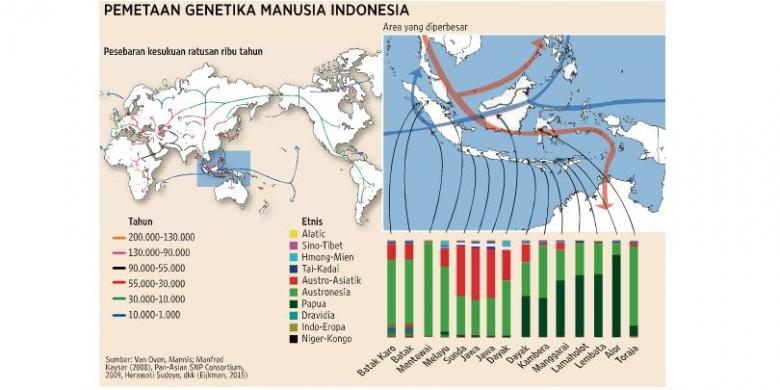
Bibliography
- Andy Barski, Albert Beaucort; Bruce Carpenter, Barski (2007). Bali and Lombok. Dorling Kindersley, London. ISBN 978-0-7566-2878-9.
- Haer, Debbie Guthrie; Morillot, Juliette & Toh, Irene (2001). Bali, a traveller's companion. Editions Didier Millet. ISBN 978-981-4217-35-4.
- Gold, Lisa (2005). Music in Bali: Experiencing Music, Expressing Culture. New York: Oxford University Press. ISBN 0-19-514149-0.
- Taylor, Jean Gelman (2003). Indonesia: Peoples and Histories. New Haven and London: Yale University Press. ISBN 0-300-10518-5.
- Pringle, Robert (2004). Bali: Indonesia's Hindu Realm; A short history of. Short History of Asia Series. Allen & Unwin. ISBN 1-86508-863-3.
Further reading
- Black, Robert (2012). Bali Fungus. Snake Scorpion Press. ISBN 978-1-4775-0824-4.
- Copeland, Jonathan (2010). Secrets of Bali: Fresh Light on the Morning of the World. Orchid Press. ISBN 978-974-524-118-3.
- Cotterell, Arthur (2015). Bali: A cultural history, Signal Books ISBN 9781909930179
- Covarrubias, Miguel (1946). Island of Bali. ISBN 9625930604
- Klemen, L (1999–2000). "Forgotten Campaign: The Dutch East Indies Campaign 1941–1942". Archived from the original on 26 July 2011.
- McPhee, Colin (2003). A House in Bali. Tuttle Publishing; New edition, 2000 (first published in 1946 by J. Day Co). ISBN 978-962-593-629-1.
- Shavit, David (2006). Bali and the Tourist Industry: A History, 1906–1942. McFarland & Co Inc. ISBN 978-0-7864-1572-4.
- Vickers, Adrian (1994). Travelling to Bali: Four Hundred Years of Journeys. Oxford University Press. ISBN 978-967-65-3081-3.
- Vickers, Adrian (2012). Bali: A Paradise Created. Tuttle. ISBN 978-0-8048-4260-0.
- Whitten, Anthony J.; Roehayat Emon Soeriaatmadja; Suraya A. Afiff (1997). The Ecology of Java and Bali. Hong Kong: Periplus Editions Ltd. ISBN 978-962-593-072-5.
- Wijaya, Made (2003). Architecture of Bali: A Source Book of Traditional and Modern Forms. Thames & Hudson Ltd. ISBN 978-0-500-34192-6.
Notes
External links


- . Encyclopædia Britannica. 3 (11th ed.). 1911.
- Bali provincial government official website
- Template:OSM relation
- CS1 Indonesian-language sources (id)
- Wikipedia articles needing page number citations from July 2024
- Articles with dead external links from September 2010
- Articles with dead external links from May 2026
- Use dmy dates from December 2022
- Articles containing Indonesian-language text
- Pages using infobox settlement with possible motto list
- Coordinates not on Wikidata
- Pages using infobox settlement with unknown parameters
- Pages linking to missing files
- Convert invalid options
- Articles with unsourced statements from June 2025
- Articles with failed verification from January 2024
- Articles with unsourced statements from April 2026
- Articles containing potentially dated statements from July 2015
- All articles containing potentially dated statements
- Articles with specifically marked weasel-worded phrases from July 2024
- Articles with unsourced statements from November 2024
- Articles prone to spam from December 2012
- Wikipedia articles incorporating a citation from the 1911 Encyclopaedia Britannica with Wikisource reference
- Official website not in Wikidata
- Bali
- 1958 establishments in Indonesia
- Hinduism in Indonesia
- Islands of Indonesia
- Lesser Sunda Islands
- Provinces of Indonesia
- States and territories established in 1958
- Former kingdoms
- Populated places in Indonesia