Finland: Difference between revisions
imported>Dresson354 m Changed "territory" to "country" since in 1906 Finland was a country but not independent one. |
imported>Jähmefyysikko : Remove unsourced note on the long name |
||
| Line 1: | Line 1: | ||
{{ | {{Short description|Country in northern Europe}} | ||
{{about|the country}} | {{about|the country}} | ||
{{pp-vandalism|small=yes}} | {{pp-vandalism|small=yes}} | ||
{{pp-move}} | {{pp-move}} | ||
{{Use Oxford spelling|date=September 2023}} | {{Use Oxford spelling|date=September 2023}} | ||
{{Use dmy dates|date= | {{Use dmy dates|date=December 2025}} | ||
{{CS1 config|mode=cs1}} | {{CS1 config|mode=cs1}} | ||
{{Infobox country | {{Infobox country | ||
| Line 14: | Line 14: | ||
| coa_size = 75 | | coa_size = 75 | ||
| national_anthem = <br />{{native name|fi|[[Maamme]]|nolink=yes}}<br />{{native name|sv|[[Maamme|Vårt land]]|nolink=yes}}<br />({{Langx|en|"Our Land"}})<br /><div style="display:inline-block;margin-top:0.4em;">[[File:United States Navy Band - Maamme.ogg|center]]</div> | | national_anthem = <br />{{native name|fi|[[Maamme]]|nolink=yes}}<br />{{native name|sv|[[Maamme|Vårt land]]|nolink=yes}}<br />({{Langx|en|"Our Land"}})<br /><div style="display:inline-block;margin-top:0.4em;">[[File:United States Navy Band - Maamme.ogg|center]]</div> | ||
| image_map = {{Switcher|[[File:EU-Finland (orthographic projection).svg | | image_map = {{Switcher|[[File:EU-Finland (orthographic projection).svg|frameless]]|Show globe|[[File:EU-Finland.svg|frameless]]|Show map of Europe|default=1}} | ||
| map_caption = {{map caption|location_color=dark green |region=Europe |region_color=dark grey |subregion=the [[European Union]] |subregion_color=green |legend=EU-Finland.svg}} | | map_caption = {{map caption|location_color=dark green |region=Europe |region_color=dark grey |subregion=the [[European Union]] |subregion_color=green |legend=EU-Finland.svg}} | ||
| capital = [[Helsinki]] | | capital = [[Helsinki]] | ||
| Line 20: | Line 20: | ||
| largest_city = capital | | largest_city = capital | ||
| official_languages = {{hlist|[[Finnish language|Finnish]]|[[Swedish language|Swedish]]}} | | official_languages = {{hlist|[[Finnish language|Finnish]]|[[Swedish language|Swedish]]}} | ||
| recognized_national_languages = {{hlist|[[ | | recognized_national_languages = {{hlist|[[Sámi languages|Sámi]]|[[Karelian language|Karelian]]|[[Finnish Kalo language|Finnish Kalo]]|[[Finnish Sign Language]]|[[Finland-Swedish Sign Language]]}} | ||
| ethnic_groups = {{unbulleted list | | ethnic_groups = {{unbulleted list | ||
|88. | |88.3% [[Finns]]{{notetag|Includes [[Swedish-speaking population of Finland|Finland-Swedes]], [[Finnish Kale|Romani]], [[Finnish Tatars|Tatar]] and [[Sámi people]].}} | ||
|11. | |11.7% [[Immigration to Finland|others]] | ||
}} | }} | ||
| ethnic_groups_year = | | ethnic_groups_year = 2025 | ||
| ethnic_groups_ref = <ref name="statistics-finland-population- | | ethnic_groups_ref = <ref name="statistics-finland-population-2025"/> | ||
| religion = {{ublist |item_style=white-space:nowrap; | | religion = {{ublist |item_style=white-space:nowrap; | ||
|{{Tree list}} | |{{Tree list}} | ||
* | * 63.2% [[Christianity]] | ||
** | ** 61.2% [[Evangelical Lutheran Church of Finland|Lutheranism]] | ||
** 1.0% [[Finnish Orthodox Church|Orthodoxy]] | ** 1.0% [[Finnish Orthodox Church|Eastern Orthodoxy]] | ||
** 1.0% other [[Christians|Christian]] | ** 1.0% other [[Christians|Christian]] | ||
{{Tree list/end}} | {{Tree list/end}} | ||
| | | 35.9% [[Irreligion in Finland|no religion]] | ||
| | | 0.9% [[Religion in Finland|other]]}} | ||
| religion_year = | | religion_year = 2025 | ||
| religion_ref = <ref name="statistics-finland-population- | | religion_ref = <ref name="statistics-finland-population-2025"/> | ||
| demonym = {{hlist|[[Demographics of Finland|Finnish]]|[[Finns|Finn]]}} | | demonym = {{hlist|[[Demographics of Finland|Finnish]]|[[Finns|Finn]]}} | ||
| government_type = [[Unitary parliamentary republic]]<ref name="Parliamentary"/> | | government_type = [[Unitary parliamentary republic]]<ref name="Parliamentary"/> | ||
| Line 44: | Line 44: | ||
| leader_title2 = [[Prime Minister of Finland|Prime Minister]] | | leader_title2 = [[Prime Minister of Finland|Prime Minister]] | ||
| leader_name2 = [[Petteri Orpo]] | | leader_name2 = [[Petteri Orpo]] | ||
| legislature = [[Parliament of Finland|Parliament]] | | legislature = [[Parliament of Finland|Parliament]] | ||
| sovereignty_type = [[History of Finland|Independence]] | | sovereignty_type = [[History of Finland|Independence]] | ||
| Line 55: | Line 53: | ||
| established_event3 = [[Constitution of Finland|Constitution established]] | | established_event3 = [[Constitution of Finland|Constitution established]] | ||
| established_date3 = 17 July 1919 | | established_date3 = 17 July 1919 | ||
| area_km2 = 338, | | area_km2 = 338,455<ref>{{cite news|publisher=BBC News|title=Finland Country profile|date=13 February 2024|url=https://www.bbc.com/news/world-europe-17288360|access-date=5 August 2025|archive-date=23 September 2016|archive-url=https://web.archive.org/web/20160923065159/http://www.bbc.com/news/world-europe-17288360|url-status=live}}</ref> | ||
| area_rank = 65th <!-- Area rank should match [[List of countries and dependencies by area]] --> | | area_rank = 65th <!-- Area rank should match [[List of countries and dependencies by area]] --> | ||
| area_sq_mi = 130,596 <!--Do not remove per [[WP:MOSNUM]]--> | | area_sq_mi = 130,596 <!--Do not remove per [[WP:MOSNUM]]--> | ||
| percent_water = 9.71 (2015)<ref>{{cite web|title=Surface water and surface water change|access-date=11 October 2020|publisher=[[Organisation for Economic Co-operation and Development]] (OECD)|url=https://stats.oecd.org/Index.aspx?DataSetCode=SURFACE_WATER|archive-date=24 March 2021|archive-url=https://web.archive.org/web/20210324133453/https://stats.oecd.org/Index.aspx?DataSetCode=SURFACE_WATER|url-status=live}}</ref> | | percent_water = 9.71 (2015)<ref>{{cite web|title=Surface water and surface water change|access-date=11 October 2020|publisher=[[Organisation for Economic Co-operation and Development]] (OECD)|url=https://stats.oecd.org/Index.aspx?DataSetCode=SURFACE_WATER|archive-date=24 March 2021|archive-url=https://web.archive.org/web/20210324133453/https://stats.oecd.org/Index.aspx?DataSetCode=SURFACE_WATER|url-status=live}}</ref> | ||
| population_census = {{IncreaseNeutral}} 5, | | population_census = {{IncreaseNeutral}} 5,652,881<ref name="statistics-finland-population-2025"/> | ||
| population_census_year = | | population_census_year = 2025 | ||
| population_estimate_rank = 114th | | population_estimate_rank = 114th | ||
| population_label2 = | | population_label2 = | ||
| Line 67: | Line 65: | ||
| population_density_sq_mi = 41 <!--Do not remove per [[WP:MOSNUM]]--> | | population_density_sq_mi = 41 <!--Do not remove per [[WP:MOSNUM]]--> | ||
| population_density_rank = 210th | | population_density_rank = 210th | ||
| GDP_PPP = {{increase}} $ | | GDP_PPP = {{increase}} $386.703 billion<ref name="IMFWEO.FI">{{cite web |url=https://data.imf.org/en/Data-Explorer?datasetUrn=IMF.RES:WEO(9.0.0) |title=World Economic Outlook Database (April 2026 Edition) |publisher=[[International Monetary Fund]] |website=www.imf.org |date=14 April 2026}}</ref> | ||
| GDP_PPP_year = | | GDP_PPP_year = 2026 | ||
| GDP_PPP_rank = | | GDP_PPP_rank = 60th | ||
| GDP_PPP_per_capita = {{increase}} $ | | GDP_PPP_per_capita = {{increase}} $68,861<ref name="IMFWEO.FI" /> | ||
| GDP_PPP_per_capita_rank = 23rd | | GDP_PPP_per_capita_rank = 23rd | ||
| GDP_nominal = {{increase}} $ | | GDP_nominal = {{increase}} $337.669 billion<ref name="IMFWEO.FI" /> | ||
| GDP_nominal_year = | | GDP_nominal_year = 2026 | ||
| GDP_nominal_rank = | | GDP_nominal_rank = 48th | ||
| GDP_nominal_per_capita = {{increase}} $ | | GDP_nominal_per_capita = {{increase}} $60,130<ref name="IMFWEO.FI" /> | ||
| GDP_nominal_per_capita_rank = 19th | | GDP_nominal_per_capita_rank = 19th | ||
| Gini = 26.6 <!--number only--> | | Gini = 26.6 <!--number only--> | ||
| Line 100: | Line 98: | ||
| official_website = {{URL|https://finland.fi/}} | | official_website = {{URL|https://finland.fi/}} | ||
}} | }} | ||
'''Finland''',{{efn|{{langx|fi|Suomi}} {{IPA|fi|ˈsuo̯mi||Fi-suomi.ogg}}; {{langx|sv|Finland}} {{IPA|sv|ˈfinlɑnd}}}} | '''Finland''',{{efn|{{langx|fi|Suomi}} {{IPA|fi|ˈsuo̯mi||Fi-suomi.ogg}}; {{langx|sv|Finland}} {{IPA|sv|ˈfinlɑnd}}}} or the '''Republic of Finland''',{{efn|{{Langx|fi|Suomen tasavalta}}; {{Langx|sv|Republiken Finland}}; {{small|{{audio|Suomi Finland.ogg|listen to all|help=no}}}}}} is a [[Nordic country]] in [[Northern Europe]]. It borders [[Sweden]] to the northwest, [[Norway]] to the north, and [[Russia]] to the east, with the [[Gulf of Bothnia]] to the west and the [[Gulf of Finland]] to the south, opposite [[Estonia]]. Its capital and largest city is [[Helsinki]]. Finland has a population of 5.7 million.<ref name="statistics-finland-population-2025">{{cite web |url= https://stat.fi/en/publication/cmg6f46k91y0e07w0qtdt6yl7 |title= Population growth slowed down in 2025 |date= 2026-04-01 |series= Population structure |publisher= Statistics Finland |issn= 1797-5395 |access-date=2026-04-01 }}</ref> The official languages are [[Finnish language|Finnish]] and [[Swedish language|Swedish]], the [[First language|mother tongues]] of 83.5 percent and 5.0 percent of the population, respectively.<ref name="statistics-finland-population-2025"/><ref>{{Cite web |title=Languages of Finland and language policy |url=https://en.kotus.fi/on-language/languages-of-finland-and-language-policy/ |access-date=2026-01-25 |website=Institute for the Languages of Finland |language=en-GB}}</ref> Finland's climate varies from [[humid continental climate|humid continental]] in the south to [[boreal climate|boreal]] in the north. Its land is predominantly covered by [[boreal forest]], with [[List of lakes of Finland|over 180,000 recorded lakes]].<ref name="thousand">{{cite web|last=Li|first=Leslie|date=16 April 1989|title=A Land of a Thousand Lakes|url=https://www.nytimes.com/1989/04/16/travel/a-land-of-a-thousand-lakes.html|access-date=20 September 2020|work=The New York Times|archive-date=2 January 2010|archive-url=https://web.archive.org/web/20100102074610/https://www.nytimes.com/1989/04/16/travel/a-land-of-a-thousand-lakes.html|url-status=live}}</ref><ref name="travel+leisure">{{cite web|url=https://www.travelandleisure.com/best-places-to-visit-in-finland-8402256|title=15 Best Places to Visit in Finland, From the Sauna Capital of the World to Santa Claus Village|first=Lydia|last=Mansel|work=[[Travel + Leisure]]|date=15 November 2023|access-date=2 January 2024|archive-date=2 January 2024|archive-url=https://web.archive.org/web/20240102021359/https://www.travelandleisure.com/best-places-to-visit-in-finland-8402256|url-status=live}}</ref> | ||
Finland was first settled around 9000 BC after the [[Last Glacial Period|last Ice Age]].<ref>{{Cite book|title=Muinaisuutemme jäljet|first1=Georg|last1=Haggren|first2=Petri|last2=Halinen|first3=Mika|last3=Lavento|first4=Sami|last4=Raninen|first5=Anna|last5=Wessman|publisher=Gaudeamus|year=2015|isbn=978-952-495-363-4|location=Helsinki|page=23}}</ref> During the [[Stone Age]], various cultures emerged, distinguished by different styles of ceramics. The [[Bronze Age]] and [[Iron Age]]s were marked by contacts with other cultures in [[Fennoscandia]] and the [[Baltic region]].<ref>{{Cite book|title=Muinaisuutemme jäljet|first1=Georg|last1=Haggren|first2=Petri|last2=Halinen|first3=Mika|last3=Lavento|first4=Sami|last4=Raninen|first5=Anna|last5=Wessman|publisher=Gaudeamus|year=2015|isbn=978-952-495-363-4|location=Helsinki|page=339}}</ref> From the late 13th century, Finland became part of Sweden following the [[Northern Crusades]]. In 1809, as a result of the [[Finnish War]], Finland was captured from Sweden and became [[Grand Duchy of Finland|an autonomous grand duchy]] within the [[Russian Empire]]. During this period, [[Golden Age of Finnish Art|Finnish art flourished]] and an [[Independence of Finland|independence movement]] gradually developed. | Finland was first settled around 9000 BC after the [[Last Glacial Period|last Ice Age]].<ref>{{Cite book|title=Muinaisuutemme jäljet|first1=Georg|last1=Haggren|first2=Petri|last2=Halinen|first3=Mika|last3=Lavento|first4=Sami|last4=Raninen|first5=Anna|last5=Wessman|publisher=Gaudeamus|year=2015|isbn=978-952-495-363-4|location=Helsinki|page=23}}</ref> During the [[Stone Age]], various cultures emerged, distinguished by different styles of ceramics. The [[Bronze Age]] and [[Iron Age]]s were marked by contacts with other cultures in [[Fennoscandia]] and the [[Baltic region]].<ref>{{Cite book|title=Muinaisuutemme jäljet|first1=Georg|last1=Haggren|first2=Petri|last2=Halinen|first3=Mika|last3=Lavento|first4=Sami|last4=Raninen|first5=Anna|last5=Wessman|publisher=Gaudeamus|year=2015|isbn=978-952-495-363-4|location=Helsinki|page=339}}</ref> From the late 13th century, Finland became part of Sweden following the [[Northern Crusades]]. In 1809, as a result of the [[Finnish War]], Finland was captured from Sweden and became [[Grand Duchy of Finland|an autonomous grand duchy]] within the [[Russian Empire]]. During this period, [[Golden Age of Finnish Art|Finnish art flourished]] and an [[Independence of Finland|independence movement]] gradually developed. | ||
Following the [[Russian Revolution]] of 1917, Finland [[Finnish Declaration of Independence|declared its independence]]. A [[Finnish Civil War|civil war]] ensued the following year, with the anticommunist [[Whites (Finland)|Whites]] emerging victorious. Finland's status as a [[republic]] was confirmed in 1919. During [[Finland in World War II|World War II]], Finland fought against the [[Soviet Union]] in the [[Winter War]] and the [[Continuation War]], and later against [[Nazi Germany]] in the [[Lapland War]]. As a result, it lost parts of its territory to the Soviet Union but retained its independence and democracy. | Following the [[Russian Revolution]] of 1917, Finland [[Finnish Declaration of Independence|declared its independence]]. A [[Finnish Civil War|civil war]] ensued the following year, with the anticommunist [[Whites (Finland)|Whites]] emerging victorious. Finland's status as a [[republic]] was confirmed in 1919. During [[Finland in World War II|World War II]], Finland fought against the [[Soviet Union]] in the [[Winter War]] and the [[Continuation War]], and later against [[Nazi Germany]] in the [[Lapland War]]. As a result, it lost parts of its territory to the Soviet Union but retained its independence and democracy. During the [[Cold War]], Finland embraced an official policy of neutrality. After the Cold War, Finland became a member of the [[European Union]] in 1995 and the [[Eurozone]] in 1999. Following the [[2022 Russian invasion of Ukraine|Russian invasion of Ukraine]], Finland joined [[NATO]] in 2023. | ||
Finland | Finland became the first country in Europe to grant [[Universal suffrage#Dates by country|universal suffrage]] in 1906, and the first in the world to give all adult citizens the right to run for public office.{{refn|group=note|name="full suffrage"|Finland was the first nation in the world to give all (adult) citizens full suffrage, in other words the right to vote and to run for office, in 1906. New Zealand was the first country in the world to grant all (adult) citizens the right to vote in 1893, but women did not get the right to run for the New Zealand legislature until 1919.<ref name="eduskunta">{{cite web |url=http://web.eduskunta.fi/Resource.phx/parliament/aboutparliament/presentation/history.htx |work=eduskunta.fi |url-status=dead |archive-date=6 December 2015 |author=Parliament of Finland |title=History of the Finnish Parliament |archive-url=http://archive.wikiwix.com/cache/20151206184816/http://web.eduskunta.fi/Resource.phx/parliament/aboutparliament/presentation/history.htx }}</ref>}} Finland remained a largely [[agrarian country|rural and agrarian country]] until the 1950s, when it pursued rapid industrialisation and a [[Nordic model|Nordic-style]] [[welfare state]], resulting in [[Economy of Finland|an advanced economy]] and high [[List of countries by GDP (nominal) per capita|per capita income]]. The [[International rankings of Finland|country consistently ranks highly in international rankings across various categories]], such as education, economic competitiveness, happiness, and prosperity. [[Foreign relations of Finland|Finnish foreign policy]] based on its [[middle power]] status emphasizes international cooperation and partnership, which has recently shifted towards closer [[Finland–NATO relations|ties with NATO]]. [[Culture of Finland|Finnish cultural values]], including [[egalitarianism]], [[secularism]], [[Human rights in Finland|human rights]] and [[Environmental issues in Finland|environmentalism]], are actively promoted through [[Foreign relations of Finland#Multilateral relations|membership in multiple international forums]]. | ||
==Etymology== | ==Etymology== | ||
{{see also|Finn (ethnonym)#Etymology}} | {{see also|Finn (ethnonym)#Etymology}} | ||
The name {{Langnf|fi|Suomi|Finland}} has uncertain origins, but a common etymology with {{lang|fi|saame}} (the [[Sámi | The name {{Langnf|fi|Suomi|Finland}} has uncertain origins, but a common etymology with {{lang|fi|saame}} (the [[Sámi people|Sámi]]) has been suggested.<ref>Rossi, Venla: "7 väärinkäsitystä suomen kielestä". ["7 misconceptions about the Finnish language"] ''Helsingin Sanomat''. 11 September 2022. {{in lang|fi}}.</ref><ref name=deSmit>{{cite web |last1=de Smit |first1=Merlijn |title=De Vanitate Etymologiae. On the origins of Suomi, Häme, Sápmi. |url=https://www.academia.edu/36858309 |website=Academia.edu |date=17 June 2018 |publisher=Academia, Inc. |access-date=6 September 2020 |language=en |archive-date=14 August 2021 |archive-url=https://web.archive.org/web/20210814113558/https://www.academia.edu/36858309 |url-status=live }}</ref> In the earliest historical sources, from the 12th and 13th centuries, the term ''Finland'' refers to the coastal region around [[Turku]] in the southwest of modern Finland; this region later became known as [[Finland Proper (historical province)|Finland Proper]] in distinction from the country name Finland.<ref name=":0">{{Cite book |title=Suomen museo 2003: "The Origins of Finland and Häme" |last=Salo |first=Unto |publisher=Suomen muinaismuistoyhdistys |year=2004 |isbn=978-951-9057-55-2 |location=Helsinki |page=55}}</ref><ref name="Maillefer">{{cite book |last1=Maillefer |first1=Jean-Marie |editor1-last=Vauchez |editor1-first=André |title=Encyclopedia of the Middle Ages |date=2000 |publisher=Fitzroy Dearborn Publishers |isbn=978-1-57958-282-1 |pages=546–547 |url=https://books.google.com/books?id=ejQOAQAAMAAJ |language=en |chapter=Finland}}</ref> | ||
In the 14th and 15th centuries, the southwest ([[Eura]] and Turku), the interior (around [[Lake Päijänne]]), and the southeast (reaching [[Lake Ladoga]]) regions of modern Finland were incorporated into the Swedish realm.<ref name="Maillefer"/> The entire area was called ''Finlandia et partes orientales'' or ''[[Österland]]'' ("Eastland") by the Scandinavians.<ref name="Maillefer"/> The term ''Österland'' was used until the 16th century.{{sfn|Kirby|2006|p=9}} The interior was known as [[Tavastia (historical province)|Tavastia]].<ref name="Maillefer"/> By the end of the [[Middle Ages]], the term ''Finland'' was extended to the east as well.<ref>{{cite book |last1=Meinander |first1=Henrik |title=History of Finland |date=2020 |publisher=Oxford University Press |isbn=978-0-19-005402-1 |page=14 |url=https://books.google.com/books?id=oATeDwAAQBAJ |language=en}}</ref> | In the 14th and 15th centuries, the southwest ([[Eura]] and Turku), the interior (around [[Lake Päijänne]]), and the southeast (reaching [[Lake Ladoga]]) regions of modern Finland were incorporated into the Swedish realm.<ref name="Maillefer"/> The entire area was called ''Finlandia et partes orientales'' or ''[[Österland]]'' ("Eastland") by the Scandinavians.<ref name="Maillefer"/> The term ''Österland'' was used until the 16th century.{{sfn|Kirby|2006|p=9}} The interior was known as [[Tavastia (historical province)|Tavastia]].<ref name="Maillefer"/> By the end of the [[Middle Ages]], the term ''Finland'' was extended to the east as well.<ref>{{cite book |last1=Meinander |first1=Henrik |title=History of Finland |date=2020 |publisher=Oxford University Press |isbn=978-0-19-005402-1 |page=14 |url=https://books.google.com/books?id=oATeDwAAQBAJ |language=en |archive-date=25 April 2025 |access-date=13 March 2025 |archive-url=https://web.archive.org/web/20250425112336/https://books.google.com/books?id=oATeDwAAQBAJ |url-status=live }}</ref> | ||
== History == | == History == | ||
| Line 119: | Line 117: | ||
===Prehistory=== | ===Prehistory=== | ||
{{Main|History of Finland#Prehistory}} | {{Main|History of Finland#Prehistory}} | ||
[[File:Kivikautinen karhunpäänuija.jpg|thumb | |||
[[File:Kivikautinen karhunpäänuija.jpg|thumb|Stone Age bear head gavel found in [[Paltamo]], Kainuu<ref>Haggrén et al. 2015, p. 109.</ref><ref>{{cite web| url = https://www.finna.fi/Record/musketti.M012:KM13275:1#image| title = eläinpääase; karhunpäänuija| work = Museovirasto| language = fi| access-date = 30 November 2017| archive-date = 1 December 2017| archive-url = https://web.archive.org/web/20171201035941/https://www.finna.fi/Record/musketti.M012:KM13275:1#image| url-status = live}}</ref>]] | |||
The area that is now Finland was settled in, at the latest, around 8500 BC during the [[Stone Age]] towards the end of the [[last glacial period]]. The [[Artifact (archaeology)|artefacts]] the first settlers left behind present characteristics that are shared with those found in [[Estonia]], Russia, and Norway.<ref name=":1">[http://herkules.oulu.fi/isbn9514281411/isbn9514281411.pdf Herkules.oulu.fi] {{Webarchive|url=https://web.archive.org/web/20160303194910/http://herkules.oulu.fi/isbn9514281411/isbn9514281411.pdf |date=3 March 2016 }}. ''People'', material, culture and environment in the north. Proceedings of the 22nd Nordic Archaeological Conference, University of Oulu, 18–23 August 2004 Edited by Vesa-Pekka Herva.</ref> The earliest people were [[hunter-gatherer]]s, using stone tools.<ref name="VF-Pre">Pirjo Uino of the National Board of Antiquities, ThisisFinland—"Prehistory: The ice recedes—man arrives". Retrieved 24 June 2008.</ref> | |||
The first pottery appeared in 5200 BC, when the [[Comb Ceramic culture]] was introduced.<ref name="Hist-Fin-Geo">[https://web.archive.org/web/20071123072314/http://www.geocities.com/ojoronen/EARLYFIN.HTM History of Finland and the Finnish People from stone age to WWII]. Retrieved 24 June 2008.</ref> The area of present-day Finland was in the western limits of the culture, which produced pottery with a distinct [[Comb Ceramic|comb pattern]].{{sfn|Kirby|2006|p=2}} The arrival of the [[Corded Ware culture]] in the south of coastal Finland between 3000 and 2500 BC may have coincided with the start of agriculture.<ref name="Virt-Mino">Professor Frank Horn of the Northern Institute for Environmental and the Minority Law University of Lappland writing for Virtual Finland on [https://web.archive.org/web/20080611022047/http://virtual.finland.fi/netcomm/news/showarticle.asp?intNWSAID=26470 National Minorities of Finland]. Retrieved 24 June 2008.</ref> Even with the introduction of agriculture, hunting and fishing continued to be important parts of the subsistence economy. | The first pottery appeared in 5200 BC, when the [[Comb Ceramic culture]] was introduced.<ref name="Hist-Fin-Geo">[https://web.archive.org/web/20071123072314/http://www.geocities.com/ojoronen/EARLYFIN.HTM History of Finland and the Finnish People from stone age to WWII]. Retrieved 24 June 2008.</ref> The area of present-day Finland was in the western limits of the culture, which produced pottery with a distinct [[Comb Ceramic|comb pattern]].{{sfn|Kirby|2006|p=2}} The arrival of the [[Corded Ware culture]] in the south of coastal Finland between 3000 and 2500 BC may have coincided with the start of agriculture.<ref name="Virt-Mino">Professor Frank Horn of the Northern Institute for Environmental and the Minority Law University of Lappland writing for Virtual Finland on [https://web.archive.org/web/20080611022047/http://virtual.finland.fi/netcomm/news/showarticle.asp?intNWSAID=26470 National Minorities of Finland]. Retrieved 24 June 2008.</ref> Even with the introduction of agriculture, hunting and fishing continued to be important parts of the subsistence economy. | ||
Based upon linguistic evidence, Finland seems to have been primarily inhabited by speakers of [[Paleo-European languages|Paleo-European]] languages prior to the migration of the Finno-Ugric peoples, which influenced the [[Sámi | Based upon linguistic evidence, Finland seems to have been primarily inhabited by speakers of [[Paleo-European languages|Paleo-European]] languages prior to the migration of the Finno-Ugric peoples, which influenced the [[Sámi languages]] who were the first Finno-Ugric peoples to move towards Finland. These languages have been divided into [[Paleo-Laplandic languages]] which were spoken around Lapland, and the Lakelandic languages spoken in most of modern-day Finland.<ref>{{cite journal |last=Aikio |first=Ante |year=2012 |title=An Essay on Saami Ethnolinguistic Prehistory |url=https://www.sgr.fi/sust/sust266/sust266_aikio.pdf |journal=Suomalais-Ugrilaisen Seuran Toimituksia/Mémoires de la Société Finno-Ougrienne |location=Helsinki |issue=266 |pages=63–117 |archive-date=19 June 2021 |access-date=25 May 2025 |archive-url=https://web.archive.org/web/20210619201601/https://www.sgr.fi/sust/sust266/sust266_aikio.pdf |url-status=live }}</ref><ref>{{Cite book |last=Aikio |first=Ante |url=https://www.academia.edu/4811770 |title=Etymologie, Entlehnungen und Entwicklungen: Festschrift für Jorma Koivulehto zum 70. Geburtstag |year=2004 |editor1=Irma Hyvärinen |series=Mémoires de la Société Néophilologique de Helsinki |volume=63 |location=Helsinki |pages=5–34 |chapter=An Essay on Substrate Studies and the Origin of Saami |editor2=Petri Kallio |editor3=Jarmo Korhonen |via=www.academia.edu}}</ref> | ||
In the [[Bronze Age]], permanent all-year-round cultivation and [[animal husbandry]] spread, but the cold climate slowed the change.<ref name=":2">{{Cite book |title=Muinaisuutemme jäljet|first1=Georg|last1=Haggren|first2=Petri|last2=Halinen|first3=Mika|last3=Lavento|first4=Sami|last4=Raninen|first5=Anna|last5=Wessman|publisher=Gaudeamus |year=2015 |location=Helsinki |pages=199, 210–211}}</ref> The [[Seima-Turbino phenomenon]] brought the first bronze artefacts to the region and possibly also the [[Finno-Ugric languages]].<ref name=":2" /><ref>{{Cite book|title=Muinaisuutemme jäljet|first1=Georg|last1=Haggren|first2=Petri|last2=Halinen|first3=Mika|last3=Lavento|first4=Sami|last4=Raninen|first5=Anna|last5=Wessman|publisher=Gaudeamus|year=2015|location=Helsinki|pages=171–178}}</ref> Commercial contacts that had so far mostly been to Estonia started to extend to Scandinavia. Domestic manufacture of bronze artefacts started 1300 BC.<ref>{{Cite book|title=Muinaisuutemme jäljet|first1=Georg|last1=Haggren|first2=Petri|last2=Halinen|first3=Mika|last3=Lavento|first4=Sami|last4=Raninen|first5=Anna|last5=Wessman|publisher=Gaudeamus|year=2015|location=Helsinki|pages=189–190}}</ref> | In the [[Bronze Age]], permanent all-year-round cultivation and [[animal husbandry]] spread, but the cold climate slowed the change.<ref name=":2">{{Cite book |title=Muinaisuutemme jäljet|first1=Georg|last1=Haggren|first2=Petri|last2=Halinen|first3=Mika|last3=Lavento|first4=Sami|last4=Raninen|first5=Anna|last5=Wessman|publisher=Gaudeamus |year=2015 |location=Helsinki |pages=199, 210–211}}</ref> The [[Seima-Turbino phenomenon]] brought the first bronze artefacts to the region and possibly also the [[Finno-Ugric languages]].<ref name=":2" /><ref>{{Cite book|title=Muinaisuutemme jäljet|first1=Georg|last1=Haggren|first2=Petri|last2=Halinen|first3=Mika|last3=Lavento|first4=Sami|last4=Raninen|first5=Anna|last5=Wessman|publisher=Gaudeamus|year=2015|location=Helsinki|pages=171–178}}</ref> Commercial contacts that had so far mostly been to Estonia started to extend to Scandinavia. Domestic manufacture of bronze artefacts started 1300 BC.<ref>{{Cite book|title=Muinaisuutemme jäljet|first1=Georg|last1=Haggren|first2=Petri|last2=Halinen|first3=Mika|last3=Lavento|first4=Sami|last4=Raninen|first5=Anna|last5=Wessman|publisher=Gaudeamus|year=2015|location=Helsinki|pages=189–190}}</ref> | ||
In the [[Iron Age]], population grew. [[Finland Proper]] was the most densely populated area. Commercial contacts in the [[Baltic Sea]] region grew and extended during the eighth and ninth centuries. Main exports from Finland were furs, slaves, [[castoreum]], and falcons to European courts. Imports included silk and other fabrics, jewelry, [[Ulfberht swords]], and, in lesser extent, glass. Production of iron started approximately in 500 BC.<ref>{{Cite book |title=Muinaisuutemme jäljet|first1=Georg|last1=Haggren|first2=Petri|last2=Halinen|first3=Mika|last3=Lavento|first4=Sami|last4=Raninen|first5=Anna|last5=Wessman|publisher=Gaudeamus |year=2015 |location=Helsinki |pages=332, 364–365}}</ref> At the end of the ninth century, indigenous artefact culture, especially weapons and women's jewelry, had more common local features than ever before. This has been interpreted to be expressing common Finnish identity.<ref>{{Cite book |title=Muinaisuutemme jäljet|first1=Georg|last1=Haggren|first2=Petri|last2=Halinen|first3=Mika|last3=Lavento|first4=Sami|last4=Raninen|first5=Anna|last5=Wessman|publisher=Gaudeamus |year=2015 |location=Helsinki |page=269}}</ref> | In the [[Iron Age]], population grew. [[Finland Proper]] was the most densely populated area. Commercial contacts in the [[Baltic Sea]] region grew and extended during the eighth and ninth centuries. Main exports from Finland were furs, slaves, [[castoreum]], and falcons to European courts. Imports included silk and other fabrics, jewelry, [[Ulfberht swords]], and, in lesser extent, glass. Production of iron started approximately in 500 BC.<ref>{{Cite book |title=Muinaisuutemme jäljet|first1=Georg|last1=Haggren|first2=Petri|last2=Halinen|first3=Mika|last3=Lavento|first4=Sami|last4=Raninen|first5=Anna|last5=Wessman|publisher=Gaudeamus |year=2015 |location=Helsinki |pages=332, 364–365}}</ref> At the end of the ninth century, indigenous artefact culture, especially weapons and women's jewelry, had more common local features than ever before. This has been interpreted to be expressing common Finnish identity.<ref>{{Cite book |title=Muinaisuutemme jäljet|first1=Georg|last1=Haggren|first2=Petri|last2=Halinen|first3=Mika|last3=Lavento|first4=Sami|last4=Raninen|first5=Anna|last5=Wessman|publisher=Gaudeamus |year=2015 |location=Helsinki |page=269}}</ref> | ||
An early form of [[Finnic languages]] spread to the Baltic Sea region approximately 1900 BC. Common Finnic language was spoken around [[Gulf of Finland]] 2000 years ago. The dialects from which the modern-day Finnish language was developed came into existence during the Iron Age.<ref>{{Cite book|title=Muinaisuutemme jäljet|first1=Georg|last1=Haggren|first2=Petri|last2=Halinen|first3=Mika|last3=Lavento|first4=Sami|last4=Raninen|first5=Anna|last5=Wessman|publisher=Gaudeamus|year=2015|location=Helsinki|pages=211–212}}</ref> Contacts with the ancient [[Baltic peoples|Baltic]] and eastern [[Germanic peoples]] greatly influenced the [[Proto-Finnic language]].{{sfn|Kirby|2006|p=2}} Although distantly related, the [[ | An early form of [[Finnic languages]] spread to the Baltic Sea region approximately 1900 BC. Common Finnic language was spoken around [[Gulf of Finland]] 2000 years ago. The dialects from which the modern-day Finnish language was developed came into existence during the Iron Age.<ref>{{Cite book|title=Muinaisuutemme jäljet|first1=Georg|last1=Haggren|first2=Petri|last2=Halinen|first3=Mika|last3=Lavento|first4=Sami|last4=Raninen|first5=Anna|last5=Wessman|publisher=Gaudeamus|year=2015|location=Helsinki|pages=211–212}}</ref> Contacts with the ancient [[Baltic peoples|Baltic]] and eastern [[Germanic peoples]] greatly influenced the [[Proto-Finnic language]].{{sfn|Kirby|2006|p=2}} Although distantly related, the [[Sámi people]] retained the hunter-gatherer lifestyle longer than the Finns. The Sámi cultural identity and the [[Sámi languages]] have survived in [[Lapland (Finland)|Lapland]], the northernmost province. | ||
===Swedish era=== | ===Swedish era=== | ||
{{Main|Finland under Swedish rule}} | {{Main|Finland under Swedish rule}} | ||
[[File: | |||
[[File:Suomenlinna.jpg|thumb|Now lying within Helsinki, [[Suomenlinna]] is a UNESCO [[World Heritage Site]] consisting of an inhabited 18th-century sea fortress built on six islands. It is one of Finland's most popular tourist attractions.]] | |||
The 12th and 13th centuries were a violent time in the northern Baltic Sea. The [[Livonian Crusade]] was ongoing and the [[Finnish tribes]] such as the [[Tavastians]] and [[Karelia (historical province of Finland)|Karelians]] were in [[Early Finnish wars|frequent conflicts]] with [[Republic of Novgorod|Novgorod]] and with each other. Also, during the 12th and 13th centuries several crusades from the Catholic realms of the Baltic Sea area were made against the Finnish tribes. [[Danes]] waged at least three crusades to Finland, in 1187 or slightly earlier,<ref name=":3">{{cite book| author = Kurt Villads Jensen| title = Ristiretket| publisher = Turun Historiallinen Yhdistys| year = 2019| pages = 126–127}}</ref> in 1191 and in 1202,<ref>{{Cite book |title=Muinaisuutemme jäljet|first1=Georg|last1=Haggren|first2=Petri|last2=Halinen|first3=Mika|last3=Lavento|first4=Sami|last4=Raninen|first5=Anna|last5=Wessman|publisher=Gaudeamus |year=2015 |location=Helsinki |page=380}}</ref> and [[Swedes]], possibly the so-called [[Second Swedish Crusade|second Crusade to Finland]], in 1249 against Tavastians and the [[Third Swedish Crusade|third Crusade to Finland]] in 1293 against the Karelians. The so-called [[First Swedish Crusade|first Crusade to Finland]], possibly in 1155, most likely never occurred.<ref>{{Cite book |title=''Ruotsin itämaa'' |last=Tarkiainen |first=Kari |publisher=Svenska litteratursällskapet i Finland |year=2010 |location=Helsinki |page=88}}</ref> | The 12th and 13th centuries were a violent time in the northern Baltic Sea. The [[Livonian Crusade]] was ongoing and the [[Finnish tribes]] such as the [[Tavastians]] and [[Karelia (historical province of Finland)|Karelians]] were in [[Early Finnish wars|frequent conflicts]] with [[Republic of Novgorod|Novgorod]] and with each other. Also, during the 12th and 13th centuries several crusades from the Catholic realms of the Baltic Sea area were made against the Finnish tribes. [[Danes]] waged at least three crusades to Finland, in 1187 or slightly earlier,<ref name=":3">{{cite book| author = Kurt Villads Jensen| title = Ristiretket| publisher = Turun Historiallinen Yhdistys| year = 2019| pages = 126–127}}</ref> in 1191 and in 1202,<ref>{{Cite book |title=Muinaisuutemme jäljet|first1=Georg|last1=Haggren|first2=Petri|last2=Halinen|first3=Mika|last3=Lavento|first4=Sami|last4=Raninen|first5=Anna|last5=Wessman|publisher=Gaudeamus |year=2015 |location=Helsinki |page=380}}</ref> and [[Swedes]], possibly the so-called [[Second Swedish Crusade|second Crusade to Finland]], in 1249 against Tavastians and the [[Third Swedish Crusade|third Crusade to Finland]] in 1293 against the Karelians. The so-called [[First Swedish Crusade|first Crusade to Finland]], possibly in 1155, most likely never occurred.<ref>{{Cite book |title=''Ruotsin itämaa'' |last=Tarkiainen |first=Kari |publisher=Svenska litteratursällskapet i Finland |year=2010 |location=Helsinki |page=88}}</ref> | ||
As a result of the Crusades, mostly with the Second Swedish Crusade led by [[Birger Jarl]], and the [[Swedish colonisation of Finland|colonization of some Finnish coastal areas]] with Christian [[Swedish-speaking population of Finland|Swedes]] during the Middle Ages,<ref>{{Cite book|title=Ruotsin itämaa|last=Tarkiainen|first=Kari|publisher=Svenska litteratursällskapet i Finland |year=2010 |isbn=978-951-583-212-2 |location=Helsinki|pages=104–147}}</ref> Finland gradually became part of the kingdom of Sweden and the sphere of influence of the [[Catholic Church]].<ref>{{Cite book|title=Ruotsin itämaa|last=Tarkiainen|first=Kari|publisher=Svenska litteratursällskapet i Finland |year=2010 |isbn=978-951-583-212-2 |location=Porvoo |pages=167–170}}</ref> Under Sweden, Finland was annexed as part of the cultural order of [[Western Europe]].<ref name="infoFinland.fi">{{cite web | url=https://www.infofinland.fi/en/information-about-finland/finnish-history | title=Finnish history | publisher=infoFinland.fi | access-date=13 April 2023 | archive-date=13 April 2023 | archive-url=https://web.archive.org/web/20230413121612/https://www.infofinland.fi/en/information-about-finland/finnish-history | url-status=live }}</ref> The Swedes built fortresses in [[Häme]] and [[Turku]], while a Swedish royal council was instituted, an administrative structure and fiscal apparatus was created, and law codes were codified during the reigns of [[Magnus Ladulås]] (1275–1290) and [[Magnus Eriksson]] (1319–1364).{{sfn|Kirby|2006|p=9}} As a result, the Finnish lands were firmly integrated into the Swedish realm.{{sfn|Kirby|2006|p=9}} | As a result of the Crusades, mostly with the Second Swedish Crusade led by [[Birger Jarl]], and the [[Swedish colonisation of Finland|colonization of some Finnish coastal areas]] with Christian [[Swedish-speaking population of Finland|Swedes]] during the Middle Ages,<ref>{{Cite book|title=Ruotsin itämaa|last=Tarkiainen|first=Kari|publisher=Svenska litteratursällskapet i Finland |year=2010 |isbn=978-951-583-212-2 |location=Helsinki|pages=104–147}}</ref> Finland gradually became part of the kingdom of Sweden and the sphere of influence of the [[Catholic Church]].<ref>{{Cite book|title=Ruotsin itämaa|last=Tarkiainen|first=Kari|publisher=Svenska litteratursällskapet i Finland |year=2010 |isbn=978-951-583-212-2 |location=Porvoo |pages=167–170}}</ref> Under Sweden, Finland was annexed as part of the cultural order of [[Western Europe]].<ref name="infoFinland.fi">{{cite web | url=https://www.infofinland.fi/en/information-about-finland/finnish-history | title=Finnish history | publisher=infoFinland.fi | access-date=13 April 2023 | archive-date=13 April 2023 | archive-url=https://web.archive.org/web/20230413121612/https://www.infofinland.fi/en/information-about-finland/finnish-history | url-status=live }}</ref> The Swedes built fortresses in [[Häme]] and [[Turku]], while a Swedish royal council was instituted, an administrative structure and fiscal apparatus was created, and law codes were codified during the reigns of [[Magnus Ladulås]] (1275–1290) and [[Magnus Eriksson]] (1319–1364).{{sfn|Kirby|2006|p=9}} As a result, the Finnish lands were firmly integrated into the Swedish realm.{{sfn|Kirby|2006|p=9}} | ||
[[Finland Swedish|Swedish]] was the dominant language of the nobility, administration, and education; [[Finnish language|Finnish]] was chiefly a language for the [[peasant]]ry, clergy, and local [[court]]s in predominantly Finnish-speaking areas.<ref>{{cite book |last1=Sanders |first1=Ruth H. |title=The Languages of Scandinavia: Seven Sisters of the North |date=2021 |publisher=University of Chicago Press |pages=94–95 |isbn=978-0-226-75975-3 |url=https://books.google.com/books?id=EL4lEAAAQBAJ}}</ref><ref>{{cite book |title=The Nordic Languages |date=2002 |publisher=W. de Gruyter |page=1648 |isbn=978-3-11-017149-5 |url=https://books.google.com/books?id=6b7WwBC5tRAC}}</ref> During the [[Protestant Reformation]], the [[Finns]] gradually converted to [[Lutheranism]].<ref>{{cite book |title=Historical Dictionary of Finland |date=2021 |publisher=Rowman & Littlefield Publishers |page=282 |isbn=978-1-5381-1154-3 |url=https://books.google.com/books?id=Fgo0EAAAQBAJ}}</ref> The end of the [[Kalmar Union]] ushered in an era of religious, social, and economic changes.{{sfn|Kirby|2006|p=28}} [[Gustav Vasa]] ({{reign|1523|1560}}) made his second son [[John III of Sweden|Johan]] the [[duke of Finland]], while [[Gustavus Adolphus|Gustav Adolf]] ({{reign|1611|1632}}) created the office of [[Governor-General of Finland|governor-general]] for Finland as part of his restructuring of the administration of the Swedish realm.{{sfn|Kirby|2006|pp=37–38}} | [[Finland Swedish|Swedish]] was the dominant language of the nobility, administration, and education; [[Finnish language|Finnish]] was chiefly a language for the [[peasant]]ry, clergy, and local [[court]]s in predominantly Finnish-speaking areas.<ref>{{cite book |last1=Sanders |first1=Ruth H. |title=The Languages of Scandinavia: Seven Sisters of the North |date=2021 |publisher=University of Chicago Press |pages=94–95 |isbn=978-0-226-75975-3 |url=https://books.google.com/books?id=EL4lEAAAQBAJ}}</ref><ref>{{cite book |title=The Nordic Languages |date=2002 |publisher=W. de Gruyter |page=1648 |isbn=978-3-11-017149-5 |url=https://books.google.com/books?id=6b7WwBC5tRAC}}</ref> During the [[Protestant Reformation]], the [[Finns]] gradually converted to [[Lutheranism]].<ref>{{cite book |title=Historical Dictionary of Finland |date=2021 |publisher=Rowman & Littlefield Publishers |page=282 |isbn=978-1-5381-1154-3 |url=https://books.google.com/books?id=Fgo0EAAAQBAJ}}</ref> The end of the [[Kalmar Union]] ushered in an era of religious, social, and economic changes.{{sfn|Kirby|2006|p=28}} [[Gustav Vasa]] ({{reign|1523|1560}}) made his second son [[John III of Sweden|Johan]] the [[duke of Finland]], while [[Gustavus Adolphus|Gustav Adolf]] ({{reign|1611|1632}}) created the office of [[Governor-General of Finland|governor-general]] for Finland as part of his restructuring of the administration of the Swedish realm.{{sfn|Kirby|2006|pp=37–38}} | ||
| Line 149: | Line 150: | ||
===Grand Duchy of Finland=== | ===Grand Duchy of Finland=== | ||
{{Main|Grand Duchy of Finland}} | {{Main|Grand Duchy of Finland}} | ||
[[File:Suomineito.jpg|thumb | The Swedish era ended with the [[Finnish War]] of 1809. On 29 March 1809, after being conquered by the armies of [[Alexander I of Russia]], Finland became [[Grand Duchy of Finland|an autonomous grand duchy]] within the [[Russian Empire]], as recognised by the [[Diet of Porvoo]].<ref>{{cite book |last1=Merivirta |first1=Raita |last2=Koivunen |first2=Leila |last3=Särkkä |first3=Timo |title=Finnish Colonial Encounters: From Anti-Imperialism to Cultural Colonialism and Complicity |date=1 January 2022 |publisher=Springer Nature |isbn=978-3-030-80610-1 |page=43 |url=https://books.google.com/books?id=l2ZXEAAAQBAJ |language=en |archive-date=22 September 2024 |access-date=17 August 2024 |archive-url=https://web.archive.org/web/20240922235128/https://books.google.com/books?id=l2ZXEAAAQBAJ |url-status=live }}</ref> This situation continued until the end of 1917.<ref name="tif"/> In 1812, Alexander I incorporated the Russian [[Vyborg Governorate|province of Vyborg]] into the Grand Duchy of Finland. In 1854, Finland became involved in Russia's involvement in the [[Crimean War]] when the British and French navies bombed the Finnish coast and [[Åland]] during the so-called [[Åland War]].<ref name="Junnila">{{cite book| first = Olavi | last = Junnila | title = Suomen historia 5 | year = 1986 | chapter = Autonomian rakentaminen ja kansallisen nousun aika | page = 151 | location = Helsinki | publisher = Weilin + Göös | isbn = 951-35-2494-9 | language = fi }}</ref> | ||
Although Swedish was still widely spoken, the Finnish language began to gain recognition during this period. From the 1860s, a strong Finnish [[Ethnic nationalism|nationalist movement]], known as the [[Fennoman movement]], grew. | [[File:Suomineito.jpg|thumb|[[Edvard Isto]], ''[[The Attack (painting)|The Attack]]'', 1899. The [[Russian eagle]] is attacking the [[Finnish Maiden]], trying to steal her book of laws]] | ||
Although Swedish was still widely spoken, the Finnish language began to gain recognition during this period. From the 1860s, a strong Finnish [[Ethnic nationalism|nationalist movement]], known as the [[Fennoman movement]], grew. As a leading Fennoman philosopher and statesman, [[Johan Vilhelm Snellman|J.V. Snellman]] played a decisive role in the 19th-century Finnish national movement by championing the official status of the Finnish language and spearheading the introduction of the [[Finnish markka]] in 1865, thereby strengthening the autonomy of the Grand Duchy of Finland.<ref name="Junnila"/><ref>{{cite web | url = https://www.suomenpankki.fi/fi/media-ja-julkaisut/puheet-ja-haastattelut/2006/pankinjohtaja-sinikka-salon-puhe-snellman-ja-suomen-markka--nayttelyn-avajaisissa-suomen-pankin-rahamuseossa/ | title = Pankinjohtaja Sinikka Salon puhe Snellman ja Suomen markka -näyttelyn avajaisissa Suomen Pankin rahamuseossa | publisher = Bank of Finland | date = 10 January 2006 | access-date = 7 December 2020 | language = fi | archive-date = 9 December 2017 | archive-url = https://web.archive.org/web/20171209100458/https://www.suomenpankki.fi/fi/media-ja-julkaisut/puheet-ja-haastattelut/2006/pankinjohtaja-sinikka-salon-puhe-snellman-ja-suomen-markka--nayttelyn-avajaisissa-suomen-pankin-rahamuseossa/ | url-status = live }}</ref> Milestones included the publication of what would become Finland's [[national epic]], the ''[[Kalevala]]'', in 1835 and the legal equality of the Finnish language with Swedish in 1892. In the spirit of [[Adolf Ivar Arwidsson]] – "we are not Swedes, we do not want to become Russians, so let us be Finns" – a Finnish national identity was established.<ref>{{cite book|last1=Lefaivre|first1=Liane|last2=Tzonis|first2=Alexander|title=Architecture of Regionalism in the Age of Globalization: Peaks and Valleys in the Flat World|url=https://books.google.com/books?id=FkYHEAAAQBAJ&pg=PT144|year=2020|publisher=Routledge|location=New York|isbn=978-1-00-022106-0|page=144}}</ref> Nevertheless, there was no real independence movement in Finland until the early 20th century.<ref name="a1">{{cite book |last=Nordstrom |first=Byron J. |title=Scandinavia Since 1500 |year=2000 |publisher=University of Minnesota Press |location=Minneapolis, US |isbn=978-0-8166-2098-2 |page=[https://archive.org/details/scandinaviasince0000nord/page/143 143] |url=https://archive.org/details/scandinaviasince0000nord/page/143 }}</ref> | |||
The [[Finnish famine of 1866–1868]] occurred after freezing temperatures in early September devastated crops and killed around 15% of the population, making it one of the worst [[famine]]s in European history.<ref>{{cite book|title=Nutrition and immunology: principles and practice |first1=M. Eric|last1= Gershwin|first2=J. Bruce |last2=German|first3= Carl L.|last3= Keen |publisher =Humana Press|year=2000 |isbn=0-89603-719-3}}</ref> The famine led the Russian Empire to relax financial regulations, and investment increased in the following decades. Economic development was rapid.<ref name="equity">{{cite web |url=http://siteresources.worldbank.org/INTRANETSOCIALDEVELOPMENT/Resources/finland.pdf |title=Growth and Equity in Finland |publisher=World Bank |access-date=22 March 2008 |archive-date=13 November 2018 |archive-url=https://web.archive.org/web/20181113032435/http://siteresources.worldbank.org/INTRANETSOCIALDEVELOPMENT/Resources/finland.pdf |url-status=live }}</ref> The [[gross domestic product]] (GDP) per capita was still half of that of the United States and a third of that of Britain.<ref name="equity" /> | The [[Finnish famine of 1866–1868]] occurred after freezing temperatures in early September devastated crops and killed around 15% of the population, making it one of the worst [[famine]]s in European history.<ref>{{cite book|title=Nutrition and immunology: principles and practice |first1=M. Eric|last1= Gershwin|first2=J. Bruce |last2=German|first3= Carl L.|last3= Keen |publisher =Humana Press|year=2000 |isbn=0-89603-719-3}}</ref> The famine led the Russian Empire to relax financial regulations, and investment increased in the following decades. Economic development was rapid.<ref name="equity">{{cite web |url=http://siteresources.worldbank.org/INTRANETSOCIALDEVELOPMENT/Resources/finland.pdf |title=Growth and Equity in Finland |publisher=World Bank |access-date=22 March 2008 |archive-date=13 November 2018 |archive-url=https://web.archive.org/web/20181113032435/http://siteresources.worldbank.org/INTRANETSOCIALDEVELOPMENT/Resources/finland.pdf |url-status=live }}</ref> The [[gross domestic product]] (GDP) per capita was still half of that of the United States and a third of that of Britain.<ref name="equity" /> | ||
From | From 1899 to 1917, the Russian Empire pursued [[Russification of Finland|a policy of Russification]], which was suspended between 1905 and 1908. In 1906, [[universal suffrage]] was introduced in the Grand Duchy of Finland. However, relations between the Grand Duchy of Finland and the Russian Empire soured when the Russian government began to take steps to restrict Finland's special status and autonomy. For example, universal suffrage was virtually meaningless in practice, as the [[tsar]] did not have to approve any of the laws passed by the Finnish parliament. The desire for independence gained ground, first among radical [[Liberalism|liberals]]<ref>Mickelsson, Rauli (2007). ''Suomen puolueet—Historia, muutos ja nykypäivä''. Vastapaino. {{in lang|fi}}</ref> and [[Socialism|socialists]], partly driven by a declaration called the'' [[February Manifesto]]'' by the last tsar of the Russian Empire, [[Nicholas II of Russia|Nicholas II]], on 15 February 1899.<ref>Alenius, Kari. "[https://www.pshy.fi/sites/pshy.fi/julkaisut_1977_2019/Faravid_28-2004.htm Russification in Estonia and Finland Before 1917] {{Webarchive|url=https://web.archive.org/web/20260209050446/https://www.pshy.fi/sites/pshy.fi/julkaisut_1977_2019/Faravid_28-2004.htm |date=9 February 2026 }}", ''Faravid'', 2004, Vol. 28, pp. 181–194.</ref> | ||
===Civil war and early independence=== | ===Civil war and early independence=== | ||
{{Main|Independence of Finland|Finnish Civil War}} | {{Main|Independence of Finland|Finnish Civil War}} | ||
[[File:The victory parade of the White Army 1918.jpg|thumb|Finnish military leader and statesman [[C. G. E. Mannerheim]] as [[general officer]] leading the [[White Victory Parade]] at the end of the [[Finnish Civil War]] in Helsinki, 1918]] | |||
After the [[February Revolution]] of 1917, Finland's position as a Grand Duchy under the rule of the Russian Empire was questioned. The [[Parliament of Finland|Finnish parliament]], controlled by the [[Social Democratic Party of Finland|Social Democrats]], passed the so-called [[Independence of Finland#Power act|Power Act]] to give the parliament supreme authority. This was rejected by the [[Russian Provisional Government]], which decided to dissolve the parliament.<ref>[http://countrystudies.us/finland/15.htm The Finnish Civil War, Federal Research Division of the Library of Congress] {{Webarchive|url=https://web.archive.org/web/20161228235436/http://countrystudies.us/finland/15.htm |date=28 December 2016 }}. Countrystudies.us. Retrieved 18 May 2016.</ref> New elections were held in which the right-wing parties won by a small majority. Some social democrats refused to accept the result, claiming that the dissolution of parliament and the subsequent elections were extra-legal. The two almost equally powerful political blocs, the right-wing parties and the Social Democratic Party, were deeply divided. | After the [[February Revolution]] of 1917, Finland's position as a Grand Duchy under the rule of the Russian Empire was questioned. The [[Parliament of Finland|Finnish parliament]], controlled by the [[Social Democratic Party of Finland|Social Democrats]], passed the so-called [[Independence of Finland#Power act|Power Act]] to give the parliament supreme authority. This was rejected by the [[Russian Provisional Government]], which decided to dissolve the parliament.<ref>[http://countrystudies.us/finland/15.htm The Finnish Civil War, Federal Research Division of the Library of Congress] {{Webarchive|url=https://web.archive.org/web/20161228235436/http://countrystudies.us/finland/15.htm |date=28 December 2016 }}. Countrystudies.us. Retrieved 18 May 2016.</ref> New elections were held in which the right-wing parties won by a small majority. Some social democrats refused to accept the result, claiming that the dissolution of parliament and the subsequent elections were extra-legal. The two almost equally powerful political blocs, the right-wing parties and the Social Democratic Party, were deeply divided. | ||
The [[October Revolution]] in Russia changed the geopolitical situation once again. Suddenly the right-wing parties in Finland began to reconsider their decision to block the transfer of supreme executive power from the Russian government to Finland when the [[Bolsheviks]] came to power in Russia. The right-wing government, led by Prime Minister [[P. E. Svinhufvud]], presented the [[Finnish Declaration of Independence|Declaration of Independence]] on 4 December 1917, which was officially approved by the Finnish Parliament on 6 December. The [[Russian Soviet Federative Socialist Republic]] (RSFSR), led by [[Vladimir Lenin]] was the first country to recognise Finland's independence on 4 January 1918.<ref>{{cite web | url = http://formin.finland.fi/public/default.aspx?contentid=107215&contentlan=1&culture=fi-FI | title = Uudenvuodenaatto Pietarin Smolnassa – Itsenäisyyden tunnustus 31.12.1917 | publisher = Ulkoministeriö | access-date = 14 September 2020 | language = fi | archive-date = 26 November 2016 | archive-url = https://web.archive.org/web/20161126002743/http://formin.finland.fi/public/default.aspx?contentid=107215&contentlan=1&culture=fi-FI | url-status = dead }}</ref> | The [[October Revolution]] in Russia changed the geopolitical situation once again. Suddenly the right-wing parties in Finland began to reconsider their decision to block the transfer of supreme executive power from the Russian government to Finland when the [[Bolsheviks]] came to power in Russia. The right-wing government, led by Prime Minister [[P. E. Svinhufvud]], presented the [[Finnish Declaration of Independence|Declaration of Independence]] on 4 December 1917, which was officially approved by the Finnish Parliament on 6 December. The [[Russian Soviet Federative Socialist Republic]] (RSFSR), led by [[Vladimir Lenin]] was the first country to recognise Finland's independence on 4 January 1918.<ref>{{cite web | url = http://formin.finland.fi/public/default.aspx?contentid=107215&contentlan=1&culture=fi-FI | title = Uudenvuodenaatto Pietarin Smolnassa – Itsenäisyyden tunnustus 31.12.1917 | publisher = Ulkoministeriö | access-date = 14 September 2020 | language = fi | archive-date = 26 November 2016 | archive-url = https://web.archive.org/web/20161126002743/http://formin.finland.fi/public/default.aspx?contentid=107215&contentlan=1&culture=fi-FI | url-status = dead }}</ref> | ||
On 27 January 1918, the government began to disarm the Russian forces in [[Ostrobothnia (historical province)|Ostrobothnia]]. The socialists took control of southern Finland and Helsinki, but the white government continued in exile in [[Vaasa]].<ref>{{cite book|author=Tuomas Tepora & Aapo Roselius|title=The Finnish Civil War 1918|chapter=The War of Liberation, the Civil Guards, and the | On 27 January 1918, the government began to disarm the Russian forces in [[Ostrobothnia (historical province)|Ostrobothnia]]. The socialists took control of southern Finland and Helsinki, but the white government continued in exile in [[Vaasa]].<ref>{{cite book|author=Tuomas Tepora & Aapo Roselius|title=The Finnish Civil War 1918|chapter=The War of Liberation, the Civil Guards, and the Veterans' Union: Public Memory in the Interwar Period|series=History of Warfare (vol. 101)|year=2014|isbn=978-90-04-24366-8}}</ref><ref>{{cite web |url=https://europecentenary.eu/reds-vs-whites-the-finnish-civil-war-january-may-1918/ |title=«Reds» vs. «Whites»: The Finnish Civil War (January- May 1918) |last=Simbeteanu |first=Iulian |work=Europe Centenary |date= 29 November 2018|access-date=13 May 2024 |quote= |archive-date=1 July 2022 |archive-url=https://web.archive.org/web/20220701004827/https://europecentenary.eu/reds-vs-whites-the-finnish-civil-war-january-may-1918/amp/ |url-status=live }}</ref> This led to a short but bitter [[Finnish Civil War|civil war]]. The [[White Guard (Finland)|Whites]], backed by [[German Empire|Imperial Germany]], prevailed over the [[Red Guards (Finland)|Reds]]<ref>{{cite web |title=A Country Study: Finland—The Finnish Civil War |url=http://memory.loc.gov/frd/cs/fitoc.html |work=Federal Research Division, Library of Congress |access-date=11 December 2008 |archive-date=10 March 2012 |archive-url=https://web.archive.org/web/20120310171449/http://memory.loc.gov/frd/cs/fitoc.html |url-status=live }}</ref> and their self-proclaimed [[Finnish Socialist Workers' Republic]].<ref>{{cite web |url= https://www.verkkouutiset.fi/sdpn-puheenjohtaja-halusi-punadiktaattoriksi-mutta-kuoli-stalinin-vankileirilla-69089/ |title= SDP:n puheenjohtaja halusi punadiktaattoriksi, mutta kuoli Stalinin vankileirillä |author=Verkkouutiset |date= 20 August 2017 |page= |publisher= verkkouutiset.fi |access-date= 7 March 2026 |url-status=dead |archive-url= https://web.archive.org/web/20211128041947/https://www.verkkouutiset.fi/sdpn-puheenjohtaja-halusi-punadiktaattoriksi-mutta-kuoli-stalinin-vankileirilla-69089/#cd1f8043 |archive-date= 28 November 2021 }}{{in lang|fi}}.</ref> After the war, tens of thousands of Reds were interned in camps where thousands were executed or died of malnutrition and disease. A deep social and political enmity was sown between the Reds and the Whites that would last until the [[Winter War]] and beyond.<ref>[https://www.is.fi/paakirjoitus/art-2000005492424.html "Pääkirjoitus: Kansalaissota on arka muistettava"] {{Webarchive|url=https://web.archive.org/web/20220526204428/https://www.is.fi/paakirjoitus/art-2000005492424.html |date=26 May 2022 }} {{in lang|fi}}.</ref><ref>[https://yle.fi/uutiset/3-8831374 "Punaisten ja valkoisten perintöä vaalitaan yhä – Suomalaiset lähettivät yli 400 muistoa vuoden 1918 sisällissodasta"] {{Webarchive|url=https://web.archive.org/web/20220521072139/https://yle.fi/uutiset/3-8831374 |date=21 May 2022 }} {{in lang|fi}}.</ref> The civil war and the activist expeditions to Soviet Russia in 1918–1920, known as the "[[Heimosodat|Kinship Wars]]", strained relations with the East.<ref>{{Cite book | last=Manninen | first=Ohto | title=Suur-Suomen ääriviivat: Kysymys tulevaisuudesta ja turvallisuudesta Suomen Saksan-politiikassa 1941 | location=Helsinki | publisher=Kirjayhtymä | year=1980 | isbn= 951-26-1735-8}}</ref><ref>{{Cite book | last=Nygård | first=Toivo | title=Suur-Suomi vai lähiheimolaisten auttaminen: Aatteellinen heimotyö itsenäisessä Suomessa | location=Helsinki | publisher=Otava | year=1978 | isbn=951-1-04963-1}}</ref> | ||
[[File:Helsinki Olympic stadium and stadium tower, 1938 (29438954721).jpg|thumb|[[Helsinki Olympic Stadium]] in 1938]] | [[File:Helsinki Olympic stadium and stadium tower, 1938 (29438954721).jpg|thumb|[[Helsinki Olympic Stadium]] in 1938]] | ||
| Line 175: | Line 177: | ||
{{Main|Finland in World War II}} | {{Main|Finland in World War II}} | ||
[[File:Kolmen valtakunnan rajapyykki 27.4.1945.png|thumb | [[File:Kolmen valtakunnan rajapyykki 27.4.1945.png|thumb|Finnish troops [[Raising the Flag on the Three-Country Cairn|raise a flag on the three-country cairn]] in April 1945 at the close of the [[Military history of Finland during World War II|World War II in Finland]].]] | ||
The [[Soviet Union]] and [[Nazi Germany]] signed the [[Molotov–Ribbentrop Pact]] on 23 August 1939, which divided Europe into spheres of influence between the two dictatorships.<ref>[https://share.america.gov/the-secret-pact-that-ushered-in-world-war-ii/ The secret pact that ushered in World War II and changed Europe] {{Webarchive|url=https://web.archive.org/web/20240502061448/https://share.america.gov/the-secret-pact-that-ushered-in-world-war-ii/ |date=2 May 2024 }}. Share America, U.S. Department of State. 19 August 2022.</ref> In accordance with the pact, the Soviet Union launched the [[Winter War]] on 30 November 1939 in order to annex Finland.<ref>[[#Manninen2008|Manninen (2008)]], pp. 37, 42, 43, 46, 49</ref><ref>{{Cite web |title=How Finland protected its WW2 independence during the Winter War |url=https://www.history.co.uk/articles/how-finland-protected-its-ww2-independence-during-the-winter-war |access-date=9 April 2025 |website=Sky HISTORY TV channel |language=en}}</ref> The [[Finnish Democratic Republic]] was set up by [[Joseph Stalin]] at the beginning of the war to govern Finland after Soviet conquest.<ref name=Tannerv>{{cite book |last=Tanner|first=Väinö |title=The Winter War: Finland Against Russia, 1939–1940, Volume 312 |location=Palo Alto |publisher=Stanford University Press |year=1956| page= 114 }}</ref> There was widespread international condemnation of the unprovoked attack and it led to the Soviet Union being expelled from the [[League of Nations]].<ref>History.com (2009): [https://www.history.com/this-day-in-history/ussr-expelled-from-the-league-of-nations USSR expelled from the League of Nations] {{Webarchive|url=https://web.archive.org/web/20240314014339/https://www.history.com/this-day-in-history/ussr-expelled-from-the-league-of-nations |date=14 March 2024 }}. A&E Television Networks.</ref> The [[Red Army]] was defeated in numerous battles, most notably the [[Battle of Suomussalmi]].<ref>{{Cite web |last=Simons |first=Paul |date=30 November 2024 |title=Winter war: Snow skills gave Finland advantage over Soviet invaders in 1939 |url=https://www.thetimes.com/comment/register/article/weather-forecast-winter-war-1939-snow-w3h528mhl?region=global |access-date=9 April 2025 |website=www.thetimes.com |language=en}}</ref> After two months of negligible progress on the battlefield, as well as heavy losses in men and material,<ref>[[#Trotter2002|Trotter (2002)]], pp. 234–235</ref> Soviet forces began to advance in February and [[Battle of Vyborg Bay (1940)|reached Vyborg]] ({{langx|fi|Viipuri}}) in March. The [[Moscow Peace Treaty]] was signed on 12 March 1940, and the war ended the following day. Finland had defended its independence, but ceded 9% of its territory to the Soviet Union.<ref>{{Cite web |title=USSR and Finland signed the Moscow Treaty |url=https://www.prlib.ru/en/history/619090 |access-date=9 April 2025 |website=Presidential Library |language=en}}</ref><ref name=":4">The Editors of Encyclopaedia Britannica. "Russo-Finnish War". Encyclopedia Britannica, 14 January 2025, https://www.britannica.com/event/Russo-Finnish-War. Accessed 9 April 2025</ref> Between 1939 and 1944, some 400,000 people were [[Evacuation of Finnish Karelia|evacuated from Karelia]]. | The [[Soviet Union]] and [[Nazi Germany]] signed the [[Molotov–Ribbentrop Pact]] on 23 August 1939, which divided Europe into spheres of influence between the two dictatorships.<ref>[https://share.america.gov/the-secret-pact-that-ushered-in-world-war-ii/ The secret pact that ushered in World War II and changed Europe] {{Webarchive|url=https://web.archive.org/web/20240502061448/https://share.america.gov/the-secret-pact-that-ushered-in-world-war-ii/ |date=2 May 2024 }}. Share America, U.S. Department of State. 19 August 2022.</ref> In accordance with the pact, the Soviet Union launched the [[Winter War]] on 30 November 1939 in order to annex Finland.<ref>[[#Manninen2008|Manninen (2008)]], pp. 37, 42, 43, 46, 49</ref><ref>{{Cite web |title=How Finland protected its WW2 independence during the Winter War |url=https://www.history.co.uk/articles/how-finland-protected-its-ww2-independence-during-the-winter-war |access-date=9 April 2025 |website=Sky HISTORY TV channel |language=en}}</ref> The [[Finnish Democratic Republic]] was set up by [[Joseph Stalin]] at the beginning of the war to govern Finland after Soviet conquest.<ref name=Tannerv>{{cite book |last=Tanner|first=Väinö |title=The Winter War: Finland Against Russia, 1939–1940, Volume 312 |location=Palo Alto |publisher=Stanford University Press |year=1956| page= 114 }}</ref> There was widespread international condemnation of the unprovoked attack and it led to the Soviet Union being expelled from the [[League of Nations]].<ref>History.com (2009): [https://www.history.com/this-day-in-history/ussr-expelled-from-the-league-of-nations USSR expelled from the League of Nations] {{Webarchive|url=https://web.archive.org/web/20240314014339/https://www.history.com/this-day-in-history/ussr-expelled-from-the-league-of-nations |date=14 March 2024 }}. A&E Television Networks.</ref> The [[Red Army]] was defeated in numerous battles, most notably the [[Battle of Suomussalmi]].<ref>{{Cite web |last=Simons |first=Paul |date=30 November 2024 |title=Winter war: Snow skills gave Finland advantage over Soviet invaders in 1939 |url=https://www.thetimes.com/comment/register/article/weather-forecast-winter-war-1939-snow-w3h528mhl?region=global |access-date=9 April 2025 |website=www.thetimes.com |language=en |archive-date=17 April 2025 |archive-url=https://web.archive.org/web/20250417090759/https://www.thetimes.com/comment/register/article/weather-forecast-winter-war-1939-snow-w3h528mhl?region=global |url-status=live }}</ref> After two months of negligible progress on the battlefield, as well as heavy losses in men and material,<ref>[[#Trotter2002|Trotter (2002)]], pp. 234–235</ref> Soviet forces began to advance in February and [[Battle of Vyborg Bay (1940)|reached Vyborg]] ({{langx|fi|Viipuri}}) in March. The [[Moscow Peace Treaty]] was signed on 12 March 1940, and the war ended the following day. Finland had defended its independence, but ceded 9% of its territory to the Soviet Union.<ref>{{Cite web |title=USSR and Finland signed the Moscow Treaty |url=https://www.prlib.ru/en/history/619090 |access-date=9 April 2025 |website=Presidential Library |language=en |archive-date=5 November 2024 |archive-url=https://web.archive.org/web/20241105152836/https://www.prlib.ru/en/history/619090 |url-status=live }}</ref><ref name=":4">The Editors of Encyclopaedia Britannica. "Russo-Finnish War". Encyclopedia Britannica, 14 January 2025, https://www.britannica.com/event/Russo-Finnish-War {{Webarchive|url=https://web.archive.org/web/20250406110002/https://www.britannica.com/event/Russo-Finnish-War |date=6 April 2025 }}. Accessed 9 April 2025</ref> Between 1939 and 1944, some 400,000 people were [[Evacuation of Finnish Karelia|evacuated from Karelia]]. | ||
[[File:Finnish areas ceded in 1944.png|thumb|upright|Areas ceded by Finland to the [[Soviet Union]] during [[World War II]]. The [[Porkkala]] land lease was returned to Finland in 1956.]] | [[File:Finnish areas ceded in 1944.png|thumb|upright|Areas ceded by Finland to the [[Soviet Union]] during [[World War II]]. The [[Porkkala]] land lease was returned to Finland in 1956.]] | ||
Hostilities resumed in June 1941 with the [[Continuation War]], when Finland allied itself with Germany following the [[Operation Barbarossa|latter's invasion of the Soviet Union]]; the main aim was to regain the territory lost to the Soviets barely a year earlier.<ref>Michael Jones (2013). "''[https://books.google.com/books?id=uGzfnIm97vQC&pg=PA38 Leningrad: State of Siege]''". Basic Books. p. 38. {{ISBN|0-7867-2177-4}}</ref> Finnish troops [[Finnish military administration in Eastern Karelia|occupied Eastern Karelia]] from 1941 to 1944 and assisted the German | Hostilities resumed in June 1941 with the [[Continuation War]], when Finland allied itself with Germany following the [[Operation Barbarossa|latter's invasion of the Soviet Union]]; the main aim was to regain the territory lost to the Soviets barely a year earlier.<ref>Michael Jones (2013). "''[https://books.google.com/books?id=uGzfnIm97vQC&pg=PA38 Leningrad: State of Siege]''". Basic Books. p. 38. {{ISBN|0-7867-2177-4}}</ref> Finnish troops [[Finnish military administration in Eastern Karelia|occupied Eastern Karelia]] from 1941 to 1944 and assisted the German Army in the [[Siege of Leningrad]].<ref>{{Citation |last1=Brinkley |first1=Douglas |last2=Haskew |first2=Michael E. |year=2004 |title=The World War II. Desk Reference | page=210| publisher=Grand Central Press}}</ref> The massive Soviet [[Vyborg–Petrozavodsk offensive]] in the summer of 1944 led to a breakthrough until the Finns finally repulsed it at [[Battle of Tali–Ihantala|Tali–Ihantala]]. This partial Soviet success led to a stalemate and later an [[Moscow Armistice|armistice]]. This was followed by the [[Lapland War]] of 1944–1945, when Finland fought retreating German forces in northern Finland. | ||
The [[Moscow Armistice|Armistice]] and [[Finno-Soviet Treaty of 1948|treaty]] signed with the Soviet Union in 1944 and 1948 included Finnish obligations, restraints, and reparations, as well as further territorial concessions. As a result of the two wars, Finland lost 12% of its land area, 20% of its industrial capacity, its second largest city, Vyborg ({{langx|fi|Viipuri}}), and the ice-free port of [[Liinakhamari]] ({{langx|fi|Liinahamari}}).<ref name=":4" /> The Finns lost around 97,000 soldiers and were forced to pay war reparations initially set at $300 million in 1938 prices, later adjusted to $226.5 million.<ref>{{Cite web |title=Gamla hamn i Jakobstad |url=https://www.gamla-hamn.fi/en/vega/bordan_vi_fick_bara |access-date=9 April 2025 |website=www.gamla-hamn.fi}}</ref> However, the country avoided occupation by Soviet forces and managed to retain its independence. Along with [[Great Britain]], Finland emerged from the war as one of the only European countries to have taken part in hostilities that was never occupied and managed to preserve its democracy throughout.<ref>[https://finland.fi/life-society/defensive-victory-led-the-way-to-peace/ Defensive victory led the way to peace] {{Webarchive|url=https://web.archive.org/web/20240502062222/https://finland.fi/life-society/defensive-victory-led-the-way-to-peace/ |date=2 May 2024 }} Max Jakobson, Helsingin Sanomat, 3 September 2004.</ref> | The [[Moscow Armistice|Armistice]] and [[Finno-Soviet Treaty of 1948|treaty]] signed with the Soviet Union in 1944 and 1948 included Finnish obligations, restraints, and reparations, as well as further territorial concessions. As a result of the two wars, Finland lost 12% of its land area, 20% of its industrial capacity, its second largest city, [[Vyborg]] ({{langx|fi|Viipuri}}), and the ice-free port of [[Liinakhamari]] ({{langx|fi|Liinahamari}}).<ref name=":4" /> The Finns lost around 97,000 soldiers and were forced to pay war reparations initially set at $300 million in 1938 prices, later adjusted to $226.5 million.<ref>{{Cite web |title=Gamla hamn i Jakobstad |url=https://www.gamla-hamn.fi/en/vega/bordan_vi_fick_bara |access-date=9 April 2025 |website=www.gamla-hamn.fi |archive-date=19 March 2025 |archive-url=https://web.archive.org/web/20250319025656/https://www.gamla-hamn.fi/en/vega/bordan_vi_fick_bara |url-status=live }}</ref> However, the country avoided occupation by Soviet forces and managed to retain its independence. Along with [[Great Britain]], Finland emerged from the war as one of the only European countries to have taken part in hostilities that was never occupied and managed to preserve its democracy throughout.<ref>[https://finland.fi/life-society/defensive-victory-led-the-way-to-peace/ Defensive victory led the way to peace] {{Webarchive|url=https://web.archive.org/web/20240502062222/https://finland.fi/life-society/defensive-victory-led-the-way-to-peace/ |date=2 May 2024 }} Max Jakobson, Helsingin Sanomat, 3 September 2004.</ref> | ||
In the decades following World War II, the [[Communist Party of Finland|Communists]] were a strong political party. Furthermore, the Soviet Union persuaded Finland to refuse [[Marshall Plan]] aid. However, in the hope of preserving Finland's independence, the United States provided secret development aid and supported the [[Social Democratic Party of Finland|Social Democratic Party]].<ref>[http://www.hs.fi/english/article/Hidden+help+from+across+the+Atlantic/1135223633788 Hidden help from across the Atlantic] {{webarchive |url=https://web.archive.org/web/20070129165823/http://www.hs.fi/english/article/Hidden+help+from+across+the+Atlantic/1135223633788 |date=29 January 2007 }}, ''Helsingin Sanomat''.</ref> | In the decades following World War II, the [[Communist Party of Finland|Communists]] were a strong political party. Furthermore, the Soviet Union persuaded Finland to refuse [[Marshall Plan]] aid. However, in the hope of preserving Finland's independence, the United States provided secret development aid and supported the [[Social Democratic Party of Finland|Social Democratic Party]].<ref>[http://www.hs.fi/english/article/Hidden+help+from+across+the+Atlantic/1135223633788 Hidden help from across the Atlantic] {{webarchive |url=https://web.archive.org/web/20070129165823/http://www.hs.fi/english/article/Hidden+help+from+across+the+Atlantic/1135223633788 |date=29 January 2007 }}, ''Helsingin Sanomat''.</ref> | ||
===After the war=== | ===After the war=== | ||
[[File: | |||
[[File:2018_Helsinki,_Finland_(41401402010).jpg|thumb|[[Alvar Aalto]]'s [[Finlandia Hall]] hosted the [[Conference on Security and Co-operation in Europe]] in 1975.]] | |||
The development of trade with the Western powers, such as the United Kingdom, and the payment of reparations to the Soviet Union led to Finland's transformation from a primarily [[agrarian society]] to an industrialised one. [[Valmet]], originally a shipyard and then several metal workshops, was established to produce materials for war reparations. After the reparations were paid, Finland continued to trade with the Soviet Union as part of [[bilateral trade]]. | The development of trade with the Western powers, such as the United Kingdom, and the payment of reparations to the Soviet Union led to Finland's transformation from a primarily [[agrarian society]] to an industrialised one. [[Valmet]], originally a shipyard and then several metal workshops, was established to produce materials for war reparations. After the reparations were paid, Finland continued to trade with the Soviet Union as part of [[bilateral trade]]. | ||
| Line 193: | Line 196: | ||
During the [[Cold War]], Finland officially embraced a policy of [[Neutral country|neutrality]]. The [[Finno-Soviet Treaty of 1948|YYA Treaty]] (Finno-Soviet Pact of Friendship, Cooperation and Mutual Assistance) recognized Finland's desire to remain outside great-power conflicts. From 1956 president [[Urho Kekkonen]] had a virtual monopoly on relations with the Soviet Union, which was crucial to his continued popularity. In politics, there was a tendency to avoid any policy or statement that could be interpreted as anti-Soviet. This phenomenon was dubbed "[[Finlandisation]]" by the West German press.<ref>{{Cite book|last=Ford|first=Hal|title=ESAU -LVI – ''FINLANDIZATION'' IN ACTION: HELSINKI'S EXPERIENCE WITH MOSCOW|url=https://www.cia.gov/library/readingroom/docs/esau-55.pdf|series=DIRECTORATE OF INTELLIGENCE|date=August 1972|access-date=16 August 2020|archive-date=1 December 2020|archive-url=https://web.archive.org/web/20201201214712/https://www.cia.gov/library/readingroom/docs/esau-55.pdf|url-status=dead}}</ref> | During the [[Cold War]], Finland officially embraced a policy of [[Neutral country|neutrality]]. The [[Finno-Soviet Treaty of 1948|YYA Treaty]] (Finno-Soviet Pact of Friendship, Cooperation and Mutual Assistance) recognized Finland's desire to remain outside great-power conflicts. From 1956 president [[Urho Kekkonen]] had a virtual monopoly on relations with the Soviet Union, which was crucial to his continued popularity. In politics, there was a tendency to avoid any policy or statement that could be interpreted as anti-Soviet. This phenomenon was dubbed "[[Finlandisation]]" by the West German press.<ref>{{Cite book|last=Ford|first=Hal|title=ESAU -LVI – ''FINLANDIZATION'' IN ACTION: HELSINKI'S EXPERIENCE WITH MOSCOW|url=https://www.cia.gov/library/readingroom/docs/esau-55.pdf|series=DIRECTORATE OF INTELLIGENCE|date=August 1972|access-date=16 August 2020|archive-date=1 December 2020|archive-url=https://web.archive.org/web/20201201214712/https://www.cia.gov/library/readingroom/docs/esau-55.pdf|url-status=dead}}</ref> | ||
A [[market economy]] was maintained in Finland. Various industries benefited from trade privileges with the Soviets. Economic growth was rapid in the post-war period, and by 1975 Finland's GDP per capita was the 15th highest in the world. During the 1970s and 1980s, Finland built one of the most extensive [[welfare state]]s in the world. In 1973, Finland negotiated a treaty with the [[European Economic Community]] (EEC) that reduced tariffs, enhancing trade relations.<ref>{{Cite web |title=Finland GDP Per Capita 1960-2025 |url=https://macrotrends.net/global-metrics/countries/FIN/finland/gdp-per-capita |access-date=10 April 2025 |website=macrotrends.net |archive-date=5 April 2025 |archive-url=https://web.archive.org/web/20250405121918/https://www.macrotrends.net/global-metrics/countries/FIN/finland/gdp-per-capita |url-status=live }}</ref> | |||
A [[market economy]] was maintained in Finland. Various industries benefited from trade privileges with the Soviets. Economic growth was rapid in the post-war period, and by 1975 Finland's GDP per capita was the 15th highest in the world. During the 1970s and 1980s, Finland built one of the most extensive [[welfare state]]s in the world. In 1973, Finland negotiated a treaty with the [[European Economic Community]] (EEC) that reduced tariffs, enhancing trade relations.<ref>{{Cite web |title=Finland GDP Per Capita 1960-2025 |url=https://macrotrends.net/global-metrics/countries/FIN/finland/gdp-per-capita |access-date=10 April 2025 |website=macrotrends.net}}</ref> | |||
Miscalculated macroeconomic decisions, a [[Finnish banking crisis of 1990s|banking crisis]], the collapse of its largest trading partner, the Soviet Union, and a global economic downturn caused a deep recession in Finland in the [[Early 1990s depression in Finland|early 1990s]]. The recession bottomed out in 1993 and Finland enjoyed more than a decade of steady economic growth.<ref>{{cite journal|last=Uusitalo|first=Hannu|title=Economic Crisis and Social Policy in Finland in the 1990s|journal=Working Paper Series|url=https://www.sprc.unsw.edu.au/media/SPRCFile/dp070.pdf|series=SPRC Discussion Paper No. 70|date=October 1996|issn=1037-2741|access-date=21 January 2019|archive-date=9 August 2017|archive-url=https://web.archive.org/web/20170809051616/https://www.sprc.unsw.edu.au/media/SPRCFile/dp070.pdf|url-status=dead}}</ref> After the collapse of the Soviet Union, Finland began to integrate more closely with the West.<ref>[http://formin.finland.fi/public/default.aspx?contentid=55802&contentlan=1&culture=fi-FI formin.finland.fi] {{Webarchive|url=https://web.archive.org/web/20160105213131/http://formin.finland.fi/public/default.aspx?contentid=55802&contentlan=1&culture=fi-FI |date=5 January 2016 }}; ''Suurlähettiläs Jaakko Blomberg: Kylmän sodan päättyminen, Suomi ja Viro – Ulkoasiainministeriö: Ajankohtaista''. Retrieved 18 May 2016.</ref> Finland [[1995 enlargement of the European Union|joined]] the [[European Union]] in 1995 and the [[euro zone]] in 1999. Much of the economic growth of the late 1990s was fuelled by the success of mobile phone manufacturer [[Nokia]].<ref name="infoFinland.fi"/><ref>{{Cite magazine |last=Kelly |first=Gordon |title=Finland and Nokia: an affair to remember |url=https://www.wired.com/story/finland-and-nokia/ |access-date=10 April 2025 |magazine=Wired |language=en-US |issn=1059-1028}}</ref> | Miscalculated macroeconomic decisions, a [[Finnish banking crisis of 1990s|banking crisis]], the collapse of its largest trading partner, the Soviet Union, and a global economic downturn caused a deep recession in Finland in the [[Early 1990s depression in Finland|early 1990s]]. The recession bottomed out in 1993 and Finland enjoyed more than a decade of steady economic growth.<ref>{{cite journal|last=Uusitalo|first=Hannu|title=Economic Crisis and Social Policy in Finland in the 1990s|journal=Working Paper Series|url=https://www.sprc.unsw.edu.au/media/SPRCFile/dp070.pdf|series=SPRC Discussion Paper No. 70|date=October 1996|issn=1037-2741|access-date=21 January 2019|archive-date=9 August 2017|archive-url=https://web.archive.org/web/20170809051616/https://www.sprc.unsw.edu.au/media/SPRCFile/dp070.pdf|url-status=dead}}</ref> After the collapse of the Soviet Union, Finland began to integrate more closely with the West.<ref>[http://formin.finland.fi/public/default.aspx?contentid=55802&contentlan=1&culture=fi-FI formin.finland.fi] {{Webarchive|url=https://web.archive.org/web/20160105213131/http://formin.finland.fi/public/default.aspx?contentid=55802&contentlan=1&culture=fi-FI |date=5 January 2016 }}; ''Suurlähettiläs Jaakko Blomberg: Kylmän sodan päättyminen, Suomi ja Viro – Ulkoasiainministeriö: Ajankohtaista''. Retrieved 18 May 2016.</ref> Finland [[1995 enlargement of the European Union|joined]] the [[European Union]] in 1995 and the [[euro zone]] in 1999. Much of the economic growth of the late 1990s was fuelled by the success of mobile phone manufacturer [[Nokia]].<ref name="infoFinland.fi"/><ref>{{Cite magazine |last=Kelly |first=Gordon |title=Finland and Nokia: an affair to remember |url=https://www.wired.com/story/finland-and-nokia/ |access-date=10 April 2025 |magazine=Wired |language=en-US |issn=1059-1028 |archive-date=19 March 2025 |archive-url=https://web.archive.org/web/20250319181723/https://www.wired.com/story/finland-and-nokia/ |url-status=live }}</ref> | ||
===21st century=== | ===21st century=== | ||
[[File:Presidentti Sauli Niinistö ja pääministeri Sanna Marinin tiedotustilaisuus 15.5.2022 ( | [[File:Presidentti Sauli Niinistö ja pääministeri Sanna Marinin tiedotustilaisuus 15.5.2022 (52073724707).jpg|thumb|Prime Minister [[Sanna Marin]] and President [[Sauli Niinistö]] at the press conference announcing Finland's intent to apply to NATO on 2022]] | ||
The Finnish people elected [[Tarja Halonen]] in the [[2000 Finnish presidential election|2000 Presidential election]], making her the first female President of Finland.<ref>{{cite web|url=https://www.councilwomenworldleaders.org/tarja-halonen.html|title=TARJA HALONEN – President of Finland (2000–2012)|publisher=Council of Women World Leaders|access-date=29 April 2022|archive-date=19 May 2022|archive-url=https://web.archive.org/web/20220519024324/https://www.councilwomenworldleaders.org/tarja-halonen.html|url-status=live}}</ref> Her predecessor, President [[Martti Ahtisaari]], later won the [[Nobel Peace Prize]] in 2008. The [[2008 financial crisis]] paralysed <!--DO NOT change to paralyzed, see [[Oxford spelling#Defining feature]].--> Finland's exports in 2008, leading to weaker economic growth throughout the decade.<ref>{{cite web|url=https://vnk.fi/documents/10616/339615/The+nature+of+Finland%E2%80%99s+economic+crisis+and+the+prerequisites+for+growth+-memorandum/07f3b69a-25cb-4347-a713-b0f91c23a931|title=The nature of Finland's economic crisis and the prerequisites for growth|first1=Bengt|last1=Holmström|first2=Sixten|last2=Korkman|first3=Matti|last3=Pohjola|website=VNK.fi|date=21 February 2014|access-date=29 April 2022|archive-date=20 January 2022|archive-url=https://web.archive.org/web/20220120214313/https://vnk.fi/documents/10616/339615/The%20nature%20of%20Finland%E2%80%99s%20economic%20crisis%20and%20the%20prerequisites%20for%20growth%20-memorandum/07f3b69a-25cb-4347-a713-b0f91c23a931|url-status=live}}</ref><ref>{{cite web|url=https://www.bofbulletin.fi/en/2015/3/shortage-of-new-firms-jams-labour-market-recovery/|title=Shortage of new firms jams labour market recovery|first1=Matti|last1=Virén|first2=Juuso|last2=Vanhala|work=Bank of Finland Bulletin|date=30 June 2015|access-date=29 April 2022|archive-date=21 May 2022|archive-url=https://web.archive.org/web/20220521192236/https://www.bofbulletin.fi/en/2015/3/shortage-of-new-firms-jams-labour-market-recovery/|url-status=live}}</ref> [[Sauli Niinistö]] was elected President of Finland from 2012 until 2024, when [[Alexander Stubb]] took over.<ref>{{cite web|url=https://yle.fi/news/3-10960387|title=Poll suggests record-level support for Finnish President|work=[[Yle News]]|date=7 September 2019|access-date=29 April 2022|archive-date=29 April 2022|archive-url=https://web.archive.org/web/20220429054955/https://yle.fi/news/3-10960387|url-status=live}}</ref><ref>{{Cite web|url=https://www.euronews.com/2024/02/12/five-things-to-know-about-finlands-new-selfie-president-alex-stubb|title=Five things to know about Finland's new 'selfie' president Alex Stubb|date=12 February 2024|website=euronews}}</ref> | The Finnish people elected [[Tarja Halonen]] in the [[2000 Finnish presidential election|2000 Presidential election]], making her the first female President of Finland.<ref>{{cite web|url=https://www.councilwomenworldleaders.org/tarja-halonen.html|title=TARJA HALONEN – President of Finland (2000–2012)|publisher=Council of Women World Leaders|access-date=29 April 2022|archive-date=19 May 2022|archive-url=https://web.archive.org/web/20220519024324/https://www.councilwomenworldleaders.org/tarja-halonen.html|url-status=live}}</ref> Her predecessor, President [[Martti Ahtisaari]], later won the [[Nobel Peace Prize]] in 2008. The [[2008 financial crisis]] paralysed <!--DO NOT change to paralyzed, see [[Oxford spelling#Defining feature]].--> Finland's exports in 2008, leading to weaker economic growth throughout the decade.<ref>{{cite web|url=https://vnk.fi/documents/10616/339615/The+nature+of+Finland%E2%80%99s+economic+crisis+and+the+prerequisites+for+growth+-memorandum/07f3b69a-25cb-4347-a713-b0f91c23a931|title=The nature of Finland's economic crisis and the prerequisites for growth|first1=Bengt|last1=Holmström|first2=Sixten|last2=Korkman|first3=Matti|last3=Pohjola|website=VNK.fi|date=21 February 2014|access-date=29 April 2022|archive-date=20 January 2022|archive-url=https://web.archive.org/web/20220120214313/https://vnk.fi/documents/10616/339615/The%20nature%20of%20Finland%E2%80%99s%20economic%20crisis%20and%20the%20prerequisites%20for%20growth%20-memorandum/07f3b69a-25cb-4347-a713-b0f91c23a931|url-status=live}}</ref><ref>{{cite web|url=https://www.bofbulletin.fi/en/2015/3/shortage-of-new-firms-jams-labour-market-recovery/|title=Shortage of new firms jams labour market recovery|first1=Matti|last1=Virén|first2=Juuso|last2=Vanhala|work=Bank of Finland Bulletin|date=30 June 2015|access-date=29 April 2022|archive-date=21 May 2022|archive-url=https://web.archive.org/web/20220521192236/https://www.bofbulletin.fi/en/2015/3/shortage-of-new-firms-jams-labour-market-recovery/|url-status=live}}</ref> [[Sauli Niinistö]] was elected President of Finland from 2012 until 2024, when [[Alexander Stubb]] took over.<ref>{{cite web|url=https://yle.fi/news/3-10960387|title=Poll suggests record-level support for Finnish President|work=[[Yle News]]|date=7 September 2019|access-date=29 April 2022|archive-date=29 April 2022|archive-url=https://web.archive.org/web/20220429054955/https://yle.fi/news/3-10960387|url-status=live}}</ref><ref>{{Cite web|url=https://www.euronews.com/2024/02/12/five-things-to-know-about-finlands-new-selfie-president-alex-stubb|title=Five things to know about Finland's new 'selfie' president Alex Stubb|date=12 February 2024|website=euronews}}</ref> | ||
| Line 207: | Line 209: | ||
==Geography== | ==Geography== | ||
{{Main|Geography of Finland}} | {{Main|Geography of Finland}} | ||
{{See also|List of cities and towns in Finland|List of lakes of Finland|List of national parks of Finland|Environmental issues in Finland}}{{More citations needed | |||
Lying approximately between latitudes [[60th parallel north|60°]] and [[70th parallel north|70° N]], and longitudes [[20th meridian east|20°]] and [[32nd meridian east|32° E]], Finland is one of the world's northernmost countries. Of world capitals, only [[Reykjavík]] lies more to the north than Helsinki. The distance from the southernmost point – [[Hanko, Finland|Hanko]] in Uusimaa – to the northernmost – [[Nuorgam]] in Lapland – is {{convert|1160|km|mi}}. | {{See also|List of cities and towns in Finland|List of lakes of Finland|List of national parks of Finland|Environmental issues in Finland}}{{More citations needed section|date=April 2025}} | ||
{{multiple image | |||
| alignment = left | |||
| direction = vertical | |||
| width = 270 | |||
| image1 = View to Pielinen from Paha-Koli in Lieksa, Finland, 2019 July.jpg | |||
| caption1 = Finland is often referred as "the land of a thousand lakes".<ref name="thousand"/> Picture of [[Pielinen|Lake Pielinen]] in [[North Karelia]]. | |||
| image2 = Saana, Kilpisjärvi, Lapland (52199967156).jpg | |||
| caption2 = [[Saana]] fell in [[Kilpisjärvi]], Finnish Lapland. | |||
| footer = | |||
}} | |||
Lying approximately between latitudes [[60th parallel north|60°]] and [[70th parallel north|70° N]], and longitudes [[20th meridian east|20°]] and [[32nd meridian east|32° E]], Finland is one of the world's northernmost countries. Of world capitals, only [[Reykjavík]] lies more to the north than Helsinki. The country is geographically stretched strongly in a north–south direction: the distance from the southernmost point – [[Hanko, Finland|Hanko]] in Uusimaa – to the northernmost – [[Nuorgam]] in Lapland – is {{convert|1160|km|mi}}. | |||
Finland has about 168,000 lakes (of area larger than {{convert|500|m2|acre|2|abbr=on|disp=or}}) and 179,000 islands.<ref>{{cite web|url=http://www.stat.fi/tup/suoluk/suoluk_alue_en.html|title=Statistics Finland, Environment and Natural Resources|access-date=4 April 2013|archive-date=8 March 2017|archive-url=https://web.archive.org/web/20170308174735/http://www.stat.fi/tup/suoluk/suoluk_alue_en.html|url-status=live}}</ref> Its largest lake, [[Saimaa]], is the fourth largest in Europe. The [[Finnish Lakeland]] is the area with the most lakes in the country;<ref name="travel+leisure"/> many of the major cities in the area, most notably [[Tampere]], [[Jyväskylä]] and [[Kuopio]], are located near the large lakes. Lying off the coast of Finland is the world's largest archipelago, a formation consisting of more than 50,000 islands. The greatest concentration of these islands is found in the southwest in a part of the [[Baltic Sea]] called the [[Archipelago Sea]], between continental Finland and the island of [[Åland]].<ref>[https://www.visitfinland.com/en/places-to-go/coast-and-archipelago/ Coast and Archipelago ] {{Webarchive|url=https://web.archive.org/web/20240426115856/https://www.visitfinland.com/en/places-to-go/coast-and-archipelago/ |date=26 April 2024 }} Visit Finland. Retrieved 26 April 2024.</ref> | Finland has about 168,000 lakes (of area larger than {{convert|500|m2|acre|2|abbr=on|disp=or}}) and 179,000 islands.<ref>{{cite web|url=http://www.stat.fi/tup/suoluk/suoluk_alue_en.html|title=Statistics Finland, Environment and Natural Resources|access-date=4 April 2013|archive-date=8 March 2017|archive-url=https://web.archive.org/web/20170308174735/http://www.stat.fi/tup/suoluk/suoluk_alue_en.html|url-status=live}}</ref> Its largest lake, [[Saimaa]], is the fourth largest in Europe. The [[Finnish Lakeland]] is the area with the most lakes in the country;<ref name="travel+leisure"/> many of the major cities in the area, most notably [[Tampere]], [[Jyväskylä]] and [[Kuopio]], are located near the large lakes. Lying off the coast of Finland is the world's largest archipelago, a formation consisting of more than 50,000 islands. The greatest concentration of these islands is found in the southwest in a part of the [[Baltic Sea]] called the [[Archipelago Sea]], between continental Finland and the island of [[Åland]].<ref>[https://www.visitfinland.com/en/places-to-go/coast-and-archipelago/ Coast and Archipelago ] {{Webarchive|url=https://web.archive.org/web/20240426115856/https://www.visitfinland.com/en/places-to-go/coast-and-archipelago/ |date=26 April 2024 }} Visit Finland. Retrieved 26 April 2024.</ref> | ||
Much of the geography of Finland is a result of the Ice Age. The glaciers were thicker and lasted longer in [[Fennoscandia]] compared with the rest of Europe. The eroding effects have contributed to a mostly flat landscape in Finland, characterized by hills. However, in the northern regions, including areas bordering the [[Scandinavian Mountains]], the terrain features mountainous elevations. At 1,324 metres (4,344 ft), [[Halti]] is the highest point in Finland. It is found in the north of Lapland at the border between Finland and Norway. The highest mountain whose peak is entirely in Finland is [[Ridnitšohkka]] at {{convert|1316|m|ft|abbr=on}}, directly adjacent to Halti. | Much of the geography of Finland is a result of the Ice Age. The glaciers were thicker and lasted longer in [[Fennoscandia]] compared with the rest of Europe. The eroding effects have contributed to a mostly flat landscape in Finland, characterized by hills. However, in the northern regions, including areas bordering the [[Scandinavian Mountains]], the terrain features mountainous elevations. At 1,324 metres (4,344 ft), [[Halti]] is the highest point in Finland. It is found in the north of Lapland at the border between Finland and Norway. The highest mountain whose peak is entirely in Finland is [[Ridnitšohkka]] at {{convert|1316|m|ft|abbr=on}}, directly adjacent to Halti. | ||
The retreating glaciers have left the land with [[terminal moraine]] deposits. These are ridges of stratified gravel and sand, running northwest to southeast, where the ancient edge of the glacier once lay. Among the biggest of these are the three [[Salpausselkä]] ridges that run across southern Finland. [[Eskers]] are also found.<ref>{{Cite web |date=12 September 2018 |title=Harjut ja Salpausselät |url=https://www.geologia.fi/harjut-ja-salpausselat/ |access-date=17 December 2025 |website=Geologia.fi |language=fi |archive-date=23 December 2025 |archive-url=https://web.archive.org/web/20251223011525/https://www.geologia.fi/harjut-ja-salpausselat/ |url-status=live }}</ref> | |||
The retreating glaciers have left the land with [[moraine | |||
Having been compressed under the enormous weight of the glaciers, terrain in Finland is rising due to the [[post-glacial rebound]]. The effect is strongest around the Gulf of Bothnia, where land steadily rises about {{convert|1|cm|1|abbr=on}} a year. As a result, the old sea bottom turns little by little into dry land: the surface area of the country is expanding by about {{convert|7|km2|sqmi}} annually.<ref>{{cite web |url=http://www.fimr.fi/en/tutkimus/fysikaalinen-tutkimus/vedenkorkeuden-vaihteluiden-ajalliset-muutokset.html |title=Trends in sea level variability |work=Finnish Institute of Marine Research |date=24 August 2004 |access-date=22 January 2007 |url-status=dead |archive-url=https://web.archive.org/web/20070227172733/http://www.fimr.fi/en/tutkimus/fysikaalinen-tutkimus/vedenkorkeuden-vaihteluiden-ajalliset-muutokset.html |archive-date=27 February 2007 }}</ref> Relatively speaking, Finland is rising from the sea.<ref name="EB">"Finland". Encyclopædia Britannica. Encyclopædia Britannica Ultimate Reference Suite. Chicago: Encyclopædia Britannica, 2011.</ref> | Having been compressed under the enormous weight of the glaciers, terrain in Finland is rising due to the [[post-glacial rebound]]. The effect is strongest around the Gulf of Bothnia, where land steadily rises about {{convert|1|cm|1|abbr=on}} a year. As a result, the old sea bottom turns little by little into dry land: the surface area of the country is expanding by about {{convert|7|km2|sqmi}} annually.<ref>{{cite web |url=http://www.fimr.fi/en/tutkimus/fysikaalinen-tutkimus/vedenkorkeuden-vaihteluiden-ajalliset-muutokset.html |title=Trends in sea level variability |work=Finnish Institute of Marine Research |date=24 August 2004 |access-date=22 January 2007 |url-status=dead |archive-url=https://web.archive.org/web/20070227172733/http://www.fimr.fi/en/tutkimus/fysikaalinen-tutkimus/vedenkorkeuden-vaihteluiden-ajalliset-muutokset.html |archive-date=27 February 2007 }}</ref> Relatively speaking, Finland is rising from the sea.<ref name="EB">"Finland". Encyclopædia Britannica. Encyclopædia Britannica Ultimate Reference Suite. Chicago: Encyclopædia Britannica, 2011.</ref> | ||
| Line 222: | Line 235: | ||
===Biodiversity=== | ===Biodiversity=== | ||
{{Main |Fauna of Finland |Wildlife of Finland}} | {{Main|Fauna of Finland|Wildlife of Finland}} | ||
[[File:Reindeer near Purnulahti of Säytsjärvi in Inari, Lapland, Finland, 2021 September.jpg|thumb |In Finland, reindeer graze in [[Lapland (Finland)|Lapland]] area and on the [[fells]].]] | [[File:Reindeer near Purnulahti of Säytsjärvi in Inari, Lapland, Finland, 2021 September.jpg|thumb |In Finland, reindeer graze in [[Lapland (Finland)|Lapland]] area and on the [[fells]].]] | ||
[[File:Ähtärin karhut 7.jpg|thumb |The [[brown bear]] is Finland's national animal.<ref>{{cite web | url=https://finland.fi/life-society/iconic-finnish-nature-symbols-stand-out/ | title=Iconic Finnish nature symbols stand out | date=25 August 2014 | publisher=This is Finland | access-date=24 December 2020 | archive-date=25 October 2017 | archive-url=https://web.archive.org/web/20171025235927/https://finland.fi/life-society/iconic-finnish-nature-symbols-stand-out/ | url-status=live }}</ref> It is also the largest [[carnivore]] in Finland.]] | [[File:Ähtärin karhut 7.jpg|thumb |The [[brown bear]] is Finland's national animal.<ref>{{cite web | url=https://finland.fi/life-society/iconic-finnish-nature-symbols-stand-out/ | title=Iconic Finnish nature symbols stand out | date=25 August 2014 | publisher=This is Finland | access-date=24 December 2020 | archive-date=25 October 2017 | archive-url=https://web.archive.org/web/20171025235927/https://finland.fi/life-society/iconic-finnish-nature-symbols-stand-out/ | url-status=live }}</ref> It is also the largest [[carnivore]] in Finland.]] | ||
| Line 236: | Line 250: | ||
===Climate=== | ===Climate=== | ||
{{Main|Climate of Finland}} | {{Main|Climate of Finland}} | ||
[[File:Finland Köppen.svg|thumb|upright|[[Köppen climate classification]] types of Finland]] | [[File:Finland Köppen.svg|thumb|upright|[[Köppen climate classification]] types of Finland]] | ||
The main factor influencing Finland's climate is the country's geographical position between the [[60th parallel north|60th]] and [[70th parallel north|70th northern parallels]] in the [[Eurasia]]n continent's coastal zone. In the [[Köppen climate classification]], the | The main factor influencing Finland's climate is the country's geographical position between the [[60th parallel north|60th]] and [[70th parallel north|70th northern parallels]] in the [[Eurasia]]n continent's coastal zone. In the [[Köppen climate classification]], the largest part of Finland lies in the [[subarctic climate|boreal zone]], characterized by warm summers and freezing winters. Within the country, the [[temperateness]] varies considerably between the southern coastal regions and the extreme north, showing characteristics of both a [[Oceanic climate|maritime]] and a [[continental climate]]. Finland is near enough to the Atlantic Ocean to be continuously warmed by the [[Gulf Stream]]. The Gulf Stream combines with the moderating effects of the Baltic Sea and numerous inland lakes to explain the unusually warm climate compared with other regions that share the same [[latitude]], such as [[Alaska]], [[Siberia]], and southern [[Greenland]].<ref name="Finland's climate">{{cite web |title=Finland's climate |url=http://www.fmi.fi/weather/climate.html |publisher=Finnish Meteorological Institute |access-date=3 December 2012 |archive-url=https://web.archive.org/web/20100721105549/http://www.fmi.fi/weather/climate.html |archive-date=21 July 2010 |url-status=dead }}</ref> | ||
[[File:Share Of Forest Area In Total Land Area, Top Countries (2021).svg|thumb|330x330px|Share of forest area in total land area, top countries (2021). Finland has the tenth highest percentage of forest cover in the world.]] | [[File:Share Of Forest Area In Total Land Area, Top Countries (2021).svg|thumb|330x330px|Share of forest area in total land area, top countries (2021). Finland has the tenth highest percentage of forest cover in the world.]] | ||
Winters in southern Finland (when the mean daily temperature remains below {{convert|0|°C|disp=or}}) are usually about 100 days long, and in the inland the snow typically covers the land from about late November to April, and on the coastal areas such as Helsinki, snow often covers the land from late December to late March.<ref>{{cite web|url = https://ilmasto-opas.fi/fi/ilmastonmuutos/suomen-muuttuva-ilmasto/-/artikkeli/08848977-fd1a-4e85-8389-7ecf3ca7de7d/uusimaa-merellisen-ilmaston-maakunta.html|title = The climate in Finland (finnish)|access-date = 3 January 2015|archive-date = 3 January 2015|archive-url = https://web.archive.org/web/20150103033232/https://ilmasto-opas.fi/fi/ilmastonmuutos/suomen-muuttuva-ilmasto/-/artikkeli/08848977-fd1a-4e85-8389-7ecf3ca7de7d/uusimaa-merellisen-ilmaston-maakunta.html|url-status = dead}}</ref> Even in the south, the harshest winter nights can see the temperatures fall to {{convert|-30|°C}}, although on coastal areas like Helsinki, temperatures below {{convert|-30|°C|0}} are rare. Climatic summers (when mean daily temperature remains above {{convert|10|°C|disp=or}}) in southern Finland last from about late May to mid-September, and in the inland, the warmest days of July can reach over {{convert|35|°C|0|abbr=on}}.<ref name="Finland's climate" /> Although most of Finland lies on the [[taiga]] belt, the southernmost coastal regions are sometimes classified as [[hemiboreal]].<ref name="Havas">{{cite web|url=http://www.oulu.fi/northnature/finnish/Suomi/luma1.html|title=Pohjoiset alueet / yleiskuvaus|last=Havas|first=Paavo|language=fi|access-date=3 December 2012|archive-date=13 May 2013|archive-url=https://web.archive.org/web/20130513014712/http://www.oulu.fi/northnature/finnish/Suomi/luma1.html|url-status=live}}</ref> | Winters in southern Finland (when the mean daily temperature remains below {{convert|0|°C|disp=or}}) are usually about 100 days long, and in the inland the snow typically covers the land from about late November to April, and on the coastal areas such as Helsinki, snow often covers the land from late December to late March.<ref>{{cite web|url = https://ilmasto-opas.fi/fi/ilmastonmuutos/suomen-muuttuva-ilmasto/-/artikkeli/08848977-fd1a-4e85-8389-7ecf3ca7de7d/uusimaa-merellisen-ilmaston-maakunta.html|title = The climate in Finland (finnish)|access-date = 3 January 2015|archive-date = 3 January 2015|archive-url = https://web.archive.org/web/20150103033232/https://ilmasto-opas.fi/fi/ilmastonmuutos/suomen-muuttuva-ilmasto/-/artikkeli/08848977-fd1a-4e85-8389-7ecf3ca7de7d/uusimaa-merellisen-ilmaston-maakunta.html|url-status = dead}}</ref> Even in the south, the harshest winter nights can see the temperatures fall to {{convert|-30|°C}}, although on coastal areas like Helsinki, temperatures below {{convert|-30|°C|0}} are rare. Climatic summers (when mean daily temperature remains above {{convert|10|°C|disp=or}}) in southern Finland last from about late May to mid-September, and in the inland, the warmest days of July can reach over {{convert|35|°C|0|abbr=on}}.<ref name="Finland's climate" /> Although most of Finland lies on the [[taiga]] belt, the southernmost coastal regions are sometimes classified as [[hemiboreal]].<ref name="Havas">{{cite web|url=http://www.oulu.fi/northnature/finnish/Suomi/luma1.html|title=Pohjoiset alueet / yleiskuvaus|last=Havas|first=Paavo|language=fi|access-date=3 December 2012|archive-date=13 May 2013|archive-url=https://web.archive.org/web/20130513014712/http://www.oulu.fi/northnature/finnish/Suomi/luma1.html|url-status=live}}</ref> | ||
| Line 247: | Line 262: | ||
A quarter of Finland's territory lies within the [[Arctic Circle]] and the [[midnight sun]] can be experienced for more days the farther north one travels. At Finland's northernmost point, the sun does not set for 73 consecutive days during summer and does not rise at all for 51 days during winter.<ref name="Finland's climate" /> | A quarter of Finland's territory lies within the [[Arctic Circle]] and the [[midnight sun]] can be experienced for more days the farther north one travels. At Finland's northernmost point, the sun does not set for 73 consecutive days during summer and does not rise at all for 51 days during winter.<ref name="Finland's climate" /> | ||
Finland is ranked 4th in [[Environmental Performance Index]] for year 2024.<ref>{{Cite web |title=2024 Environmental Performance Index |url=https://epi.yale.edu/measure/2024/EPI |access-date=11 October 2024 |website=Environmental Performance Index |language=en}}</ref> This Index combines various indicators around known issues around the world and measures how good they fit in among each countries on a scale. Finland scores good in parameters like Climate Change Mitigation, Waste Management, Air pollution, Air quality etc.<ref>{{Cite web |title=2024 Environmental Performance Index - Finland |url=https://epi.yale.edu/country/2024/FIN |access-date=15 October 2024 |website=Environmental Performance Index |language=en}}</ref> | Finland is ranked 4th in [[Environmental Performance Index]] for year 2024.<ref>{{Cite web |title=2024 Environmental Performance Index |url=https://epi.yale.edu/measure/2024/EPI |access-date=11 October 2024 |website=Environmental Performance Index |language=en |archive-date=10 July 2024 |archive-url=https://web.archive.org/web/20240710023935/https://epi.yale.edu/measure/2024/EPI |url-status=live }}</ref> This Index combines various indicators around known issues around the world and measures how good they fit in among each countries on a scale. Finland scores good in parameters like Climate Change Mitigation, Waste Management, Air pollution, Air quality etc.<ref>{{Cite web |title=2024 Environmental Performance Index - Finland |url=https://epi.yale.edu/country/2024/FIN |access-date=15 October 2024 |website=Environmental Performance Index |language=en}}</ref> | ||
== | ==Government and politics== | ||
{{Main| | {{Main|Politics of Finland}} | ||
{{multiple image | |||
| align = right | |||
| direction = horizontal | |||
| total_width = 300 | |||
| caption_align = center | |||
| image1 = Finnish President Alexander Stubb arrives to the South Portico of the White House for a meeting with President Donald Trump (54732037329) (cropped 2).jpg | |||
| caption1 = [[Alexander Stubb]]<br /><small>[[President of Finland|President]]</small> | |||
| image2 = Petteri-Orpo-01 (cropped).jpg | |||
| caption2 = [[Petteri Orpo]]<br /><small>[[Prime Minister of Finland|Prime Minister]]</small> | |||
}} | |||
Modern Finnish values are rooted in [[Egalitarianism|egalitarian]] ideals.<ref name=":5">{{Cite book |last=Orsitto |first=Davide |title=Varieties of Equality in European Welfare States: A Multidisciplinary Approach to Redistribution |publisher=Edward Elgar Publishing |year=2024 |isbn=9781035343683 |pages=124}}</ref> The country maintains a [[Nordic model|Nordic welfare model]] with [[Economy of Finland|significant state intervention in critical economic sectors]].<ref name="nordicmodel" /> Robust [[LGBTQ rights in Finland|LGBT rights]],<ref>{{Cite web |date=9 September 2020 |title=Finland actively promotes the rights of sexual and gender minorities |url=https://um.fi/current-affairs/-/asset_publisher/gc654PySnjTX/content/suomi-toimii-aktiivisesti-seksuaali-ja-sukupuoliv-c3-a4hemmist-c3-b6jen-oikeuksien-edist-c3-a4miseksi |access-date=9 August 2025 |website=Ministry for Foreign Affairs |language=en-US |archive-date=11 August 2025 |archive-url=https://web.archive.org/web/20250811070432/https://um.fi/current-affairs/-/asset_publisher/gc654PySnjTX/content/suomi-toimii-aktiivisesti-seksuaali-ja-sukupuoliv-c3-a4hemmist-c3-b6jen-oikeuksien-edist-c3-a4miseksi |url-status=live }}</ref> strong efforts to eliminate poverty,<ref name=":5" /> broad protections for [[Women in Finland|women's rights]],<ref>{{Cite web |last1=Moriyama |first1=Naomi |last2=Doyle |first2=William |date=8 March 2022 |title=This is what a nation run by women looks like |url=https://www.cnn.com/cnn/2022/03/08/opinions/international-womens-day-finland-sanna-marin-moriyama-doyle |access-date=9 August 2025 |website=CNN}}</ref> [[secularism]],<ref>{{Cite journal |last1=Lemos |first1=Carlos |last2=Puga-Gonzalez |first2=Ivan |date=2 June 2021 |title=Belief in God, Confidence in the Church and Secularization in Scandinavia |journal=Secularism and Nonreligion |volume=10 |issue=1 |pages=5 |doi=10.5334/snr.143 |doi-access=free |issn=2053-6712|hdl=11250/2988232 |hdl-access=free }}</ref> and [[environmentalism]] are indicators of its political and cultural values.<ref>{{Citation |last1=Pál |first1=Viktor |title=Chapter 1. Introduction to the Environmental Histories of Finland |date=1 October 2023 |work=Green Development or Greenwashing? |pages=1–8 |url=https://doi.org/10.3197/63824846758018.ch01 |access-date=9 August 2025 |place=Winwick, Cambs. |publisher=The White Horse Press |doi=10.3197/63824846758018.ch01 |isbn=978-1-912186-76-1 |last2=Räsänen |first2=Tuomas |last3=Saikku |first3=Mikko|url-access=subscription }}</ref> According to [[International Institute for Democracy and Electoral Assistance|International IDEA]]’s Global State of Democracy (GSoD) Indices and Democracy Tracker, Finland performs in the high range on overall democratic measures, with particular strengths in political participation, including inclusive freedom of movement, freedom of movement and elected government.<ref>{{Cite web |title=Finland {{!}} The Global State of Democracy |url=https://www.idea.int/democracytracker/country/finland |access-date=16 October 2025 |website=www.idea.int |language=en |archive-date=14 November 2025 |archive-url=https://web.archive.org/web/20251114143030/https://www.idea.int/democracytracker/country/finland |url-status=live }}</ref><ref>{{Cite web |title=Home {{!}} The Global State of Democracy |url=https://www.idea.int/democracytracker/ |access-date=16 October 2025 |website=www.idea.int |archive-date=8 September 2025 |archive-url=https://web.archive.org/web/20250908102653/https://www.idea.int/democracytracker/ |url-status=live }}</ref><ref>{{Cite web |title=Global State of Democracy Indices {{!}} The Global State of Democracy |url=https://www.idea.int/democracytracker/gsod-indices |access-date=16 October 2025 |website=www.idea.int |archive-date=25 August 2025 |archive-url=https://web.archive.org/web/20250825020600/https://www.idea.int/democracytracker/gsod-indices |url-status=live }}</ref>[[File:BlueEurozone.svg|thumb|Finland is a member of:<br /> | |||
{{legend2|#039|the [[Eurozone]]|invert=y}}<br /> | |||
{{legend2|#a050ff|the [[European Union]]|invert=y}}|class=skin-invert-image]] | |||
===Constitution=== | |||
The [[Constitution of Finland]] defines the political system; Finland is a [[parliamentary republic]] within the framework of a [[representative democracy]]. The [[Prime Minister of Finland|Prime Minister]] is the country's most powerful person. Citizens can run and vote in parliamentary, municipal, presidential, and [[Elections in the European Union|European Union elections]]. | |||
===President=== | |||
{{Main|President of Finland}} | |||
Finland's [[head of state]] is the [[President of Finland|President of the Republic]]. Finland had, for most of its independence a [[semi-presidential system]] of government, but in the last few decades the powers of the president have become more circumscribed, and consequently the country is now considered a [[parliamentary republic]].<ref name="Parliamentary">{{Cite journal |last=Nousiainen |first=Jaakko |date=June 2001 |title=From semi-presidentialism to parliamentary government: political and constitutional developments in Finland |journal=Scandinavian Political Studies |volume=24 |issue=2 |pages=95–109 |doi=10.1111/1467-9477.00048 | issn=0080-6757}}</ref> A new constitution, enacted in 2000, made the presidency primarily a ceremonial office. The president appoints the [[Prime Minister of Finland|prime minister]] as elected by [[Parliament of Finland|Parliament]], appoints and dismisses the other ministers of the [[Finnish Government]] on the recommendation of the prime minister, opens parliamentary sessions, and confers state honors. Nevertheless, the president remains responsible for Finland's [[foreign relations of Finland|foreign relations]], including the making of war and peace, but excluding matters related to the [[European Union]].<ref>{{Cite web |title=Finland's Next President Will Face a Changed Security Landscape |url=https://www.rusi.org/explore-our-research/publications/commentary/finlands-next-president-will-face-changed-security-landscape |access-date=5 April 2025 |website=Rusi |language=en}}</ref> Moreover, the president exercises supreme command over the [[Finnish Defence Forces]] as commander-in-chief. In the exercise of his or her foreign and defense powers, the president is required to consult the [[Finnish government]], but the government's advice is not binding. In addition, the president has several domestic [[reserve powers]], including the authority to veto legislation, to grant pardons, and to appoint several public officials.<ref>{{Cite web |title=Duties |url=https://www.presidentti.fi/en/presidency/duties/ |access-date=3 March 2025 |website=Presidentti |language=en-US}}</ref> The president is also required by the Constitution to dismiss individual ministers or the entire government upon a parliamentary vote of no confidence.<ref>{{Cite web|url=https://constituteproject.org/constitution/Finland_2011?lang=en|title=Constitution of Finland, 1999 (rev. 2011)|publisher=Constitute Project|access-date=5 March 2022|archive-date=5 March 2022|archive-url=https://web.archive.org/web/20220305070137/https://constituteproject.org/constitution/Finland_2011?lang=en|url-status=live}}</ref> | |||
The president is directly elected via [[Two-round system|runoff voting]] and may serve for a maximum of two consecutive 6-year terms. The current president is [[Alexander Stubb]], who took office on [[2024 Finnish presidential election|1 March 2024]]. His predecessors were [[Kaarlo Juho Ståhlberg]] (1919–1925), [[Lauri Kristian Relander]] (1925–1931), [[Pehr Evind Svinhufvud]] (1931–1937), [[Kyösti Kallio]] (1937–1940), [[Risto Ryti]] (1940–1944), [[Carl Gustaf Emil Mannerheim]] (1944–1946), [[Juho Kusti Paasikivi]] (1946–1956), [[Urho Kekkonen]] (1956–1982), [[Mauno Koivisto]] (1982–1994), [[Martti Ahtisaari]] (1994–2000), [[Tarja Halonen]] (2000–2012), and [[Sauli Niinistö]] (2012–2024). | |||
===Parliament=== | |||
{{Main|Parliament of Finland}} | |||
{{multiple image | |||
| direction = vertical | |||
| width = 220 | |||
| image1 = Parlamento,_Helsinki,_Finlandia,_2012-08-14,_DD_02.JPG | |||
| caption1 = The [[Parliament of Finland]]'s main building in Helsinki | |||
| image2 = Eduskunta istuntosali.jpg | |||
| caption2 = The Session Hall of the Parliament of Finland | |||
}} | |||
The 200-member [[Unicameralism|unicameral]] Parliament of Finland ({{Langx|fi|Eduskunta}}) exercises supreme legislative authority in the country. It may alter the constitution and ordinary laws, dismiss the cabinet, and override presidential vetoes. Its acts are not subject to judicial review; the constitutionality of new laws is assessed by the parliament's [[Parliament of Finland#Committees|constitutional law committee]]. The parliament is elected for a term of four years using the proportional [[D'Hondt method]] within several multi-seat constituencies through the [[Open list#Most open|most open list]] multi-member districts. Various parliament committees listen to experts and prepare legislation. | |||
Significant [[List of political parties in Finland|parliamentary parties]] are [[Centre Party (Finland)|Centre Party]], [[Christian Democrats (Finland)|Christian Democrats]], [[Finns Party]], [[Green League]], [[Left Alliance (Finland)|Left Alliance]], [[National Coalition Party]], [[Social Democratic Party of Finland|Social Democrats]] and [[Swedish People's Party of Finland|Swedish People's Party]]. | |||
===Cabinet=== | |||
{{Main|Finnish Government}} | |||
{{See also|Prime Minister of Finland}} | |||
After parliamentary elections, the parties negotiate among themselves on forming a new cabinet (the [[Finnish Government]]), which then has to be approved by a simple majority vote in the parliament. The cabinet can be dismissed by a parliamentary vote of no confidence, although this rarely happens, as the parties represented in the cabinet usually make up a majority in the parliament. | |||
The cabinet exercises most executive powers and originates most of the bills that the parliament then debates and votes on. It is headed by the [[Prime Minister of Finland]], and consists of him or her, other ministers, and the [[Chancellor of Justice (Finland)|Chancellor of Justice]]. Each minister heads his or her ministry, or, in some cases, has responsibility for a subset of a ministry's policy. After the prime minister, the most powerful minister is often the [[Minister of Finance (Finland)|minister of finance]]. | |||
As no one party ever dominates the parliament, Finnish cabinets are multi-party coalitions. As a rule, the post of prime minister goes to the leader of the biggest party and that of the minister of finance to the leader of the second biggest. | |||
The [[Orpo Cabinet]] is the incumbent 77th government of Finland. It took office on 20 June 2023. The cabinet is headed by [[Petteri Orpo]] and is a coalition between the National Coalition Party, Finns Party, the Swedish People's Party, and the Christian Democrats.<ref>{{Cite web |title=Finland's conservative party picks ministers for right-wing coalition government – The Seattle Times |url=https://www.seattletimes.com/business/finlands-conservative-party-picks-ministers-for-right-wing-coalition-government/?amp=1 |access-date=18 June 2023 |website=www.seattletimes.com |date=18 June 2023 |archive-date=18 June 2023 |archive-url=https://web.archive.org/web/20230618202805/https://www.seattletimes.com/business/finlands-conservative-party-picks-ministers-for-right-wing-coalition-government/?amp=1 |url-status=live }}</ref> | |||
===Administrative divisions=== | |||
{{Main|Administrative divisions of Finland|||}} | |||
[[File:Finland administrative divisions 2.svg|thumbnail|[[Municipalities of Finland|Municipalities]] (thin borders) and [[Regions of Finland|regions]] (thick borders) of Finland (2021)]] | |||
The local administrative divisions of the country are the [[Municipalities of Finland|municipalities]] (''kunta'', ''kommun''), which may also call themselves cities (''kaupunki'', ''stad''). {{As of|2021}}, there are 309 municipalities.<ref name="Suomen Kuntaliitto">{{cite web |title=Kaupunkien ja kuntien lukumäärät ja väestötiedot |url=https://www.kuntaliitto.fi/tilastot-ja-julkaisut/kaupunkien-ja-kuntien-lukumaarat-ja-vaestotiedot |url-status=live |archive-url=https://web.archive.org/web/20200108222022/https://www.kuntaliitto.fi/tilastot-ja-julkaisut/kaupunkien-ja-kuntien-lukumaarat-ja-vaestotiedot |archive-date=8 January 2020 |access-date=7 March 2021 |publisher=Suomen Kuntaliitto – Association of Finnish Municipalities |language=fi}}</ref> Most are small with median number of 6,000 residents. The highest decision-making authority is the municipal council, whose members are elected for a four-year term. The municipal elections, which are based on a [[Partisan (politics)|partisan list]], provide a democratic counterbalance for the political composition of the parliament. The municipalities account for half of the public spending, financed by municipal income tax, state subsidies, and other revenue. The main duties of the municipalities include education and [[Child care|child care services]]; cultural, youth, library and sports services; urban planning and land use; water and waste management and environmental services.<ref name="c008">{{cite book |last1=Pekkola |first1=Elias |chapter-url=https://link.springer.com/10.1007/978-3-031-34862-4_4 |title=Finnish Public Administration |last2=Johanson |first2=Jan-Erik |last3=Kujala |first3=Emmi-Niina |last4=Mykkänen |first4=Mikko |date=2023 |publisher=Springer International Publishing |isbn=978-3-031-34861-7 |publication-place=Cham |pages=57–75 |chapter=The Structures of the Finnish Public Administration |doi=10.1007/978-3-031-34862-4_4 |access-date=26 September 2025}}</ref> | |||
The 2023 reform transformed the administrative system from a two-tier structure (central government and municipal level) into a three-tier system. The 21 [[Wellbeing services counties of Finland|wellbeing services counties]] occupy the middle level as regional democratic self-governing entities. They are responsible for organising [[Health system|health]], [[Social services|social welfare]] and [[emergency service]]s. Wellbeing services counties do not have the right to levy taxes and their funding is based on central government funding.<ref name="stm-wellbeing">{{cite web |title=Wellbeing services counties will be responsible for organising health, social and rescue services on 1 January 2023 |url=https://stm.fi/en/wellbeing-services-counties |url-status=live |archive-url=https://web.archive.org/web/20230907074217/https://stm.fi/en/wellbeing-services-counties |archive-date=7 September 2023 |access-date=7 September 2023 |publisher=Ministry of Social Affairs and Health}}</ref> The City of Helsinki and the region of Åland remain outside the wellbeing services county structure.<ref name="c008" /> | |||
The municipalities in mainland Finland are grouped into 18 [[Regions of Finland|regions]] ({{lang|fi|maakunta}}, ''landskap''). The regions are governed by regional councils, which serve as forums of cooperation for the municipalities. Regional council members are selected from among the members of the municipal councils. The statutory functions of the regions are regional development and regional land-use planning. They also responsible for the coordination of [[European Structural and Investment Funds|EU structural funds]].<ref name="c008" /> The autonomous province of Åland forms its own region, with a democratically elected [[Parliament of Åland|regional parliament]] (''lagting'').<ref>{{Cite web |title=The special status of the Åland Islands |url=https://um.fi/the-special-status-of-the-aland-islands |access-date=26 September 2025 |website=Ministry for Foreign Affairs |language=en-US |archive-date=23 July 2021 |archive-url=https://web.archive.org/web/20210723180645/https://um.fi/the-special-status-of-the-aland-islands |url-status=live }}</ref> | |||
The state administration also has a regional presence through which ministries and central agencies operate at a regional level. These agencies are distinct from the self-governing regional level. The two main state regional authorities are the [[Regional State Administrative Agencies]] (''Aluehallintovirasto'' or ''AVI'') and the [[Centres for Economic Development, Transport and the Environment]] (''Elinkeino-, liikenne- ja ympäristökeskus'' or ''ELY-keskus'').<ref name="c008" /> | |||
The 6 Regional State Administrative Agencies in mainland Finland carry out regional implementation, steering, and enforcement of relevant legislation, including supervision, permit and subsidy processes, and coordinating contingency planning.<ref name="c008" /> Åland is designated a seventh county.<ref>{{cite web |title=Tervetuloa aluehallintoviraston verkkosivuille! |url=http://www.avi.fi/fi/Sivut/etusivu.aspx |url-status=dead |archive-url=https://web.archive.org/web/20120315151138/http://www.avi.fi/fi/Sivut/etusivu.aspx |archive-date=15 March 2012 |access-date=9 June 2012 |publisher=State Provincial Office |language=fi}}</ref>{{update inline|reason=The agencies were restructured on 1 January 2026|date=January 2026}} | |||
The 15 Centres for Economic Development, Transport and the Environment in mainland Finland are primarily development-oriented organizations that also have implementation dimensions. Their work is divided into three areas: business and industry, transport and infrastructure, and environment and natural resources.<ref name="c008" />{{update inline|date=January 2026}} | |||
Sámi people have a semi-autonomous [[Sami native region (Finland)|Sámi native region]] in Lapland for issues on language and culture.{{Citation needed|date=September 2025}} | |||
{| style="width:90%" | {| style="width:90%" | ||
| style="width:50%" | | | style="width:50%" | | ||
| Line 382: | Line 464: | ||
|} | |} | ||
|} | |} | ||
===Law=== | ===Law=== | ||
{{Main|Law of Finland|Judicial system of Finland}} | {{Main|Law of Finland|Judicial system of Finland}} | ||
[[File:Supreme Court of Finland.jpg|thumb|The Court House of the [[Supreme Court of Finland|Supreme Court]]]] | [[File:Supreme Court of Finland.jpg|thumb|The Court House of the [[Supreme Court of Finland|Supreme Court]]]] | ||
The judicial system of Finland is a [[Civil law (legal system)|civil law]] system divided between [[court]]s with regular civil and criminal jurisdiction and [[administrative court]]s with jurisdiction over litigation between individuals and the public administration. Finnish law is codified and based on [[Judiciary of Sweden|Swedish law]] and in a wider sense, civil law or [[Roman law]]. The court system for civil and criminal jurisdiction consists of local courts, [[Hovrätt|regional appellate courts]], and the [[Supreme Court of Finland|Supreme Court]]. The administrative branch of justice consists of administrative courts and the [[Supreme Administrative Court of Finland|Supreme Administrative Court]]. In addition to the regular courts, there are a few special courts in certain branches of administration. There is also a [[Judicial system of Finland#High Court of Impeachment|High Court of Impeachment]] for criminal charges against certain high-ranking officeholders. | The judicial system of Finland is a [[Civil law (legal system)|civil law]] system divided between [[court]]s with regular civil and criminal jurisdiction and [[administrative court]]s with jurisdiction over litigation between individuals and the public administration. Finnish law is codified and based on [[Judiciary of Sweden|Swedish law]] and in a wider sense, civil law or [[Roman law]]. The court system for civil and criminal jurisdiction consists of local courts, [[Hovrätt|regional appellate courts]], and the [[Supreme Court of Finland|Supreme Court]]. The administrative branch of justice consists of administrative courts and the [[Supreme Administrative Court of Finland|Supreme Administrative Court]]. In addition to the regular courts, there are a few special courts in certain branches of administration. There is also a [[Judicial system of Finland#High Court of Impeachment|High Court of Impeachment]] for criminal charges against certain high-ranking officeholders. | ||
| Line 455: | Line 475: | ||
===Foreign relations=== | ===Foreign relations=== | ||
{{Main|Foreign relations of Finland}} | {{Main|Foreign relations of Finland}} | ||
[[File:Nobel Peace Prize 2008 Ole Danbolt Mjøs & Martti Ahtisaari 1.jpg|thumb|[[Martti Ahtisaari]] receiving the Nobel Peace Prize in 2008]] | [[File:Nobel Peace Prize 2008 Ole Danbolt Mjøs & Martti Ahtisaari 1.jpg|thumb|[[Martti Ahtisaari]] receiving the Nobel Peace Prize in 2008]] | ||
According to the 2012 constitution, the president leads foreign policy in cooperation with the government, except that the president has no role in EU affairs.<ref name="Finnish constitution">[http://www.finlex.fi/fi/laki/kaannokset/1999/en19990731.pdf Finnish constitution] {{Webarchive|url=https://web.archive.org/web/20131113222833/http://www.finlex.fi/fi/laki/kaannokset/1999/en19990731.pdf |date=13 November 2013 }}, Section 93.</ref> In 2008, president [[Martti Ahtisaari]] was awarded the [[Nobel Peace Prize]].<ref name="Nobelprize">{{cite web|url=http://nobelprize.org/nobel_prizes/peace/laureates/2008/|title=The Nobel Peace Prize 2008|work=The Nobel Foundation|publisher=Nobel Foundation|access-date=10 May 2009|archive-date=12 June 2018|archive-url=https://web.archive.org/web/20180612211621/https://www.nobelprize.org/nobel_prizes/peace/laureates/2008/|url-status=live}}</ref> | Finland's middle power status includes a strong economy, international cooperation, and commitment to human rights.<ref name="f494">{{cite web | title=Development Co-operation Profiles: Finland | website=OECD | date=11 June 2025 | url=https://www.oecd.org/en/publications/development-co-operation-profiles_04b376d7-en/finland_3fffb451-en.html#:~:text=Finland's%20development%20co-operation%20prioritises,changes%20in%20the%20international%20environment. | access-date=11 August 2025}}</ref> According to the 2012 constitution, the president leads foreign policy in cooperation with the government, except that the president has no role in EU affairs.<ref name="Finnish constitution">[http://www.finlex.fi/fi/laki/kaannokset/1999/en19990731.pdf Finnish constitution] {{Webarchive|url=https://web.archive.org/web/20131113222833/http://www.finlex.fi/fi/laki/kaannokset/1999/en19990731.pdf |date=13 November 2013 }}, Section 93.</ref> In 2008, president [[Martti Ahtisaari]] was awarded the [[Nobel Peace Prize]].<ref name="Nobelprize">{{cite web|url=http://nobelprize.org/nobel_prizes/peace/laureates/2008/|title=The Nobel Peace Prize 2008|work=The Nobel Foundation|publisher=Nobel Foundation|access-date=10 May 2009|archive-date=12 June 2018|archive-url=https://web.archive.org/web/20180612211621/https://www.nobelprize.org/nobel_prizes/peace/laureates/2008/|url-status=live}}</ref> | ||
Finland's [[Finland–Russia relations|relationship with Russia]] deteriorated following the | Finland's [[Finland–Russia relations|relationship with Russia]] deteriorated following the [[2022 Russian invasion of Ukraine]], with a number of Russian diplomats expelled for spying, Russians restricted from visiting Finland and the general opinion immediately changing for [[Finland–NATO relations|Finland to join NATO]],<ref>{{cite web |title=Finnish government approves indefinite entry restrictions for Russians |date=6 July 2023 |url=https://newsinfrance.com/finnish-government-approves-indefinite-entry-restrictions-for-russians/ |access-date=21 July 2023 |archive-date=20 July 2023 |archive-url=https://web.archive.org/web/20230720234936/https://newsinfrance.com/finnish-government-approves-indefinite-entry-restrictions-for-russians/ |url-status=live }}</ref> while it has also had a significant impact on the increasing strength of [[Finland–United States relations|relations between the United States and Finland]].<ref>{{cite web|url=https://valtioneuvosto.fi/en/-/finland-strengthens-trade-relations-in-increasingly-important-us-market|title=Finland strengthens trade relations in increasingly important US market|work=Finnish Government |publisher=[[Finnish Government]]|date=12 December 2022|access-date=19 December 2023|archive-date=19 December 2023|archive-url=https://web.archive.org/web/20231219010500/https://valtioneuvosto.fi/en/-/finland-strengthens-trade-relations-in-increasingly-important-us-market|url-status=live}}</ref> According to the 2024 [[Global Peace Index]], Finland is the 13th most peaceful country in the world.<ref>{{Cite web|url=https://www.economicsandpeace.org/wp-content/uploads/2024/06/GPI-2024-web.pdf|title=2024 Global Peace Index|accessdate=20 November 2025|archive-date=19 August 2024|archive-url=https://web.archive.org/web/20240819091540/https://www.economicsandpeace.org/wp-content/uploads/2024/06/GPI-2024-web.pdf|url-status=live}}</ref> | ||
===Military=== | ===Military=== | ||
{{Main|Finnish Defence Forces|Military history of Finland|Finland–NATO relations}} | {{Main|Finnish Defence Forces|Military history of Finland|Finland–NATO relations}} | ||
{{See also|List of wars involving Finland|Finland–Russia border}} | {{See also|List of wars involving Finland|Finland–Russia border}} | ||
[[File:Tracked transport vehicle Sisu NA 110.JPG|thumb|[[Sisu Nasu]] NA-110 tracked transport vehicle of the Finnish Army. Most conscripts receive training for warfare in winter, and transport vehicles such as this give mobility in heavy snow.]] | [[File:Tracked transport vehicle Sisu NA 110.JPG|thumb|[[Sisu Nasu]] NA-110 tracked transport vehicle of the Finnish Army. Most conscripts receive training for warfare in winter, and transport vehicles such as this give mobility in heavy snow.]] | ||
The [[Finnish Defence Forces]] consists of an [[Finnish Army|army]], [[Finnish Navy|navy]], and [[Finnish Air Force|air force]]. The [[Finnish Border Guard|border guard]], while under the Ministry of the Interior, can be incorporated into the Defence Forces during wartime. Finland maintains universal male [[Conscription in Finland|conscription]], under which all male Finnish nationals above 18 years of age serve for 6 to 12 months of armed service or 12 months of [[Siviilipalvelus|civilian]] (non-armed) service. The Finnish military comprises a [[Cadre (military)|cadre]] of professional soldiers (mainly officers and technical personnel), conscripts, and a large number of reservists. The standard readiness strength is 34,700 people in uniform, of which 25% are professional soldiers; the entire reserve comprises approximately 900,000 people.<ref>{{cite web|url=https://www.thetimes.com/world/europe/article/finland-russia-war-putin-bhlqs0b6d|title=Finland stays strong in face of Russia threat: 'We are talking about war'|work=[[The Times]]|access-date=27 May 2025|url-access=subscription}}</ref><ref name="cnn"/> Voluntary post-conscription overseas peacekeeping service is popular, and troops serve around the world in UN, NATO, and EU missions. Women are allowed to serve in all combat arms; in 2022, 1,211 women entered voluntary military service.<ref>{{Cite web |date=30 December 2022 |title=Ennätysmäärä vapaaehtoisia naisia suoritti varusmiespalveluksen – kotiutuneita yli 1000 - |url=https://puolustusvoimat.fi/-/ennatysmaara-vapaaehtoisia-naisia-suoritti-varusmiespalveluksen-kotiutuneita-yli-1000 |access-date=3 January 2023 |website=Puolustusvoimat |language=fi-FI |archive-date=2 January 2023 |archive-url=https://web.archive.org/web/20230102204538/https://puolustusvoimat.fi/-/ennatysmaara-vapaaehtoisia-naisia-suoritti-varusmiespalveluksen-kotiutuneita-yli-1000 |url-status=live }}</ref> | The [[Finnish Defence Forces]] consists of an [[Finnish Army|army]], [[Finnish Navy|navy]], and [[Finnish Air Force|air force]]. The [[Finnish Border Guard|border guard]], while under the Ministry of the Interior, can be incorporated into the Defence Forces during wartime. Finland maintains universal male [[Conscription in Finland|conscription]], under which all male Finnish nationals above 18 years of age serve for 6 to 12 months of armed service or 12 months of [[Siviilipalvelus|civilian]] (non-armed) service. The Finnish military comprises a [[Cadre (military)|cadre]] of professional soldiers (mainly officers and technical personnel), conscripts, and a large number of reservists. The standard readiness strength is 34,700 people in uniform, of which 25% are professional soldiers; the entire reserve comprises approximately 900,000 people.<ref>{{cite web|url=https://www.thetimes.com/world/europe/article/finland-russia-war-putin-bhlqs0b6d|title=Finland stays strong in face of Russia threat: 'We are talking about war'|work=[[The Times]]|date=26 May 2025 |access-date=27 May 2025|url-access=subscription}}</ref><ref name="cnn"/> Voluntary post-conscription overseas peacekeeping service is popular, and troops serve around the world in UN, NATO, and EU missions. Women are allowed to serve in all combat arms; in 2022, 1,211 women entered voluntary military service.<ref>{{Cite web |date=30 December 2022 |title=Ennätysmäärä vapaaehtoisia naisia suoritti varusmiespalveluksen – kotiutuneita yli 1000 - |url=https://puolustusvoimat.fi/-/ennatysmaara-vapaaehtoisia-naisia-suoritti-varusmiespalveluksen-kotiutuneita-yli-1000 |access-date=3 January 2023 |website=Puolustusvoimat |language=fi-FI |archive-date=2 January 2023 |archive-url=https://web.archive.org/web/20230102204538/https://puolustusvoimat.fi/-/ennatysmaara-vapaaehtoisia-naisia-suoritti-varusmiespalveluksen-kotiutuneita-yli-1000 |url-status=live }}</ref> | ||
Finnish defence expenditure per capita is one of the highest in the European Union.<ref>[http://www.stat.fi/artikkelit/2007/art_2007-06-01_005.html Työvoimakustannukset puuttuvat puolustusmenoista] {{Webarchive|url=https://web.archive.org/web/20180912204417/http://www.stat.fi/artikkelit/2007/art_2007-06-01_005.html |date=12 September 2018 }}, Statistics Finland {{in lang|fi}}: Eurostat ranking is sixth, but the third when conscription is accounted.</ref> With a high capability of [[military personnel]],<ref>{{cite web| url = https://www.helsinkitimes.fi/finland/finland-news/domestic/14544-finland-to-raise-wartime-strength-to-280-000-troops.html| title = Finland to raise wartime strength to 280,000 troops| date = 17 February 2017| access-date = 9 October 2022| archive-date = 2 December 2022| archive-url = https://web.archive.org/web/20221202064100/https://www.helsinkitimes.fi/finland/finland-news/domestic/14544-finland-to-raise-wartime-strength-to-280-000-troops.html| url-status = live}}</ref> [[arsenal]]<ref>{{Cite web|url=https://www.iltalehti.fi/kotimaa/a/7b4df6b7-cb77-4af7-bd97-80bd2c109f5b|title=Suomella on järisyttävän suuri ja kadehdittu tykistö|access-date=9 October 2022|archive-date=8 November 2022|archive-url=https://web.archive.org/web/20221108213509/https://www.iltalehti.fi/kotimaa/a/7b4df6b7-cb77-4af7-bd97-80bd2c109f5b|url-status=live}}</ref> and [[homeland defence]] willingness, Finland is one of Europe's militarily strongest countries.<ref name="cnn">{{cite web|url=https://edition.cnn.com/2025/05/27/world/video/finland-president-alexander-stubb-russia-ebof-vrtc|title=Video: Finland's president responds to Russian military activity along border|work=[[CNN]]|access-date=28 May 2025}}</ref><ref>{{cite web|url=https://euromaidanpress.com/2015/04/11/finland-sparta-of-the-north/|title=Finland - Sparta of the North|first=Paula|last=Chertok|work=Euromaidan Press|date=11 April 2015|access-date=9 October 2022|archive-date=14 October 2022|archive-url=https://web.archive.org/web/20221014185723/https://euromaidanpress.com/2015/04/11/finland-sparta-of-the-north/|url-status=live}}</ref> | Finnish defence expenditure per capita is one of the highest in the European Union.<ref>[http://www.stat.fi/artikkelit/2007/art_2007-06-01_005.html Työvoimakustannukset puuttuvat puolustusmenoista] {{Webarchive|url=https://web.archive.org/web/20180912204417/http://www.stat.fi/artikkelit/2007/art_2007-06-01_005.html |date=12 September 2018 }}, Statistics Finland {{in lang|fi}}: Eurostat ranking is sixth, but the third when conscription is accounted.</ref> With a high capability of [[military personnel]],<ref>{{cite web| url = https://www.helsinkitimes.fi/finland/finland-news/domestic/14544-finland-to-raise-wartime-strength-to-280-000-troops.html| title = Finland to raise wartime strength to 280,000 troops| date = 17 February 2017| access-date = 9 October 2022| archive-date = 2 December 2022| archive-url = https://web.archive.org/web/20221202064100/https://www.helsinkitimes.fi/finland/finland-news/domestic/14544-finland-to-raise-wartime-strength-to-280-000-troops.html| url-status = live}}</ref> [[arsenal]]<ref>{{Cite web|url=https://www.iltalehti.fi/kotimaa/a/7b4df6b7-cb77-4af7-bd97-80bd2c109f5b|title=Suomella on järisyttävän suuri ja kadehdittu tykistö|access-date=9 October 2022|archive-date=8 November 2022|archive-url=https://web.archive.org/web/20221108213509/https://www.iltalehti.fi/kotimaa/a/7b4df6b7-cb77-4af7-bd97-80bd2c109f5b|url-status=live}}</ref> and [[homeland defence]] willingness, Finland is one of Europe's militarily strongest countries.<ref name="cnn">{{cite web|url=https://edition.cnn.com/2025/05/27/world/video/finland-president-alexander-stubb-russia-ebof-vrtc|title=Video: Finland's president responds to Russian military activity along border|work=[[CNN]]|access-date=28 May 2025|archive-date=28 May 2025|archive-url=https://web.archive.org/web/20250528074110/https://edition.cnn.com/2025/05/27/world/video/finland-president-alexander-stubb-russia-ebof-vrtc|url-status=live}}</ref><ref>{{cite web|url=https://euromaidanpress.com/2015/04/11/finland-sparta-of-the-north/|title=Finland - Sparta of the North|first=Paula|last=Chertok|work=Euromaidan Press|date=11 April 2015|access-date=9 October 2022|archive-date=14 October 2022|archive-url=https://web.archive.org/web/20221014185723/https://euromaidanpress.com/2015/04/11/finland-sparta-of-the-north/|url-status=live}}</ref> The NATO organization will site a command unit at [[Riihimäki]] in 2027.<ref>Roman Pryhodko. (9 March 2026). "Finland to Host Third NATO HQ: Responsible for Telecommunications and IT". [https://militarnyi.com/en/news/finland-third-nato-hq-for-communications-it/ Militarnyi website] Retrieved 9 March 2026.</ref> | ||
Finland became a member of [[NATO]] on 4 April 2023,<ref name="finland-and-nato"/> though it had previously participated in the [[NATO Response Force]]. Finland is actively involved in multilateral military operations, including the [[Joint Expeditionary Force]] (JEF),<ref>{{cite web|url=https://www.defmin.fi/en/areas_of_expertise/international_defence_cooperation/jef_cooperation#2082a0aa|title=JEF cooperation|publisher=[[Ministry of Defence (Finland)|Ministry of Defence]]|access-date=19 December 2023|archive-date=19 December 2023|archive-url=https://web.archive.org/web/20231219063135/https://www.defmin.fi/en/areas_of_expertise/international_defence_cooperation/jef_cooperation#2082a0aa|url-status=live}}</ref> the [[EU Battlegroup]],<ref>{{cite web|title=European Union battlegroups|url=http://puolustusvoimat.fi/en/international-crisis-management/eu-battle-group|publisher=Finnish Defence Forces|access-date=27 May 2018|archive-date=17 January 2023|archive-url=https://web.archive.org/web/20230117092239/https://puolustusvoimat.fi/en/international-crisis-management/eu-battle-group|url-status=live}}</ref><ref>{{cite web |url=http://natowatch.org/sites/default/files/briefing_paper_no.51_finland_and_nato.pdf |title=Is Finland taking a step closer to NATO membership |first=Nigel |last=Chamberlain |publisher=NATO Watch |date=19 May 2014 |access-date=27 May 2018 |archive-date=9 June 2022 |archive-url=https://web.archive.org/web/20220609224936/https://natowatch.org/sites/default/files/briefing_paper_no.51_finland_and_nato.pdf |url-status=live }}</ref><ref name="eduskunta.fi">{{cite report |title=Memorandum of Understanding (MOU) Between the Government of the Republic of Finland and Headquarters, Supreme Allied Commander Transformation As Well As Supreme Headquarters Allied Powers Europe Regarding the Provision of Host Nation Support for the Execution of NATO: Operations / Exercises / Similar Military Activity |url=https://www.eduskunta.fi/FI/lakiensaataminen/valiokunnat/ulkoasiainvaliokunta/Documents/HNS_MOU_FINLAND.pdf |via=[[Parliament of Finland]] |date=n.d. |publisher=NATO |access-date=29 June 2022 |archive-url=https://web.archive.org/web/20160803161737/https://www.eduskunta.fi/FI/lakiensaataminen/valiokunnat/ulkoasiainvaliokunta/Documents/HNS_MOU_FINLAND.pdf |archive-date=3 August 2016 |url-status=dead}}</ref> and the [[Kosovo Force]]; it also contributed to the [[International Security Assistance Force]] in Afghanistan.<ref>[http://yle.fi/uutiset/finnish_soldiers_involved_in_20-minute_gunfight_in_afghanistan/7702492 Finnish soldiers involved in 20-minute gunfight in Afghanistan |Yle Uutiset] {{Webarchive|url=https://web.archive.org/web/20160908205300/http://yle.fi/uutiset/finnish_soldiers_involved_in_20-minute_gunfight_in_afghanistan/7702492 |date=8 September 2016 }}. yle.fi. Retrieved 18 May 2016.</ref><ref>[https://web.archive.org/web/20160105231045/http://formin.finland.fi/Public/default.aspx?contentid=115832&nodeid=49302&contentlan=2&culture=en-US Finland's participation in NATO-led crisis management operations]. Ministry for Foreign Affairs of Finland</ref> On 18 December 2023, Finland signed the [[Agreement on Defense Cooperation between Finland and the United States of America|Defense Cooperation Agreement (DCA)]] with the United States, which regulates the presence of the U.S. armed forces and their dependents on Finnish territory and the presence and activities of U.S. defence suppliers.<ref name="tbo">{{cite web|url=https://thebarentsobserver.com/en/security/2023/12/finland-invites-american-troops-far-northern-bases|title=New defence agreement: Finland invites American troops to bases in Lapland|first=Atle|last=Staalesen|work=[[The Barents Observer]]|date=18 December 2023|access-date=19 December 2023|archive-date=19 December 2023|archive-url=https://web.archive.org/web/20231219003547/https://thebarentsobserver.com/en/security/2023/12/finland-invites-american-troops-far-northern-bases|url-status=live}}</ref> | Finland became a member of [[NATO]] on 4 April 2023,<ref name="finland-and-nato"/> though it had previously participated in the [[NATO Response Force]]. Finland is actively involved in multilateral military operations, including the [[Joint Expeditionary Force]] (JEF),<ref>{{cite web|url=https://www.defmin.fi/en/areas_of_expertise/international_defence_cooperation/jef_cooperation#2082a0aa|title=JEF cooperation|publisher=[[Ministry of Defence (Finland)|Ministry of Defence]]|access-date=19 December 2023|archive-date=19 December 2023|archive-url=https://web.archive.org/web/20231219063135/https://www.defmin.fi/en/areas_of_expertise/international_defence_cooperation/jef_cooperation#2082a0aa|url-status=live}}</ref> the [[EU Battlegroup]],<ref>{{cite web|title=European Union battlegroups|url=http://puolustusvoimat.fi/en/international-crisis-management/eu-battle-group|publisher=Finnish Defence Forces|access-date=27 May 2018|archive-date=17 January 2023|archive-url=https://web.archive.org/web/20230117092239/https://puolustusvoimat.fi/en/international-crisis-management/eu-battle-group|url-status=live}}</ref><ref>{{cite web |url=http://natowatch.org/sites/default/files/briefing_paper_no.51_finland_and_nato.pdf |title=Is Finland taking a step closer to NATO membership |first=Nigel |last=Chamberlain |publisher=NATO Watch |date=19 May 2014 |access-date=27 May 2018 |archive-date=9 June 2022 |archive-url=https://web.archive.org/web/20220609224936/https://natowatch.org/sites/default/files/briefing_paper_no.51_finland_and_nato.pdf |url-status=live }}</ref><ref name="eduskunta.fi">{{cite report |title=Memorandum of Understanding (MOU) Between the Government of the Republic of Finland and Headquarters, Supreme Allied Commander Transformation As Well As Supreme Headquarters Allied Powers Europe Regarding the Provision of Host Nation Support for the Execution of NATO: Operations / Exercises / Similar Military Activity |url=https://www.eduskunta.fi/FI/lakiensaataminen/valiokunnat/ulkoasiainvaliokunta/Documents/HNS_MOU_FINLAND.pdf |via=[[Parliament of Finland]] |date=n.d. |publisher=NATO |access-date=29 June 2022 |archive-url=https://web.archive.org/web/20160803161737/https://www.eduskunta.fi/FI/lakiensaataminen/valiokunnat/ulkoasiainvaliokunta/Documents/HNS_MOU_FINLAND.pdf |archive-date=3 August 2016 |url-status=dead}}</ref> and the [[Kosovo Force]]; it also contributed to the [[International Security Assistance Force]] in Afghanistan.<ref>[http://yle.fi/uutiset/finnish_soldiers_involved_in_20-minute_gunfight_in_afghanistan/7702492 Finnish soldiers involved in 20-minute gunfight in Afghanistan |Yle Uutiset] {{Webarchive|url=https://web.archive.org/web/20160908205300/http://yle.fi/uutiset/finnish_soldiers_involved_in_20-minute_gunfight_in_afghanistan/7702492 |date=8 September 2016 }}. yle.fi. Retrieved 18 May 2016.</ref><ref>[https://web.archive.org/web/20160105231045/http://formin.finland.fi/Public/default.aspx?contentid=115832&nodeid=49302&contentlan=2&culture=en-US Finland's participation in NATO-led crisis management operations]. Ministry for Foreign Affairs of Finland</ref> On 18 December 2023, Finland signed the [[Agreement on Defense Cooperation between Finland and the United States of America|Defense Cooperation Agreement (DCA)]] with the United States, which regulates the presence of the U.S. armed forces and their dependents on Finnish territory and the presence and activities of U.S. defence suppliers.<ref name="tbo">{{cite web|url=https://thebarentsobserver.com/en/security/2023/12/finland-invites-american-troops-far-northern-bases|title=New defence agreement: Finland invites American troops to bases in Lapland|first=Atle|last=Staalesen|work=[[The Barents Observer]]|date=18 December 2023|access-date=19 December 2023|archive-date=19 December 2023|archive-url=https://web.archive.org/web/20231219003547/https://thebarentsobserver.com/en/security/2023/12/finland-invites-american-troops-far-northern-bases|url-status=live}}</ref> | ||
| Line 472: | Line 494: | ||
===Human rights=== | ===Human rights=== | ||
{{Main|Human rights in Finland}} | {{Main|Human rights in Finland}} | ||
[[File:Helsinki Cathedral before Helsinki Pride Parade 2022-07-02.jpg|thumb|People gathering at the [[Senate Square, Helsinki|Senate Square]], [[Helsinki]], before the [[Helsinki Pride|2022 Helsinki Pride parade]] started]] | [[File:Helsinki Cathedral before Helsinki Pride Parade 2022-07-02.jpg|thumb|People gathering at the [[Senate Square, Helsinki|Senate Square]], [[Helsinki]], before the [[Helsinki Pride|2022 Helsinki Pride parade]] started]] | ||
Finland has one of the world's most extensive [[Social security in Finland|welfare systems]], one that guarantees decent living conditions for all residents. The welfare system was created almost entirely during the first three decades after World War II.<ref name="LOC">Text from PD source: US Library of Congress: ''[http://lcweb2.loc.gov/frd/cs/fitoc.html A Country Study: Finland] {{Webarchive|url=https://web.archive.org/web/20150214114830/http://lcweb2.loc.gov/frd/cs/fitoc.html |date=14 February 2015 }}'', Library of Congress Call Number DL1012 .A74 1990.</ref> | Finland has one of the world's most extensive [[Social security in Finland|welfare systems]], one that guarantees decent living conditions for all residents. The welfare system was created almost entirely during the first three decades after World War II.<ref name="LOC">Text from PD source: US Library of Congress: ''[http://lcweb2.loc.gov/frd/cs/fitoc.html A Country Study: Finland] {{Webarchive|url=https://web.archive.org/web/20150214114830/http://lcweb2.loc.gov/frd/cs/fitoc.html |date=14 February 2015 }}'', Library of Congress Call Number DL1012 .A74 1990.</ref> | ||
| Line 477: | Line 500: | ||
Section 6 of the [[Finnish Constitution]] states: "No one shall be placed in a different position on situation of sex, age, origin, language, religion, belief, opinion, state of health, disability or any other personal reason without an acceptable reason".<ref>{{cite web | url = https://www.finlex.fi/fi/lainsaadanto/1999/731 | title = Perustuslaki: 2. luku Perusoikeudet, 6 § Yhdenvertaisuus 2 momentti | year = 1999 | publisher = Finlex | access-date = 27 August 2020 | language = fi | archive-date = 23 April 2012 | archive-url = https://web.archive.org/web/20120423074406/http://www.finlex.fi/fi/laki/ajantasa/1999/19990731 | url-status = live }}</ref> | Section 6 of the [[Finnish Constitution]] states: "No one shall be placed in a different position on situation of sex, age, origin, language, religion, belief, opinion, state of health, disability or any other personal reason without an acceptable reason".<ref>{{cite web | url = https://www.finlex.fi/fi/lainsaadanto/1999/731 | title = Perustuslaki: 2. luku Perusoikeudet, 6 § Yhdenvertaisuus 2 momentti | year = 1999 | publisher = Finlex | access-date = 27 August 2020 | language = fi | archive-date = 23 April 2012 | archive-url = https://web.archive.org/web/20120423074406/http://www.finlex.fi/fi/laki/ajantasa/1999/19990731 | url-status = live }}</ref> | ||
Finland has been ranked above average among the world's countries in [[democracy]],<ref>{{cite web |url=http://www.democracyranking.org/downloads/2012/Scores_of_the_Democracy-Ranking-2012.htm |title=Scores of the Democracy Ranking 2012 |publisher=Global Democracy Ranking |year=2012 |access-date=27 September 2013 |archive-date=23 April 2018 |archive-url=https://web.archive.org/web/20180423023959/http://www.democracyranking.org/downloads/2012/Scores_of_the_Democracy-Ranking-2012.htm |url-status= | Finland has been ranked above average among the world's countries in [[democracy]],<ref>{{cite web |url=http://www.democracyranking.org/downloads/2012/Scores_of_the_Democracy-Ranking-2012.htm |title=Scores of the Democracy Ranking 2012 |publisher=Global Democracy Ranking |year=2012 |access-date=27 September 2013 |archive-date=23 April 2018 |archive-url=https://web.archive.org/web/20180423023959/http://www.democracyranking.org/downloads/2012/Scores_of_the_Democracy-Ranking-2012.htm |url-status=usurped }}</ref> [[press freedom]],<ref>{{cite web |url=http://www.freedomhouse.org/report/freedom-press/2013/finland |title=Freedom of the Press: Finland |publisher=Freedom House |year=2013 |access-date=27 September 2013 |archive-date=4 September 2019 |archive-url=https://web.archive.org/web/20190904010956/https://freedomhouse.org/report/freedom-press/2013/finland |url-status=dead }}</ref> and [[human development (economics)|human development]].<ref>{{cite web |url=http://hdrstats.undp.org/en/countries/profiles/FIN.html |title=Statistics of the Human Development Report |publisher=[[United Nations Development Programme]] |year=2013 |access-date=27 September 2013 |url-status=dead |archive-url=https://web.archive.org/web/20131128081803/http://hdrstats.undp.org/en/countries/profiles/FIN.html |archive-date=28 November 2013 }}</ref> [[Amnesty International]] has expressed concern regarding some issues in Finland, such as the imprisonment of [[conscientious objector]]s, and [[Racism in Finland|societal discrimination]] against [[Romani people]] and members of other ethnic and linguistic minorities.<ref>{{cite web |url=https://www.amnesty.org/en/region/finland/report-2013 |title=Annual Report 2013: Finland |publisher=[[Amnesty International]] |year=2013 |access-date=27 September 2013 |archive-date=31 December 2013 |archive-url=https://web.archive.org/web/20131231151421/http://www.amnesty.org/en/region/finland/report-2013 |url-status=dead }}</ref><ref>{{cite web |url=https://2009-2017.state.gov/j/drl/rls/hrrpt/humanrightsreport/index.htm#wrapper |title=Country Reports on Human Rights Practices for 2012: Finland |publisher=U.S. State of Department [[Bureau of Democracy, Human Rights and Labor]] |year=2012 |access-date=27 September 2013 |archive-date=21 May 2018 |archive-url=https://web.archive.org/web/20180521170415/https://2009-2017.state.gov/j/drl/rls/hrrpt/humanrightsreport/index.htm#wrapper |url-status=live }}</ref> | ||
In the report of the European umbrella organization [[ILGA-Europe]] published in May 2023, Finland [[LGBT rights in Finland|ranked sixth]] in a European comparison of [[LGBT rights by country or territory|LGBTQ+ rights]].<ref>{{cite web|url=https://www.helsinkitimes.fi/world-int/23542-j.html|title=Finland ranks 6th in European LGTBQ+ rights comparison|work=[[Helsinki Times]]|date=11 May 2023|access-date=12 May 2023|archive-date=12 May 2023|archive-url=https://web.archive.org/web/20230512021618/https://www.helsinkitimes.fi/world-int/23542-j.html|url-status=live}}</ref> | In the report of the European umbrella organization [[ILGA-Europe]] published in May 2023, Finland [[LGBT rights in Finland|ranked sixth]] in a European comparison of [[LGBT rights by country or territory|LGBTQ+ rights]].<ref>{{cite web|url=https://www.helsinkitimes.fi/world-int/23542-j.html|title=Finland ranks 6th in European LGTBQ+ rights comparison|work=[[Helsinki Times]]|date=11 May 2023|access-date=12 May 2023|archive-date=12 May 2023|archive-url=https://web.archive.org/web/20230512021618/https://www.helsinkitimes.fi/world-int/23542-j.html|url-status=live}}</ref> | ||
| Line 483: | Line 506: | ||
==Economy== | ==Economy== | ||
{{Main|Economy of Finland}} | {{Main|Economy of Finland}} | ||
{{See also|List of companies of Finland|List of largest companies in Finland|Helsinki Stock Exchange}} | {{See also|List of companies of Finland|List of largest companies in Finland|Helsinki Stock Exchange}} | ||
{{As of|2022}}, Finland | {{As of|2022}}, Finland ranked 16th globally in [[List of countries by GDP (PPP) per capita|nominal GDP per capita]] according to the [[International Monetary Fund|IMF]]. Additionally, Finland boasts a well-developed [[Welfare state|welfare system]] that encompasses free education and universal healthcare, contributing to its reputation as a wealthy nation. | ||
In 2018, the [[service sector]] constituted the largest segment of the economy, amounting to 66% of the GDP, while manufacturing and refining made up 31%. [[Primary sector of the economy|Primary production]] accounted for 2.9% of the economy.<ref>{{cite web |url=http://www.stat.fi/tup/suoluk/suoluk_kansantalous_en.html |title=Finland in Figures—National Accounts |work=Statistics Finland |access-date=26 April 2007 |archive-date=22 August 2019 |archive-url=https://web.archive.org/web/20190822190524/http://www.stat.fi/tup/suoluk/suoluk_kansantalous_en.html |url-status=live }}</ref> Manufacturing is the primary economic sector concerning [[International trade|foreign trade]].<ref>{{cite web |url=http://www.stat.fi/tup/suoluk/suoluk_teollisuus_en.html |title=Finland in Figures—Manufacturing |work=Statistics Finland |access-date=26 April 2007 |archive-date=21 April 2019 |archive-url=https://web.archive.org/web/20190421065653/http://www.stat.fi/tup/suoluk/suoluk_teollisuus_en.html |url-status=live }}</ref> The predominant industrial sectors in 2007 were electronics (22%), machinery, vehicles, and other engineered metal products (21.1%), forest industry (13%), and chemicals (11%). The gross domestic product reached its peak in 2021.<ref name="statista">{{cite web | url = https://www.statista.com/topics/6910/key-economic-indicators-in-finland/#topicOverview | title = Key economic indicators of Finland | work = statista.com | date = 28 November 2022 | access-date = 11 July 2023 | archive-date = 11 July 2023 | archive-url = https://web.archive.org/web/20230711215417/https://www.statista.com/topics/6910/key-economic-indicators-in-finland/#topicOverview | url-status = live }}</ref> Finland has been ranked seventh in the [[Global Innovation Index]] in 2025.<ref>{{Cite web |title=GII Innovation Ecosystems & Data Explorer 2025 |url=https://www.wipo.int/gii-ranking/en/finland |access-date=16 October 2025 |website=WIPO}}</ref><ref>{{Cite book |last1=Dutta |first1=Soumitra |url=https://www.wipo.int/web-publications/global-innovation-index-2025/en/index.html |title=Global Innovation Index 2025: Innovation at a Crossroads |last2=Lanvin |first2=Bruno |publisher=[[World Intellectual Property Organization]] |year=2025 |isbn=978-92-805-3797-0 |page=19 |language=en |doi=10.34667/tind.58864 |access-date=17 October 2025 |archive-date=12 October 2025 |archive-url=https://web.archive.org/web/20251012035001/https://www.wipo.int/web-publications/global-innovation-index-2025/en/index.html |url-status=live }}</ref> | |||
[[File:Kittilä mine.jpg|thumb|[[Kittilä mine|Kittilä Gold Mine]], in [[Kittilä]], [[Lapland (Finland)|Finnish Lapland]], is the largest primary gold producer in Europe.<ref>{{cite web|url=https://www.avkvalves.eu/en/cases/water-cases/agnico-eagle-finland|title=Supplying more than 100 valves to the largest gold mine in Europe|publisher=AVK International|access-date=11 December 2023|archive-date=11 December 2023|archive-url=https://web.archive.org/web/20231211181153/https://www.avkvalves.eu/en/cases/water-cases/agnico-eagle-finland|url-status=live}}</ref><ref>{{cite web|url=https://www.mining.com/agnico-has-kittila-operating-permit-restored-expects-30000-oz-of-additional-production/|title=Agnico operating permit restored for Kittila mine in Finland|first=Jackson|last=Chen|publisher=Mining.com|date=27 October 2023|access-date=11 December 2023|archive-date=11 December 2023|archive-url=https://web.archive.org/web/20231211181153/https://www.mining.com/agnico-has-kittila-operating-permit-restored-expects-30000-oz-of-additional-production/|url-status=live}}</ref>]] | [[File:Kittilä mine.jpg|thumb|[[Kittilä mine|Kittilä Gold Mine]], in [[Kittilä]], [[Lapland (Finland)|Finnish Lapland]], is the largest primary gold producer in Europe.<ref>{{cite web|url=https://www.avkvalves.eu/en/cases/water-cases/agnico-eagle-finland|title=Supplying more than 100 valves to the largest gold mine in Europe|publisher=AVK International|access-date=11 December 2023|archive-date=11 December 2023|archive-url=https://web.archive.org/web/20231211181153/https://www.avkvalves.eu/en/cases/water-cases/agnico-eagle-finland|url-status=live}}</ref><ref>{{cite web|url=https://www.mining.com/agnico-has-kittila-operating-permit-restored-expects-30000-oz-of-additional-production/|title=Agnico operating permit restored for Kittila mine in Finland|first=Jackson|last=Chen|publisher=Mining.com|date=27 October 2023|access-date=11 December 2023|archive-date=11 December 2023|archive-url=https://web.archive.org/web/20231211181153/https://www.mining.com/agnico-has-kittila-operating-permit-restored-expects-30000-oz-of-additional-production/|url-status=live}}</ref>]] | ||
Finland has considerable timber, mineral (including [[iron]], [[chromium]], [[copper]], [[nickel]] and [[gold]]) and freshwater resources. Finland's gold production in 2015 was 9 metric tons.<ref>{{Cite web |title=Gold production |url=https://ourworldindata.org/grapher/gold-production?tab=table |archive-url=https://web.archive.org/web/20231129233804/https://ourworldindata.org/grapher/gold-production?tab=table |archive-date=29 November 2023 |access-date=19 December 2024 |website=Our World in Data |url-status=live }}</ref> For the rural population, [[forestry]], paper | Finland has considerable [[timber]], mineral (including [[iron]], [[chromium]], [[copper]], [[nickel]] and [[gold]]) and freshwater resources. Finland's gold production in 2015 was 9 metric tons.<ref>{{Cite web |title=Gold production |url=https://ourworldindata.org/grapher/gold-production?tab=table |archive-url=https://web.archive.org/web/20231129233804/https://ourworldindata.org/grapher/gold-production?tab=table |archive-date=29 November 2023 |access-date=19 December 2024 |website=Our World in Data |url-status=live }}</ref> | ||
For the rural population, [[forestry]], [[paper mill]]s and agriculture are important. The [[Helsinki metropolitan area]] accounts for roughly one-third of Finland's GDP. Private services represent the largest employer in Finland. | |||
Finland's soil and climate pose particular challenges for crop production, with harsh winters and relatively short growing seasons, often interrupted by frost. However, the prevalence of the Gulf Stream and the North Atlantic Drift Current in Finland's temperate climate allows for half of the world's arable land north of the 60° north latitude. Although annual precipitation is generally adequate, it mostly transpires during winter, which poses a continuous risk of summer droughts. Farmers have adapted to the climate by relying on quick-ripening and frost-resistant crop varieties. They cultivate south-facing slopes and rich bottomlands to ensure year-round production, even during summer frosts. Drainage systems are often utilized to remove excess water. Finland's agricultural sector has demonstrated remarkable efficiency and productivity, particularly in comparison to its European counterparts.<ref name="LOC" /> | Finland's soil and [[#climate|climate]] pose particular challenges for crop production, with harsh winters and relatively short growing seasons, often interrupted by frost. However, the prevalence of the [[Gulf Stream]] and the [[North Atlantic Drift Current]] in Finland's temperate climate allows for half of the world's arable land north of the 60° north latitude. Although annual precipitation is generally adequate, it mostly transpires during winter, which poses a continuous risk of summer droughts. Farmers have adapted to the climate by relying on quick-ripening and frost-resistant crop varieties. They cultivate south-facing slopes and rich bottomlands to ensure year-round production, even during summer frosts. Drainage systems are often utilized to remove excess water. Finland's agricultural sector has demonstrated remarkable efficiency and productivity, particularly in comparison to its European counterparts.<ref name="LOC" /> | ||
Forests are crucial to the nation's economy, making it one of the world's foremost wood producers and offering raw materials at competitive prices to the [[wood processing]] industries. The government has played an important role in forestry for a considerable period similar to that in agriculture. It has regulated tree cutting, sponsored technical improvements, and established long-term plans to guarantee the sustainability of the country's forests in supplying the wood-processing industries.<ref name="LOC" /> | Forests are crucial to the nation's economy, making it one of the world's foremost wood producers and offering raw materials at competitive prices to the [[wood processing]] industries. The government has played an important role in forestry for a considerable period similar to that in agriculture. It has regulated tree cutting, sponsored technical improvements, and established long-term plans to guarantee the sustainability of the country's forests in supplying the wood-processing industries.<ref name="LOC" /> | ||
{{As of|2008}}, the average level of income, adjusted for purchasing power, was comparable to that of Italy, Sweden, Germany and France.<ref name="incomecomparison">{{cite web |url=http://www.tilastokeskus.fi/artikkelit/2008/art_2008-06-09_001.html |title=Suomalaisten tulot Euroopan keskitasoa. Hyvinvointipalvelut eivät paranna sijoitusta |publisher=Tilastokeskus.fi |date=9 June 2008 |access-date=26 August 2010 |archive-date=12 January 2012 |archive-url=https://web.archive.org/web/20120112181601/http://www.tilastokeskus.fi/artikkelit/2008/art_2008-06-09_001.html |url-status=live }}</ref> In 2006, 62% of the labour force was employed by firms with fewer than 250 workers, which generated 49% of total business revenue.<ref>{{cite web |url=http://www.helsinkitimes.fi/htimes/index.php?option=com_content&view=article&id=895:small-enterprises-grow-faster-than-the-big-ones&catid=33:general&Itemid=201 |title=Small enterprises grow faster than the big ones |publisher=Helsinkitimes.fi |date=11 April 2008 |access-date=26 August 2010 |archive-date=26 August 2013 |archive-url=https://web.archive.org/web/20130826035434/http://www.helsinkitimes.fi/htimes/index.php?option=com_content&view=article&id=895:small-enterprises-grow-faster-than-the-big-ones&catid=33:general&Itemid=201 |url-status=live }}</ref> The employment rate of women is high. Gender segregation between male-dominated professions and female-dominated professions is higher than in the US.<ref name="niels">The Nordic Model of Welfare: A Historical Reappraisal, by Niels Finn Christiansen</ref> The proportion of part-time workers was one of the lowest in OECD in 1999.<ref name="niels" /> {{As of|2013}}, the 10 largest private sector employers in Finland were [[Itella]], [[Nokia]], [[OP Financial Group|OP-Pohjola]], [[ISS A/S|ISS]], [[VR (company)|VR]], [[Kesko]], [[UPM-Kymmene]], [[YIT]], [[Metso]], and [[Nordea]].<ref>{{cite web|url=https://www.talouselama.fi/uutiset/sata-suurinta-tyonantajaa-nokia-jai-kakkoseksi/72619deb-427d-3852-8a82-edfa4a7e818e|title=Sata suurinta työnantajaa: Nokia jäi kakkoseksi|first=Antti|last=Mikkonen|website=Talouselämä|date=17 May 2013|access-date=5 August 2019|archive-date=5 August 2019|archive-url=https://web.archive.org/web/20190805171326/https://www.talouselama.fi/uutiset/sata-suurinta-tyonantajaa-nokia-jai-kakkoseksi/72619deb-427d-3852-8a82-edfa4a7e818e|url-status=live}}</ref> {{As of|2022}}, the unemployment rate was 6.8%.<ref>{{cite web | url=https://yle.fi/uutiset/3-12588671 | title=Tilastokeskus: Työllisyysasteen trendiluku heinäkuussa 73,7 prosenttia | date=23 August 2022 | access-date=10 October 2022 | archive-date=10 October 2022 | archive-url=https://web.archive.org/web/20221010085539/https://yle.fi/uutiset/3-12588671 | url-status=live }}</ref> | {{As of|2008}}, the average level of income, adjusted for purchasing power, was comparable to that of Italy, Sweden, Germany and France.<ref name="incomecomparison">{{cite web |url=http://www.tilastokeskus.fi/artikkelit/2008/art_2008-06-09_001.html |title=Suomalaisten tulot Euroopan keskitasoa. Hyvinvointipalvelut eivät paranna sijoitusta |publisher=Tilastokeskus.fi |date=9 June 2008 |access-date=26 August 2010 |archive-date=12 January 2012 |archive-url=https://web.archive.org/web/20120112181601/http://www.tilastokeskus.fi/artikkelit/2008/art_2008-06-09_001.html |url-status=live }}</ref> | ||
In 2006, 62% of the labour force was employed by firms with fewer than 250 workers, which generated 49% of total business revenue.<ref>{{cite web |url=http://www.helsinkitimes.fi/htimes/index.php?option=com_content&view=article&id=895:small-enterprises-grow-faster-than-the-big-ones&catid=33:general&Itemid=201 |title=Small enterprises grow faster than the big ones |publisher=Helsinkitimes.fi |date=11 April 2008 |access-date=26 August 2010 |archive-date=26 August 2013 |archive-url=https://web.archive.org/web/20130826035434/http://www.helsinkitimes.fi/htimes/index.php?option=com_content&view=article&id=895:small-enterprises-grow-faster-than-the-big-ones&catid=33:general&Itemid=201 |url-status=live }}</ref> | |||
The employment rate of women is high. Gender segregation between male-dominated professions and female-dominated professions is higher than in the US.<ref name="niels">The Nordic Model of Welfare: A Historical Reappraisal, by Niels Finn Christiansen</ref> The proportion of part-time workers was one of the lowest in OECD in 1999.<ref name="niels" /> | |||
{{As of|2013}}, the 10 largest private sector employers in Finland were [[Itella]], [[Nokia]], [[OP Financial Group|OP-Pohjola]], [[ISS A/S|ISS]], [[VR (company)|VR]], [[Kesko]], [[UPM-Kymmene]], [[YIT]], [[Metso]], and [[Nordea]].<ref>{{cite web|url=https://www.talouselama.fi/uutiset/sata-suurinta-tyonantajaa-nokia-jai-kakkoseksi/72619deb-427d-3852-8a82-edfa4a7e818e|title=Sata suurinta työnantajaa: Nokia jäi kakkoseksi|first=Antti|last=Mikkonen|website=Talouselämä|date=17 May 2013|access-date=5 August 2019|archive-date=5 August 2019|archive-url=https://web.archive.org/web/20190805171326/https://www.talouselama.fi/uutiset/sata-suurinta-tyonantajaa-nokia-jai-kakkoseksi/72619deb-427d-3852-8a82-edfa4a7e818e|url-status=live}}</ref> | |||
{{As of|2022}}, the unemployment rate was 6.8%.<ref>{{cite web | url=https://yle.fi/uutiset/3-12588671 | title=Tilastokeskus: Työllisyysasteen trendiluku heinäkuussa 73,7 prosenttia | date=23 August 2022 | access-date=10 October 2022 | archive-date=10 October 2022 | archive-url=https://web.archive.org/web/20221010085539/https://yle.fi/uutiset/3-12588671 | url-status=live }}</ref> | |||
{{As of|2024}}, 47% of households | {{As of|2024}}, 47% of households consisted of a single person, 32% two persons and 21% three or more persons.<ref>{{cite web |author= |title=Finland in Figures |url=https://toolbox.finland.fi/wp-content/uploads/sites/2/2024/09/finland-in-figures-2024.pdf |url-status=live |archive-url=https://web.archive.org/web/20230711215421/https://www.doria.fi/bitstream/handle/10024/187235/yyti_fif_202300_2023_net.pdf;jsessionid=CEBC8DDF671F478AC3ABDB483177047E?sequence=1 |archive-date=11 July 2023 |access-date=28 March 2025 |publisher=Statistics Finland}}</ref> | ||
The average residential space was {{convert|40|m2}} per person.<ref>{{cite web|author=|url=https://www.infofinland.fi/en/housing/housing-in-finland|title=Housing in Finland|publisher=Statistics Finland|access-date=22 December 2022|archive-date=20 January 2023|archive-url=https://web.archive.org/web/20230120090820/https://www.infofinland.fi/en/housing/housing-in-finland|url-status=live}}</ref> | |||
In 2023, Finland's GDP reached €273 billion.<ref name="statista"/> In 2022, altogether 74 per cent of employed persons worked in services and administration, 21 per cent in industry and construction, and four per cent in agriculture and forestry.<ref>{{cite web|author=|url=https://www.stat.fi/uutinen/finland-in-figures-2023-key-figures-about-us|title=Finland in Figures 2023 – key figures about us|publisher=Statistics Finland|date=1 June 2023|access-date=12 July 2023|archive-date=11 July 2023|archive-url=https://web.archive.org/web/20230711215418/https://www.stat.fi/uutinen/finland-in-figures-2023-key-figures-about-us|url-status=live}}</ref> | |||
Finland | In 2018, Finland had the highest concentration of [[cooperative]]s relative to its population.<ref>{{cite web |url=http://maine.coop/Finland.php |title=Finland: Globalization Insurance: Finland's Leap of Caution |website=Cooperatives Build a Better Maine|publisher=Cooperative Maine Business Alliance & Cooperative Development Institute |access-date=1 February 2019 |archive-url=https://web.archive.org/web/20190202042001/http://maine.coop/Finland.php |archive-date=2 February 2019 |url-status=dead }}</ref> The largest retailer, which is also the largest private employer, [[S Group|S-Group]], and the largest bank, [[OP Financial Group]], in Finland are both cooperatives. | ||
===Energy=== | ===Energy=== | ||
| Line 505: | Line 536: | ||
The free and largely privately owned financial and physical [[Nordic energy market]]s traded in [[NASDAQ OMX Commodities Europe]] and [[Nord Pool Spot]] exchanges, have provided competitive prices compared with other EU countries. {{As of|2022}}, Finland has the lowest non-household electricity prices in the EU.<ref>{{Cite web |title=Electricity price statistics - Statistics Explained |publisher=Eurostat |date=13 April 2023 |access-date=18 April 2023 |url= https://ec.europa.eu/eurostat/statistics-explained/index.php?title=Electricity_price_statistics#Electricity_prices_for_non-household_consumers |issn=2443-8219 }}</ref> | The free and largely privately owned financial and physical [[Nordic energy market]]s traded in [[NASDAQ OMX Commodities Europe]] and [[Nord Pool Spot]] exchanges, have provided competitive prices compared with other EU countries. {{As of|2022}}, Finland has the lowest non-household electricity prices in the EU.<ref>{{Cite web |title=Electricity price statistics - Statistics Explained |publisher=Eurostat |date=13 April 2023 |access-date=18 April 2023 |url= https://ec.europa.eu/eurostat/statistics-explained/index.php?title=Electricity_price_statistics#Electricity_prices_for_non-household_consumers |issn=2443-8219 }}</ref> | ||
In 2021, the energy market was around 87 terawatt hours and the peak demand around 14 [[gigawatt]]s in winter.<ref name=TilastokeskusEnergia>{{Cite web |title=Energia |publisher=Tilastokeskus |date=3 March 2023 |access-date=18 April 2023 |url=https://www.stat.fi/tup/suoluk/suoluk_energia.html |language=fi |archive-date=18 April 2023 |archive-url=https://web.archive.org/web/20230418122138/https://www.stat.fi/tup/suoluk/suoluk_energia.html |url-status=live }}</ref><ref>{{Cite web |title=Sähkön tuotanto ja kulutus |date=19 May 2017 |publisher=Fingrid |access-date=18 April 2023 |url= https://www.fingrid.fi/sahkomarkkinainformaatio/kulutus-ja-tuotanto/|language=fi }}</ref> Industry and construction consumed 43.5% of total consumption, a relatively high figure reflecting Finland's industries.<ref name=TilastokeskusEnergia/> Finland's [[hydrocarbon resources]] are limited to [[peat]] and wood. About 18% of the electricity is produced by [[hydropower]]<ref name=TilastokeskusEnergia/> In 2021, [[renewable energy]] (mainly hydropower and various forms of wood energy) was high at 43% compared with the EU average of 22% in final energy consumption.<ref>{{Cite web |title=Share of energy from renewable sources |publisher=Eurostat |date=5 April 2023 |access-date=18 April 2023 |url=https://ec.europa.eu/eurostat/databrowser/view/nrg_ind_ren/default/table?lang=en |id=NRG_IND_REN |archive-date=18 April 2023 |archive-url=https://web.archive.org/web/20230418122138/https://ec.europa.eu/eurostat/databrowser/view/nrg_ind_ren/default/table?lang=en |url-status=live }}</ref> About 20% of electricity is imported, especially from Sweden due to its lower cost there.<ref>{{Cite web |title='Suomi pärjää ilman Venäjän sähköä' – omavaraisuus saavutetaan kahdessa vuodessa, arvioi Fingrid |last=Autio |first=Antti |work=Ilta-Sanomat |agency=STT, Antti |date=4 April 2021 |access-date=18 April 2023 |url=https://www.is.fi/taloussanomat/art-2000008726918.html |language=fi |archive-date=18 April 2023 |archive-url=https://web.archive.org/web/20230418122138/https://www.is.fi/taloussanomat/art-2000008726918.html |url-status=live }}</ref> {{As of|2022|02}}, Finland's [[Global strategic petroleum reserves|strategic petroleum reserves]] held 200 days worth of net oil imports in the case of emergencies.<ref>{{Cite web |last=[[International Energy Agency]] |date=12 May 2022 |title=Oil Stocks of IEA Countries |url=https://www.iea.org/articles/oil-stocks-of-iea-countries |access-date=17 May 2022 |publisher=IEA |location=Paris |language= |archive-date=16 May 2022 |archive-url=https://web.archive.org/web/20220516150055/https://www.iea.org/articles/oil-stocks-of-iea-countries |url-status=live }}</ref> | In 2021, the energy market was around 87 terawatt hours and the peak demand around 14 [[gigawatt]]s in winter.<ref name=TilastokeskusEnergia>{{Cite web |title=Energia |publisher=Tilastokeskus |date=3 March 2023 |access-date=18 April 2023 |url=https://www.stat.fi/tup/suoluk/suoluk_energia.html |language=fi |archive-date=18 April 2023 |archive-url=https://web.archive.org/web/20230418122138/https://www.stat.fi/tup/suoluk/suoluk_energia.html |url-status=live }}</ref><ref>{{Cite web |title=Sähkön tuotanto ja kulutus |date=19 May 2017 |publisher=Fingrid |access-date=18 April 2023 |url=https://www.fingrid.fi/sahkomarkkinainformaatio/kulutus-ja-tuotanto/ |language=fi |archive-date=18 April 2023 |archive-url=https://web.archive.org/web/20230418122140/https://www.fingrid.fi/sahkomarkkinainformaatio/kulutus-ja-tuotanto/ |url-status=live }}</ref> Industry and construction consumed 43.5% of total consumption, a relatively high figure reflecting Finland's industries.<ref name=TilastokeskusEnergia/> Finland's [[hydrocarbon resources]] are limited to [[peat]] and wood. About 18% of the electricity is produced by [[hydropower]]<ref name=TilastokeskusEnergia/> In 2021, [[renewable energy]] (mainly hydropower and various forms of wood energy) was high at 43% compared with the EU average of 22% in final energy consumption.<ref>{{Cite web |title=Share of energy from renewable sources |publisher=Eurostat |date=5 April 2023 |access-date=18 April 2023 |url=https://ec.europa.eu/eurostat/databrowser/view/nrg_ind_ren/default/table?lang=en |id=NRG_IND_REN |archive-date=18 April 2023 |archive-url=https://web.archive.org/web/20230418122138/https://ec.europa.eu/eurostat/databrowser/view/nrg_ind_ren/default/table?lang=en |url-status=live }}</ref> About 20% of electricity is imported, especially from Sweden due to its lower cost there.<ref>{{Cite web |title='Suomi pärjää ilman Venäjän sähköä' – omavaraisuus saavutetaan kahdessa vuodessa, arvioi Fingrid |last=Autio |first=Antti |work=Ilta-Sanomat |agency=STT, Antti |date=4 April 2021 |access-date=18 April 2023 |url=https://www.is.fi/taloussanomat/art-2000008726918.html |language=fi |archive-date=18 April 2023 |archive-url=https://web.archive.org/web/20230418122138/https://www.is.fi/taloussanomat/art-2000008726918.html |url-status=live }}</ref> {{As of|2022|02}}, Finland's [[Global strategic petroleum reserves|strategic petroleum reserves]] held 200 days worth of net oil imports in the case of emergencies.<ref>{{Cite web |last=[[International Energy Agency]] |date=12 May 2022 |title=Oil Stocks of IEA Countries |url=https://www.iea.org/articles/oil-stocks-of-iea-countries |access-date=17 May 2022 |publisher=IEA |location=Paris |language= |archive-date=16 May 2022 |archive-url=https://web.archive.org/web/20220516150055/https://www.iea.org/articles/oil-stocks-of-iea-countries |url-status=live }}</ref> | ||
Finland has five privately owned nuclear reactors producing 40% of the country's energy.<ref name=STT2023>{{Cite web |title=Joko nyt? Olkiluodon ydinvoimalan viimeinen testi maalissa – maanantaista odotetaan suurta päivää |agency=STT |work=MTVuutiset.fi |date=13 April 2023 |access-date=18 April 2023 |url=https://www.mtvuutiset.fi/artikkeli/joko-nyt-olkiluodon-ydinvoimalan-viimeinen-testi-maalissa-maanantaista-odotetaan-suurta-paivaa/8675154 |language=fi |archive-date=18 April 2023 |archive-url=https://web.archive.org/web/20230418122138/https://www.mtvuutiset.fi/artikkeli/joko-nyt-olkiluodon-ydinvoimalan-viimeinen-testi-maalissa-maanantaista-odotetaan-suurta-paivaa/8675154 |url-status=live }}</ref> The [[Onkalo spent nuclear fuel repository]] is | {{main|Nuclear power in Finland}} | ||
Finland has five privately owned nuclear reactors producing 40% of the country's energy.<ref name=STT2023>{{Cite web |title=Joko nyt? Olkiluodon ydinvoimalan viimeinen testi maalissa – maanantaista odotetaan suurta päivää |agency=STT |work=MTVuutiset.fi |date=13 April 2023 |access-date=18 April 2023 |url=https://www.mtvuutiset.fi/artikkeli/joko-nyt-olkiluodon-ydinvoimalan-viimeinen-testi-maalissa-maanantaista-odotetaan-suurta-paivaa/8675154 |language=fi |archive-date=18 April 2023 |archive-url=https://web.archive.org/web/20230418122138/https://www.mtvuutiset.fi/artikkeli/joko-nyt-olkiluodon-ydinvoimalan-viimeinen-testi-maalissa-maanantaista-odotetaan-suurta-paivaa/8675154 |url-status=live }}</ref> | |||
There are three reactors at the [[Olkiluoto Nuclear Power Plant]] and two old Soviet-designed [[VVER]]-440 at the [[Loviisa Nuclear Power Plant]]. | |||
The [[Onkalo spent nuclear fuel repository]] is under construction at the [[Olkiluoto Nuclear Power Plant]] in the municipality of [[Eurajoki]], on the west coast of Finland, by the company [[Posiva]].<ref>{{cite news |title=Journey deep into the Finnish caverns where nuclear waste will be buried for millennia |url=https://www.wired.co.uk/article/olkiluoto-island-finland-nuclear-waste-onkalo |magazine=[[Wired (magazine)|Wired]] |date=24 April 2017 |access-date=26 August 2019 |archive-date=26 August 2019 |archive-url=https://web.archive.org/web/20190826061516/https://www.wired.co.uk/article/olkiluoto-island-finland-nuclear-waste-onkalo |url-status=live }}</ref> | |||
===Transport=== | ===Transport=== | ||
{{Main|Transport in Finland}} | {{Main|Transport in Finland}} | ||
{{multiple image | {{multiple image | ||
| alignment = left | | alignment = left | ||
| Line 532: | Line 570: | ||
===Industry=== | ===Industry=== | ||
{{Main|Economy of Finland}} | {{Main|Economy of Finland}} | ||
[[File:Oasis of the Seas.jpg|thumb|The [[Oasis of the Seas]] was built at the [[Perno shipyard]] in [[Turku]].]] | [[File:Oasis of the Seas.jpg|thumb|The [[Oasis of the Seas]] was built at the [[Perno shipyard]] in [[Turku]].]] | ||
Finland rapidly industrialized after World War II, achieving GDP per capita levels comparable to that of Japan or the UK at the beginning of the 1970s. Initially, most of the economic development was based on two broad groups of export-led industries, the "metal industry" (''metalliteollisuus'') and "forest industry" (''metsäteollisuus''). The "metal industry" includes shipbuilding, metalworking, the [[automotive industry]], engineered products such as motors and [[Electronics industry|electronics]], and production of metals and alloys including [[steel]], [[copper]] and [[chromium]]. Many of the world's biggest [[cruise ship]]s, including [[MS Freedom of the Seas]] and the [[Oasis of the Seas]] have been built in Finnish shipyards.<ref>{{cite web |url=http://www.oasisoftheseas.com/presskit/Oasis_of_the_Seas.pdf |title=Oasis of the Seas: Fast Facts |work=OasisoftheSeas.com |date=10 September 2009 |access-date=24 October 2009 |archive-url=https://web.archive.org/web/20120220080037/http://www.oasisoftheseas.com/presskit/Oasis_of_the_Seas.pdf |archive-date=20 February 2012}}</ref><ref>{{Cite web|title=Freedom of the Seas Fact Sheet – Royal Caribbean Press Center|url=https://www.royalcaribbeanpresscenter.com/fact-sheet/5/freedom-of-the-seas/|access-date=16 June 2020|website=royalcaribbeanpresscenter.com|archive-date=30 September 2020|archive-url=https://web.archive.org/web/20200930155947/https://www.royalcaribbeanpresscenter.com/fact-sheet/5/freedom-of-the-seas/|url-status=live}}</ref> The "forest industry" includes forestry, timber, pulp and paper, and is often considered a logical development based on Finland's extensive forest resources, as 73% of the area is covered by forest. In the [[pulp and paper industry]], many major companies are based in Finland; [[Ahlstrom-Munksjö]], [[Metsä Board]], and [[UPM (company)|UPM]] are all Finnish forest-based companies with revenues exceeding €1 billion. However, in recent decades, the Finnish economy has diversified, with companies expanding into fields such as electronics ([[Nokia]]), metrology ([[Vaisala]]), petroleum ([[Neste]]), and [[Video games in Finland|video games]] ([[Rovio Entertainment]]), and is no longer dominated by the two sectors of metal and forest industry. Likewise, the structure has changed, with the service sector growing. Despite this, production for export is still more prominent than in Western Europe, thus making Finland possibly more vulnerable to global economic trends. | Finland rapidly industrialized after World War II, achieving GDP per capita levels comparable to that of Japan or the UK at the beginning of the 1970s. Initially, most of the economic development was based on two broad groups of export-led industries, the "metal industry" (''metalliteollisuus'') and "forest industry" (''metsäteollisuus''). The "metal industry" includes shipbuilding, metalworking, the [[automotive industry]], engineered products such as motors and [[Electronics industry|electronics]], and production of metals and alloys including [[steel]], [[copper]] and [[chromium]]. Many of the world's biggest [[cruise ship]]s, including [[MS Freedom of the Seas]] and the [[Oasis of the Seas]] have been built in Finnish shipyards.<ref>{{cite web |url=http://www.oasisoftheseas.com/presskit/Oasis_of_the_Seas.pdf |title=Oasis of the Seas: Fast Facts |work=OasisoftheSeas.com |date=10 September 2009 |access-date=24 October 2009 |archive-url=https://web.archive.org/web/20120220080037/http://www.oasisoftheseas.com/presskit/Oasis_of_the_Seas.pdf |archive-date=20 February 2012}}</ref><ref>{{Cite web|title=Freedom of the Seas Fact Sheet – Royal Caribbean Press Center|url=https://www.royalcaribbeanpresscenter.com/fact-sheet/5/freedom-of-the-seas/|access-date=16 June 2020|website=royalcaribbeanpresscenter.com|archive-date=30 September 2020|archive-url=https://web.archive.org/web/20200930155947/https://www.royalcaribbeanpresscenter.com/fact-sheet/5/freedom-of-the-seas/|url-status=live}}</ref> The "forest industry" includes forestry, timber, pulp and paper, and is often considered a logical development based on Finland's extensive forest resources, as 73% of the area is covered by forest. In the [[pulp and paper industry]], many major companies are based in Finland; [[Ahlstrom-Munksjö]], [[Metsä Board]], and [[UPM (company)|UPM]] are all Finnish forest-based companies with revenues exceeding €1 billion. However, in recent decades, the Finnish economy has diversified, with companies expanding into fields such as electronics ([[Nokia]]), metrology ([[Vaisala]]), petroleum ([[Neste]]), and [[Video games in Finland|video games]] ([[Rovio Entertainment]]), and is no longer dominated by the two sectors of metal and forest industry. Likewise, the structure has changed, with the service sector growing. Despite this, production for export is still more prominent than in Western Europe, thus making Finland possibly more vulnerable to global economic trends. | ||
In 2023, the Finnish economy was estimated to consist of approximately 2.3% agriculture, 23.9% manufacturing, and 61.4% services.<ref>{{Cite web |title=Europe :: Finland – The World Factbook – Central Intelligence Agency |url=https://www.cia.gov/the-world-factbook/countries/finland/ | In 2023, the Finnish economy was estimated to consist of approximately 2.3% agriculture, 23.9% manufacturing, and 61.4% services.<ref>{{Cite web |title=Europe :: Finland – The World Factbook – Central Intelligence Agency |url=https://www.cia.gov/the-world-factbook/countries/finland/ |archive-url=https://web.archive.org/web/20221220030113/https://www.cia.gov/the-world-factbook/countries/finland/ |archive-date=20 December 2022 |access-date=27 March 2025 |website=cia.gov|url-status=dead}}</ref> In 2019, the per-capita income of Finland was estimated to be $48,869. In 2020, Finland was ranked 20th on the [[ease of doing business index]], among 190 jurisdictions. | ||
===Public policy=== | ===Public policy=== | ||
| Line 548: | Line 587: | ||
===Tourism=== | ===Tourism=== | ||
{{Main|Tourism in Finland}} | {{Main|Tourism in Finland}} | ||
[[File:Hameenlinna.JPG|thumb|The historical [[Häme Castle]] in [[Hämeenlinna]] is located close to the [[Lake Vanajavesi]].<ref>{{ | |||
[[File:Hameenlinna.JPG|thumb|The historical [[Häme Castle]] in [[Hämeenlinna]] is located close to the [[Lake Vanajavesi]].<ref>{{cite web |url= https://www.kansallismuseo.fi/en/haemeenlinna |title= Häme Castle |author= <!--Staff writer(s); no by-line.--> |date= |page= |publisher= National Museum of Finland’s site Häme Castle |access-date= 10 March 2026 |url-status=live |archive-url= https://web.archive.org/web/20260310041311/https://www.kansallismuseo.fi/en/haemeenlinna|archive-date= 10 March 2026 }}</ref>]] | |||
In 2017, tourism in Finland grossed approximately €15.0 billion. Of this, €4.6 billion (30%) came from foreign tourism.<ref name="Matkailutilinpito">{{cite report|year=2019|title=Matkailutilinpito: Matkailun talous- ja työllisyysvaikutukset 2016–2017|url=https://www.businessfinland.fi/499c03/contentassets/4b07e15186484a69b62e991ed85a6c45/matkailutilinpito_2016-2017.pdf|publisher=[[Business Finland]], Visit Finland|access-date=2 April 2020|language=fi|archive-date=15 April 2020|archive-url=https://web.archive.org/web/20200415131213/https://www.businessfinland.fi/499c03/contentassets/4b07e15186484a69b62e991ed85a6c45/matkailutilinpito_2016-2017.pdf|url-status=live}}</ref> In 2017, there were 15.2 million overnight stays of domestic tourists and 6.7 million overnight stays of foreign tourists.<ref name="TEM">{{cite web|url=https://tem.fi/en/finnish-tourism-in-numbers|title=Finnish tourism in numbers|author=Ministry of Economic Affairs and Employment|author-link=Ministry of Economic Affairs and Employment (Finland)|access-date=2 April 2020|archive-date=16 April 2020|archive-url=https://web.archive.org/web/20200416075104/https://tem.fi/en/finnish-tourism-in-numbers|url-status=live}}</ref> Tourism contributes roughly 2.7% to Finland's GDP.<ref name="Tourism_infographic"/> | In 2017, tourism in Finland grossed approximately €15.0 billion. Of this, €4.6 billion (30%) came from foreign tourism.<ref name="Matkailutilinpito">{{cite report|year=2019|title=Matkailutilinpito: Matkailun talous- ja työllisyysvaikutukset 2016–2017|url=https://www.businessfinland.fi/499c03/contentassets/4b07e15186484a69b62e991ed85a6c45/matkailutilinpito_2016-2017.pdf|publisher=[[Business Finland]], Visit Finland|access-date=2 April 2020|language=fi|archive-date=15 April 2020|archive-url=https://web.archive.org/web/20200415131213/https://www.businessfinland.fi/499c03/contentassets/4b07e15186484a69b62e991ed85a6c45/matkailutilinpito_2016-2017.pdf|url-status=live}}</ref> In 2017, there were 15.2 million overnight stays of domestic tourists and 6.7 million overnight stays of foreign tourists.<ref name="TEM">{{cite web|url=https://tem.fi/en/finnish-tourism-in-numbers|title=Finnish tourism in numbers|author=Ministry of Economic Affairs and Employment|author-link=Ministry of Economic Affairs and Employment (Finland)|access-date=2 April 2020|archive-date=16 April 2020|archive-url=https://web.archive.org/web/20200416075104/https://tem.fi/en/finnish-tourism-in-numbers|url-status=live}}</ref> Tourism contributes roughly 2.7% to Finland's GDP.<ref name="Tourism_infographic"/> | ||
[[Lapland (Finland)|Lapland]] has the highest tourism consumption of any Finnish region.<ref name="Tourism_infographic">{{cite report|year=2019|title=Tourism as Export Infographic 2019|url=https://www.businessfinland.fi/494339/globalassets/julkaisut/visit-finland/tutkimukset/2020/2019-tourism-as-export-infographic.pdf|publisher=Business Finland, Visit Finland|access-date=2 April 2020|archive-date=15 April 2020|archive-url=https://web.archive.org/web/20200415140027/https://www.businessfinland.fi/494339/globalassets/julkaisut/visit-finland/tutkimukset/2020/2019-tourism-as-export-infographic.pdf|url-status=live}}</ref> Above the [[Arctic Circle]], in midwinter, there is a [[polar night]], a period when the sun does not rise for days or weeks, or even months, and correspondingly, [[midnight sun]] in the summer, with no sunset even at midnight (for up to 73 consecutive days, at the northernmost point). Lapland is so far north that the [[aurora borealis]], [[fluorescence]] in the high atmosphere due to [[solar wind]], is seen regularly in the fall, winter, and spring. Finnish Lapland is also locally regarded as the home of [[Santa Claus]], with several theme parks, such as [[Santa Claus Village]] and [[Santa Park]] in [[Rovaniemi]].<ref name="travel+leisure"/><ref>{{cite web|title=The Real Home of Santa Claus in Finland|url=http://www.lifeinlapland.com/articles/lapland-travel-tips/real-home-santa-korvatunturi.html|access-date=20 November 2017|archive-date=30 November 2017|archive-url=https://web.archive.org/web/20171130173930/http://www.lifeinlapland.com/articles/lapland-travel-tips/real-home-santa-korvatunturi.html|url-status=dead}}</ref><ref>{{cite web|url=https://www.nytimes.com/2025/04/15/world/asia/santa-finland-rovaniemi.html|title=Santa Lives in Rovaniemi, Finland. Some of His Neighbors Are Not Thrilled.|first=Jeffrey|last=Gettleman|work=[[The New York Times]]|date=15 April 2025|access-date=16 April 2025}}</ref> Other significant tourist destinations in Lapland also include [[ski resort]]s (such as [[Levi, Finland|Levi]], [[Ruka, Finland|Ruka]] and [[Ylläs]])<ref name="travel+leisure"/><ref>{{Cite web|url=https://theculturetrip.com/europe/finland/articles/top-12-ski-resorts-in-finland/|title=The Top 12 Ski Resorts in Finland|first=Jessica|last=Wood|website=Culture Trip|date=17 August 2017}}</ref> and [[sleigh]] rides led by either [[reindeer]] or [[Husky|huskies]].<ref>{{Cite web|url=https://santaclausvillage.info/services/activity-services/santa-claus-reindeer-rides-safaris-rovaniemi/|title=Santa Claus Reindeer rides & excursions in Rovaniemi Lapland Finland|website=Santa Claus Village Rovaniemi Finland|access-date=5 March 2021|archive-date=18 August 2021|archive-url=https://web.archive.org/web/20210818004506/https://santaclausvillage.info/services/activity-services/santa-claus-reindeer-rides-safaris-rovaniemi/|url-status=dead}}</ref><ref>{{Cite web|url=https://www.yllas.fi/en/activities/husky-safaris-and-reindeers.html|title=Discover the winter magic with Huskies and Reindeers|website=yllas.fi|date=14 June 2023|access-date=5 March 2021|archive-date=26 January 2021|archive-url=https://web.archive.org/web/20210126122915/https://www.yllas.fi/en/activities/husky-safaris-and-reindeers.html|url-status=live}}</ref> | [[Lapland (Finland)|Lapland]] has the highest tourism consumption of any Finnish region.<ref name="Tourism_infographic">{{cite report|year=2019|title=Tourism as Export Infographic 2019|url=https://www.businessfinland.fi/494339/globalassets/julkaisut/visit-finland/tutkimukset/2020/2019-tourism-as-export-infographic.pdf|publisher=Business Finland, Visit Finland|access-date=2 April 2020|archive-date=15 April 2020|archive-url=https://web.archive.org/web/20200415140027/https://www.businessfinland.fi/494339/globalassets/julkaisut/visit-finland/tutkimukset/2020/2019-tourism-as-export-infographic.pdf|url-status=live}}</ref> Above the [[Arctic Circle]], in midwinter, there is a [[polar night]], a period when the sun does not rise for days or weeks, or even months, and correspondingly, [[midnight sun]] in the summer, with no sunset even at midnight (for up to 73 consecutive days, at the northernmost point). Lapland is so far north that the [[aurora borealis]], [[fluorescence]] in the high atmosphere due to [[solar wind]], is seen regularly in the fall, winter, and spring. Finnish Lapland is also locally regarded as the home of [[Santa Claus]], with several theme parks, such as [[Santa Claus Village]] and [[Santa Park]] in [[Rovaniemi]].<ref name="travel+leisure"/><ref>{{cite web|title=The Real Home of Santa Claus in Finland|url=http://www.lifeinlapland.com/articles/lapland-travel-tips/real-home-santa-korvatunturi.html|access-date=20 November 2017|archive-date=30 November 2017|archive-url=https://web.archive.org/web/20171130173930/http://www.lifeinlapland.com/articles/lapland-travel-tips/real-home-santa-korvatunturi.html|url-status=dead}}</ref><ref>{{cite web|url=https://www.nytimes.com/2025/04/15/world/asia/santa-finland-rovaniemi.html|title=Santa Lives in Rovaniemi, Finland. Some of His Neighbors Are Not Thrilled.|first=Jeffrey|last=Gettleman|work=[[The New York Times]]|date=15 April 2025|access-date=16 April 2025|archive-date=16 April 2025|archive-url=https://web.archive.org/web/20250416023105/https://www.nytimes.com/2025/04/15/world/asia/santa-finland-rovaniemi.html|url-status=live}}</ref> Other significant tourist destinations in Lapland also include [[ski resort]]s (such as [[Levi, Finland|Levi]], [[Ruka, Finland|Ruka]] and [[Ylläs]])<ref name="travel+leisure"/><ref>{{Cite web|url=https://theculturetrip.com/europe/finland/articles/top-12-ski-resorts-in-finland/|title=The Top 12 Ski Resorts in Finland|first=Jessica|last=Wood|website=Culture Trip|date=17 August 2017|access-date=5 March 2021|archive-date=26 January 2021|archive-url=https://web.archive.org/web/20210126102009/https://theculturetrip.com/europe/finland/articles/top-12-ski-resorts-in-finland/|url-status=live}}</ref> and [[sleigh]] rides led by either [[reindeer]] or [[Husky|huskies]].<ref>{{Cite web|url=https://santaclausvillage.info/services/activity-services/santa-claus-reindeer-rides-safaris-rovaniemi/|title=Santa Claus Reindeer rides & excursions in Rovaniemi Lapland Finland|website=Santa Claus Village Rovaniemi Finland|access-date=5 March 2021|archive-date=18 August 2021|archive-url=https://web.archive.org/web/20210818004506/https://santaclausvillage.info/services/activity-services/santa-claus-reindeer-rides-safaris-rovaniemi/|url-status=dead}}</ref><ref>{{Cite web|url=https://www.yllas.fi/en/activities/husky-safaris-and-reindeers.html|title=Discover the winter magic with Huskies and Reindeers|website=yllas.fi|date=14 June 2023|access-date=5 March 2021|archive-date=26 January 2021|archive-url=https://web.archive.org/web/20210126122915/https://www.yllas.fi/en/activities/husky-safaris-and-reindeers.html|url-status=live}}</ref> | ||
Tourist attractions in Finland include the natural landscape found throughout the country as well as urban attractions. Finland contains 40 [[List of national parks of Finland|national parks]] (such as [[Koli National Park]] in [[North Karelia]]), from the Southern shores of the [[Gulf of Finland]] to the high [[fell]]s of Lapland. Outdoor activities range from [[Nordic skiing]], golf, fishing, [[yachting]], lake cruises, hiking, and [[kayaking]], among many others. [[Bird-watching]] is popular for those fond of avifauna, however, [[hunting]] is also popular. | Tourist attractions in Finland include the natural landscape found throughout the country as well as urban attractions. Finland contains 40 [[List of national parks of Finland|national parks]] (such as [[Koli National Park]] in [[North Karelia]]), from the Southern shores of the [[Gulf of Finland]] to the high [[fell]]s of Lapland. Outdoor activities range from [[Nordic skiing]], golf, fishing, [[yachting]], lake cruises, hiking, and [[kayaking]], among many others. [[Bird-watching]] is popular for those fond of avifauna, however, [[hunting]] is also popular. | ||
| Line 559: | Line 599: | ||
== Demographics == | == Demographics == | ||
{{Main|Demographics of Finland}} | {{Main|Demographics of Finland}} | ||
{{Pie chart | {{Pie chart | ||
|thumb = right | |thumb = right | ||
|direction=row | |direction=row | ||
|caption = Population by continent<br/>of origin ( | |caption = Population by continent<br/>of origin (2025)<ref name="statistics-finland-population-2025"/><ref>{{Cite web |website=Statistics Finland |url=https://stat.fi/meta/kas/syntypera_ja_ta_en.html |access-date=18 July 2024 |title=Concepts: Origin and background country |language=en}}</ref> | ||
|label1 = Finland | |label1 = Finland | ||
|value1 = 88. | |value1 = 88.3 | ||
|color1 = #003399 | |color1 = #003399 | ||
|label2 = Rest of Europe | |label2 = Rest of Europe | ||
|value2 = 5. | |value2 = 5.6 | ||
|color2 = #0392cf | |color2 = #0392cf | ||
|label3 = Asia | |label3 = Asia | ||
|value3 = | |value3 = 4.2 | ||
|color3 = #ffbf00 | |color3 = #ffbf00 | ||
|label4 = [[African diaspora in Finland|Africa]] | |label4 = [[African diaspora in Finland|Africa]] | ||
| Line 578: | Line 619: | ||
|value5 = 0.3 | |value5 = 0.3 | ||
|color5 = #ee4035 | |color5 = #ee4035 | ||
|label6 = | |label6 = Oceania | ||
|value6 = 0.1 | |value6 = 0.1 | ||
|color6 = #e86af0 | |color6 = #e86af0 | ||
}} | }} | ||
The population of Finland is approximately 5. | The population of Finland is approximately 5.7 million. The [[birth rate]] is 7.8 per 1,000 inhabitants, giving a [[Total fertility rate|fertility rate]] of 1.26 children born per [[Women in Finland|woman]],<ref name="immigration-record-high-in-finland-in-2023">{{Cite web | url=https://stat.fi/en/publication/clmixlq2e5fnt0bw60d4l2t7g | title=Immigration record high in Finland in 2023 | date=25 January 2024 | publisher=Statistics Finland | access-date=25 January 2024 | language=en | archive-date=25 January 2024 | archive-url=https://web.archive.org/web/20240125063517/https://www.stat.fi/en/publication/clmixlq2e5fnt0bw60d4l2t7g | url-status=live }}</ref> one of the lowest in the world and well below the replacement rate of 2.1. In 1887, Finland recorded its highest rate, with 5.17 children born per woman.<ref>{{cite web|url=https://ourworldindata.org/grapher/children-born-per-woman?year=1800&country=FIN|title=Total Fertility Rate around the world over the last centuries|first=Max|last=Roser|year=2014|work=[[Our World in Data]], [[Gapminder Foundation]]|access-date=7 May 2019|archive-url=https://web.archive.org/web/20190205121631/https://ourworldindata.org/grapher/children-born-per-woman?year=1800&country=FIN|archive-date=5 February 2019|url-status=dead}}</ref> The [[child mortality]] rate is 2.1 deaths per every 1,000 births, one of the lowest in the world; this is attributed to a strong medical system and robust maternal care initiatives, including the [[Maternity package|maternity package programme]].<ref>{{Cite web |title=Infant mortality rate Comparison - The World Factbook |url=https://www.cia.gov/the-world-factbook/field/infant-mortality-rate/country-comparison/ |archive-url=https://web.archive.org/web/20250702115851/https://www.cia.gov/the-world-factbook/field/infant-mortality-rate/country-comparison/|archive-date=2025-07-02|url-status=dead|access-date=5 July 2025 |website=www.cia.gov}}</ref> Finland has one of the oldest populations in the world, with a median age of 44.1 years and 23.8% of the population aged 65 and over.<ref name="statistics-finland-population-2025"/> Finland has an average population density of 19 inhabitants per square kilometre.<ref name="statistics-finland-population-2025"/> This is the third lowest population density in Europe, after Norway and [[Iceland]], and the lowest in the European Union. Finland's population has always been concentrated in the southern parts of the country, a phenomenon that became more pronounced during the urbanisation of the 20th century. Three of Finland's four largest cities are located in the [[Helsinki Metropolitan Area]]: Helsinki, [[Espoo]] and [[Vantaa]].<ref>[http://www.kirkkonummensanomat.fi/neo/?app=NeoDirect&com=6/159/55218/ab3d2d5ebf Kirkkonummen Sanomat: Nurmijärvi – ilmiö voimistui heinäkuussa – Kirkkonummella väkiluvun kasvu 1,2 %] {{Webarchive|url=https://web.archive.org/web/20200930155959/http://www.kirkkonummensanomat.fi/neo/?app=NeoDirect&com=6/159/55218/ab3d2d5ebf |date=30 September 2020 }} {{in lang|fi}}.</ref> The city of [[Tampere]] is third after Helsinki and Espoo, and Vantaa is fourth. Other cities with more than 100,000 inhabitants are [[Turku]], [[Oulu]], [[Jyväskylä]], [[Kuopio]] and [[Lahti]]. | ||
[[Immigration to Finland|Finland's immigrant population]] is growing.<ref name="statistics-finland-population- | [[Immigration to Finland|Finland's immigrant population]] is growing.<ref name="statistics-finland-population-2025"/> {{As of|2025}}, there were 660,800 people with a foreign background living in Finland (11.7% of the population), most of them from the former Soviet Union, Estonia, Ukraine, Iraq, Somalia, China and India.<ref name="statistics-finland-population-2025"/> The children of foreigners are not automatically granted Finnish citizenship, as Finnish citizenship law maintains a policy of ''[[jus sanguinis]]'', whereby only children born to at least one Finnish parent are granted citizenship. If they are born in Finland and cannot obtain citizenship of another country, they become Finnish citizens.<ref>{{Cite web |title=Child born in Finland |publisher=Finnish Immigration Service |access-date=25 April 2021 |url=https://migri.fi/en/child-born-in-finland |language=en |archive-date=5 May 2021 |archive-url=https://web.archive.org/web/20210505223359/https://migri.fi/en/child-born-in-finland |url-status=live }}</ref> In addition, certain people of Finnish descent living in countries that were once part of the Soviet Union retain the [[Right of return#Finland|right of return]], i.e. the right to establish permanent residence in the country, which would eventually entitle them to citizenship.<ref>{{cite web |url=http://www.migri.fi/netcomm/content.asp?path=8,2475 |title=Finnish Directorate of Immigration |date=10 November 2011 |url-status=dead|archive-url=https://web.archive.org/web/20111110122502/http://www.migri.fi/netcomm/content.asp?path=8,2475 |archive-date=10 November 2011 }}</ref> {{As of|2025}}, 10.9% of the Finnish population were foreign born. As a result of recent immigration, the country has significant populations of ethnic [[Estonians in Finland|Estonians]], [[Russians in Finland|Russians]], [[Ukrainians in Finland|Ukrainians]], [[Iraqis in Finland|Iraqis]], [[Chinese people in Finland|Chinese]], [[Somalis in Finland|Somalis]], [[Filipinos in Finland|Filipinos]], [[Indians in Finland|Indians]] and [[Finnish Iranians|Iranians]].<ref name="statistics-finland-population-2025"/> | ||
Finland's national minorities include the | Finland's national minorities include the Sámi, [[Romani people|Roma]], [[Jews]] and [[Tatars]]. The Roma of the [[Finnish Kale]] group settled in the country at the end of the 16th century.<ref>{{cite web|url=https://minorityrights.org/country/finland/|title=Finland - World Directory of Minorities & Indigenous Peoples|date=2 November 2023|access-date=4 January 2024|archive-date=4 May 2023|archive-url=https://web.archive.org/web/20230504090129/https://minorityrights.org/country/finland/|url-status=live}}</ref> | ||
=== | === Languages === | ||
{{Main|Finnish language|Finland Swedish|Languages of Finland}} | {{Main|Finnish language|Finland Swedish|Languages of Finland}} | ||
{{See also|List of municipalities of Finland in which Finnish is not the sole official language}} | {{See also|List of municipalities of Finland in which Finnish is not the sole official language}} | ||
[[File:Languages of Finnish municipalities (2016).svg|thumb|Municipalities of Finland: {{legend|#EEEEC1|unilingually Finnish}}{{legend|#37ABC8|bilingual with Finnish as majority language, Swedish as minority language}}{{legend|#0055D4|bilingual with Swedish as majority language, Finnish as minority language}}{{legend|#000080|unilingually Swedish}}{{legend|#800033|bilingual with Finnish as majority language, Sami as minority language}}]] | [[File:Languages of Finnish municipalities (2016).svg|thumb|Municipalities of Finland: {{legend|#EEEEC1|unilingually Finnish}}{{legend|#37ABC8|bilingual with Finnish as majority language, Swedish as minority language}}{{legend|#0055D4|bilingual with Swedish as majority language, Finnish as minority language}}{{legend|#000080|unilingually Swedish}}{{legend|#800033|bilingual with Finnish as majority language, Sami as minority language}}]] | ||
[[Finnish language|Finnish]] and [[Swedish language|Swedish]] are the official languages of Finland. Finnish predominates nationwide while Swedish is spoken in some coastal areas in the west and south (with towns such as [[Ekenäs, Finland|Ekenäs]],<ref>{{Cite web|url=https://theculturetrip.com/europe/finland/articles/the-10-most-beautiful-towns-in-finland/|title=The 10 Most Beautiful Towns in Finland|first=Lani|last=Seelinger|website=Culture Trip|date=16 June 2015|access-date=23 April 2021|archive-date=23 April 2021|archive-url=https://web.archive.org/web/20210423195917/https://theculturetrip.com/europe/finland/articles/the-10-most-beautiful-towns-in-finland/|url-status=live}}</ref> [[Pargas]],<ref name="auto1">{{Cite web|url=https://www.helsinkitimes.fi/finland/finland-news/domestic/18417-twice-a-minority-foreign-immigration-to-swedish-speaking-communities-in-finland.html|title=Twice a minority: foreign immigration to Swedish-speaking communities in Finland|website=helsinkitimes.fi|date=12 December 2020|access-date=23 April 2021|archive-date=9 May 2021|archive-url=https://web.archive.org/web/20210509230145/https://www.helsinkitimes.fi/finland/finland-news/domestic/18417-twice-a-minority-foreign-immigration-to-swedish-speaking-communities-in-finland.html|url-status=live}}</ref> [[Närpes]],<ref name="auto1"/> [[Kristinestad]],<ref>{{Cite web|url=https://www.helsinkitimes.fi/themes/themes/travel/12675-discovering-swedish-speaking-municipalities-kristinestad.html|title=Discovering Swedish-speaking municipalities: Kristinestad|website=helsinkitimes.fi|date=8 November 2014|access-date=23 April 2021|archive-date=23 April 2021|archive-url=https://web.archive.org/web/20210423121854/https://www.helsinkitimes.fi/themes/themes/travel/12675-discovering-swedish-speaking-municipalities-kristinestad.html|url-status=live}}</ref> [[Jakobstad]]<ref>{{Cite web|url=https://www.helsinkitimes.fi/themes/themes/travel/13124-discovering-swedish-speaking-municipalities-jakobstad.html|title=Discovering Swedish-speaking municipalities: Jakobstad|website=helsinkitimes.fi|date=8 January 2015|access-date=23 April 2021|archive-date=23 April 2021|archive-url=https://web.archive.org/web/20210423121854/https://www.helsinkitimes.fi/themes/themes/travel/13124-discovering-swedish-speaking-municipalities-jakobstad.html|url-status=live}}</ref> and [[Nykarleby]].<ref>{{Cite web|url=https://www.helsinkitimes.fi/themes/themes/travel/12953-discovering-swedish-speaking-municipalities-nykarleby.html|title=Discovering Swedish-speaking municipalities: Nykarleby|website=helsinkitimes.fi|date=4 December 2014|access-date=23 April 2021|archive-date=23 April 2021|archive-url=https://web.archive.org/web/20210423121854/https://www.helsinkitimes.fi/themes/themes/travel/12953-discovering-swedish-speaking-municipalities-nykarleby.html|url-status=live}}</ref>) and in the autonomous region of [[Åland]], which is the only monolingual Swedish-speaking region in Finland.<ref>{{Cite web|url=https://www.norden.org/en/info-norden/swedish-language-courses-foreigners-aland|title=Swedish language courses for foreigners in Åland | Nordic cooperation|website=norden.org|access-date=25 July 2020|archive-date=26 July 2020|archive-url=https://web.archive.org/web/20200726065442/https://www.norden.org/en/info-norden/swedish-language-courses-foreigners-aland|url-status=live}}</ref> {{As of|2025}}, the [[native language]] of 83.5% of the population was Finnish,<ref name="statistics-finland-population-2025"/> which is part of the Finnic subgroup of the [[Uralic languages|Uralic language]]. The language is one of only four official [[Languages of the European Union|EU languages]] not of [[Indo-European languages|Indo-European]] origin, and has no relation through descent to the other [[North Germanic languages|national languages]] of the [[Nordic countries|Nordics]]. Conversely, Finnish is closely related to [[Estonian language|Estonian]] and [[Karelian language|Karelian]], and more distantly to [[Hungarian language|Hungarian]] and the [[Sámi languages]]. | |||
Swedish is the native language of 5.0% of the population ([[Swedish-speaking population of Finland|Swedish-speaking Finns]]).<ref name="statistics-finland-population-2025"/> Swedish is a compulsory school subject and general knowledge of the language is good among many non-native speakers.<ref>{{cite web|url=http://ec.europa.eu/public_opinion/archives/ebs/ebs_243_en.pdf|title=Europeans and their languages, the situation in 2005|publisher=European Commission|access-date=5 January 2021|archive-date=14 April 2016|archive-url=https://web.archive.org/web/20160414102658/http://ec.europa.eu/public_opinion/archives/ebs/ebs_243_en.pdf|url-status=live}}</ref> Likewise, a majority of Swedish-speaking non-Ålanders can speak Finnish.<ref>{{cite web|url=https://www.hbl.fi/artikel/finlandssvenska-ungdomar-talar-sallan-finska-sarskilt-pa-natet-ar-finskan-ovanlig/|title=Finlandssvenska ungdomar talar sällan finska – särskilt på nätet är finskan ovanlig|publisher=Hufvudstadsbladet|last=Piippo|first=Mikael|date=12 December 2018|access-date=5 January 2021|archive-date=8 March 2021|archive-url=https://web.archive.org/web/20210308121149/https://www.hbl.fi/artikel/finlandssvenska-ungdomar-talar-sallan-finska-sarskilt-pa-natet-ar-finskan-ovanlig/|url-status=dead}}</ref><!-- the complete report at http://magma.fi/wp-content/uploads/2019/06/111.pdf --> The Finnish side of the land border with Sweden is unilingually Finnish-speaking. The Swedish across the border is distinct from the Swedish spoken in Finland. There is a sizeable pronunciation difference between the varieties of Swedish spoken in the two countries, although their [[mutual intelligibility]] is nearly universal.<ref>{{cite web|url=https://www.infofinland.fi/sv/livet-i-finland/finska-och-svenska-spraket/det-svenska-spraket-i-finland|title=Det svenska språket i Finland|publisher=InfoFinland|language=sv|access-date=5 January 2021|archive-date=6 January 2021|archive-url=https://web.archive.org/web/20210106222638/https://www.infofinland.fi/sv/livet-i-finland/finska-och-svenska-spraket/det-svenska-spraket-i-finland|url-status=live}}</ref> | |||
[[Finnish Kalo language|Finnish Romani]] is spoken by some 5,000–6,000 people; there are 13,000-14,000 Romani people in Finland.<ref>{{Cite web |title=Romanit ovat etninen vähemmistö {{!}} Näin se näkyy meillä |url=https://romanit.fi/ |access-date=9 February 2024 |website=Romanit.fi |language=fi |archive-date=14 February 2024 |archive-url=https://web.archive.org/web/20240214124437/https://romanit.fi/ |url-status=live }}</ref> Romani and [[Finnish Sign Language]] are also recognized in the constitution. There are two sign languages: Finnish Sign Language, spoken natively by 4,000–5,000 people,<ref>{{cite web |title=Forskningscentralen för de inhemska språken—Teckenspråken i Finland |language=sv |url=http://www.kotus.fi/index.phtml?l=sv&s=206 |url-status=dead |archive-url=https://web.archive.org/web/20150318084839/http://www.kotus.fi/index.phtml?l=sv&s=206 |archive-date=18 March 2015 }}</ref> and [[Finland-Swedish Sign Language]], spoken natively by about 150 people. [[Mishar Tatar dialect|Tatar]] is spoken by a [[Finnish Tatars|Finnish Tatar]] minority of about 800 people whose ancestors moved to Finland mainly between the 1870s and 1920s.<ref>{{cite web |url=http://forum.hunturk.net/national-minorities-of-finland-the-tatars-2491.html |title=National Minorities of Finland, The Tatars |publisher=Forum.hunturk.net |access-date=6 December 2011 |archive-date=11 December 2011 |archive-url=https://web.archive.org/web/20111211121203/http://forum.hunturk.net/national-minorities-of-finland-the-tatars-2491.html |url-status=live }}</ref> | |||
[[ | The [[Sámi languages]] have an official status in parts of Lapland, where the [[Sámi people#Finland|Sámi]], numbering over 10,000<ref>{{Cite web |date=30 July 2017 |title=Saamelaisten määrä Sisä-Suomessa |url=https://barbmu.wordpress.com/mika-barbmu/saamelaisten-maara-sisa-suomessa/ |access-date=9 February 2024 |website=bárbmu ry/rs |language=fi |archive-date=18 January 2022 |archive-url=https://web.archive.org/web/20220118044435/https://barbmu.wordpress.com/mika-barbmu/saamelaisten-maara-sisa-suomessa/ |url-status=live }}</ref> are recognized as an [[Indigenous peoples|indigenous people]]. About a quarter of them speak a Sámi language as their mother tongue.<ref name="Population 2006-12-31">{{cite web |url=http://tilastokeskus.fi/til/vaerak/2006/vaerak_2006_2007-03-23_tie_001_en.html |title=The population of Finland in 2006 |work=Statistics Finland |date=31 December 2006 |access-date=4 September 2007 |archive-date=13 September 2023 |archive-url=https://web.archive.org/web/20230913065123/https://tilastokeskus.fi/til/vaerak/2006/vaerak_2006_2007-03-23_tie_001_en.html |url-status=live }}</ref> The Sámi languages that are spoken in Finland are [[Northern Sami]], [[Inari Sámi language|Inari Sami]], and [[Skolt Sami language|Skolt Sami]].{{refn|group=note|The names for Finland in its Sami languages are: {{lang|se|Suopma}} ([[Northern Sami]]), {{lang|smn|Suomâ}} ([[Inari Sámi language|Inari Sami]]) and {{lang|sms|Lää'ddjânnam}} ([[Skolt Sami language|Skolt Sami]]). See [https://www.geonames.de Geonames.de.]}} The rights of minority groups (in particular Sami, Swedish speakers, and Romani people) are protected by the constitution.<ref>{{cite web |url=http://www.finlex.fi/fi/laki/kaannokset/1999/en19990731.pdf |title=The Constitution of Finland, 17 § and 121 § |work=FINLEX Data Bank |access-date=4 September 2007 |archive-date=13 November 2013 |archive-url=https://web.archive.org/web/20131113222833/http://www.finlex.fi/fi/laki/kaannokset/1999/en19990731.pdf |url-status=dead }}</ref> The [[Nordic countries#Languages|Nordic]] languages and [[Karelian language|Karelian]] are also specially recognized in parts of Finland. | ||
{{As of|2025}}, the most common foreign languages are [[Russian language|Russian]] (1.8%), [[Estonian language|Estonian]] (0.9%), [[Ukrainian language|Ukrainian]] (0.8%), [[Arabic]] (0.8%) and [[English language|English]] (0.7%).<ref name="statistics-finland-population-2025"/> | |||
{{As of| | |||
English is studied by most pupils as a compulsory subject from the first grade (at seven years of age), formerly from the third or fifth grade, in the comprehensive school (in some schools other languages can be chosen instead).<ref>{{Cite news|url=http://www.helsinkitimes.fi/finland/finland-news/domestic/15462-finland-s-first-graders-to-start-learning-foreign-language-in-spring-2020.html|title=Finland's first-graders to start learning foreign language in spring 2020|last=Teivainen|first=Aleksi|date=13 April 2019|work=[[Helsinki Times]]|access-date=1 May 2019}}</ref><ref>{{Cite thesis|last=Yang|first=Junyi|title=Teachers' Role in Developing Healthy Self-esteem in Young Learners: A study of English language teachers in Finland|date=Spring 2018|degree=Master's Degree Program in Early Language Education for Intercultural Communication|publisher=University of Eastern Finland|url=http://epublications.uef.fi/pub/urn_nbn_fi_uef-20180513/urn_nbn_fi_uef-20180513.pdf|access-date=1 May 2019|archive-date=23 May 2019|archive-url=https://web.archive.org/web/20190523084242/http://epublications.uef.fi/pub/urn_nbn_fi_uef-20180513/urn_nbn_fi_uef-20180513.pdf|url-status=live}}</ref><ref>{{Cite web|url=https://finlandtoday.fi/finland-places-among-the-top-four-english-speaking-countries-in-the-world/|title=Finland Places Among the Top Four English-Speaking Countries in the World|first=Tony|last=Öhberg|access-date=25 July 2020|archive-date=25 July 2020|archive-url=https://web.archive.org/web/20200725213602/https://finlandtoday.fi/finland-places-among-the-top-four-english-speaking-countries-in-the-world/|url-status=live}}</ref><ref>{{Cite web|url=https://yle.fi/uutiset/osasto/news/finland_ranks_sixth_in_english_skills_early_instruction_crucial/10071036|title=Finland ranks sixth in English skills, early instruction crucial|website=Yle Uutiset|date=12 February 2018|access-date=25 July 2020|archive-date=25 July 2020|archive-url=https://web.archive.org/web/20200725215547/https://yle.fi/uutiset/osasto/news/finland_ranks_sixth_in_english_skills_early_instruction_crucial/10071036|url-status=live}}</ref> German, French, Spanish and Russian can be studied as second foreign languages from the fourth grade (at 10 years of age; some schools may offer other options).<ref>{{Cite conference|last=Nuolijärvi|first=Pirkko|date=Fall 2011|title=Language education policy and practice in Finland|url=http://www.efnil.org/documents/conference-publications/london-2011/the-role-of-language-education-in-creating-a/15-Pirkko-Nuolijarvi.pdf|conference=European Federation of National Institutions for Language|access-date=1 May 2019|archive-date=22 December 2022|archive-url=https://web.archive.org/web/20221222175213/http://efnil.org/documents/conference-publications/london-2011/the-role-of-language-education-in-creating-a/15-Pirkko-Nuolijarvi.pdf|url-status=dead}}</ref> | English is studied by most pupils as a compulsory subject from the first grade (at seven years of age), formerly from the third or fifth grade, in the comprehensive school (in some schools other languages can be chosen instead).<ref>{{Cite news|url=http://www.helsinkitimes.fi/finland/finland-news/domestic/15462-finland-s-first-graders-to-start-learning-foreign-language-in-spring-2020.html|title=Finland's first-graders to start learning foreign language in spring 2020|last=Teivainen|first=Aleksi|date=13 April 2019|work=[[Helsinki Times]]|access-date=1 May 2019}}</ref><ref>{{Cite thesis|last=Yang|first=Junyi|title=Teachers' Role in Developing Healthy Self-esteem in Young Learners: A study of English language teachers in Finland|date=Spring 2018|degree=Master's Degree Program in Early Language Education for Intercultural Communication|publisher=University of Eastern Finland|url=http://epublications.uef.fi/pub/urn_nbn_fi_uef-20180513/urn_nbn_fi_uef-20180513.pdf|access-date=1 May 2019|archive-date=23 May 2019|archive-url=https://web.archive.org/web/20190523084242/http://epublications.uef.fi/pub/urn_nbn_fi_uef-20180513/urn_nbn_fi_uef-20180513.pdf|url-status=live}}</ref><ref>{{Cite web|url=https://finlandtoday.fi/finland-places-among-the-top-four-english-speaking-countries-in-the-world/|title=Finland Places Among the Top Four English-Speaking Countries in the World|first=Tony|last=Öhberg|access-date=25 July 2020|archive-date=25 July 2020|archive-url=https://web.archive.org/web/20200725213602/https://finlandtoday.fi/finland-places-among-the-top-four-english-speaking-countries-in-the-world/|url-status=live}}</ref><ref>{{Cite web|url=https://yle.fi/uutiset/osasto/news/finland_ranks_sixth_in_english_skills_early_instruction_crucial/10071036|title=Finland ranks sixth in English skills, early instruction crucial|website=Yle Uutiset|date=12 February 2018|access-date=25 July 2020|archive-date=25 July 2020|archive-url=https://web.archive.org/web/20200725215547/https://yle.fi/uutiset/osasto/news/finland_ranks_sixth_in_english_skills_early_instruction_crucial/10071036|url-status=live}}</ref> German, French, Spanish and Russian can be studied as second foreign languages from the fourth grade (at 10 years of age; some schools may offer other options).<ref>{{Cite conference|last=Nuolijärvi|first=Pirkko|date=Fall 2011|title=Language education policy and practice in Finland|url=http://www.efnil.org/documents/conference-publications/london-2011/the-role-of-language-education-in-creating-a/15-Pirkko-Nuolijarvi.pdf|conference=European Federation of National Institutions for Language|access-date=1 May 2019|archive-date=22 December 2022|archive-url=https://web.archive.org/web/20221222175213/http://efnil.org/documents/conference-publications/london-2011/the-role-of-language-education-in-creating-a/15-Pirkko-Nuolijarvi.pdf|url-status=dead}}</ref> | ||
| Line 610: | Line 650: | ||
{{Largest cities | {{Largest cities | ||
| country = Finland | | country = Finland | ||
| stat_ref = Statistics Finland<ref>{{cite web |url= https://stat.fi/en/publication/cm0nk6gq0jmhm08w3rxb4yzpx |title= Finland's preliminary population figure was 5,639,600 at the end of February 2025 |date=25 March 2025 |series= Population structure |publisher= Statistics Finland |access-date=4 April 2025}}</ref> | | stat_ref = Statistics Finland<ref>{{cite web |url= https://stat.fi/en/publication/cm0nk6gq0jmhm08w3rxb4yzpx |title= Finland's preliminary population figure was 5,639,600 at the end of February 2025 |date= 25 March 2025 |series= Population structure |publisher= Statistics Finland |access-date= 4 April 2025 |archive-date= 25 March 2025 |archive-url= https://web.archive.org/web/20250325080659/https://stat.fi/en/publication/cm0nk6gq0jmhm08w3rxb4yzpx |url-status= live }}</ref> | ||
| list_by_pop = | | list_by_pop = | ||
| div_name = Region | | div_name = Region | ||
| Line 699: | Line 739: | ||
=== Religion === | === Religion === | ||
{{Main|Religion in Finland}} | {{Main|Religion in Finland}} | ||
{{Pie chart | {{Pie chart | ||
|thumb = right | |thumb = right | ||
|caption = Registered members of religions groups in Finland by the Statistics Finland ( | |caption = Registered members of religions groups in Finland by the Statistics Finland (2025)<ref name="statistics-finland-population-2025"/> | ||
|label1 = Evangelical Lutheran Church | |label1 = Evangelical Lutheran Church | ||
|value1 = | |value1 = 61.2 | ||
| color1 = | |color1 = DodgerBlue | ||
|label2 = Orthodox Church | |label2 = Orthodox Church | ||
|value2 = 1.0 | |value2 = 1.0 | ||
| color2 = | |color2 = Orchid | ||
|label3 = Other Christian | |label3 = Other Christian | ||
|value3 = 1.0 | |value3 = 1.0 | ||
| color3 = | |color3 = DarkOrchid | ||
|label4 = | |label4 = Islam | ||
|value4 = 0. | |value4 = 0.5 | ||
| color4 = | |color4 = Green | ||
|label5 = Unaffiliated | |label5 = Other Religions | ||
| | |value5 = 0.4 | ||
| | |color5 = Chartreuse | ||
|label6 = Unaffiliated | |||
|value6 = 35.9 | |||
|color6 = Honeydew | |||
}} | }} | ||
With 3.5 million members,<ref>[https://www.kirkontilastot.fi/viz.php?id=271 Jäsentilasto 2024] {{Webarchive|url=https://web.archive.org/web/20240429170934/https://www.kirkontilastot.fi/viz.php?id=271 |date=29 April 2024 }} Evangelical Lutheran Church of Finland</ref> the [[Evangelical Lutheran Church of Finland]] is Finland's largest religious body; {{As of| | With 3.5 million members,<ref>[https://www.kirkontilastot.fi/viz.php?id=271 Jäsentilasto 2024] {{Webarchive|url=https://web.archive.org/web/20240429170934/https://www.kirkontilastot.fi/viz.php?id=271 |date=29 April 2024 }} Evangelical Lutheran Church of Finland</ref> the [[Evangelical Lutheran Church of Finland]] is Finland's largest religious body; {{As of|2025}}, 61.2% of Finns were members of the church.<ref name="statistics-finland-population-2025"/> The Evangelical Lutheran Church of Finland has seen its share of the country's population declining by roughly one percent annually in recent years. The decline has been due to both church membership resignations and falling baptism rates.<ref>[http://eroakirkosta.fi/media/none/tiedote_13_2015.html?year=2015 Eroakirkosta.fi – Kirkosta eronnut tänä vuonna 40 000 ihmistä] {{Webarchive|url=https://web.archive.org/web/20160731065845/http://eroakirkosta.fi/media/none/tiedote_13_2015.html?year=2015 |date=31 July 2016 }} {{in lang|fi}}.</ref><ref>[http://www.karjalainen.fi/uutiset/uutis-alueet/kotimaa/item/108142-kastettujen-maara-romahtanut-kirkollisista-ristiaisista-luopuu-yha-useampi ''Karjalainen – Kastettujen määrä romahtanut – kirkollisista ristiäisistä luopuu yhä useampi''] {{Webarchive|url=https://web.archive.org/web/20180816230621/https://www.karjalainen.fi/uutiset/uutis-alueet/kotimaa/item/108142-kastettujen-maara-romahtanut-kirkollisista-ristiaisista-luopuu-yha-useampi |date=16 August 2018 }} 13 June 2016 {{in lang|fi}}.</ref> The second largest group, accounting for 35.9% of the population, has no religious affiliation. A small minority belongs to the [[Finnish Orthodox Church]] (1.0%). Other [[Protestant]] denominations and the [[Catholic Church in Finland|Roman Catholic Church]] are significantly smaller, as are the [[History of the Jews in Finland|Jewish]] and other non-Christian communities (totalling 1.6%). The [[Pew Research Center]] estimated the [[Islam in Finland|Muslim]] population at 2.7% in 2016.<ref>{{cite web|title=Muslim Population Growth in Europe|url=http://www.pewforum.org/2017/11/29/europes-growing-muslim-population/|website=pewforum.org|date=29 November 2017|access-date=28 September 2018|archive-date=1 December 2017|archive-url=https://web.archive.org/web/20171201133210/http://www.pewforum.org/2017/11/29/europes-growing-muslim-population/|url-status=live}}</ref> | ||
Finland's state church was the Church of Sweden until 1809. As an autonomous Grand Duchy under Russia from 1809 to 1917, Finland retained the Lutheran State Church system, and the Evangelical Lutheran Church of Finland was established. After Finland had gained independence in 1917, religious freedom was declared in the constitution of 1919, and a separate law on religious freedom in 1922. Through this arrangement, the Evangelical Lutheran Church of Finland gained a constitutional status as a national church alongside the Finnish Orthodox Church, whose position however is not codified in the constitution. The main Lutheran and Orthodox churches have special roles such as in state ceremonies and schools.<ref>{{cite web |url=http://finland.fi/Public/default.aspx?contentid=160099&nodeid=41800&culture=en-US |title=The Church in Finland today |first=Salla |last=Korpela |date=May 2005 |access-date=11 January 2011 |publisher=Finland Promotion Board; Produced by the Ministry for Foreign Affairs, Department for Communications and Culture |archive-date=10 September 2015 |archive-url=https://web.archive.org/web/20150910195729/http://finland.fi/Public/default.aspx?contentid=160099&nodeid=41800&culture=en-US |url-status=live }}</ref> | Finland's state church was the Church of Sweden until 1809. As an autonomous Grand Duchy under Russia from 1809 to 1917, Finland retained the Lutheran State Church system, and the Evangelical Lutheran Church of Finland was established. After Finland had gained independence in 1917, religious freedom was declared in the constitution of 1919, and a separate law on religious freedom in 1922. Through this arrangement, the Evangelical Lutheran Church of Finland gained a constitutional status as a national church alongside the Finnish Orthodox Church, whose position however is not codified in the constitution. The main Lutheran and Orthodox churches have special roles such as in state ceremonies and schools.<ref>{{cite web |url=http://finland.fi/Public/default.aspx?contentid=160099&nodeid=41800&culture=en-US |title=The Church in Finland today |first=Salla |last=Korpela |date=May 2005 |access-date=11 January 2011 |publisher=Finland Promotion Board; Produced by the Ministry for Foreign Affairs, Department for Communications and Culture |archive-date=10 September 2015 |archive-url=https://web.archive.org/web/20150910195729/http://finland.fi/Public/default.aspx?contentid=160099&nodeid=41800&culture=en-US |url-status=live }}</ref> | ||
In 2016, 69.3% of Finnish children were [[Baptism|baptized]],<ref>[http://sakasti.evl.fi/sakasti.nsf/0/FFEDB75916EB394AC22576CC003D875E/$FILE/Vaestonmuutokset_koko%20kirkko_2016.xlsx Lutheran church member statistics (2016)] {{Webarchive|url=https://web.archive.org/web/20181215122035/http://sakasti.evl.fi/sakasti.nsf/0/FFEDB75916EB394AC22576CC003D875E/$FILE/Vaestonmuutokset_koko%20kirkko_2016.xlsx |date=15 December 2018 }} evl.fi</ref> but by 2019, this figure had declined to around 62% <ref>{{Cite web |title=Helsinki leads trend to bypass baptism |url=https://yle.fi/a/3-1136695 |access-date=28 March 2025 |website=yle.fi}}</ref> and 82.3% were [[Confirmation (Lutheran Church)|confirmed]] in 2012 at the age of 15,<ref>[http://sakasti.evl.fi/sakasti.nsf/0/8A75CE045AD09FE4C22577AE00256611/$FILE/KKH_Tilastollinen_vuosikirja2012_toiminta_lopullinen%20versio.pdf Church statistical yesrbook 2012] {{Webarchive|url=https://web.archive.org/web/20140320170001/http://sakasti.evl.fi/sakasti.nsf/0/8A75CE045AD09FE4C22577AE00256611/$FILE/KKH_Tilastollinen_vuosikirja2012_toiminta_lopullinen%20versio.pdf |date=20 March 2014 }} The Evangelical Lutheran Church of Finland</ref> and over 90% of the funerals are Christian. However, the majority of Lutherans attend church only for special occasions like Christmas ceremonies, weddings, and funerals. The Lutheran Church estimates that approximately 1.8% of its members attend church services weekly.<ref>[http://yle.fi/uutiset/church_attendance_falls_religion_seen_as_private/5539349 Church Attendance Falls; Religion Seen as Private] {{Webarchive|url=https://web.archive.org/web/20160418102934/http://yle.fi/uutiset/church_attendance_falls_religion_seen_as_private/5539349 |date=18 April 2016 }} 3 June 2012 YLE</ref> The average number of church visits per year by church members is approximately two.<ref name="state2004">{{cite web |url=https://2001-2009.state.gov/g/drl/rls/irf/2004/35453.htm |title=International Religious Freedom Report 2004 |work=[[United States Department of State|U.S. Department of State]] |date=15 September 2004 |access-date=22 January 2007 |archive-date=17 December 2019 |archive-url=https://web.archive.org/web/20191217170039/https://2001-2009.state.gov/g/drl/rls/irf/2004/35453.htm |url-status=live }}</ref> | In 2016, 69.3% of Finnish children were [[Baptism|baptized]],<ref>[http://sakasti.evl.fi/sakasti.nsf/0/FFEDB75916EB394AC22576CC003D875E/$FILE/Vaestonmuutokset_koko%20kirkko_2016.xlsx Lutheran church member statistics (2016)] {{Webarchive|url=https://web.archive.org/web/20181215122035/http://sakasti.evl.fi/sakasti.nsf/0/FFEDB75916EB394AC22576CC003D875E/$FILE/Vaestonmuutokset_koko%20kirkko_2016.xlsx |date=15 December 2018 }} evl.fi</ref> but by 2019, this figure had declined to around 62%<ref>{{Cite web |title=Helsinki leads trend to bypass baptism |url=https://yle.fi/a/3-1136695 |access-date=28 March 2025 |website=yle.fi }}{{Dead link|date=August 2025 |bot=InternetArchiveBot |fix-attempted=yes }}</ref> and 82.3% were [[Confirmation (Lutheran Church)|confirmed]] in 2012 at the age of 15,<ref>[http://sakasti.evl.fi/sakasti.nsf/0/8A75CE045AD09FE4C22577AE00256611/$FILE/KKH_Tilastollinen_vuosikirja2012_toiminta_lopullinen%20versio.pdf Church statistical yesrbook 2012] {{Webarchive|url=https://web.archive.org/web/20140320170001/http://sakasti.evl.fi/sakasti.nsf/0/8A75CE045AD09FE4C22577AE00256611/$FILE/KKH_Tilastollinen_vuosikirja2012_toiminta_lopullinen%20versio.pdf |date=20 March 2014 }} The Evangelical Lutheran Church of Finland</ref> and over 90% of the funerals are Christian. However, the majority of Lutherans attend church only for special occasions like Christmas ceremonies, weddings, and funerals. The Lutheran Church estimates that approximately 1.8% of its members attend church services weekly.<ref>[http://yle.fi/uutiset/church_attendance_falls_religion_seen_as_private/5539349 Church Attendance Falls; Religion Seen as Private] {{Webarchive|url=https://web.archive.org/web/20160418102934/http://yle.fi/uutiset/church_attendance_falls_religion_seen_as_private/5539349 |date=18 April 2016 }} 3 June 2012 YLE</ref> The average number of church visits per year by church members is approximately two.<ref name="state2004">{{cite web |url=https://2001-2009.state.gov/g/drl/rls/irf/2004/35453.htm |title=International Religious Freedom Report 2004 |work=[[United States Department of State|U.S. Department of State]] |date=15 September 2004 |access-date=22 January 2007 |archive-date=17 December 2019 |archive-url=https://web.archive.org/web/20191217170039/https://2001-2009.state.gov/g/drl/rls/irf/2004/35453.htm |url-status=live }}</ref> | ||
According to a 2010 [[Eurobarometer]] poll, 33% of Finnish citizens responded that they "believe there is a God"; 42% answered that they "believe there is some sort of spirit or life force"; and 22% that they "do not believe there is any sort of spirit, God, or life force".<ref name="EUROBAROMETER">{{cite web |url=http://ec.europa.eu/public_opinion/archives/ebs/ebs_341_en.pdf |title=Special Eurobarometer Biotechnology |page=204 |edition=Fieldwork: January–February 2010 |date=October 2010 |access-date=16 October 2012 |url-status=dead |archive-url=https://web.archive.org/web/20101215001129/http://ec.europa.eu/public_opinion/archives/ebs/ebs_341_en.pdf |archive-date=15 December 2010 }}</ref> According to ISSP survey data (2008), 8% consider themselves "highly religious", and 31% "moderately religious". In the same survey, 28% reported themselves as "agnostic" and 29% as "non-religious".<ref>Kimmo, Ketola et al. (2011). [http://tampub.uta.fi/bitstream/handle/10024/65683/uskonto_suomalaisten_elamassa_2011.pdf?sequence=1 Uskonto suomalaisten elämässä] {{Webarchive|url=https://web.archive.org/web/20180916015652/http://tampub.uta.fi/bitstream/handle/10024/65683/uskonto_suomalaisten_elamassa_2011.pdf?sequence=1 |date=16 September 2018 }}. Tampereen yliopistopaino Oy . {{ISBN|978-951-44-8483-4}}</ref> | According to a 2010 [[Eurobarometer]] poll, 33% of Finnish citizens responded that they "believe there is a God"; 42% answered that they "believe there is some sort of spirit or life force"; and 22% that they "do not believe there is any sort of spirit, God, or life force".<ref name="EUROBAROMETER">{{cite web |url=http://ec.europa.eu/public_opinion/archives/ebs/ebs_341_en.pdf |title=Special Eurobarometer Biotechnology |page=204 |edition=Fieldwork: January–February 2010 |date=October 2010 |access-date=16 October 2012 |url-status=dead |archive-url=https://web.archive.org/web/20101215001129/http://ec.europa.eu/public_opinion/archives/ebs/ebs_341_en.pdf |archive-date=15 December 2010 }}</ref> According to ISSP survey data (2008), 8% consider themselves "highly religious", and 31% "moderately religious". In the same survey, 28% reported themselves as "agnostic" and 29% as "non-religious".<ref>Kimmo, Ketola et al. (2011). [http://tampub.uta.fi/bitstream/handle/10024/65683/uskonto_suomalaisten_elamassa_2011.pdf?sequence=1 Uskonto suomalaisten elämässä] {{Webarchive|url=https://web.archive.org/web/20180916015652/http://tampub.uta.fi/bitstream/handle/10024/65683/uskonto_suomalaisten_elamassa_2011.pdf?sequence=1 |date=16 September 2018 }}. Tampereen yliopistopaino Oy . {{ISBN|978-951-44-8483-4}}</ref> | ||
| Line 729: | Line 773: | ||
=== Health === | === Health === | ||
{{Main|Healthcare in Finland}} | {{Main|Healthcare in Finland}} | ||
[[File:Verenluovuttaja.tiff|thumb|upright|A man donating blood at [[Finnish Red Cross]] {{ill|Blood Service|fi|Veripalvelu}}]] | [[File:Verenluovuttaja.tiff|thumb|upright|A man donating blood at [[Finnish Red Cross]] {{ill|Blood Service|fi|Veripalvelu}}]] | ||
[[Life expectancy]] was 79 years for men and 84.2 years for women in 2023.<ref>{{cite web |title=Population and society |url=https://stat.fi/tup/suoluk/suoluk_vaesto_en.html |url-status=live |archive-url=https://web.archive.org/web/20181114133623/http://www.stat.fi/tup/julkaisut/tiedostot/julkaisuluettelo/yyti_fif_201800_2018_19693_net.pdf |archive-date=14 November 2018 |access-date=10 December 2018 |website=stat.fi |publisher=}}</ref> The under-five mortality rate was 2.3 per 1,000 live births in 2022, ranking Finland's rate among the lowest in the world.<ref>{{cite web |title=Trends in Under five Mortality Rate |url=https://data.unicef.org/country/fin/ |url-status=live |archive-url=https://web.archive.org/web/20181210063347/https://data.unicef.org/country/fin/ |archive-date=10 December 2018 |access-date=28 March 2025 |publisher=UNICEF}}</ref> The [[fertility rate]] in 2023 stood at 1.26 children born/per woman and has been below [[Sub-replacement fertility|the replacement rate]] of 2.1 since 1969.<ref name="stat.fi">[https://stat.fi/en/publication/cln4jsw103qcn0avxz5icrry3 Birth rate fell to the lowest level in statistical history in 2023] {{Webarchive|url=https://web.archive.org/web/20150928205952/http://www.stat.fi/til/synt/2014/synt_2014_2015-04-14_tie_001_en.html|date=28 September 2015}}. Stat.fi (14 April 2015). Retrieved 28 March 2025.</ref> With a low birth rate women also become mothers at a later age, the mean age at first live birth being 30.3 in 2023.<ref name="stat.fi" /> A 2011 study published in ''[[The Lancet]]'' medical journal found that Finland had the lowest [[stillbirth]] rate out of 193 countries.<ref>{{cite journal |url=http://www.thelancet.com/journals/lancet/article/PIIS0140-6736(10)62187-3/fulltext#article_upsell |title=Stillbirths: Where? When? Why? How to make the data count? |journal=The Lancet |access-date=6 December 2011 |doi=10.1016/S0140-6736(10)62187-3 |pmid=21496911 |volume=377 |issue=9775 |pages=1448–1463 |year=2011 |last1=Lawn |first1=Joy E. |last2=Blencowe |first2=Hannah |last3=Pattinson |first3=Robert |last4=Cousens |first4=Simon |last5=Kumar |first5=Rajesh |last6=Ibiebele |first6=Ibinabo |last7=Gardosi |first7=Jason |last8=Day |first8=Louise T. |last9=Stanton |first9=Cynthia |hdl=2263/16343 |s2cid=14278260 |hdl-access=free |archive-date=22 December 2011 |archive-url=https://web.archive.org/web/20111222012754/http://www.thelancet.com/journals/lancet/article/PIIS0140-6736(10)62187-3/fulltext#article_upsell |url-status=live |url-access=subscription }}</ref> | [[Life expectancy]] was 79 years for men and 84.2 years for women in 2023.<ref>{{cite web |title=Population and society |url=https://stat.fi/tup/suoluk/suoluk_vaesto_en.html |url-status=live |archive-url=https://web.archive.org/web/20181114133623/http://www.stat.fi/tup/julkaisut/tiedostot/julkaisuluettelo/yyti_fif_201800_2018_19693_net.pdf |archive-date=14 November 2018 |access-date=10 December 2018 |website=stat.fi |publisher=}}</ref> The under-five mortality rate was 2.3 per 1,000 live births in 2022, ranking Finland's rate among the lowest in the world.<ref>{{cite web |title=Trends in Under five Mortality Rate |url=https://data.unicef.org/country/fin/ |url-status=live |archive-url=https://web.archive.org/web/20181210063347/https://data.unicef.org/country/fin/ |archive-date=10 December 2018 |access-date=28 March 2025 |publisher=UNICEF}}</ref> The [[fertility rate]] in 2023 stood at 1.26 children born/per woman and has been below [[Sub-replacement fertility|the replacement rate]] of 2.1 since 1969.<ref name="stat.fi">[https://stat.fi/en/publication/cln4jsw103qcn0avxz5icrry3 Birth rate fell to the lowest level in statistical history in 2023] {{Webarchive|url=https://web.archive.org/web/20150928205952/http://www.stat.fi/til/synt/2014/synt_2014_2015-04-14_tie_001_en.html|date=28 September 2015}}. Stat.fi (14 April 2015). Retrieved 28 March 2025.</ref> With a low birth rate women also become mothers at a later age, the mean age at first live birth being 30.3 in 2023.<ref name="stat.fi" /> A 2011 study published in ''[[The Lancet]]'' medical journal found that Finland had the lowest [[stillbirth]] rate out of 193 countries.<ref>{{cite journal |url=http://www.thelancet.com/journals/lancet/article/PIIS0140-6736(10)62187-3/fulltext#article_upsell |title=Stillbirths: Where? When? Why? How to make the data count? |journal=The Lancet |access-date=6 December 2011 |doi=10.1016/S0140-6736(10)62187-3 |pmid=21496911 |volume=377 |issue=9775 |pages=1448–1463 |year=2011 |last1=Lawn |first1=Joy E. |last2=Blencowe |first2=Hannah |last3=Pattinson |first3=Robert |last4=Cousens |first4=Simon |last5=Kumar |first5=Rajesh |last6=Ibiebele |first6=Ibinabo |last7=Gardosi |first7=Jason |last8=Day |first8=Louise T. |last9=Stanton |first9=Cynthia |hdl=2263/16343 |s2cid=14278260 |hdl-access=free |archive-date=22 December 2011 |archive-url=https://web.archive.org/web/20111222012754/http://www.thelancet.com/journals/lancet/article/PIIS0140-6736(10)62187-3/fulltext#article_upsell |url-status=live |url-access=subscription }}</ref> | ||
There has been a slight increase or no change in welfare and health inequalities between population groups in the 21st century. Lifestyle-related diseases are on the rise. More than half a million Finns suffer from [[diabetes]], [[type 1 diabetes]] being globally the most common in Finland. Many children are diagnosed with [[type 2 diabetes]]. The number of [[musculoskeletal disease]]s and [[cancer]]s are increasing, although the cancer prognosis has improved. Allergies and dementia are also growing health problems in Finland. One of the most common reasons for work disability are due to mental disorders, in particular [[Major depressive disorder|depression]].<ref>{{cite web |url=http://www.stm.fi/c/document_library/get_file?folderId=6511570&name=DLFE-26813.pdf |title=Health care in Finland |publisher=STM |access-date=6 September 2014 |url-status=dead |archive-url=https://web.archive.org/web/20150317183526/http://www.stm.fi/c/document_library/get_file?folderId=6511570&name=DLFE-26813.pdf |archive-date=17 March 2015 }}</ref> Without [[age standardization]], the suicide rates were 13 per 100 000 in 2015, close to the North European average.<ref>{{cite web|url=https://yle.fi/uutiset/osasto/news/eurostat_falling_suicide_rate_in_finland_nears_european_average/10324113|title=Eurostat: Falling suicide rate in Finland nears European average|date=26 July 2018|publisher=YLE|access-date=18 December 2018|archive-date=18 December 2018|archive-url=https://web.archive.org/web/20181218145614/https://yle.fi/uutiset/osasto/news/eurostat_falling_suicide_rate_in_finland_nears_european_average/10324113|url-status=live}}</ref> Age-standardized suicide rates are still among the highest among developed countries in the OECD.<ref>{{cite web|url=http://apps.who.int/gho/data/node.main.MHSUICIDEASDR?lang=en|title=GHO {{!}} By category {{!}} Suicide rate estimates, age-standardized – Estimates by country|website=WHO|access-date=17 March 2020|archive-date=18 October 2017|archive-url=https://web.archive.org/web/20171018170407/http://apps.who.int/gho/data/node.main.MHSUICIDEASDR?lang=en|url-status=live}}</ref> | There has been a slight increase or no change in welfare and health inequalities between population groups in the 21st century. Lifestyle-related diseases are on the rise. More than half a million Finns suffer from [[diabetes]], [[type 1 diabetes]] being globally the most common in Finland. Many children are diagnosed with [[type 2 diabetes]]. The number of [[musculoskeletal disease]]s and [[cancer]]s are increasing, although the cancer prognosis has improved. Allergies and dementia are also growing health problems in Finland. One of the most common reasons for work disability are due to mental disorders, in particular [[Major depressive disorder|depression]].<ref>{{cite web |url=http://www.stm.fi/c/document_library/get_file?folderId=6511570&name=DLFE-26813.pdf |title=Health care in Finland |publisher=STM |access-date=6 September 2014 |url-status=dead |archive-url=https://web.archive.org/web/20150317183526/http://www.stm.fi/c/document_library/get_file?folderId=6511570&name=DLFE-26813.pdf |archive-date=17 March 2015 }}</ref> Without [[age standardization]], the suicide rates were 13 per 100 000 in 2015, close to the North European average.<ref>{{cite web|url=https://yle.fi/uutiset/osasto/news/eurostat_falling_suicide_rate_in_finland_nears_european_average/10324113|title=Eurostat: Falling suicide rate in Finland nears European average|date=26 July 2018|publisher=YLE|access-date=18 December 2018|archive-date=18 December 2018|archive-url=https://web.archive.org/web/20181218145614/https://yle.fi/uutiset/osasto/news/eurostat_falling_suicide_rate_in_finland_nears_european_average/10324113|url-status=live}}</ref> Age-standardized suicide rates are still among the highest among developed countries in the OECD.<ref>{{cite web|url=http://apps.who.int/gho/data/node.main.MHSUICIDEASDR?lang=en|title=GHO {{!}} By category {{!}} Suicide rate estimates, age-standardized – Estimates by country|website=WHO|access-date=17 March 2020|archive-date=18 October 2017|archive-url=https://web.archive.org/web/20171018170407/http://apps.who.int/gho/data/node.main.MHSUICIDEASDR?lang=en|url-status=live}}</ref> | ||
| Line 740: | Line 785: | ||
=== Education and science === | === Education and science === | ||
{{Main|Education in Finland}} | {{Main|Education in Finland}} | ||
[[File:Oodi July 2019 2.jpg|thumb | |||
[[File:Oodi July 2019 2.jpg|thumb|[[Helsinki Central Library Oodi]] was chosen as the best new [[public library]] in the world in 2019.<ref>{{cite magazine|url=https://time.com/collection/worlds-greatest-places-2019/5654132/helsinki-central-library-oodi-finland/|title=World's Greatest Places: Helsinki Central Library Oodi|magazine=[[Time (magazine)|Time]]|access-date=11 October 2020|archive-date=19 September 2020|archive-url=https://web.archive.org/web/20200919163457/https://time.com/collection/worlds-greatest-places-2019/5654132/helsinki-central-library-oodi-finland/|url-status=live}}</ref>]] | |||
Most pre-tertiary education is arranged at the municipal level. Around 3 percent of students are enrolled in private schools (mostly specialist language and international schools).<ref>{{cite web |url=http://www.eurydice.org/ressources/Eurydice/pdf/047DN/047_NL_EN.pdf |title=Summary sheets on education systems in Europe |publisher=Eurydice.org |access-date=26 August 2010 |url-status=dead |archive-url=https://web.archive.org/web/20080910005807/http://www.eurydice.org/ressources/Eurydice/pdf/047DN/047_NL_EN.pdf |archive-date=10 September 2008 }}</ref> Formal education is usually started at the age of 7. Primary school takes normally six years and lower secondary school three years. | Most pre-tertiary education is arranged at the municipal level. Around 3 percent of students are enrolled in private schools (mostly specialist language and international schools).<ref>{{cite web |url=http://www.eurydice.org/ressources/Eurydice/pdf/047DN/047_NL_EN.pdf |title=Summary sheets on education systems in Europe |publisher=Eurydice.org |access-date=26 August 2010 |url-status=dead |archive-url=https://web.archive.org/web/20080910005807/http://www.eurydice.org/ressources/Eurydice/pdf/047DN/047_NL_EN.pdf |archive-date=10 September 2008 }}</ref> Formal education is usually started at the age of 7. Primary school takes normally six years and lower secondary school three years. | ||
| Line 746: | Line 792: | ||
[[File:Lc3 2018 (263682303) (cropped).jpeg|thumb|upright|[[Linus Torvalds]], the Finnish [[Software engineering|software engineer]] best known for creating the popular [[Open-source software|open-source]] kernel [[Linux]].]] | [[File:Lc3 2018 (263682303) (cropped).jpeg|thumb|upright|[[Linus Torvalds]], the Finnish [[Software engineering|software engineer]] best known for creating the popular [[Open-source software|open-source]] kernel [[Linux]].]] | ||
In tertiary education, two mostly separate and non-interoperating sectors are found: the profession-oriented polytechnics and the research-oriented universities. Education is free and living expenses are to a large extent financed by the government through [[student benefit]]s. There are 15 universities and 24 Universities of Applied Sciences (UAS) in the country.<ref>{{cite web |url=https://www.scholarshipsineurope.com/list-of-university-in-finland/ |title=List of University in Finland |website=scholarshipsineurope.com |access-date=4 August 2018 |date=July 2017 |archive-date=26 August 2018 |archive-url=https://web.archive.org/web/20180826214500/https://www.scholarshipsineurope.com/list-of-university-in-finland/ |url-status=live }}</ref><ref>{{cite web |url=http://www.studyinfinland.fi/where_to_study/universities_of_applied_sciences |title=Universities of Applied Sciences in Finland |website=studyinfinland.fi |access-date=4 August 2018 |archive-url=https://web.archive.org/web/20180808092603/http://studyinfinland.fi/where_to_study/universities_of_applied_sciences |archive-date=8 August 2018 |url-status=dead }}</ref> The [[University of Helsinki]] is ranked 117th in the Top University Ranking of 2025.<ref>{{cite web |title=Top University Ranking of 2025: University of Helsinki |url=https://www.topuniversities.com/universities/university-helsinki |url-status=live |archive-url=https://web.archive.org/web/20100102111112/http://topuniversities.com/university/258/university-of-helsinki |archive-date=2 January 2010 |access-date=28 March 2025}}</ref> [[List of universities in Finland|Other reputable universities]] of Finland include [[Aalto University]] in [[Espoo]], both [[University of Turku]] and [[Åbo Akademi University]] in [[Turku]], [[University of Jyväskylä]], [[University of Oulu]], [[LUT University]] in [[Lappeenranta]] and [[Lahti]], [[University of Eastern Finland]] in [[Kuopio]] and [[Joensuu]], and [[Tampere University]].<ref>{{Cite web|url=https://www.study.eu/best-universities/finland|title=The top 9 best universities in Finland: 2021 rankings|website=study.eu|access-date=23 November 2020|archive-date=30 November 2020|archive-url=https://web.archive.org/web/20201130210546/https://www.study.eu/best-universities/finland|url-status=live}}</ref> | In tertiary education, two mostly separate and non-interoperating sectors are found: the profession-oriented polytechnics and the research-oriented universities. Education is free and living expenses are to a large extent financed by the government through [[student benefit]]s. There are 15 universities and 24 Universities of Applied Sciences (UAS) in the country.<ref>{{cite web |url=https://www.scholarshipsineurope.com/list-of-university-in-finland/ |title=List of University in Finland |website=scholarshipsineurope.com |access-date=4 August 2018 |date=July 2017 |archive-date=26 August 2018 |archive-url=https://web.archive.org/web/20180826214500/https://www.scholarshipsineurope.com/list-of-university-in-finland/ |url-status=live }}</ref><ref>{{cite web |url=http://www.studyinfinland.fi/where_to_study/universities_of_applied_sciences |title=Universities of Applied Sciences in Finland |website=studyinfinland.fi |access-date=4 August 2018 |archive-url=https://web.archive.org/web/20180808092603/http://studyinfinland.fi/where_to_study/universities_of_applied_sciences |archive-date=8 August 2018 |url-status=dead }}</ref> The [[University of Helsinki]] is ranked 117th in the Top University Ranking of 2025.<ref>{{cite web |title=Top University Ranking of 2025: University of Helsinki |url=https://www.topuniversities.com/universities/university-helsinki |url-status=live |archive-url=https://web.archive.org/web/20100102111112/http://topuniversities.com/university/258/university-of-helsinki |archive-date=2 January 2010 |access-date=28 March 2025}}</ref> [[List of universities in Finland|Other reputable universities]] of Finland include [[Aalto University]] in [[Espoo]], both [[University of Turku]] and [[Åbo Akademi University]] in [[Turku]], [[University of Jyväskylä]], [[University of Oulu]], [[LUT University]] in [[Lappeenranta]] and [[Lahti]], [[University of Eastern Finland]] in [[Kuopio]] and [[Joensuu]], and [[Tampere University]].<ref>{{Cite web|url=https://www.study.eu/best-universities/finland|title=The top 9 best universities in Finland: 2021 rankings|website=study.eu|access-date=23 November 2020|archive-date=30 November 2020|archive-url=https://web.archive.org/web/20201130210546/https://www.study.eu/best-universities/finland|url-status=live}}</ref> | ||
The [[World Economic Forum]] ranks Finland's tertiary education No. 2 in the world.<ref>{{cite web |author=World Economic Forum |author-link=World Economic Forum |title=The Global Competitiveness Report 2019 |url=https://www3.weforum.org/docs/WEF_TheGlobalCompetitivenessReport2019.pdf |url-status=live |archive-url=https://web.archive.org/web/20180920154137/http://www3.weforum.org/docs/WEF_GlobalCompetitivenessReport_2013-14.pdf |archive-date=20 September 2018 |access-date=28 March 2025 |page=236}}</ref> Around 33% of residents have a tertiary degree, similar to Nordics and more than in most other OECD countries except Canada (44%), United States (38%) and Japan (37%).<ref>{{cite web |url=https://www.tilastokeskus.fi/artikkelit/2006/art_2006-07-06_001.html |title=Tilastokeskus.fi |publisher=Tilastokeskus.fi |access-date=6 March 2011 |archive-date=9 May 2019 |archive-url=https://web.archive.org/web/20190509105843/https://www.tilastokeskus.fi/artikkelit/2006/art_2006-07-06_001.html |url-status=live }}</ref> In addition, 38% of Finland's population has a university or [[college degree]], which is among the highest percentages in the world.<ref>Sauter, Michael B. (24 September 2012) [https://finance.yahoo.com/news/the-most-educated-countries-in-the-world.html;_ylt=AlaWy8IcyeBaviKi7_.WJyhE6odG;_ylu=X3oDMTJrY2d2NGZyBG1pdANDeFMgRmluYW5jaWFsbHkgRml0IEFydGljbGUgQXJ0aWNsZSBCb2R5IFByb2QEcG9zAzMEc2VjA01lZGlhQXJ0aWNsZUJvZHlBc3NlbWJseQ--;_ylg=X3oDMTNjdGVoaXJqBGludGwDdXMEbGFuZwNlbi11cwRwc3RhaWQDY2IyOTRhMGEtYmY2OS0zYTdlLThlYTUtZWFlNTU3YWI1ZTc3BHBzdGNhdANleGNsdXNpdmVzfGZpbmFuY2lhbGx5Zml0BHB0A3N0b3J5cGFnZQ--;_ylv=3?page=1 The Most Educated Countries in the World] {{webarchive |url=https://web.archive.org/web/20160820025707/http://finance.yahoo.com/news/the-most-educated-countries-in-the-world.html;_ylt=AlaWy8IcyeBaviKi7_.WJyhE6odG;_ylu=X3oDMTJrY2d2NGZyBG1pdANDeFMgRmluYW5jaWFsbHkgRml0IEFydGljbGUgQXJ0aWNsZSBCb2R5IFByb2QEcG9zAzMEc2VjA01lZGlhQXJ0aWNsZUJvZHlBc3NlbWJseQ--;_ylg=X3oDMTNjdGVoaXJqBGludGwDdXMEbGFuZwNlbi11cwRwc3RhaWQDY2IyOTRhMGEtYmY2OS0zYTdlLThlYTUtZWFlNTU3YWI1ZTc3BHBzdGNhdANleGNsdXNpdmVzfGZpbmFuY2lhbGx5Zml0BHB0A3N0b3J5cGFnZQ--;_ylv=3?page=1 |date=20 August 2016 }}. Yahoo! Finance. Retrieved 18 May 2016.</ref><ref>[https://newsfeed.time.com/2012/09/27/and-the-worlds-most-educated-country-is/ And the World's Most Educated Country Is...] . ''Time''. (27 September 2012). Retrieved 18 May 2016.</ref> Adult education appears in several forms, such as secondary evening schools, civic and workers' institutes, study centres, vocational course centres, and [[folk high school]]s.<ref name="LOC" /> | The [[World Economic Forum]] ranks Finland's tertiary education No. 2 in the world.<ref>{{cite web |author=World Economic Forum |author-link=World Economic Forum |title=The Global Competitiveness Report 2019 |url=https://www3.weforum.org/docs/WEF_TheGlobalCompetitivenessReport2019.pdf |url-status=live |archive-url=https://web.archive.org/web/20180920154137/http://www3.weforum.org/docs/WEF_GlobalCompetitivenessReport_2013-14.pdf |archive-date=20 September 2018 |access-date=28 March 2025 |page=236}}</ref> Around 33% of residents have a tertiary degree, similar to Nordics and more than in most other OECD countries except Canada (44%), United States (38%) and Japan (37%).<ref>{{cite web |url=https://www.tilastokeskus.fi/artikkelit/2006/art_2006-07-06_001.html |title=Tilastokeskus.fi |publisher=Tilastokeskus.fi |access-date=6 March 2011 |archive-date=9 May 2019 |archive-url=https://web.archive.org/web/20190509105843/https://www.tilastokeskus.fi/artikkelit/2006/art_2006-07-06_001.html |url-status=live }}</ref> In addition, 38% of Finland's population has a university or [[college degree]], which is among the highest percentages in the world.<ref>Sauter, Michael B. (24 September 2012) [https://finance.yahoo.com/news/the-most-educated-countries-in-the-world.html;_ylt=AlaWy8IcyeBaviKi7_.WJyhE6odG;_ylu=X3oDMTJrY2d2NGZyBG1pdANDeFMgRmluYW5jaWFsbHkgRml0IEFydGljbGUgQXJ0aWNsZSBCb2R5IFByb2QEcG9zAzMEc2VjA01lZGlhQXJ0aWNsZUJvZHlBc3NlbWJseQ--;_ylg=X3oDMTNjdGVoaXJqBGludGwDdXMEbGFuZwNlbi11cwRwc3RhaWQDY2IyOTRhMGEtYmY2OS0zYTdlLThlYTUtZWFlNTU3YWI1ZTc3BHBzdGNhdANleGNsdXNpdmVzfGZpbmFuY2lhbGx5Zml0BHB0A3N0b3J5cGFnZQ--;_ylv=3?page=1 The Most Educated Countries in the World] {{webarchive |url=https://web.archive.org/web/20160820025707/http://finance.yahoo.com/news/the-most-educated-countries-in-the-world.html;_ylt=AlaWy8IcyeBaviKi7_.WJyhE6odG;_ylu=X3oDMTJrY2d2NGZyBG1pdANDeFMgRmluYW5jaWFsbHkgRml0IEFydGljbGUgQXJ0aWNsZSBCb2R5IFByb2QEcG9zAzMEc2VjA01lZGlhQXJ0aWNsZUJvZHlBc3NlbWJseQ--;_ylg=X3oDMTNjdGVoaXJqBGludGwDdXMEbGFuZwNlbi11cwRwc3RhaWQDY2IyOTRhMGEtYmY2OS0zYTdlLThlYTUtZWFlNTU3YWI1ZTc3BHBzdGNhdANleGNsdXNpdmVzfGZpbmFuY2lhbGx5Zml0BHB0A3N0b3J5cGFnZQ--;_ylv=3?page=1 |date=20 August 2016 }}. Yahoo! Finance. Retrieved 18 May 2016.</ref><ref>[https://newsfeed.time.com/2012/09/27/and-the-worlds-most-educated-country-is/ And the World's Most Educated Country Is...] {{Webarchive|url=https://web.archive.org/web/20170917202126/http://newsfeed.time.com/2012/09/27/and-the-worlds-most-educated-country-is/ |date=17 September 2017 }} . ''Time''. (27 September 2012). Retrieved 18 May 2016.</ref> Adult education appears in several forms, such as secondary evening schools, civic and workers' institutes, study centres, vocational course centres, and [[folk high school]]s.<ref name="LOC" /> | ||
More than 30% of tertiary graduates are in science-related fields. Forest improvement, materials research, environmental sciences, neural networks, low-temperature physics, brain research, biotechnology, genetic technology, and communications showcase fields of study where Finnish researchers have had a significant impact.<ref name="innovation">{{cite web|first=Kari |last=Sipilä |title=A country that innovates |url=http://www.finland.cn/Public/default.aspx?contentid=99637 |archive-url=https://web.archive.org/web/20110707031053/http://www.finland.cn/Public/default.aspx?contentid=99637 |archive-date=7 July 2011 |work=Virtual Finland |publisher=Ministry for Foreign Affairs / Department for Communication and Culture / Unit for Promotion and Publications / Embassy and Consulates General of Finland in China |url-status=dead }}</ref> Finland is highly productive in scientific research. In 2005, Finland had the fourth most scientific publications per capita of the OECD countries.<ref>{{cite web |url=http://www.research.fi/en/performance/scientific_publication.html |title=Scientific publication—Finnish science and technology Information Service |language=fi |publisher=Research.fi |date=15 November 2007 |access-date=3 August 2013 |url-status=dead |archive-url=https://web.archive.org/web/20131113085004/http://www.research.fi/en/performance/scientific_publication.html |archive-date=13 November 2013 }}</ref> In 2007, 1,801 patents were filed in Finland.<ref>{{cite web|url=http://www.research.fi/en/performance/patents/patents_with%20numbers |title=Patents with numbers—Finnish science and technology Information Service |language=fi |publisher=Research.fi |date=8 December 2009 |access-date=4 February 2010 |url-status=dead |archive-url=https://web.archive.org/web/20091011194752/http://www.research.fi/en/performance/patents/patents_with%20numbers |archive-date=11 October 2009}}</ref> | More than 30% of tertiary graduates are in science-related fields. Forest improvement, materials research, environmental sciences, neural networks, low-temperature physics, brain research, biotechnology, genetic technology, and communications showcase fields of study where Finnish researchers have had a significant impact.<ref name="innovation">{{cite web|first=Kari |last=Sipilä |title=A country that innovates |url=http://www.finland.cn/Public/default.aspx?contentid=99637 |archive-url=https://web.archive.org/web/20110707031053/http://www.finland.cn/Public/default.aspx?contentid=99637 |archive-date=7 July 2011 |work=Virtual Finland |publisher=Ministry for Foreign Affairs / Department for Communication and Culture / Unit for Promotion and Publications / Embassy and Consulates General of Finland in China |url-status=dead }}</ref> Finland is highly productive in scientific research. In 2005, Finland had the fourth most scientific publications per capita of the OECD countries.<ref>{{cite web |url=http://www.research.fi/en/performance/scientific_publication.html |title=Scientific publication—Finnish science and technology Information Service |language=fi |publisher=Research.fi |date=15 November 2007 |access-date=3 August 2013 |url-status=dead |archive-url=https://web.archive.org/web/20131113085004/http://www.research.fi/en/performance/scientific_publication.html |archive-date=13 November 2013 }}</ref> In 2007, 1,801 patents were filed in Finland.<ref>{{cite web|url=http://www.research.fi/en/performance/patents/patents_with%20numbers |title=Patents with numbers—Finnish science and technology Information Service |language=fi |publisher=Research.fi |date=8 December 2009 |access-date=4 February 2010 |url-status=dead |archive-url=https://web.archive.org/web/20091011194752/http://www.research.fi/en/performance/patents/patents_with%20numbers |archive-date=11 October 2009}}</ref> | ||
| Line 757: | Line 802: | ||
=== Literature === | === Literature === | ||
{{Main|Finnish literature}} | {{Main|Finnish literature|Finland-Swedish literature}} | ||
[[File:Tove Jansson 1956.jpg|thumb|upright|Writer and artist [[Tove Jansson]]]] | [[File:Tove Jansson 1956.jpg|thumb|upright|Writer and artist [[Tove Jansson]]]] | ||
Written Finnish | Written Finnish can be said to have existed since [[Mikael Agricola]] translated the [[New Testament]] into Finnish during the [[Protestant Reformation]] in the 16th century. However, few notable works of literature were produced until the 19th century, which marked the emergence of a Finnish national [[Romanticism|Romantic Movement]]. This period prompted [[Elias Lönnrot]] to collect Finnish and Karelian folk poetry and to arrange and publish them as the ''[[Kalevala]]'', the Finnish [[national epic]]. The era saw a rise of poets and novelists writing in Finnish, most notably the national writer [[Aleksis Kivi]] (''[[The Seven Brothers]]''), as well as [[Minna Canth]], [[Eino Leino]], and [[Juhani Aho]], who was nominated for the [[Nobel Prize in Literature]] twelve times.<ref>{{Cite web|url=https://www.nobelprize.org/nomination/archive/show_people.php?id=342|title=Nomination Database|website=www.nobelprize.org|access-date=24 January 2017}}</ref> | ||
Alongside Finnish-language literature, many authors of the national awakening wrote in Swedish. Prominent among them were the national poet [[Johan Ludvig Runeberg]] (''[[The Tales of Ensign Stål]]'') and [[Zachris Topelius]], whose works occupy a central place in Finland-Swedish literature. | |||
Following Finland's independence, modernist tendencies gained prominence. This development was exemplified by the Finland-Swedish poet [[Edith Södergran]], while Finnish-language authors increasingly explored national, historical, and social themes. Key figures of the early and mid-20th century include [[Frans Eemil Sillanpää]], who was awarded the [[Nobel Prize in Literature]] in 1939, the historical novelist [[Mika Waltari]], and [[Väinö Linna]], whose works ''[[The Unknown Soldier (novel)|The Unknown Soldier]]'' and the ''[[Under the North Star trilogy]]'' became central texts of post-war Finnish literature. From the 1950s onwards, Finnish poetry embraced modernism, beginning with [[Paavo Haavikko]]. | |||
In contemporary Finnish literature, a wide range of genres and styles coexist. Detective fiction and popular literature have enjoyed particular success. At the same time, the Finland-Swedish writer and artist [[Tove Jansson]] has become one of Finland's most internationally recognised authors. Best known as the creator of ''[[The Moomins]]'', she is among the most translated Finnish writers, and her work has had a lasting impact on Finnish and international popular culture, extending far beyond literature into visual media, museums, and other cultural forms.<ref>{{Cite web|url=https://finland.fi/arts-culture/tove-jansson-and-the-moomin-story|title=Finland's Tove Jansson and the Moomin story|website=www.finland.fi|date=11 March 2014|access-date=15 February 2025}}</ref><ref>{{Cite web|url=https://www.theguardian.com/books/2024/oct/28/helsinki-show-tove-jansson-murals-hidden-moomins|title=Tove Jansson murals, with hidden Moomins, seen for first time in Helsinki show|website=The Guardian|date=28 October 2024|access-date=15 February 2025|last=Oltermann|first=Philip}}</ref> | |||
=== Visual arts, design, and architecture === | === Visual arts, design, and architecture === | ||
{{See also|Architecture of Finland|Finnish art}} | {{See also|Architecture of Finland|Finnish art}} | ||
[[File:Sammon puolustus.jpg|thumb|right|[[Akseli Gallen-Kallela]], ''[[The Defense of the Sampo]]'', 1896, [[Turku Art Museum]]]] | [[File:Sammon puolustus.jpg|thumb|right|[[Akseli Gallen-Kallela]], ''[[The Defense of the Sampo]]'', 1896, [[Turku Art Museum]]]] | ||
The visual arts in Finland started to form their characteristics in the 19th century when [[Romantic nationalism]] was rising in | The visual arts in Finland started to form their characteristics in the 19th century when [[Romantic nationalism]] was rising in autonomous Finland. The best known Finnish painters, [[Akseli Gallen-Kallela]], started painting in a [[Realism (arts)|naturalist]] style but moved to national romanticism. Other notable painters of the era include [[Pekka Halonen]], [[Eero Järnefelt]], [[Helene Schjerfbeck]] and [[Hugo Simberg]]. In the late 20th century, the homoerotic art of Touko Laaksonen, pseudonym [[Tom of Finland]], found a worldwide audience.<ref>Arell, Berndt; Mustola, Kati (2006). ''Tom of Finland: Ennennäkemätöntä – Unforeseen'', p. 187.</ref><ref>{{cite news|title=Tom of Finland stamps on sale Monday; Finland's biggest seller ever|url=http://yle.fi/uutiset/tom_of_finland_stamps_on_sale_monday_finlands_biggest_seller_ever/7459075|access-date=15 January 2015|work=Yle Uutiset|date=8 September 2014|archive-date=11 February 2015|archive-url=https://web.archive.org/web/20150211064900/http://yle.fi/uutiset/tom_of_finland_stamps_on_sale_monday_finlands_biggest_seller_ever/7459075|url-status=live}}</ref> | ||
Finland's best-known sculptor of the 20th century was [[Wäinö Aaltonen]], remembered for his monumental [[Bust (sculpture)|busts]] and sculptures. The works of [[Eila Hiltunen]] and [[Laila Pullinen]] exemplifies the [[modernism]] in sculpture. | Finland's best-known sculptor of the 20th century was [[Wäinö Aaltonen]], remembered for his monumental [[Bust (sculpture)|busts]] and sculptures. The works of [[Eila Hiltunen]] and [[Laila Pullinen]] exemplifies the [[modernism]] in sculpture. | ||
| Line 774: | Line 824: | ||
=== Music === | === Music === | ||
{{Main|Music of Finland|Sami music}} | {{Main|Music of Finland|Sami music}} | ||
[[File:10stringkantele02.jpg|thumb | |||
[[File:10stringkantele02.jpg|thumb|The [[kantele]] is Finland's national and traditional instrument.]] | |||
====Folk==== | |||
Finnish folk music can be divided into Nordic dance music and the older tradition of poem singing, poems from which the national epic, the ''[[Kalevala]]'', was created. | Finnish folk music can be divided into Nordic dance music and the older tradition of poem singing, poems from which the national epic, the ''[[Kalevala]]'', was created. | ||
Much of Finland's classical music is influenced by traditional Finnish and Karelian melodies and lyrics, as comprised in the ''Kalevala''. In the historical region of [[Finnish Karelia]], as well as other parts of Eastern Finland, the old poem singing traditions were preserved better than in the western parts of the country. In the 19th century [[Nordic folk dance music]] largely replaced the kalevaic tradition. Finnish [[folk music]] has undergone a [[roots revival]] and has become a part of [[popular music]]. The people of northern Finland, Sweden, and Norway, the [[ | Much of Finland's classical music is influenced by traditional Finnish and Karelian melodies and lyrics, as comprised in the ''Kalevala''. In the historical region of [[Finnish Karelia]], as well as other parts of Eastern Finland, the old poem singing traditions were preserved better than in the western parts of the country. In the 19th century [[Nordic folk dance music]] largely replaced the kalevaic tradition. Finnish [[folk music]] has undergone a [[roots revival]] and has become a part of [[popular music]]. The people of northern Finland, Sweden, and Norway, the [[Sámi people|Sámi]], are known primarily for highly spiritual songs called [[joik]]. | ||
====Classical==== | |||
[[File:Sibelius with notes.jpg|thumb|upright|The Finnish composer [[Jean Sibelius]] (1865–1957) was a significant figure in the history of [[European classical music|classical music]].]] | [[File:Sibelius with notes.jpg|thumb|upright|The Finnish composer [[Jean Sibelius]] (1865–1957) was a significant figure in the history of [[European classical music|classical music]].]] | ||
The first [[Finnish opera]] was written by the German-born composer [[Fredrik Pacius]] in 1852. Pacius also wrote the music to the poem [[Maamme|''Maamme/Vårt land'' (Our Country)]], Finland's [[national anthem]]. In the 1890s Finnish nationalism based on the ''Kalevala'' spread, and [[Jean Sibelius]] became famous for his vocal symphony ''[[Kullervo (Sibelius)|Kullervo]]''. In 1899 he composed ''[[Finlandia]]'', which played an important role in Finland gaining independence. He remains one of Finland's most popular national figures. | The first [[Finnish opera]] was written by the German-born composer [[Fredrik Pacius]] in 1852. Pacius also wrote the music to the poem [[Maamme|''Maamme/Vårt land'' (Our Country)]], Finland's [[national anthem]]. In the 1890s Finnish nationalism based on the ''Kalevala'' spread, and [[Jean Sibelius]] became famous for his vocal symphony ''[[Kullervo (Sibelius)|Kullervo]]''. In 1899 he composed ''[[Finlandia]]'', which played an important role in Finland gaining independence. He remains one of Finland's most popular national figures. | ||
| Line 785: | Line 837: | ||
Alongside Sibelius, the distinct Finnish style of music was created by [[Oskar Merikanto]], [[Toivo Kuula]], [[Erkki Melartin]], [[Leevi Madetoja]] and [[Uuno Klami]]. Important modernist composers include [[Einojuhani Rautavaara]], [[Aulis Sallinen]] and [[Magnus Lindberg]], among others. [[Kaija Saariaho]] was ranked the world's greatest living composer in a 2019 composers' poll.<ref>{{Cite web|url=https://musicfinland.com/en/news/kaija-saariaho-voted-greatest-living-composer-by-bbc-music-magazine|title=Kaija Saariaho voted greatest living composer by BBC Music Magazine|website=Music Finland|language=en-us|access-date=9 January 2023|archive-date=3 June 2023|archive-url=https://web.archive.org/web/20230603033428/https://musicfinland.com/en/news/kaija-saariaho-voted-greatest-living-composer-by-bbc-music-magazine|url-status=live}}</ref> Many Finnish musicians have achieved international success. Among them are the conductor [[Esa-Pekka Salonen]], the opera singer [[Karita Mattila]] and the violinist [[Pekka Kuusisto]]. | Alongside Sibelius, the distinct Finnish style of music was created by [[Oskar Merikanto]], [[Toivo Kuula]], [[Erkki Melartin]], [[Leevi Madetoja]] and [[Uuno Klami]]. Important modernist composers include [[Einojuhani Rautavaara]], [[Aulis Sallinen]] and [[Magnus Lindberg]], among others. [[Kaija Saariaho]] was ranked the world's greatest living composer in a 2019 composers' poll.<ref>{{Cite web|url=https://musicfinland.com/en/news/kaija-saariaho-voted-greatest-living-composer-by-bbc-music-magazine|title=Kaija Saariaho voted greatest living composer by BBC Music Magazine|website=Music Finland|language=en-us|access-date=9 January 2023|archive-date=3 June 2023|archive-url=https://web.archive.org/web/20230603033428/https://musicfinland.com/en/news/kaija-saariaho-voted-greatest-living-composer-by-bbc-music-magazine|url-status=live}}</ref> Many Finnish musicians have achieved international success. Among them are the conductor [[Esa-Pekka Salonen]], the opera singer [[Karita Mattila]] and the violinist [[Pekka Kuusisto]]. | ||
====Popular music==== | |||
''Iskelmä'' (coined directly from the German word ''[[Schlager]]'', meaning "hit") is a traditional Finnish word for a light popular song. Finnish popular music also includes various kinds of [[dance music]]; [[Tango music|tango]], a style of [[Music of Argentina|Argentine music]], is also popular.<ref>{{Cite news |title=Explaining the Finnish love of tango |author=C.G. |newspaper=The Economist |date=11 October 2017 |access-date=18 July 2020 |url=https://www.economist.com/prospero/2017/10/11/explaining-the-finnish-love-of-tango |archive-date=23 November 2020 |archive-url=https://web.archive.org/web/20201123044316/https://www.economist.com/prospero/2017/10/11/explaining-the-finnish-love-of-tango |url-status=live }}</ref> The light music in Swedish-speaking areas has more influences from Sweden. At least a couple of Finnish [[polka]]s are known worldwide, such as ''[[Säkkijärven polkka]]''<ref>{{Cite web|url=https://www.wearethemighty.com/mighty-history/how-the-finns-stopped-the-soviets-with-this-polka-song/|title=How the Finns stopped the Soviets with this polka song|date=6 August 2020|access-date=5 March 2021|archive-date=20 January 2021|archive-url=https://web.archive.org/web/20210120064329/https://www.wearethemighty.com/mighty-history/how-the-finns-stopped-the-soviets-with-this-polka-song/|url-status=live}}</ref> and "{{lang|fi|[[Ievan polkka]]}}".<ref>{{Cite web|url=https://musicfinland.com/en/news/finnish-jenkka-song-took-over-japans-department-stores|title=Finnish jenkka song took over Japan's department stores|website=Music Finland|access-date=12 September 2020|archive-date=30 September 2020|archive-url=https://web.archive.org/web/20200930160000/https://musicfinland.com/en/news/finnish-jenkka-song-took-over-japans-department-stores|url-status=live}}</ref> | ''Iskelmä'' (coined directly from the German word ''[[Schlager]]'', meaning "hit") is a traditional Finnish word for a light popular song. Finnish popular music also includes various kinds of [[dance music]]; [[Tango music|tango]], a style of [[Music of Argentina|Argentine music]], is also popular.<ref>{{Cite news |title=Explaining the Finnish love of tango |author=C.G. |newspaper=The Economist |date=11 October 2017 |access-date=18 July 2020 |url=https://www.economist.com/prospero/2017/10/11/explaining-the-finnish-love-of-tango |archive-date=23 November 2020 |archive-url=https://web.archive.org/web/20201123044316/https://www.economist.com/prospero/2017/10/11/explaining-the-finnish-love-of-tango |url-status=live }}</ref> The light music in Swedish-speaking areas has more influences from Sweden. At least a couple of Finnish [[polka]]s are known worldwide, such as ''[[Säkkijärven polkka]]''<ref>{{Cite web|url=https://www.wearethemighty.com/mighty-history/how-the-finns-stopped-the-soviets-with-this-polka-song/|title=How the Finns stopped the Soviets with this polka song|date=6 August 2020|access-date=5 March 2021|archive-date=20 January 2021|archive-url=https://web.archive.org/web/20210120064329/https://www.wearethemighty.com/mighty-history/how-the-finns-stopped-the-soviets-with-this-polka-song/|url-status=live}}</ref> and "{{lang|fi|[[Ievan polkka]]}}".<ref>{{Cite web|url=https://musicfinland.com/en/news/finnish-jenkka-song-took-over-japans-department-stores|title=Finnish jenkka song took over Japan's department stores|website=Music Finland|access-date=12 September 2020|archive-date=30 September 2020|archive-url=https://web.archive.org/web/20200930160000/https://musicfinland.com/en/news/finnish-jenkka-song-took-over-japans-department-stores|url-status=live}}</ref> | ||
| Line 795: | Line 846: | ||
=== Cinema and television === | === Cinema and television === | ||
{{Main|Cinema of Finland|Television in Finland}} | {{Main|Cinema of Finland|Television in Finland}} | ||
{{See also|Lists of Finnish films}} | {{See also|Lists of Finnish films}} | ||
[[File:Aki Kaurismäki at Berlinale 2017.jpg|alt=Aki Kaurismäki in 2012|thumb|upright|Film director [[Aki Kaurismäki]]]] | [[File:Aki Kaurismäki at Berlinale 2017.jpg|alt=Aki Kaurismäki in 2012|thumb|upright|Film director [[Aki Kaurismäki]]]] | ||
In the film industry, notable modern directors include brothers [[Mika Kaurismäki|Mika]] and [[Aki Kaurismäki]], [[Dome Karukoski]], [[Antti Jokinen]], [[Jalmari Helander]], and [[Renny Harlin]]. Some Finnish [[Drama (film and television)|drama series]] are internationally known, such as ''[[Bordertown (Finnish TV series)|Bordertown]]''.<ref>[https://yle.fi/uutiset/3-9433336 YLE: Syke, Sorjonen ja Suomi Love myyvät maailmalla, mutta Presidentti ei maistunut kriitikoille] {{Webarchive|url=https://web.archive.org/web/20200928085334/https://yle.fi/uutiset/3-9433336 |date=28 September 2020 }} {{in lang|fi}}.</ref> | In the film industry, notable modern directors include brothers [[Mika Kaurismäki|Mika]] and [[Aki Kaurismäki]], [[Dome Karukoski]], [[Antti Jokinen]], [[Jalmari Helander]], and [[Renny Harlin]]. Some Finnish [[Drama (film and television)|drama series]] are internationally known, such as ''[[Bordertown (Finnish TV series)|Bordertown]]''.<ref>[https://yle.fi/uutiset/3-9433336 YLE: Syke, Sorjonen ja Suomi Love myyvät maailmalla, mutta Presidentti ei maistunut kriitikoille] {{Webarchive|url=https://web.archive.org/web/20200928085334/https://yle.fi/uutiset/3-9433336 |date=28 September 2020 }} {{in lang|fi}}.</ref> | ||
One of the most internationally successful Finnish films are ''[[The White Reindeer]]'', directed by [[Erik Blomberg]] in 1952, which won the [[Golden Globe Award for Best | One of the most internationally successful Finnish films are ''[[The White Reindeer]]'', directed by [[Erik Blomberg]] in 1952, which won the [[Golden Globe Award for Best Non-English Language Film]] in [[14th Golden Globes|1956]];<ref>{{cite web |url=http://www.awardsandshows.com/features/best-foreign-film-506.html |title=List of Winners – Golden Globes Best Foreign Film |access-date=12 December 2013 |archive-date=2 February 2015 |archive-url=https://web.archive.org/web/20150202061106/http://www.awardsandshows.com/features/best-foreign-film-506.html |url-status=live }}</ref><ref>{{cite book |last1=Sundholm|first1=John|last2=Thorsen|first2=Isak|last3=Andersson|first3=Lars Gustaf|last4=Hedling|first4=Olof|last5=Iversen|first5=Gunnar|last6=Møller|first6=Birgir Thor|url=https://books.google.com/books?id=QktG6a4YnQYC&q=1957+golden+globe+best+foreign+film+white+reindeer&pg=PA390 |title= Historical Dictionary of Scandinavian Cinema (Google eBook) |access-date=12 December 2013|date = 20 September 2012| page=389 et seq|publisher=Scarecrow Press |isbn = 978-0-8108-7899-0}}</ref> ''[[The Man Without a Past]]'', directed by Aki Kaurismäki in 2002, which was nominated for the [[Academy Award for Best International Feature Film]] in [[75th Academy Awards|2002]] and won the [[Grand Prix (Cannes Film Festival)|Grand Prix]] at the [[2002 Cannes Film Festival]];<ref>{{cite web|last=Fauth|first=Jurgen|url=http://worldfilm.about.com/od/scandinavianfilm/fr/manwithoutpast.htm|title=The Man Without a Past|archive-url=https://web.archive.org/web/20150906125603/http://worldfilm.about.com/od/scandinavianfilm/fr/manwithoutpast.htm |archive-date=6 September 2015|work=[[About.com]]|access-date=5 February 2008}}</ref> and ''[[The Fencer]]'', directed by [[Klaus Härö]] in 2015, which was nominated for the [[73rd Golden Globes]] in the Best Non-English Language Film category as a Finnish/German/Estonian co-production.<ref>{{Cite web|url=https://www.goldenglobes.com/film/fencer|title=The Fencer|website=goldenglobes.com|access-date=15 September 2020|archive-date=26 September 2020|archive-url=https://web.archive.org/web/20200926091748/https://www.goldenglobes.com/film/fencer|url-status=live}}</ref> | ||
In Finland, the most significant films include ''[[The Unknown Soldier (1955 film)|The Unknown Soldier]]'', directed by [[Edvin Laine]] in 1955.<ref>{{Cite web|url=https://yle.fi/uutiset/osasto/news/finnish_independence_day_galas_protests_and_war_memories/7671639|title=Finnish Independence Day: Galas, protests and war memories|website=Yle Uutiset|date=6 December 2014|access-date=23 November 2020|archive-date=8 November 2017|archive-url=https://web.archive.org/web/20171108152004/https://yle.fi/uutiset/osasto/news/finnish_independence_day_galas_protests_and_war_memories/7671639|url-status=live}}</ref> ''[[Here, Beneath the North Star]]'' from 1968, is also one of the most significant works in Finnish history.<ref>{{Cite journal|url=https://lfq.salisbury.edu/_issues/48_1/agreeing_on_history_adaptation_as_restorative_truth_in_finnish_reconciliation.html|title=Agreeing on History Adaptation as Restorative Truth in Finnish Reconciliation, Mads Larsen, Literature Film Quarterly|website=lfq.salisbury.edu|date=January 2020 |access-date=23 November 2020|archive-date=10 May 2022|archive-url=https://web.archive.org/web/20220510215701/https://lfq.salisbury.edu/_issues/48_1/agreeing_on_history_adaptation_as_restorative_truth_in_finnish_reconciliation.html|url-status=live |last1=Larsen |first1=Mads }}</ref> A 1960 [[crime comedy film]] ''[[Inspector Palmu's Mistake (film)|Inspector Palmu's Mistake]]'', directed by [[Matti Kassila]], was voted in 2012 the best Finnish film of all time by Finnish film critics and journalists,<ref>{{cite web | url=http://yle.fi/uutiset/kriitikot_valitsivat_kaikkien_aikojen_parhaan_kotimaisen_elokuvan/6372726 | title=Kriitikot valitsivat kaikkien aikojen parhaan kotimaisen elokuvan | publisher=Yle Uutiset | date=12 November 2012 | access-date=9 May 2014 | author=Sundqvist, Janne | language=fi | archive-date=13 January 2014 | archive-url=https://web.archive.org/web/20140113021327/http://yle.fi/uutiset/kriitikot_valitsivat_kaikkien_aikojen_parhaan_kotimaisen_elokuvan/6372726 | url-status=live }}</ref> but the 1984 comedy film ''[[Uuno Turhapuro in the Army]]'', the ninth film in [[Uuno Turhapuro|''Uuno Turhapuro'' film series]], remains Finland's most seen domestic film made since 1968 by Finnish audience.<ref>[https://sketsi.net/uuno-turhapuro-armeijan-leivissa-elokuvat/ Uuno armeijan leivissä ja muut Turhapuro elokuvat] {{in lang|fi}}.</ref> | In Finland, the most significant films include ''[[The Unknown Soldier (1955 film)|The Unknown Soldier]]'', directed by [[Edvin Laine]] in 1955.<ref>{{Cite web|url=https://yle.fi/uutiset/osasto/news/finnish_independence_day_galas_protests_and_war_memories/7671639|title=Finnish Independence Day: Galas, protests and war memories|website=Yle Uutiset|date=6 December 2014|access-date=23 November 2020|archive-date=8 November 2017|archive-url=https://web.archive.org/web/20171108152004/https://yle.fi/uutiset/osasto/news/finnish_independence_day_galas_protests_and_war_memories/7671639|url-status=live}}</ref> ''[[Here, Beneath the North Star]]'' from 1968, is also one of the most significant works in Finnish history.<ref>{{Cite journal|url=https://lfq.salisbury.edu/_issues/48_1/agreeing_on_history_adaptation_as_restorative_truth_in_finnish_reconciliation.html|title=Agreeing on History Adaptation as Restorative Truth in Finnish Reconciliation, Mads Larsen, Literature Film Quarterly|website=lfq.salisbury.edu|date=January 2020 |access-date=23 November 2020|archive-date=10 May 2022|archive-url=https://web.archive.org/web/20220510215701/https://lfq.salisbury.edu/_issues/48_1/agreeing_on_history_adaptation_as_restorative_truth_in_finnish_reconciliation.html|url-status=live |last1=Larsen |first1=Mads }}</ref> A 1960 [[crime comedy film]] ''[[Inspector Palmu's Mistake (film)|Inspector Palmu's Mistake]]'', directed by [[Matti Kassila]], was voted in 2012 the best Finnish film of all time by Finnish film critics and journalists,<ref>{{cite web | url=http://yle.fi/uutiset/kriitikot_valitsivat_kaikkien_aikojen_parhaan_kotimaisen_elokuvan/6372726 | title=Kriitikot valitsivat kaikkien aikojen parhaan kotimaisen elokuvan | publisher=Yle Uutiset | date=12 November 2012 | access-date=9 May 2014 | author=Sundqvist, Janne | language=fi | archive-date=13 January 2014 | archive-url=https://web.archive.org/web/20140113021327/http://yle.fi/uutiset/kriitikot_valitsivat_kaikkien_aikojen_parhaan_kotimaisen_elokuvan/6372726 | url-status=live }}</ref> but the 1984 comedy film ''[[Uuno Turhapuro in the Army]]'', the ninth film in [[Uuno Turhapuro|''Uuno Turhapuro'' film series]], remains Finland's most seen domestic film made since 1968 by Finnish audience.<ref>[https://sketsi.net/uuno-turhapuro-armeijan-leivissa-elokuvat/ Uuno armeijan leivissä ja muut Turhapuro elokuvat] {{in lang|fi}}.</ref> | ||
| Line 813: | Line 865: | ||
=== Sauna === | === Sauna === | ||
{{Main|Finnish sauna}} | {{Main|Finnish sauna}} | ||
[[File:Smoke Sauna (395139052).jpg|thumb | |||
The Finns' love for [[Finnish sauna|sauna]]s is generally associated with Finnish cultural tradition.<ref>{{cite web|url=https://www.nytimes.com/2025/05/02/magazine/finland-happiest-country.html|title=My Miserable Week in the 'Happiest Country on Earth'|first=Molly|last=Young|work=[[The New York Times]]|date=2 May 2025|access-date=3 May 2025}}</ref> Sauna is a type of dry steam bath practiced widely in Finland, which is especially evident in the strong tradition around [[Midsummer]] and [[Christmas]]. The word sauna is of Proto-Finnish origin (found in Finnic and | [[File:Smoke Sauna (395139052).jpg|thumb|A [[smoke sauna]] in [[Ruka, Finland|Ruka]], Kuusamo]] | ||
The Finns' love for [[Finnish sauna|sauna]]s is generally associated with Finnish cultural tradition.<ref>{{cite web|url=https://www.nytimes.com/2025/05/02/magazine/finland-happiest-country.html|title=My Miserable Week in the 'Happiest Country on Earth'|first=Molly|last=Young|work=[[The New York Times]]|date=2 May 2025|access-date=3 May 2025}}</ref> Sauna is a type of dry steam bath practiced widely in Finland, which is especially evident in the strong tradition around [[Midsummer]] and [[Christmas]]. The word sauna is of Proto-Finnish origin (found in Finnic and Sámi languages) dating back 7,000 years.<ref>{{Cite web |title=Sauna – A Finnish national institution |last1=Helamaa |first1=Erkki |last2=Pentikäinen |first2=Juha |work=Virtual Finland |date=November 2001 |url= http://virtual.finland.fi/netcomm/news/showarticle.asp?intNWSAID=26074 |archive-url=https://web.archive.org/web/20080209130410/http://virtual.finland.fi/netcomm/news/showarticle.asp?intNWSAID=26074 |archive-date=9 February 2008 |language=en }}</ref> Steam baths have been part of European tradition elsewhere as well, but the sauna has survived best in Finland, in addition to Sweden, Estonia, Latvia, Russia, Norway, and parts of the United States and Canada. Moreover, nearly all Finnish houses have either their own sauna or in multi-story apartment houses, a timeshare sauna. Municipal swimming halls and hotels have often their own saunas. The [[Finnish sauna culture]] is inscribed on the [[UNESCO Intangible Cultural Heritage Lists]].<ref>{{cite web| title= Sauna culture in Finland |url= https://ich.unesco.org/en/RL/sauna-culture-in-finland-01596 |publisher=UNESCO |access-date=18 December 2020}}</ref><ref>{{cite web| title= Finnish sauna culture steams up UNESCO Heritage List |url= https://yle.fi/uutiset/osasto/news/finnish_sauna_culture_steams_up_unesco_heritage_list/11703917 |publisher=[[YLE]] |date=17 December 2020|access-date=18 December 2020}}</ref> | |||
=== Cuisine === | === Cuisine === | ||
{{Main|Finnish cuisine}} | {{Main|Finnish cuisine}} | ||
[[File:Ruisleipä-limppu reikäleipä reissumies hapankorppu-1.JPG|thumb|''[[Ruisleipä]]'', a dark [[sourdough]] [[rye bread]], holds the status of the [[national food]] in Finland.<ref>{{cite web |date=19 January 2017 |title=The people have spoken - rye bread is the national food |url=https://yle.fi/a/3-9413195}}</ref>]] | [[File:Ruisleipä-limppu reikäleipä reissumies hapankorppu-1.JPG|thumb|''[[Ruisleipä]]'', a dark [[sourdough]] [[rye bread]], holds the status of the [[national food]] in Finland.<ref>{{cite web |date=19 January 2017 |title=The people have spoken - rye bread is the national food |url=https://yle.fi/a/3-9413195}}</ref>]] | ||
Finnish cuisine generally combines traditional country fare and contemporary style cooking. Potato, meat and [[Fish (food)|fish]] play a prominent role in traditional Finnish dishes. Finnish foods often use [[wholemeal]] products ([[rye]], [[barley]], [[oat]]s) and berries (such as [[bilberry|bilberries]], [[lingonberry|lingonberries]], [[cloudberry|cloudberries]], and [[sea buckthorn]]). Milk and its derivatives like [[buttermilk]] are commonly used as food and drink. The most popular fish food in Finland is [[salmon]].<ref>[https://www.mtvuutiset.fi/makuja/artikkeli/kalat-joita-suomalaiset-syovat-nyt-eniten-yksi-ylivoimainen-suosikki/6471418 "Kalat, joita suomalaiset syövät nyt eniten: Yksi ylivoimainen suosikki"]. ''MTV Uutiset'' {{in lang|fi}}.</ref><ref>[https://www.helsinkitimes.fi/index.php/eat-and-drink/4487-salmon-soup-is-one-of-many-lappish-wonders "Salmon soup is one of many Lappish wonders"]. ''[[Helsinki Times]]''.</ref> | Finnish cuisine generally combines traditional country fare and contemporary style cooking. Potato, meat and [[Fish (food)|fish]] play a prominent role in traditional Finnish dishes. Finnish foods often use [[wholemeal]] products ([[rye]], [[barley]], [[oat]]s) and berries (such as [[bilberry|bilberries]], [[lingonberry|lingonberries]], [[cloudberry|cloudberries]], and [[sea buckthorn]]). Milk and its derivatives like [[buttermilk]] are commonly used as food and drink. The most popular fish food in Finland is [[salmon]].<ref>[https://www.mtvuutiset.fi/makuja/artikkeli/kalat-joita-suomalaiset-syovat-nyt-eniten-yksi-ylivoimainen-suosikki/6471418 "Kalat, joita suomalaiset syövät nyt eniten: Yksi ylivoimainen suosikki"]. ''MTV Uutiset'' {{in lang|fi}}.</ref><ref>[https://www.helsinkitimes.fi/index.php/eat-and-drink/4487-salmon-soup-is-one-of-many-lappish-wonders "Salmon soup is one of many Lappish wonders"]. ''[[Helsinki Times]]''.</ref> | ||
| Line 825: | Line 879: | ||
=== Public holidays === | === Public holidays === | ||
{{Main|Public holidays in Finland|Flag flying days in Finland}} | {{Main|Public holidays in Finland|Flag flying days in Finland}} | ||
There are several holidays in Finland, of which perhaps the most characteristic of Finnish culture include Christmas (''joulu''), Midsummer (''juhannus''), [[Vappu|May Day]] (''vappu'') and [[Independence Day (Finland)|Independence Day]] (''itsenäisyyspäivä''). Of these, Christmas and Midsummer are special in Finland because the actual festivities take place on eves, such as [[Christmas Eve]]<ref>''Llewellyn's Sabbats Almanac: Samhain 2010 to Mabon 2011'' p.64. Llewellyn Worldwide, 2010</ref><ref>{{cite book|url=https://books.google.com/books?id=lHl61M4-nhwC&dq=Jultomten&pg=PT232|title=Festivals of Western Europe|page=202|publisher=Forgotten Books|year=1973|isbn=9781465579997 }}</ref> and [[Juhannus|Midsummer's Eve]],<ref>{{cite web |url=http://www.finlit.fi/tietopalvelu/juhlat/juhannus/kokko.htm |title=Suomalaisen kirjallisuuden seura: Juhannuskokko |publisher=Finlit.fi |access-date=25 December 2012 |url-status=dead |archive-url=https://web.archive.org/web/20121212031052/http://www.finlit.fi/tietopalvelu/juhlat/juhannus/kokko.htm |archive-date=12 December 2012 }}</ref><ref>{{cite web |url=http://www.finlit.fi/tietopalvelu/juhlat/juhannus/koriste.htm |title=Suomalaisen kirjallisuuden seura: Koivunoksia ja maitoruokia |publisher=Finlit.fi |access-date=25 December 2012 |url-status=dead |archive-url=https://web.archive.org/web/20121212031056/http://www.finlit.fi/tietopalvelu/juhlat/juhannus/koriste.htm |archive-date=12 December 2012 }}</ref> while Christmas Day and Midsummer's Day are more consecrated to rest. Other public holidays in Finland are [[New Year's Day]], [[Epiphany (holiday)#Finland|Epiphany]], [[Good Friday]], [[Easter Sunday]] and [[Easter Monday]], [[Ascension Day]], [[All Saints' Day]] and [[Saint Stephen's Day#Finland|Saint Stephen's Day]]. All official holidays in Finland are established by Acts of Parliament.<ref>{{cite web|url=https://www.iltalehti.fi/kotimaa/a/a5ada22b-379b-4b8b-83ca-51bf6f97213c|title=Tänään on vietetty laskiaista – mutta tiedätkö, mistä päivässä on oikein kyse?|first=Samppa|last=Rautio|work=Iltalehti|date=5 March 2019|access-date=26 November 2020|language=fi}}</ref> | There are several holidays in Finland, of which perhaps the most characteristic of Finnish culture include Christmas (''joulu''), Midsummer (''juhannus''), [[Vappu|May Day]] (''vappu'') and [[Independence Day (Finland)|Independence Day]] (''itsenäisyyspäivä''). Of these, Christmas and Midsummer are special in Finland because the actual festivities take place on eves, such as [[Christmas Eve]]<ref>''Llewellyn's Sabbats Almanac: Samhain 2010 to Mabon 2011'' p.64. Llewellyn Worldwide, 2010</ref><ref>{{cite book|url=https://books.google.com/books?id=lHl61M4-nhwC&dq=Jultomten&pg=PT232|title=Festivals of Western Europe|page=202|publisher=Forgotten Books|year=1973|isbn=9781465579997 }}</ref> and [[Juhannus|Midsummer's Eve]],<ref>{{cite web |url=http://www.finlit.fi/tietopalvelu/juhlat/juhannus/kokko.htm |title=Suomalaisen kirjallisuuden seura: Juhannuskokko |publisher=Finlit.fi |access-date=25 December 2012 |url-status=dead |archive-url=https://web.archive.org/web/20121212031052/http://www.finlit.fi/tietopalvelu/juhlat/juhannus/kokko.htm |archive-date=12 December 2012 }}</ref><ref>{{cite web |url=http://www.finlit.fi/tietopalvelu/juhlat/juhannus/koriste.htm |title=Suomalaisen kirjallisuuden seura: Koivunoksia ja maitoruokia |publisher=Finlit.fi |access-date=25 December 2012 |url-status=dead |archive-url=https://web.archive.org/web/20121212031056/http://www.finlit.fi/tietopalvelu/juhlat/juhannus/koriste.htm |archive-date=12 December 2012 }}</ref> while Christmas Day and Midsummer's Day are more consecrated to rest. Other public holidays in Finland are [[New Year's Day]], [[Epiphany (holiday)#Finland|Epiphany]], [[Good Friday]], [[Easter Sunday]] and [[Easter Monday]], [[Ascension Day]], [[All Saints' Day]] and [[Saint Stephen's Day#Finland|Saint Stephen's Day]]. All official holidays in Finland are established by Acts of Parliament.<ref>{{cite web|url=https://www.iltalehti.fi/kotimaa/a/a5ada22b-379b-4b8b-83ca-51bf6f97213c|title=Tänään on vietetty laskiaista – mutta tiedätkö, mistä päivässä on oikein kyse?|first=Samppa|last=Rautio|work=Iltalehti|date=5 March 2019|access-date=26 November 2020|language=fi}}</ref> | ||
=== Sports === | === Sports === | ||
{{Main|Sport in Finland}} | {{Main|Sport in Finland}} | ||
{{See also|Finland at the Olympics}} | {{See also|Finland at the Olympics}} | ||
[[File:Finlandhockeybronze2010WinterOlympics.jpg|thumb|Finland's [[Finland men's national ice hockey team|men's national ice hockey team]] is [[IIHF World Ranking|ranked]] as one of the best in the world. The team has won four world championships (1995, 2011, 2019 and 2022) and one Olympic gold medal (2022).<ref>{{cite web|url=https://yle.fi/news/3-12326320|title=Finland claims first-ever hockey gold at Beijing Olympics|work=[[Yle News]]|date=20 February 2022|access-date=20 February 2022}}</ref><ref>{{cite web|url=https://www.abc.net.au/news/2022-02-20/beijing-winter-olympics-finald-beats-roc-ice-hockey-final/100846726|title=Finland wins historic Winter Olympics ice hockey gold medal after beating ROC team 2–1 in Beijing final|first=Simon|last=Smale|work=[[Australian Broadcasting Corporation]]|date=20 February 2022|access-date=20 February 2022}}</ref>]] | [[File:Finlandhockeybronze2010WinterOlympics.jpg|thumb|Finland's [[Finland men's national ice hockey team|men's national ice hockey team]] is [[IIHF World Ranking|ranked]] as one of the best in the world. The team has won four world championships (1995, 2011, 2019 and 2022) and one Olympic gold medal (2022).<ref>{{cite web|url=https://yle.fi/news/3-12326320|title=Finland claims first-ever hockey gold at Beijing Olympics|work=[[Yle News]]|date=20 February 2022|access-date=20 February 2022}}</ref><ref>{{cite web|url=https://www.abc.net.au/news/2022-02-20/beijing-winter-olympics-finald-beats-roc-ice-hockey-final/100846726|title=Finland wins historic Winter Olympics ice hockey gold medal after beating ROC team 2–1 in Beijing final|first=Simon|last=Smale|work=[[Australian Broadcasting Corporation]]|date=20 February 2022|access-date=20 February 2022}}</ref>]] | ||
| Line 842: | Line 898: | ||
==See also== | ==See also== | ||
{{Portal|Finland|Europe}} | {{Portal|Finland|Countries|Europe|European Union | ||
}} | |||
* [[List of Finland-related topics]] | * [[List of Finland-related topics]] | ||
* [[Outline of Finland]] | * [[Outline of Finland]] | ||
{{Clear}} | |||
== Notes == | == Notes == | ||
| Line 870: | Line 928: | ||
==External links== | ==External links== | ||
{{Sister project links|Finland|voy=Finland}} | {{Sister project links|Finland|auto=1|voy=Finland}} | ||
* [https://www.britannica.com/place/Finland Finland] at the ''[[Encyclopædia Britannica]]'' | * [https://www.britannica.com/place/Finland Finland] at the ''[[Encyclopædia Britannica]]'' | ||
* | * {{Cite CIA World Factbook|country=Finland}} | ||
* [https://www.bbc.co.uk/news/world-europe-17288360 Finland profile] from the [[BBC News]] | * [https://www.bbc.co.uk/news/world-europe-17288360 Finland profile] from the [[BBC News]] | ||
| Line 880: | Line 938: | ||
===Maps=== | ===Maps=== | ||
* {{ | * {{OSM relation|54224}} | ||
* {{wikiatlas|Finland}} | * {{wikiatlas|Finland}} | ||
Latest revision as of 15:44, 31 May 2026
Template:CS1 config Template:Infobox country Finland,[lower-alpha 1] or the Republic of Finland,[lower-alpha 2] is a Nordic country in Northern Europe. It borders Sweden to the northwest, Norway to the north, and Russia to the east, with the Gulf of Bothnia to the west and the Gulf of Finland to the south, opposite Estonia. Its capital and largest city is Helsinki. Finland has a population of 5.7 million.[1] The official languages are Finnish and Swedish, the mother tongues of 83.5 percent and 5.0 percent of the population, respectively.[1][2] Finland's climate varies from humid continental in the south to boreal in the north. Its land is predominantly covered by boreal forest, with over 180,000 recorded lakes.[3][4]
Finland was first settled around 9000 BC after the last Ice Age.[5] During the Stone Age, various cultures emerged, distinguished by different styles of ceramics. The Bronze Age and Iron Ages were marked by contacts with other cultures in Fennoscandia and the Baltic region.[6] From the late 13th century, Finland became part of Sweden following the Northern Crusades. In 1809, as a result of the Finnish War, Finland was captured from Sweden and became an autonomous grand duchy within the Russian Empire. During this period, Finnish art flourished and an independence movement gradually developed.
Following the Russian Revolution of 1917, Finland declared its independence. A civil war ensued the following year, with the anticommunist Whites emerging victorious. Finland's status as a republic was confirmed in 1919. During World War II, Finland fought against the Soviet Union in the Winter War and the Continuation War, and later against Nazi Germany in the Lapland War. As a result, it lost parts of its territory to the Soviet Union but retained its independence and democracy. During the Cold War, Finland embraced an official policy of neutrality. After the Cold War, Finland became a member of the European Union in 1995 and the Eurozone in 1999. Following the Russian invasion of Ukraine, Finland joined NATO in 2023.
Finland became the first country in Europe to grant universal suffrage in 1906, and the first in the world to give all adult citizens the right to run for public office.[note 1] Finland remained a largely rural and agrarian country until the 1950s, when it pursued rapid industrialisation and a Nordic-style welfare state, resulting in an advanced economy and high per capita income. The country consistently ranks highly in international rankings across various categories, such as education, economic competitiveness, happiness, and prosperity. Finnish foreign policy based on its middle power status emphasizes international cooperation and partnership, which has recently shifted towards closer ties with NATO. Finnish cultural values, including egalitarianism, secularism, human rights and environmentalism, are actively promoted through membership in multiple international forums.
Etymology
The name Template:Langnf has uncertain origins, but a common etymology with saame (the Sámi) has been suggested.[8][9] In the earliest historical sources, from the 12th and 13th centuries, the term Finland refers to the coastal region around Turku in the southwest of modern Finland; this region later became known as Finland Proper in distinction from the country name Finland.[10][11]
In the 14th and 15th centuries, the southwest (Eura and Turku), the interior (around Lake Päijänne), and the southeast (reaching Lake Ladoga) regions of modern Finland were incorporated into the Swedish realm.[11] The entire area was called Finlandia et partes orientales or Österland ("Eastland") by the Scandinavians.[11] The term Österland was used until the 16th century.[12] The interior was known as Tavastia.[11] By the end of the Middle Ages, the term Finland was extended to the east as well.[13]
History
Prehistory

The area that is now Finland was settled in, at the latest, around 8500 BC during the Stone Age towards the end of the last glacial period. The artefacts the first settlers left behind present characteristics that are shared with those found in Estonia, Russia, and Norway.[16] The earliest people were hunter-gatherers, using stone tools.[17]
The first pottery appeared in 5200 BC, when the Comb Ceramic culture was introduced.[18] The area of present-day Finland was in the western limits of the culture, which produced pottery with a distinct comb pattern.[19] The arrival of the Corded Ware culture in the south of coastal Finland between 3000 and 2500 BC may have coincided with the start of agriculture.[20] Even with the introduction of agriculture, hunting and fishing continued to be important parts of the subsistence economy.
Based upon linguistic evidence, Finland seems to have been primarily inhabited by speakers of Paleo-European languages prior to the migration of the Finno-Ugric peoples, which influenced the Sámi languages who were the first Finno-Ugric peoples to move towards Finland. These languages have been divided into Paleo-Laplandic languages which were spoken around Lapland, and the Lakelandic languages spoken in most of modern-day Finland.[21][22]
In the Bronze Age, permanent all-year-round cultivation and animal husbandry spread, but the cold climate slowed the change.[23] The Seima-Turbino phenomenon brought the first bronze artefacts to the region and possibly also the Finno-Ugric languages.[23][24] Commercial contacts that had so far mostly been to Estonia started to extend to Scandinavia. Domestic manufacture of bronze artefacts started 1300 BC.[25]
In the Iron Age, population grew. Finland Proper was the most densely populated area. Commercial contacts in the Baltic Sea region grew and extended during the eighth and ninth centuries. Main exports from Finland were furs, slaves, castoreum, and falcons to European courts. Imports included silk and other fabrics, jewelry, Ulfberht swords, and, in lesser extent, glass. Production of iron started approximately in 500 BC.[26] At the end of the ninth century, indigenous artefact culture, especially weapons and women's jewelry, had more common local features than ever before. This has been interpreted to be expressing common Finnish identity.[27]
An early form of Finnic languages spread to the Baltic Sea region approximately 1900 BC. Common Finnic language was spoken around Gulf of Finland 2000 years ago. The dialects from which the modern-day Finnish language was developed came into existence during the Iron Age.[28] Contacts with the ancient Baltic and eastern Germanic peoples greatly influenced the Proto-Finnic language.[19] Although distantly related, the Sámi people retained the hunter-gatherer lifestyle longer than the Finns. The Sámi cultural identity and the Sámi languages have survived in Lapland, the northernmost province.
Swedish era

The 12th and 13th centuries were a violent time in the northern Baltic Sea. The Livonian Crusade was ongoing and the Finnish tribes such as the Tavastians and Karelians were in frequent conflicts with Novgorod and with each other. Also, during the 12th and 13th centuries several crusades from the Catholic realms of the Baltic Sea area were made against the Finnish tribes. Danes waged at least three crusades to Finland, in 1187 or slightly earlier,[29] in 1191 and in 1202,[30] and Swedes, possibly the so-called second Crusade to Finland, in 1249 against Tavastians and the third Crusade to Finland in 1293 against the Karelians. The so-called first Crusade to Finland, possibly in 1155, most likely never occurred.[31]
As a result of the Crusades, mostly with the Second Swedish Crusade led by Birger Jarl, and the colonization of some Finnish coastal areas with Christian Swedes during the Middle Ages,[32] Finland gradually became part of the kingdom of Sweden and the sphere of influence of the Catholic Church.[33] Under Sweden, Finland was annexed as part of the cultural order of Western Europe.[34] The Swedes built fortresses in Häme and Turku, while a Swedish royal council was instituted, an administrative structure and fiscal apparatus was created, and law codes were codified during the reigns of Magnus Ladulås (1275–1290) and Magnus Eriksson (1319–1364).[12] As a result, the Finnish lands were firmly integrated into the Swedish realm.[12]
Swedish was the dominant language of the nobility, administration, and education; Finnish was chiefly a language for the peasantry, clergy, and local courts in predominantly Finnish-speaking areas.[35][36] During the Protestant Reformation, the Finns gradually converted to Lutheranism.[37] The end of the Kalmar Union ushered in an era of religious, social, and economic changes.[38] Gustav Vasa (Template:Reign) made his second son Johan the duke of Finland, while Gustav Adolf (Template:Reign) created the office of governor-general for Finland as part of his restructuring of the administration of the Swedish realm.[39]
In the 16th century, a bishop and Lutheran Reformer Mikael Agricola published the first written works in Finnish;[40] and Finland's current capital city, Helsinki, was founded by King Gustav Vasa in 1555.[41] The first university in Finland, the Royal Academy of Turku, was established by Queen Christina of Sweden at the proposal of Count Per Brahe in 1640.[42][43]
The Finns reaped a reputation in the Thirty Years' War (1618–1648) as a well-trained cavalrymen called "Hakkapeliitta".[44] Finland suffered a severe famine in 1695–1697, during which about one third of the Finnish population died,[45] and a devastating plague occurred a few years later.
In the 18th century, wars between Sweden and Russia twice led to the occupation of Finland by Russian forces, times known to the Finns as the Greater Wrath (1714–1721) and the Lesser Wrath (1742–1743).[46][45] It is estimated that almost an entire generation of young men was lost during the Great Wrath, due mainly to the destruction of homes and farms, and the burning of Helsinki.[47]
Grand Duchy of Finland
The Swedish era ended with the Finnish War of 1809. On 29 March 1809, after being conquered by the armies of Alexander I of Russia, Finland became an autonomous grand duchy within the Russian Empire, as recognised by the Diet of Porvoo.[48] This situation continued until the end of 1917.[46] In 1812, Alexander I incorporated the Russian province of Vyborg into the Grand Duchy of Finland. In 1854, Finland became involved in Russia's involvement in the Crimean War when the British and French navies bombed the Finnish coast and Åland during the so-called Åland War.[49]

Although Swedish was still widely spoken, the Finnish language began to gain recognition during this period. From the 1860s, a strong Finnish nationalist movement, known as the Fennoman movement, grew. As a leading Fennoman philosopher and statesman, J.V. Snellman played a decisive role in the 19th-century Finnish national movement by championing the official status of the Finnish language and spearheading the introduction of the Finnish markka in 1865, thereby strengthening the autonomy of the Grand Duchy of Finland.[49][50] Milestones included the publication of what would become Finland's national epic, the Kalevala, in 1835 and the legal equality of the Finnish language with Swedish in 1892. In the spirit of Adolf Ivar Arwidsson – "we are not Swedes, we do not want to become Russians, so let us be Finns" – a Finnish national identity was established.[51] Nevertheless, there was no real independence movement in Finland until the early 20th century.[52]
The Finnish famine of 1866–1868 occurred after freezing temperatures in early September devastated crops and killed around 15% of the population, making it one of the worst famines in European history.[53] The famine led the Russian Empire to relax financial regulations, and investment increased in the following decades. Economic development was rapid.[54] The gross domestic product (GDP) per capita was still half of that of the United States and a third of that of Britain.[54]
From 1899 to 1917, the Russian Empire pursued a policy of Russification, which was suspended between 1905 and 1908. In 1906, universal suffrage was introduced in the Grand Duchy of Finland. However, relations between the Grand Duchy of Finland and the Russian Empire soured when the Russian government began to take steps to restrict Finland's special status and autonomy. For example, universal suffrage was virtually meaningless in practice, as the tsar did not have to approve any of the laws passed by the Finnish parliament. The desire for independence gained ground, first among radical liberals[55] and socialists, partly driven by a declaration called the February Manifesto by the last tsar of the Russian Empire, Nicholas II, on 15 February 1899.[56]
Civil war and early independence

After the February Revolution of 1917, Finland's position as a Grand Duchy under the rule of the Russian Empire was questioned. The Finnish parliament, controlled by the Social Democrats, passed the so-called Power Act to give the parliament supreme authority. This was rejected by the Russian Provisional Government, which decided to dissolve the parliament.[57] New elections were held in which the right-wing parties won by a small majority. Some social democrats refused to accept the result, claiming that the dissolution of parliament and the subsequent elections were extra-legal. The two almost equally powerful political blocs, the right-wing parties and the Social Democratic Party, were deeply divided.
The October Revolution in Russia changed the geopolitical situation once again. Suddenly the right-wing parties in Finland began to reconsider their decision to block the transfer of supreme executive power from the Russian government to Finland when the Bolsheviks came to power in Russia. The right-wing government, led by Prime Minister P. E. Svinhufvud, presented the Declaration of Independence on 4 December 1917, which was officially approved by the Finnish Parliament on 6 December. The Russian Soviet Federative Socialist Republic (RSFSR), led by Vladimir Lenin was the first country to recognise Finland's independence on 4 January 1918.[58]
On 27 January 1918, the government began to disarm the Russian forces in Ostrobothnia. The socialists took control of southern Finland and Helsinki, but the white government continued in exile in Vaasa.[59][60] This led to a short but bitter civil war. The Whites, backed by Imperial Germany, prevailed over the Reds[61] and their self-proclaimed Finnish Socialist Workers' Republic.[62] After the war, tens of thousands of Reds were interned in camps where thousands were executed or died of malnutrition and disease. A deep social and political enmity was sown between the Reds and the Whites that would last until the Winter War and beyond.[63][64] The civil war and the activist expeditions to Soviet Russia in 1918–1920, known as the "Kinship Wars", strained relations with the East.[65][66]
.jpg)
After a brief experiment with monarchy, when an attempt to make Prince Frederick Charles of Hesse the king of Finland failed, a republican constitution was adopted and Finland became a presidential republic, with K. J. Ståhlberg elected as its first president on 25 July 1919.[67] A liberal nationalist with a legal background, Ståhlberg anchored the state in liberal democracy, promoted the rule of law and initiated internal reforms.[68] Finland was also one of the first European countries to strongly promote women's equality, with Miina Sillanpää becoming the first female minister in Finnish history in Väinö Tanner's cabinet in 1926–1927.[69] The Finnish-Russian border was established in 1920 by the Treaty of Tartu, which largely followed the historical border but gave Finland Pechenga (Script error: The function "langx" does not exist.) and its Barents Sea port.[46] Finnish democracy survived Soviet coup attempts and the anti-communist Lapua movement.
In 1917 there were three million people in the country. After the civil war, a credit-based land reform was introduced, increasing the proportion of the population with access to capital.[54] About 70% of the workforce was employed in agriculture and 10% in industry.[70]
World War II

The Soviet Union and Nazi Germany signed the Molotov–Ribbentrop Pact on 23 August 1939, which divided Europe into spheres of influence between the two dictatorships.[71] In accordance with the pact, the Soviet Union launched the Winter War on 30 November 1939 in order to annex Finland.[72][73] The Finnish Democratic Republic was set up by Joseph Stalin at the beginning of the war to govern Finland after Soviet conquest.[74] There was widespread international condemnation of the unprovoked attack and it led to the Soviet Union being expelled from the League of Nations.[75] The Red Army was defeated in numerous battles, most notably the Battle of Suomussalmi.[76] After two months of negligible progress on the battlefield, as well as heavy losses in men and material,[77] Soviet forces began to advance in February and reached Vyborg (Script error: The function "langx" does not exist.) in March. The Moscow Peace Treaty was signed on 12 March 1940, and the war ended the following day. Finland had defended its independence, but ceded 9% of its territory to the Soviet Union.[78][79] Between 1939 and 1944, some 400,000 people were evacuated from Karelia.

Hostilities resumed in June 1941 with the Continuation War, when Finland allied itself with Germany following the latter's invasion of the Soviet Union; the main aim was to regain the territory lost to the Soviets barely a year earlier.[80] Finnish troops occupied Eastern Karelia from 1941 to 1944 and assisted the German Army in the Siege of Leningrad.[81] The massive Soviet Vyborg–Petrozavodsk offensive in the summer of 1944 led to a breakthrough until the Finns finally repulsed it at Tali–Ihantala. This partial Soviet success led to a stalemate and later an armistice. This was followed by the Lapland War of 1944–1945, when Finland fought retreating German forces in northern Finland.
The Armistice and treaty signed with the Soviet Union in 1944 and 1948 included Finnish obligations, restraints, and reparations, as well as further territorial concessions. As a result of the two wars, Finland lost 12% of its land area, 20% of its industrial capacity, its second largest city, Vyborg (Script error: The function "langx" does not exist.), and the ice-free port of Liinakhamari (Script error: The function "langx" does not exist.).[79] The Finns lost around 97,000 soldiers and were forced to pay war reparations initially set at $300 million in 1938 prices, later adjusted to $226.5 million.[82] However, the country avoided occupation by Soviet forces and managed to retain its independence. Along with Great Britain, Finland emerged from the war as one of the only European countries to have taken part in hostilities that was never occupied and managed to preserve its democracy throughout.[83]
In the decades following World War II, the Communists were a strong political party. Furthermore, the Soviet Union persuaded Finland to refuse Marshall Plan aid. However, in the hope of preserving Finland's independence, the United States provided secret development aid and supported the Social Democratic Party.[84]
After the war
.jpg)
The development of trade with the Western powers, such as the United Kingdom, and the payment of reparations to the Soviet Union led to Finland's transformation from a primarily agrarian society to an industrialised one. Valmet, originally a shipyard and then several metal workshops, was established to produce materials for war reparations. After the reparations were paid, Finland continued to trade with the Soviet Union as part of bilateral trade.
In 1950, 46% of Finnish workers were employed in agriculture and a third lived in urban areas, but new jobs in manufacturing, services and trade quickly attracted people to the cities.[85] The average number of births per woman fell from a baby boom peak of 3.5 in 1947 to 1.5 in 1973. As the baby boomers entered the workforce, the economy failed to create jobs fast enough and hundreds of thousands emigrated to more industrialised Sweden, with emigration peaking in 1969 and 1970.[85] Finland participated in trade liberalisation in the World Bank, the International Monetary Fund and the General Agreement on Tariffs and Trade.
During the Cold War, Finland officially embraced a policy of neutrality. The YYA Treaty (Finno-Soviet Pact of Friendship, Cooperation and Mutual Assistance) recognized Finland's desire to remain outside great-power conflicts. From 1956 president Urho Kekkonen had a virtual monopoly on relations with the Soviet Union, which was crucial to his continued popularity. In politics, there was a tendency to avoid any policy or statement that could be interpreted as anti-Soviet. This phenomenon was dubbed "Finlandisation" by the West German press.[86]
A market economy was maintained in Finland. Various industries benefited from trade privileges with the Soviets. Economic growth was rapid in the post-war period, and by 1975 Finland's GDP per capita was the 15th highest in the world. During the 1970s and 1980s, Finland built one of the most extensive welfare states in the world. In 1973, Finland negotiated a treaty with the European Economic Community (EEC) that reduced tariffs, enhancing trade relations.[87]
Miscalculated macroeconomic decisions, a banking crisis, the collapse of its largest trading partner, the Soviet Union, and a global economic downturn caused a deep recession in Finland in the early 1990s. The recession bottomed out in 1993 and Finland enjoyed more than a decade of steady economic growth.[88] After the collapse of the Soviet Union, Finland began to integrate more closely with the West.[89] Finland joined the European Union in 1995 and the euro zone in 1999. Much of the economic growth of the late 1990s was fuelled by the success of mobile phone manufacturer Nokia.[34][90]
21st century
.jpg)
The Finnish people elected Tarja Halonen in the 2000 Presidential election, making her the first female President of Finland.[91] Her predecessor, President Martti Ahtisaari, later won the Nobel Peace Prize in 2008. The 2008 financial crisis paralysed Finland's exports in 2008, leading to weaker economic growth throughout the decade.[92][93] Sauli Niinistö was elected President of Finland from 2012 until 2024, when Alexander Stubb took over.[94][95]
Finnish support for NATO rose sharply after the Russian invasion of Ukraine in 2022. Before February 2022, opinion polls showed a narrow but decisive majority against NATO membership;[96] by April, a supermajority was in favour of membership.[97][98][99][100] On 11 May 2022, Finland signed a mutual security pact with the United Kingdom.[101] On 12 May, Finland's president and Prime Minister called for NATO membership "without delay".[102] Subsequently, on 17 May, the Finnish Parliament voted 188–8 in favour of Finland's accession to NATO.[103] Finland became a member of NATO on 4 April 2023.[104]
Geography
TemplateStyles' src attribute must not be empty.
This section needs additional citations for verification. (April 2025) |


.jpg)
Lying approximately between latitudes 60° and 70° N, and longitudes 20° and 32° E, Finland is one of the world's northernmost countries. Of world capitals, only Reykjavík lies more to the north than Helsinki. The country is geographically stretched strongly in a north–south direction: the distance from the southernmost point – Hanko in Uusimaa – to the northernmost – Nuorgam in Lapland – is 1,160 kilometres (720 mi).
Finland has about 168,000 lakes (of area larger than 500 m2 or 0.12 acres) and 179,000 islands.[105] Its largest lake, Saimaa, is the fourth largest in Europe. The Finnish Lakeland is the area with the most lakes in the country;[4] many of the major cities in the area, most notably Tampere, Jyväskylä and Kuopio, are located near the large lakes. Lying off the coast of Finland is the world's largest archipelago, a formation consisting of more than 50,000 islands. The greatest concentration of these islands is found in the southwest in a part of the Baltic Sea called the Archipelago Sea, between continental Finland and the island of Åland.[106]
Much of the geography of Finland is a result of the Ice Age. The glaciers were thicker and lasted longer in Fennoscandia compared with the rest of Europe. The eroding effects have contributed to a mostly flat landscape in Finland, characterized by hills. However, in the northern regions, including areas bordering the Scandinavian Mountains, the terrain features mountainous elevations. At 1,324 metres (4,344 ft), Halti is the highest point in Finland. It is found in the north of Lapland at the border between Finland and Norway. The highest mountain whose peak is entirely in Finland is Ridnitšohkka at 1,316 m (4,318 ft), directly adjacent to Halti.
The retreating glaciers have left the land with terminal moraine deposits. These are ridges of stratified gravel and sand, running northwest to southeast, where the ancient edge of the glacier once lay. Among the biggest of these are the three Salpausselkä ridges that run across southern Finland. Eskers are also found.[107]
Having been compressed under the enormous weight of the glaciers, terrain in Finland is rising due to the post-glacial rebound. The effect is strongest around the Gulf of Bothnia, where land steadily rises about 1 cm (0.4 in) a year. As a result, the old sea bottom turns little by little into dry land: the surface area of the country is expanding by about 7 square kilometres (2.7 sq mi) annually.[108] Relatively speaking, Finland is rising from the sea.[109]
The landscape is covered mostly by coniferous taiga forests and fens, with little cultivated land. Of the total area, 10% is lakes, rivers, and ponds, and 78% is forest. The forest consists of pine, spruce, birch, and other species.[110] Finland is the largest producer of wood in Europe and among the largest in the world. The most common type of rock is granite. It is a ubiquitous part of the scenery, visible wherever there is no soil cover. Moraine or till is the most common type of soil, covered by a thin layer of humus of biological origin. Podzol profile development is seen in most forest soils except where drainage is poor. Gleysols and peat bogs occupy poorly drained areas.
Biodiversity


Phytogeographically, Finland is shared between the Arctic, central European, and northern European provinces of the Circumboreal Region within the Boreal Kingdom. According to the WWF, the territory of Finland can be subdivided into three ecoregions: the Scandinavian and Russian taiga, Sarmatic mixed forests, and Scandinavian Montane Birch forest and grasslands.[112] Taiga covers most of Finland from northern regions of southern provinces to the north of Lapland. On the southwestern coast, south of the Helsinki-Rauma line, forests are characterized by mixed forests, that are more typical in the Baltic region. In the extreme north of Finland, near the tree line and Arctic Ocean, Montane Birch forests are common. Finland had a 2018 Forest Landscape Integrity Index mean score of 5.08/10, ranking it 109th globally out of 172 countries.[113]
Similarly, Finland has a diverse and extensive range of fauna. There are at least sixty native mammalian species, 248 breeding bird species, over 70 fish species, and 11 reptile and frog species present today, many migrating from neighbouring countries thousands of years ago. Large and widely recognized wildlife mammals found in Finland are the brown bear, grey wolf, wolverine, and elk. Three of the more striking birds are the whooper swan, a large European swan and the national bird of Finland; the Western capercaillie, a large, black-plumaged member of the grouse family; and the Eurasian eagle-owl. The latter is considered an indicator of old-growth forest connectivity, and has been declining because of landscape fragmentation.[114] Around 24,000 species of insects are prevalent in Finland some of the most common being hornets with tribes of beetles such as the Onciderini also being common. The most common breeding birds are the willow warbler, common chaffinch, and redwing.[115] Of some seventy species of freshwater fish, the northern pike, perch, and others are plentiful. Atlantic salmon remains the favourite of fly rod enthusiasts.
The endangered Saimaa ringed seal, one of only three lake seal species in the world, exists only in the Saimaa lake system of southeastern Finland, down to only 390 seals today.[116][117] The species has become the emblem of the Finnish Association for Nature Conservation.[118]
A third of Finland's land area originally consisted of moorland, about half of this area has been drained for cultivation over the past centuries.[119]
Climate

The main factor influencing Finland's climate is the country's geographical position between the 60th and 70th northern parallels in the Eurasian continent's coastal zone. In the Köppen climate classification, the largest part of Finland lies in the boreal zone, characterized by warm summers and freezing winters. Within the country, the temperateness varies considerably between the southern coastal regions and the extreme north, showing characteristics of both a maritime and a continental climate. Finland is near enough to the Atlantic Ocean to be continuously warmed by the Gulf Stream. The Gulf Stream combines with the moderating effects of the Baltic Sea and numerous inland lakes to explain the unusually warm climate compared with other regions that share the same latitude, such as Alaska, Siberia, and southern Greenland.[120]
.svg)
Winters in southern Finland (when the mean daily temperature remains below 0 °C or 32 °F) are usually about 100 days long, and in the inland the snow typically covers the land from about late November to April, and on the coastal areas such as Helsinki, snow often covers the land from late December to late March.[121] Even in the south, the harshest winter nights can see the temperatures fall to −30 °C (−22 °F), although on coastal areas like Helsinki, temperatures below −30 °C (−22 °F) are rare. Climatic summers (when mean daily temperature remains above 10 °C or 50 °F) in southern Finland last from about late May to mid-September, and in the inland, the warmest days of July can reach over 35 °C (95 °F).[120] Although most of Finland lies on the taiga belt, the southernmost coastal regions are sometimes classified as hemiboreal.[122]
In northern Finland, particularly in Lapland, the winters are long and cold, while the summers are relatively warm but short. On the most severe winter days in Lapland can see the temperature fall to −45 °C (−49 °F). The winter of the north lasts for about 200 days with permanent snow cover from about mid-October to early May. Summers in the north are quite short, only two to three months, but can still see maximum daily temperatures above 25 °C (77 °F) during heat waves.[120] No part of Finland has Arctic tundra, but Alpine tundra can be found at the fells Lapland.[122]
The Finnish climate is suitable for cereal farming only in the southernmost regions, while the northern regions are suitable for animal husbandry.[123]
A quarter of Finland's territory lies within the Arctic Circle and the midnight sun can be experienced for more days the farther north one travels. At Finland's northernmost point, the sun does not set for 73 consecutive days during summer and does not rise at all for 51 days during winter.[120]
Finland is ranked 4th in Environmental Performance Index for year 2024.[124] This Index combines various indicators around known issues around the world and measures how good they fit in among each countries on a scale. Finland scores good in parameters like Climate Change Mitigation, Waste Management, Air pollution, Air quality etc.[125]
Government and politics
_(cropped_2).jpg)
.jpg)
Modern Finnish values are rooted in egalitarian ideals.[126] The country maintains a Nordic welfare model with significant state intervention in critical economic sectors.[127] Robust LGBT rights,[128] strong efforts to eliminate poverty,[126] broad protections for women's rights,[129] secularism,[130] and environmentalism are indicators of its political and cultural values.[131] According to International IDEA’s Global State of Democracy (GSoD) Indices and Democracy Tracker, Finland performs in the high range on overall democratic measures, with particular strengths in political participation, including inclusive freedom of movement, freedom of movement and elected government.[132][133][134]

Template:Legend2
Template:Legend2
Constitution
The Constitution of Finland defines the political system; Finland is a parliamentary republic within the framework of a representative democracy. The Prime Minister is the country's most powerful person. Citizens can run and vote in parliamentary, municipal, presidential, and European Union elections.
President
Finland's head of state is the President of the Republic. Finland had, for most of its independence a semi-presidential system of government, but in the last few decades the powers of the president have become more circumscribed, and consequently the country is now considered a parliamentary republic.[135] A new constitution, enacted in 2000, made the presidency primarily a ceremonial office. The president appoints the prime minister as elected by Parliament, appoints and dismisses the other ministers of the Finnish Government on the recommendation of the prime minister, opens parliamentary sessions, and confers state honors. Nevertheless, the president remains responsible for Finland's foreign relations, including the making of war and peace, but excluding matters related to the European Union.[136] Moreover, the president exercises supreme command over the Finnish Defence Forces as commander-in-chief. In the exercise of his or her foreign and defense powers, the president is required to consult the Finnish government, but the government's advice is not binding. In addition, the president has several domestic reserve powers, including the authority to veto legislation, to grant pardons, and to appoint several public officials.[137] The president is also required by the Constitution to dismiss individual ministers or the entire government upon a parliamentary vote of no confidence.[138]
The president is directly elected via runoff voting and may serve for a maximum of two consecutive 6-year terms. The current president is Alexander Stubb, who took office on 1 March 2024. His predecessors were Kaarlo Juho Ståhlberg (1919–1925), Lauri Kristian Relander (1925–1931), Pehr Evind Svinhufvud (1931–1937), Kyösti Kallio (1937–1940), Risto Ryti (1940–1944), Carl Gustaf Emil Mannerheim (1944–1946), Juho Kusti Paasikivi (1946–1956), Urho Kekkonen (1956–1982), Mauno Koivisto (1982–1994), Martti Ahtisaari (1994–2000), Tarja Halonen (2000–2012), and Sauli Niinistö (2012–2024).
Parliament


The 200-member unicameral Parliament of Finland (Script error: The function "langx" does not exist.) exercises supreme legislative authority in the country. It may alter the constitution and ordinary laws, dismiss the cabinet, and override presidential vetoes. Its acts are not subject to judicial review; the constitutionality of new laws is assessed by the parliament's constitutional law committee. The parliament is elected for a term of four years using the proportional D'Hondt method within several multi-seat constituencies through the most open list multi-member districts. Various parliament committees listen to experts and prepare legislation.
Significant parliamentary parties are Centre Party, Christian Democrats, Finns Party, Green League, Left Alliance, National Coalition Party, Social Democrats and Swedish People's Party.
Cabinet
After parliamentary elections, the parties negotiate among themselves on forming a new cabinet (the Finnish Government), which then has to be approved by a simple majority vote in the parliament. The cabinet can be dismissed by a parliamentary vote of no confidence, although this rarely happens, as the parties represented in the cabinet usually make up a majority in the parliament.
The cabinet exercises most executive powers and originates most of the bills that the parliament then debates and votes on. It is headed by the Prime Minister of Finland, and consists of him or her, other ministers, and the Chancellor of Justice. Each minister heads his or her ministry, or, in some cases, has responsibility for a subset of a ministry's policy. After the prime minister, the most powerful minister is often the minister of finance.
As no one party ever dominates the parliament, Finnish cabinets are multi-party coalitions. As a rule, the post of prime minister goes to the leader of the biggest party and that of the minister of finance to the leader of the second biggest.
The Orpo Cabinet is the incumbent 77th government of Finland. It took office on 20 June 2023. The cabinet is headed by Petteri Orpo and is a coalition between the National Coalition Party, Finns Party, the Swedish People's Party, and the Christian Democrats.[139]
Administrative divisions

The local administrative divisions of the country are the municipalities (kunta, kommun), which may also call themselves cities (kaupunki, stad). As of 2021[update], there are 309 municipalities.[140] Most are small with median number of 6,000 residents. The highest decision-making authority is the municipal council, whose members are elected for a four-year term. The municipal elections, which are based on a partisan list, provide a democratic counterbalance for the political composition of the parliament. The municipalities account for half of the public spending, financed by municipal income tax, state subsidies, and other revenue. The main duties of the municipalities include education and child care services; cultural, youth, library and sports services; urban planning and land use; water and waste management and environmental services.[141]
The 2023 reform transformed the administrative system from a two-tier structure (central government and municipal level) into a three-tier system. The 21 wellbeing services counties occupy the middle level as regional democratic self-governing entities. They are responsible for organising health, social welfare and emergency services. Wellbeing services counties do not have the right to levy taxes and their funding is based on central government funding.[142] The City of Helsinki and the region of Åland remain outside the wellbeing services county structure.[141]
The municipalities in mainland Finland are grouped into 18 regions (maakunta, landskap). The regions are governed by regional councils, which serve as forums of cooperation for the municipalities. Regional council members are selected from among the members of the municipal councils. The statutory functions of the regions are regional development and regional land-use planning. They also responsible for the coordination of EU structural funds.[141] The autonomous province of Åland forms its own region, with a democratically elected regional parliament (lagting).[143]
The state administration also has a regional presence through which ministries and central agencies operate at a regional level. These agencies are distinct from the self-governing regional level. The two main state regional authorities are the Regional State Administrative Agencies (Aluehallintovirasto or AVI) and the Centres for Economic Development, Transport and the Environment (Elinkeino-, liikenne- ja ympäristökeskus or ELY-keskus).[141]
The 6 Regional State Administrative Agencies in mainland Finland carry out regional implementation, steering, and enforcement of relevant legislation, including supervision, permit and subsidy processes, and coordinating contingency planning.[141] Åland is designated a seventh county.[144][needs update]
The 15 Centres for Economic Development, Transport and the Environment in mainland Finland are primarily development-oriented organizations that also have implementation dimensions. Their work is divided into three areas: business and industry, transport and infrastructure, and environment and natural resources.[141][needs update]
Sámi people have a semi-autonomous Sámi native region in Lapland for issues on language and culture.[citation needed]
|
Law

The judicial system of Finland is a civil law system divided between courts with regular civil and criminal jurisdiction and administrative courts with jurisdiction over litigation between individuals and the public administration. Finnish law is codified and based on Swedish law and in a wider sense, civil law or Roman law. The court system for civil and criminal jurisdiction consists of local courts, regional appellate courts, and the Supreme Court. The administrative branch of justice consists of administrative courts and the Supreme Administrative Court. In addition to the regular courts, there are a few special courts in certain branches of administration. There is also a High Court of Impeachment for criminal charges against certain high-ranking officeholders.
Around 92% of residents have confidence in Finland's security institutions.[146] The overall crime rate of Finland is not high in the EU context. Some crime types are above average, notably the high homicide rate for Western Europe.[147] A day fine system is in effect and also applied to offenses such as speeding. Finland has a very low number of corruption charges; Transparency International ranks Finland as one of the least corrupt countries in Europe.
Foreign relations

Finland's middle power status includes a strong economy, international cooperation, and commitment to human rights.[148] According to the 2012 constitution, the president leads foreign policy in cooperation with the government, except that the president has no role in EU affairs.[149] In 2008, president Martti Ahtisaari was awarded the Nobel Peace Prize.[150]
Finland's relationship with Russia deteriorated following the 2022 Russian invasion of Ukraine, with a number of Russian diplomats expelled for spying, Russians restricted from visiting Finland and the general opinion immediately changing for Finland to join NATO,[151] while it has also had a significant impact on the increasing strength of relations between the United States and Finland.[152] According to the 2024 Global Peace Index, Finland is the 13th most peaceful country in the world.[153]
Military

The Finnish Defence Forces consists of an army, navy, and air force. The border guard, while under the Ministry of the Interior, can be incorporated into the Defence Forces during wartime. Finland maintains universal male conscription, under which all male Finnish nationals above 18 years of age serve for 6 to 12 months of armed service or 12 months of civilian (non-armed) service. The Finnish military comprises a cadre of professional soldiers (mainly officers and technical personnel), conscripts, and a large number of reservists. The standard readiness strength is 34,700 people in uniform, of which 25% are professional soldiers; the entire reserve comprises approximately 900,000 people.[154][155] Voluntary post-conscription overseas peacekeeping service is popular, and troops serve around the world in UN, NATO, and EU missions. Women are allowed to serve in all combat arms; in 2022, 1,211 women entered voluntary military service.[156]
Finnish defence expenditure per capita is one of the highest in the European Union.[157] With a high capability of military personnel,[158] arsenal[159] and homeland defence willingness, Finland is one of Europe's militarily strongest countries.[155][160] The NATO organization will site a command unit at Riihimäki in 2027.[161]
Finland became a member of NATO on 4 April 2023,[104] though it had previously participated in the NATO Response Force. Finland is actively involved in multilateral military operations, including the Joint Expeditionary Force (JEF),[162] the EU Battlegroup,[163][164][165] and the Kosovo Force; it also contributed to the International Security Assistance Force in Afghanistan.[166][167] On 18 December 2023, Finland signed the Defense Cooperation Agreement (DCA) with the United States, which regulates the presence of the U.S. armed forces and their dependents on Finnish territory and the presence and activities of U.S. defence suppliers.[168]
Human rights

Finland has one of the world's most extensive welfare systems, one that guarantees decent living conditions for all residents. The welfare system was created almost entirely during the first three decades after World War II.[169]
Section 6 of the Finnish Constitution states: "No one shall be placed in a different position on situation of sex, age, origin, language, religion, belief, opinion, state of health, disability or any other personal reason without an acceptable reason".[170]
Finland has been ranked above average among the world's countries in democracy,[171] press freedom,[172] and human development.[173] Amnesty International has expressed concern regarding some issues in Finland, such as the imprisonment of conscientious objectors, and societal discrimination against Romani people and members of other ethnic and linguistic minorities.[174][175]
In the report of the European umbrella organization ILGA-Europe published in May 2023, Finland ranked sixth in a European comparison of LGBTQ+ rights.[176]
Economy
As of 2022[update], Finland ranked 16th globally in nominal GDP per capita according to the IMF. Additionally, Finland boasts a well-developed welfare system that encompasses free education and universal healthcare, contributing to its reputation as a wealthy nation.
In 2018, the service sector constituted the largest segment of the economy, amounting to 66% of the GDP, while manufacturing and refining made up 31%. Primary production accounted for 2.9% of the economy.[177] Manufacturing is the primary economic sector concerning foreign trade.[178] The predominant industrial sectors in 2007 were electronics (22%), machinery, vehicles, and other engineered metal products (21.1%), forest industry (13%), and chemicals (11%). The gross domestic product reached its peak in 2021.[179] Finland has been ranked seventh in the Global Innovation Index in 2025.[180][181]

Finland has considerable timber, mineral (including iron, chromium, copper, nickel and gold) and freshwater resources. Finland's gold production in 2015 was 9 metric tons.[184] For the rural population, forestry, paper mills and agriculture are important. The Helsinki metropolitan area accounts for roughly one-third of Finland's GDP. Private services represent the largest employer in Finland.
Finland's soil and climate pose particular challenges for crop production, with harsh winters and relatively short growing seasons, often interrupted by frost. However, the prevalence of the Gulf Stream and the North Atlantic Drift Current in Finland's temperate climate allows for half of the world's arable land north of the 60° north latitude. Although annual precipitation is generally adequate, it mostly transpires during winter, which poses a continuous risk of summer droughts. Farmers have adapted to the climate by relying on quick-ripening and frost-resistant crop varieties. They cultivate south-facing slopes and rich bottomlands to ensure year-round production, even during summer frosts. Drainage systems are often utilized to remove excess water. Finland's agricultural sector has demonstrated remarkable efficiency and productivity, particularly in comparison to its European counterparts.[169]
Forests are crucial to the nation's economy, making it one of the world's foremost wood producers and offering raw materials at competitive prices to the wood processing industries. The government has played an important role in forestry for a considerable period similar to that in agriculture. It has regulated tree cutting, sponsored technical improvements, and established long-term plans to guarantee the sustainability of the country's forests in supplying the wood-processing industries.[169]
As of 2008[update], the average level of income, adjusted for purchasing power, was comparable to that of Italy, Sweden, Germany and France.[185] In 2006, 62% of the labour force was employed by firms with fewer than 250 workers, which generated 49% of total business revenue.[186] The employment rate of women is high. Gender segregation between male-dominated professions and female-dominated professions is higher than in the US.[187] The proportion of part-time workers was one of the lowest in OECD in 1999.[187] As of 2013[update], the 10 largest private sector employers in Finland were Itella, Nokia, OP-Pohjola, ISS, VR, Kesko, UPM-Kymmene, YIT, Metso, and Nordea.[188] As of 2022[update], the unemployment rate was 6.8%.[189]
As of 2024[update], 47% of households consisted of a single person, 32% two persons and 21% three or more persons.[190] The average residential space was 40 square metres (430 sq ft) per person.[191] In 2023, Finland's GDP reached €273 billion.[179] In 2022, altogether 74 per cent of employed persons worked in services and administration, 21 per cent in industry and construction, and four per cent in agriculture and forestry.[192]
In 2018, Finland had the highest concentration of cooperatives relative to its population.[193] The largest retailer, which is also the largest private employer, S-Group, and the largest bank, OP Financial Group, in Finland are both cooperatives.
Energy

The free and largely privately owned financial and physical Nordic energy markets traded in NASDAQ OMX Commodities Europe and Nord Pool Spot exchanges, have provided competitive prices compared with other EU countries. As of 2022[update], Finland has the lowest non-household electricity prices in the EU.[195]
In 2021, the energy market was around 87 terawatt hours and the peak demand around 14 gigawatts in winter.[196][197] Industry and construction consumed 43.5% of total consumption, a relatively high figure reflecting Finland's industries.[196] Finland's hydrocarbon resources are limited to peat and wood. About 18% of the electricity is produced by hydropower[196] In 2021, renewable energy (mainly hydropower and various forms of wood energy) was high at 43% compared with the EU average of 22% in final energy consumption.[198] About 20% of electricity is imported, especially from Sweden due to its lower cost there.[199] As of February 2022[update], Finland's strategic petroleum reserves held 200 days worth of net oil imports in the case of emergencies.[200]
Finland has five privately owned nuclear reactors producing 40% of the country's energy.[194]
There are three reactors at the Olkiluoto Nuclear Power Plant and two old Soviet-designed VVER-440 at the Loviisa Nuclear Power Plant.
The Onkalo spent nuclear fuel repository is under construction at the Olkiluoto Nuclear Power Plant in the municipality of Eurajoki, on the west coast of Finland, by the company Posiva.[201]
Transport


Finland's road system is utilized by most internal cargo and passenger traffic. The annual state operated road network expenditure of around €1 billion is paid for with vehicle and fuel taxes which amount to around €1.5 billion and €1 billion, respectively. Among the Finnish highways, the most significant and busiest main roads include the Turku Highway (E18), the Tampere Highway (E12), the Lahti Highway (E75), and the ring roads (Ring I and Ring III) of the Helsinki metropolitan area and the Tampere Ring Road of the Tampere urban area.[202]
The main international passenger gateway is Helsinki Airport, which handled about 15.3 million passengers in 2023.[203] Another 26 airports have scheduled passenger services.[204] The Helsinki Airport-based Finnair, Blue1, and Nordic Regional Airlines, Norwegian Air Shuttle sell air services both domestically and internationally.
The Government annually spends around €350 million to maintain the 5,865-kilometre-long (3,644 mi) network of railway tracks. Rail transport is handled by the state-owned VR Group.[205] Finland's first railway was opened in 1862,[206][207] and today it forms part of the Finnish Main Line, which is more than 800 kilometers long. Helsinki opened the world's northernmost metro system in 1982.
The majority of international cargo shipments are handled at ports. Vuosaari Harbour in Helsinki is the largest container port in Finland; others include Kotka, Hamina, Hanko, Pori, Rauma, and Oulu. There is passenger traffic from Helsinki and Turku, which have ferry connections to Tallinn, Mariehamn, Stockholm and Travemünde. The Helsinki-Tallinn route is one of the busiest passenger sea routes in the world.[208]
Industry

Finland rapidly industrialized after World War II, achieving GDP per capita levels comparable to that of Japan or the UK at the beginning of the 1970s. Initially, most of the economic development was based on two broad groups of export-led industries, the "metal industry" (metalliteollisuus) and "forest industry" (metsäteollisuus). The "metal industry" includes shipbuilding, metalworking, the automotive industry, engineered products such as motors and electronics, and production of metals and alloys including steel, copper and chromium. Many of the world's biggest cruise ships, including MS Freedom of the Seas and the Oasis of the Seas have been built in Finnish shipyards.[209][210] The "forest industry" includes forestry, timber, pulp and paper, and is often considered a logical development based on Finland's extensive forest resources, as 73% of the area is covered by forest. In the pulp and paper industry, many major companies are based in Finland; Ahlstrom-Munksjö, Metsä Board, and UPM are all Finnish forest-based companies with revenues exceeding €1 billion. However, in recent decades, the Finnish economy has diversified, with companies expanding into fields such as electronics (Nokia), metrology (Vaisala), petroleum (Neste), and video games (Rovio Entertainment), and is no longer dominated by the two sectors of metal and forest industry. Likewise, the structure has changed, with the service sector growing. Despite this, production for export is still more prominent than in Western Europe, thus making Finland possibly more vulnerable to global economic trends.
In 2023, the Finnish economy was estimated to consist of approximately 2.3% agriculture, 23.9% manufacturing, and 61.4% services.[211] In 2019, the per-capita income of Finland was estimated to be $48,869. In 2020, Finland was ranked 20th on the ease of doing business index, among 190 jurisdictions.
Public policy
.jpg)
Finnish politicians have often emulated the Nordic model.[127] Nordics have been free-trading for over a century. The level of protection in commodity trade has been low, except for agricultural products.[127] Finland is ranked 13th in the 2025 global Index of Economic Freedom and ninth in Europe.[212] According to the OECD, only four EU-15 countries have less regulated product markets and only one has less regulated financial markets.[127] The 2024 IMD World Competitiveness Yearbook ranked Finland 15th most competitive.[213] The World Economic Forum 2019 index ranked Finland the eleventh most competitive.[214]
The legal system is clear and business bureaucracy less than most countries.[212] Property rights are well protected and contractual agreements are strictly honoured.[212] Finland is rated the least corrupt country in the world in the Corruption Perceptions Index[215] and 20th in the Ease of doing business index.[216]
In Finland, collective labour agreements are universally valid. These are drafted every few years for each profession and seniority level, with only a few jobs outside the system. The agreement becomes universally enforceable provided that more than 50% of the employees support it, in practice by being a member of a relevant trade union. The unionization rate is high (70%), especially in the middle class (AKAVA, mostly for university-educated professionals: 80%).[127]
Tourism

In 2017, tourism in Finland grossed approximately €15.0 billion. Of this, €4.6 billion (30%) came from foreign tourism.[218] In 2017, there were 15.2 million overnight stays of domestic tourists and 6.7 million overnight stays of foreign tourists.[219] Tourism contributes roughly 2.7% to Finland's GDP.[220]
Lapland has the highest tourism consumption of any Finnish region.[220] Above the Arctic Circle, in midwinter, there is a polar night, a period when the sun does not rise for days or weeks, or even months, and correspondingly, midnight sun in the summer, with no sunset even at midnight (for up to 73 consecutive days, at the northernmost point). Lapland is so far north that the aurora borealis, fluorescence in the high atmosphere due to solar wind, is seen regularly in the fall, winter, and spring. Finnish Lapland is also locally regarded as the home of Santa Claus, with several theme parks, such as Santa Claus Village and Santa Park in Rovaniemi.[4][221][222] Other significant tourist destinations in Lapland also include ski resorts (such as Levi, Ruka and Ylläs)[4][223] and sleigh rides led by either reindeer or huskies.[224][225]
Tourist attractions in Finland include the natural landscape found throughout the country as well as urban attractions. Finland contains 40 national parks (such as Koli National Park in North Karelia), from the Southern shores of the Gulf of Finland to the high fells of Lapland. Outdoor activities range from Nordic skiing, golf, fishing, yachting, lake cruises, hiking, and kayaking, among many others. Bird-watching is popular for those fond of avifauna, however, hunting is also popular.
The most famous tourist attractions in Helsinki include the Helsinki Cathedral and the Suomenlinna sea fortress.[4] The most well-known Finnish amusement parks include Linnanmäki in Helsinki and Särkänniemi in Tampere.[226] St. Olaf's Castle (Olavinlinna) in Savonlinna hosts the annual Savonlinna Opera Festival,[227] and the medieval milieus of the cities of Turku, Rauma and Porvoo also attract spectators.[4][228] Commercial cruises between major coastal and port cities in the Baltic region play a significant role in the local tourism industry.
Demographics
The population of Finland is approximately 5.7 million. The birth rate is 7.8 per 1,000 inhabitants, giving a fertility rate of 1.26 children born per woman,[230] one of the lowest in the world and well below the replacement rate of 2.1. In 1887, Finland recorded its highest rate, with 5.17 children born per woman.[231] The child mortality rate is 2.1 deaths per every 1,000 births, one of the lowest in the world; this is attributed to a strong medical system and robust maternal care initiatives, including the maternity package programme.[232] Finland has one of the oldest populations in the world, with a median age of 44.1 years and 23.8% of the population aged 65 and over.[1] Finland has an average population density of 19 inhabitants per square kilometre.[1] This is the third lowest population density in Europe, after Norway and Iceland, and the lowest in the European Union. Finland's population has always been concentrated in the southern parts of the country, a phenomenon that became more pronounced during the urbanisation of the 20th century. Three of Finland's four largest cities are located in the Helsinki Metropolitan Area: Helsinki, Espoo and Vantaa.[233] The city of Tampere is third after Helsinki and Espoo, and Vantaa is fourth. Other cities with more than 100,000 inhabitants are Turku, Oulu, Jyväskylä, Kuopio and Lahti.
Finland's immigrant population is growing.[1] As of 2025[update], there were 660,800 people with a foreign background living in Finland (11.7% of the population), most of them from the former Soviet Union, Estonia, Ukraine, Iraq, Somalia, China and India.[1] The children of foreigners are not automatically granted Finnish citizenship, as Finnish citizenship law maintains a policy of jus sanguinis, whereby only children born to at least one Finnish parent are granted citizenship. If they are born in Finland and cannot obtain citizenship of another country, they become Finnish citizens.[234] In addition, certain people of Finnish descent living in countries that were once part of the Soviet Union retain the right of return, i.e. the right to establish permanent residence in the country, which would eventually entitle them to citizenship.[235] As of 2025[update], 10.9% of the Finnish population were foreign born. As a result of recent immigration, the country has significant populations of ethnic Estonians, Russians, Ukrainians, Iraqis, Chinese, Somalis, Filipinos, Indians and Iranians.[1]
Finland's national minorities include the Sámi, Roma, Jews and Tatars. The Roma of the Finnish Kale group settled in the country at the end of the 16th century.[236]
Languages
.svg)
Finnish and Swedish are the official languages of Finland. Finnish predominates nationwide while Swedish is spoken in some coastal areas in the west and south (with towns such as Ekenäs,[237] Pargas,[238] Närpes,[238] Kristinestad,[239] Jakobstad[240] and Nykarleby.[241]) and in the autonomous region of Åland, which is the only monolingual Swedish-speaking region in Finland.[242] As of 2025[update], the native language of 83.5% of the population was Finnish,[1] which is part of the Finnic subgroup of the Uralic language. The language is one of only four official EU languages not of Indo-European origin, and has no relation through descent to the other national languages of the Nordics. Conversely, Finnish is closely related to Estonian and Karelian, and more distantly to Hungarian and the Sámi languages.
Swedish is the native language of 5.0% of the population (Swedish-speaking Finns).[1] Swedish is a compulsory school subject and general knowledge of the language is good among many non-native speakers.[243] Likewise, a majority of Swedish-speaking non-Ålanders can speak Finnish.[244] The Finnish side of the land border with Sweden is unilingually Finnish-speaking. The Swedish across the border is distinct from the Swedish spoken in Finland. There is a sizeable pronunciation difference between the varieties of Swedish spoken in the two countries, although their mutual intelligibility is nearly universal.[245]
Finnish Romani is spoken by some 5,000–6,000 people; there are 13,000-14,000 Romani people in Finland.[246] Romani and Finnish Sign Language are also recognized in the constitution. There are two sign languages: Finnish Sign Language, spoken natively by 4,000–5,000 people,[247] and Finland-Swedish Sign Language, spoken natively by about 150 people. Tatar is spoken by a Finnish Tatar minority of about 800 people whose ancestors moved to Finland mainly between the 1870s and 1920s.[248]
The Sámi languages have an official status in parts of Lapland, where the Sámi, numbering over 10,000[249] are recognized as an indigenous people. About a quarter of them speak a Sámi language as their mother tongue.[250] The Sámi languages that are spoken in Finland are Northern Sami, Inari Sami, and Skolt Sami.[note 3] The rights of minority groups (in particular Sami, Swedish speakers, and Romani people) are protected by the constitution.[251] The Nordic languages and Karelian are also specially recognized in parts of Finland.
As of 2025[update], the most common foreign languages are Russian (1.8%), Estonian (0.9%), Ukrainian (0.8%), Arabic (0.8%) and English (0.7%).[1]
English is studied by most pupils as a compulsory subject from the first grade (at seven years of age), formerly from the third or fifth grade, in the comprehensive school (in some schools other languages can be chosen instead).[252][253][254][255] German, French, Spanish and Russian can be studied as second foreign languages from the fourth grade (at 10 years of age; some schools may offer other options).[256]
Largest cities
Religion
Registered members of religions groups in Finland by the Statistics Finland (2025)[1]
With 3.5 million members,[257] the Evangelical Lutheran Church of Finland is Finland's largest religious body; As of 2025[update], 61.2% of Finns were members of the church.[1] The Evangelical Lutheran Church of Finland has seen its share of the country's population declining by roughly one percent annually in recent years. The decline has been due to both church membership resignations and falling baptism rates.[258][259] The second largest group, accounting for 35.9% of the population, has no religious affiliation. A small minority belongs to the Finnish Orthodox Church (1.0%). Other Protestant denominations and the Roman Catholic Church are significantly smaller, as are the Jewish and other non-Christian communities (totalling 1.6%). The Pew Research Center estimated the Muslim population at 2.7% in 2016.[260]
Finland's state church was the Church of Sweden until 1809. As an autonomous Grand Duchy under Russia from 1809 to 1917, Finland retained the Lutheran State Church system, and the Evangelical Lutheran Church of Finland was established. After Finland had gained independence in 1917, religious freedom was declared in the constitution of 1919, and a separate law on religious freedom in 1922. Through this arrangement, the Evangelical Lutheran Church of Finland gained a constitutional status as a national church alongside the Finnish Orthodox Church, whose position however is not codified in the constitution. The main Lutheran and Orthodox churches have special roles such as in state ceremonies and schools.[261]
In 2016, 69.3% of Finnish children were baptized,[262] but by 2019, this figure had declined to around 62%[263] and 82.3% were confirmed in 2012 at the age of 15,[264] and over 90% of the funerals are Christian. However, the majority of Lutherans attend church only for special occasions like Christmas ceremonies, weddings, and funerals. The Lutheran Church estimates that approximately 1.8% of its members attend church services weekly.[265] The average number of church visits per year by church members is approximately two.[266]
According to a 2010 Eurobarometer poll, 33% of Finnish citizens responded that they "believe there is a God"; 42% answered that they "believe there is some sort of spirit or life force"; and 22% that they "do not believe there is any sort of spirit, God, or life force".[267] According to ISSP survey data (2008), 8% consider themselves "highly religious", and 31% "moderately religious". In the same survey, 28% reported themselves as "agnostic" and 29% as "non-religious".[268]
Health
Life expectancy was 79 years for men and 84.2 years for women in 2023.[269] The under-five mortality rate was 2.3 per 1,000 live births in 2022, ranking Finland's rate among the lowest in the world.[270] The fertility rate in 2023 stood at 1.26 children born/per woman and has been below the replacement rate of 2.1 since 1969.[271] With a low birth rate women also become mothers at a later age, the mean age at first live birth being 30.3 in 2023.[271] A 2011 study published in The Lancet medical journal found that Finland had the lowest stillbirth rate out of 193 countries.[272]
There has been a slight increase or no change in welfare and health inequalities between population groups in the 21st century. Lifestyle-related diseases are on the rise. More than half a million Finns suffer from diabetes, type 1 diabetes being globally the most common in Finland. Many children are diagnosed with type 2 diabetes. The number of musculoskeletal diseases and cancers are increasing, although the cancer prognosis has improved. Allergies and dementia are also growing health problems in Finland. One of the most common reasons for work disability are due to mental disorders, in particular depression.[273] Without age standardization, the suicide rates were 13 per 100 000 in 2015, close to the North European average.[274] Age-standardized suicide rates are still among the highest among developed countries in the OECD.[275]
There are 307 residents for each doctor.[276] About 19% of health care is funded directly by households and 77% by taxation.
In April 2012, Finland was ranked second in Gross National Happiness in a report published by The Earth Institute.[277] Since 2012, Finland has every time ranked at least in the top 5 of world's happiest countries in the annual World Happiness Report by the United Nations,[278][279][280] as well as ranking as the happiest country since 2018.[281][282]
Education and science

Most pre-tertiary education is arranged at the municipal level. Around 3 percent of students are enrolled in private schools (mostly specialist language and international schools).[284] Formal education is usually started at the age of 7. Primary school takes normally six years and lower secondary school three years.
The curriculum is set by the Ministry of Education and Culture and the Education Board. Education is compulsory between the ages of 7 and 18. After lower secondary school, graduates may apply to trade schools or gymnasiums (upper secondary schools). Trade schools offer a vocational education: approximately 40% of an age group choose this path after the lower secondary school.[285] Academically oriented gymnasiums have higher entrance requirements and specifically prepare for Abitur and tertiary education. Graduation from either formally qualifies for tertiary education.
_(cropped).jpeg)
In tertiary education, two mostly separate and non-interoperating sectors are found: the profession-oriented polytechnics and the research-oriented universities. Education is free and living expenses are to a large extent financed by the government through student benefits. There are 15 universities and 24 Universities of Applied Sciences (UAS) in the country.[286][287] The University of Helsinki is ranked 117th in the Top University Ranking of 2025.[288] Other reputable universities of Finland include Aalto University in Espoo, both University of Turku and Åbo Akademi University in Turku, University of Jyväskylä, University of Oulu, LUT University in Lappeenranta and Lahti, University of Eastern Finland in Kuopio and Joensuu, and Tampere University.[289]
The World Economic Forum ranks Finland's tertiary education No. 2 in the world.[290] Around 33% of residents have a tertiary degree, similar to Nordics and more than in most other OECD countries except Canada (44%), United States (38%) and Japan (37%).[291] In addition, 38% of Finland's population has a university or college degree, which is among the highest percentages in the world.[292][293] Adult education appears in several forms, such as secondary evening schools, civic and workers' institutes, study centres, vocational course centres, and folk high schools.[169]
More than 30% of tertiary graduates are in science-related fields. Forest improvement, materials research, environmental sciences, neural networks, low-temperature physics, brain research, biotechnology, genetic technology, and communications showcase fields of study where Finnish researchers have had a significant impact.[294] Finland is highly productive in scientific research. In 2005, Finland had the fourth most scientific publications per capita of the OECD countries.[295] In 2007, 1,801 patents were filed in Finland.[296]
Culture
Literature

Written Finnish can be said to have existed since Mikael Agricola translated the New Testament into Finnish during the Protestant Reformation in the 16th century. However, few notable works of literature were produced until the 19th century, which marked the emergence of a Finnish national Romantic Movement. This period prompted Elias Lönnrot to collect Finnish and Karelian folk poetry and to arrange and publish them as the Kalevala, the Finnish national epic. The era saw a rise of poets and novelists writing in Finnish, most notably the national writer Aleksis Kivi (The Seven Brothers), as well as Minna Canth, Eino Leino, and Juhani Aho, who was nominated for the Nobel Prize in Literature twelve times.[297]
Alongside Finnish-language literature, many authors of the national awakening wrote in Swedish. Prominent among them were the national poet Johan Ludvig Runeberg (The Tales of Ensign Stål) and Zachris Topelius, whose works occupy a central place in Finland-Swedish literature.
Following Finland's independence, modernist tendencies gained prominence. This development was exemplified by the Finland-Swedish poet Edith Södergran, while Finnish-language authors increasingly explored national, historical, and social themes. Key figures of the early and mid-20th century include Frans Eemil Sillanpää, who was awarded the Nobel Prize in Literature in 1939, the historical novelist Mika Waltari, and Väinö Linna, whose works The Unknown Soldier and the Under the North Star trilogy became central texts of post-war Finnish literature. From the 1950s onwards, Finnish poetry embraced modernism, beginning with Paavo Haavikko.
In contemporary Finnish literature, a wide range of genres and styles coexist. Detective fiction and popular literature have enjoyed particular success. At the same time, the Finland-Swedish writer and artist Tove Jansson has become one of Finland's most internationally recognised authors. Best known as the creator of The Moomins, she is among the most translated Finnish writers, and her work has had a lasting impact on Finnish and international popular culture, extending far beyond literature into visual media, museums, and other cultural forms.[298][299]
Visual arts, design, and architecture

The visual arts in Finland started to form their characteristics in the 19th century when Romantic nationalism was rising in autonomous Finland. The best known Finnish painters, Akseli Gallen-Kallela, started painting in a naturalist style but moved to national romanticism. Other notable painters of the era include Pekka Halonen, Eero Järnefelt, Helene Schjerfbeck and Hugo Simberg. In the late 20th century, the homoerotic art of Touko Laaksonen, pseudonym Tom of Finland, found a worldwide audience.[300][301]
Finland's best-known sculptor of the 20th century was Wäinö Aaltonen, remembered for his monumental busts and sculptures. The works of Eila Hiltunen and Laila Pullinen exemplifies the modernism in sculpture.
Finns have made major contributions to handicrafts and industrial design: among the internationally renowned figures are Timo Sarpaneva, Tapio Wirkkala and Ilmari Tapiovaara. Finnish architecture is famous around the world, and has contributed significantly to several styles internationally, such as Jugendstil (or Art Nouveau), Nordic Classicism and functionalism. Among the top 20th-century Finnish architects to gain international recognition are Eliel Saarinen and his son Eero Saarinen. Architect Alvar Aalto is regarded as among the most important 20th-century designers in the world;[302] he helped bring functionalist architecture to Finland, but soon was a pioneer in its development towards an organic style.[303] Aalto is also famous for his work in furniture, lamps, textiles, and glassware, which were usually incorporated into his buildings.
Music

Folk
Finnish folk music can be divided into Nordic dance music and the older tradition of poem singing, poems from which the national epic, the Kalevala, was created. Much of Finland's classical music is influenced by traditional Finnish and Karelian melodies and lyrics, as comprised in the Kalevala. In the historical region of Finnish Karelia, as well as other parts of Eastern Finland, the old poem singing traditions were preserved better than in the western parts of the country. In the 19th century Nordic folk dance music largely replaced the kalevaic tradition. Finnish folk music has undergone a roots revival and has become a part of popular music. The people of northern Finland, Sweden, and Norway, the Sámi, are known primarily for highly spiritual songs called joik.
Classical

The first Finnish opera was written by the German-born composer Fredrik Pacius in 1852. Pacius also wrote the music to the poem Maamme/Vårt land (Our Country), Finland's national anthem. In the 1890s Finnish nationalism based on the Kalevala spread, and Jean Sibelius became famous for his vocal symphony Kullervo. In 1899 he composed Finlandia, which played an important role in Finland gaining independence. He remains one of Finland's most popular national figures.
Alongside Sibelius, the distinct Finnish style of music was created by Oskar Merikanto, Toivo Kuula, Erkki Melartin, Leevi Madetoja and Uuno Klami. Important modernist composers include Einojuhani Rautavaara, Aulis Sallinen and Magnus Lindberg, among others. Kaija Saariaho was ranked the world's greatest living composer in a 2019 composers' poll.[304] Many Finnish musicians have achieved international success. Among them are the conductor Esa-Pekka Salonen, the opera singer Karita Mattila and the violinist Pekka Kuusisto.
Popular music
Iskelmä (coined directly from the German word Schlager, meaning "hit") is a traditional Finnish word for a light popular song. Finnish popular music also includes various kinds of dance music; tango, a style of Argentine music, is also popular.[305] The light music in Swedish-speaking areas has more influences from Sweden. At least a couple of Finnish polkas are known worldwide, such as Säkkijärven polkka[306] and "Ievan polkka".[307]
During the 1970s, progressive rock group Wigwam and rock and roll group Hurriganes gained respect abroad. The Finnish punk scene produced some internationally acknowledged names including Terveet Kädet in the 1980s. Hanoi Rocks was a pioneering glam rock act.[308] Many Finnish metal bands have gained international recognition; Finland has been often called the "Promised Land of Heavy Metal" because there are more than 50 metal Bands for every 100,000 inhabitants – more than any other nation in the world.[309][310] Modern Finnish popular music includes a number of prominent rock musicians, pop musicians, jazz musicians, hip-hop performers, and dance music acts.[311][312][313][314]
Finland has won the Eurovision Song Contest once in 2006 when Lordi won the contest with the song ''Hard Rock Hallelujah''.[315] The Finnish pop artist Käärijä also got second place in the contest in 2023 with his worldwide hit song ''Cha Cha Cha''.[316][317]
Cinema and television

In the film industry, notable modern directors include brothers Mika and Aki Kaurismäki, Dome Karukoski, Antti Jokinen, Jalmari Helander, and Renny Harlin. Some Finnish drama series are internationally known, such as Bordertown.[318]
One of the most internationally successful Finnish films are The White Reindeer, directed by Erik Blomberg in 1952, which won the Golden Globe Award for Best Non-English Language Film in 1956;[319][320] The Man Without a Past, directed by Aki Kaurismäki in 2002, which was nominated for the Academy Award for Best International Feature Film in 2002 and won the Grand Prix at the 2002 Cannes Film Festival;[321] and The Fencer, directed by Klaus Härö in 2015, which was nominated for the 73rd Golden Globes in the Best Non-English Language Film category as a Finnish/German/Estonian co-production.[322]
In Finland, the most significant films include The Unknown Soldier, directed by Edvin Laine in 1955.[323] Here, Beneath the North Star from 1968, is also one of the most significant works in Finnish history.[324] A 1960 crime comedy film Inspector Palmu's Mistake, directed by Matti Kassila, was voted in 2012 the best Finnish film of all time by Finnish film critics and journalists,[325] but the 1984 comedy film Uuno Turhapuro in the Army, the ninth film in Uuno Turhapuro film series, remains Finland's most seen domestic film made since 1968 by Finnish audience.[326]
Media and communications

Today, there are around 200 newspapers, 320 popular magazines, 2,100 professional magazines, and 67 commercial radio stations. The largest newspaper is Helsingin Sanomat, its circulation being 339,437 as of 2019[update].[327] Yle, the Finnish Broadcasting Company, operates five television channels and thirteen radio channels. Each year, around 12,000 book titles are published.[328]
Thanks to its emphasis on transparency and equal rights, Finland's press has been rated the freest in the world.[329] Worldwide, Finns, along with other Nordic peoples and the Japanese, spend the most time reading newspapers.[330] In regards to telecommunication infrastructure, Finland is ranked third, below the United States and Singapore in the Portulan Institute's Network Readiness Index (NRI) – an indicator for determining the development level of a country's information and communication technologies.[331]
Sauna
.jpg)
The Finns' love for saunas is generally associated with Finnish cultural tradition.[332] Sauna is a type of dry steam bath practiced widely in Finland, which is especially evident in the strong tradition around Midsummer and Christmas. The word sauna is of Proto-Finnish origin (found in Finnic and Sámi languages) dating back 7,000 years.[333] Steam baths have been part of European tradition elsewhere as well, but the sauna has survived best in Finland, in addition to Sweden, Estonia, Latvia, Russia, Norway, and parts of the United States and Canada. Moreover, nearly all Finnish houses have either their own sauna or in multi-story apartment houses, a timeshare sauna. Municipal swimming halls and hotels have often their own saunas. The Finnish sauna culture is inscribed on the UNESCO Intangible Cultural Heritage Lists.[334][335]
Cuisine

Finnish cuisine generally combines traditional country fare and contemporary style cooking. Potato, meat and fish play a prominent role in traditional Finnish dishes. Finnish foods often use wholemeal products (rye, barley, oats) and berries (such as bilberries, lingonberries, cloudberries, and sea buckthorn). Milk and its derivatives like buttermilk are commonly used as food and drink. The most popular fish food in Finland is salmon.[337][338]
Finland has the world's second highest per capita consumption of coffee.[339] Milk consumption is also high, at an average of about 112 litres (25 imp gal; 30 US gal), per person, per year,[340] even though 17% of the Finns are lactose intolerant.[341]
Public holidays
There are several holidays in Finland, of which perhaps the most characteristic of Finnish culture include Christmas (joulu), Midsummer (juhannus), May Day (vappu) and Independence Day (itsenäisyyspäivä). Of these, Christmas and Midsummer are special in Finland because the actual festivities take place on eves, such as Christmas Eve[342][343] and Midsummer's Eve,[344][345] while Christmas Day and Midsummer's Day are more consecrated to rest. Other public holidays in Finland are New Year's Day, Epiphany, Good Friday, Easter Sunday and Easter Monday, Ascension Day, All Saints' Day and Saint Stephen's Day. All official holidays in Finland are established by Acts of Parliament.[346]
Sports

Various sporting events are popular in Finland. Pesäpallo, the Finnish equivalent of American baseball, is the national sport of Finland,[349][350] although the most popular sport in terms of spectators is ice hockey.[351] Other popular sports include athletics, cross-country skiing, ski jumping, football, volleyball, and basketball.[352] Association football is the most played team sport in terms of the number of players in the country.[353][354] Finland's national basketball team has received widespread public attention.[355]
In terms of medals and gold medals won per capita, Finland is the best-performing country in Olympic history.[356] Finland first participated as a nation in its own right at the Olympic Games in 1908. At the 1912 Summer Olympics, three gold medals were won by the original "Flying Finn" Hannes Kolehmainen. In the 1920s and '30s, Finnish long-distance runners dominated the Olympics, with Paavo Nurmi winning a total of nine Olympic gold medals and setting 22 official world records between 1921 and 1931. Nurmi is often considered the greatest Finnish sportsman and one of the greatest athletes of all time. The 1952 Summer Olympics were held in Helsinki.
The javelin throw event has brought Finland nine Olympic gold medals, five world championships, five European championships, and 24 world records. Finland also has a notable history in figure skating. Finnish skaters have won 8 world championships and 13 junior world cups in synchronized skating.
Finnish competitors have achieved significant success in motorsport. In the World Rally Championship, Finland has produced eight world champions, more than any other country.[357] In Formula One, Finland has won the most world championships per capita, with Keke Rosberg, Mika Häkkinen and Kimi Räikkönen all having won the title.[358]
Some of the most popular recreational sports and activities include Nordic walking, running, cycling and skiing. Floorball is the most popular youth and workplace sport.[359]
See also
Notes
- ↑ Finland was the first nation in the world to give all (adult) citizens full suffrage, in other words the right to vote and to run for office, in 1906. New Zealand was the first country in the world to grant all (adult) citizens the right to vote in 1893, but women did not get the right to run for the New Zealand legislature until 1919.[7]
- ↑ The role that the regional councils serve on Mainland Finland are on Åland handled by the autonomous Government of Åland.
- ↑ The names for Finland in its Sami languages are: Suopma (Northern Sami), Suomâ (Inari Sami) and Lää'ddjânnam (Skolt Sami). See Geonames.de.
References
- ↑ 1.00 1.01 1.02 1.03 1.04 1.05 1.06 1.07 1.08 1.09 1.10 1.11 1.12 "Population growth slowed down in 2025". Population structure. Statistics Finland. 1 April 2026. ISSN 1797-5395. Retrieved 1 April 2026.
- ↑ "Languages of Finland and language policy". Institute for the Languages of Finland. Retrieved 25 January 2026.
- ↑ 3.0 3.1 Li, Leslie (16 April 1989). "A Land of a Thousand Lakes". The New York Times. Archived from the original on 2 January 2010. Retrieved 20 September 2020.
- ↑ 4.0 4.1 4.2 4.3 4.4 4.5 Mansel, Lydia (15 November 2023). "15 Best Places to Visit in Finland, From the Sauna Capital of the World to Santa Claus Village". Travel + Leisure. Archived from the original on 2 January 2024. Retrieved 2 January 2024.
- ↑ Haggren, Georg; Halinen, Petri; Lavento, Mika; Raninen, Sami; Wessman, Anna (2015). Muinaisuutemme jäljet. Helsinki: Gaudeamus. p. 23. ISBN 978-952-495-363-4.
- ↑ Haggren, Georg; Halinen, Petri; Lavento, Mika; Raninen, Sami; Wessman, Anna (2015). Muinaisuutemme jäljet. Helsinki: Gaudeamus. p. 339. ISBN 978-952-495-363-4.
- ↑ Parliament of Finland. "History of the Finnish Parliament". eduskunta.fi. Archived from the original on 6 December 2015.
- ↑ Rossi, Venla: "7 väärinkäsitystä suomen kielestä". ["7 misconceptions about the Finnish language"] Helsingin Sanomat. 11 September 2022. (in Finnish).
- ↑ de Smit, Merlijn (17 June 2018). "De Vanitate Etymologiae. On the origins of Suomi, Häme, Sápmi". Academia.edu. Academia, Inc. Archived from the original on 14 August 2021. Retrieved 6 September 2020.
- ↑ Salo, Unto (2004). Suomen museo 2003: "The Origins of Finland and Häme". Helsinki: Suomen muinaismuistoyhdistys. p. 55. ISBN 978-951-9057-55-2.
- ↑ 11.0 11.1 11.2 11.3 Maillefer, Jean-Marie (2000). "Finland". In Vauchez, André (ed.). Encyclopedia of the Middle Ages. Fitzroy Dearborn Publishers. pp. 546–547. ISBN 978-1-57958-282-1.
- ↑ 12.0 12.1 12.2 Kirby 2006, p. 9.
- ↑ Meinander, Henrik (2020). History of Finland. Oxford University Press. p. 14. ISBN 978-0-19-005402-1. Archived from the original on 25 April 2025. Retrieved 13 March 2025.
- ↑ Haggrén et al. 2015, p. 109.
- ↑ "eläinpääase; karhunpäänuija". Museovirasto (in Finnish). Archived from the original on 1 December 2017. Retrieved 30 November 2017.
- ↑ Herkules.oulu.fi Archived 3 March 2016 at the Wayback Machine. People, material, culture and environment in the north. Proceedings of the 22nd Nordic Archaeological Conference, University of Oulu, 18–23 August 2004 Edited by Vesa-Pekka Herva.
- ↑ Pirjo Uino of the National Board of Antiquities, ThisisFinland—"Prehistory: The ice recedes—man arrives". Retrieved 24 June 2008.
- ↑ History of Finland and the Finnish People from stone age to WWII. Retrieved 24 June 2008.
- ↑ 19.0 19.1 Kirby 2006, p. 2.
- ↑ Professor Frank Horn of the Northern Institute for Environmental and the Minority Law University of Lappland writing for Virtual Finland on National Minorities of Finland. Retrieved 24 June 2008.
- ↑ Aikio, Ante (2012). "An Essay on Saami Ethnolinguistic Prehistory" (PDF). Suomalais-Ugrilaisen Seuran Toimituksia/Mémoires de la Société Finno-Ougrienne. Helsinki (266): 63–117. Archived (PDF) from the original on 19 June 2021. Retrieved 25 May 2025.
- ↑ Aikio, Ante (2004). "An Essay on Substrate Studies and the Origin of Saami". In Irma Hyvärinen; Petri Kallio; Jarmo Korhonen (eds.). Etymologie, Entlehnungen und Entwicklungen: Festschrift für Jorma Koivulehto zum 70. Geburtstag. Mémoires de la Société Néophilologique de Helsinki. 63. Helsinki. pp. 5–34 – via www.academia.edu.
- ↑ 23.0 23.1 Haggren, Georg; Halinen, Petri; Lavento, Mika; Raninen, Sami; Wessman, Anna (2015). Muinaisuutemme jäljet. Helsinki: Gaudeamus. pp. 199, 210–211.
- ↑ Haggren, Georg; Halinen, Petri; Lavento, Mika; Raninen, Sami; Wessman, Anna (2015). Muinaisuutemme jäljet. Helsinki: Gaudeamus. pp. 171–178.
- ↑ Haggren, Georg; Halinen, Petri; Lavento, Mika; Raninen, Sami; Wessman, Anna (2015). Muinaisuutemme jäljet. Helsinki: Gaudeamus. pp. 189–190.
- ↑ Haggren, Georg; Halinen, Petri; Lavento, Mika; Raninen, Sami; Wessman, Anna (2015). Muinaisuutemme jäljet. Helsinki: Gaudeamus. pp. 332, 364–365.
- ↑ Haggren, Georg; Halinen, Petri; Lavento, Mika; Raninen, Sami; Wessman, Anna (2015). Muinaisuutemme jäljet. Helsinki: Gaudeamus. p. 269.
- ↑ Haggren, Georg; Halinen, Petri; Lavento, Mika; Raninen, Sami; Wessman, Anna (2015). Muinaisuutemme jäljet. Helsinki: Gaudeamus. pp. 211–212.
- ↑ Kurt Villads Jensen (2019). Ristiretket. Turun Historiallinen Yhdistys. pp. 126–127.
- ↑ Haggren, Georg; Halinen, Petri; Lavento, Mika; Raninen, Sami; Wessman, Anna (2015). Muinaisuutemme jäljet. Helsinki: Gaudeamus. p. 380.
- ↑ Tarkiainen, Kari (2010). Ruotsin itämaa. Helsinki: Svenska litteratursällskapet i Finland. p. 88.
- ↑ Tarkiainen, Kari (2010). Ruotsin itämaa. Helsinki: Svenska litteratursällskapet i Finland. pp. 104–147. ISBN 978-951-583-212-2.
- ↑ Tarkiainen, Kari (2010). Ruotsin itämaa. Porvoo: Svenska litteratursällskapet i Finland. pp. 167–170. ISBN 978-951-583-212-2.
- ↑ 34.0 34.1 "Finnish history". infoFinland.fi. Archived from the original on 13 April 2023. Retrieved 13 April 2023.
- ↑ Sanders, Ruth H. (2021). The Languages of Scandinavia: Seven Sisters of the North. University of Chicago Press. pp. 94–95. ISBN 978-0-226-75975-3.
- ↑ The Nordic Languages. W. de Gruyter. 2002. p. 1648. ISBN 978-3-11-017149-5.
- ↑ Historical Dictionary of Finland. Rowman & Littlefield Publishers. 2021. p. 282. ISBN 978-1-5381-1154-3.
- ↑ Kirby 2006, p. 28.
- ↑ Kirby 2006, pp. 37–38.
- ↑ Books from Finland. Publishers' Association of Finland. 1992. p. 180.
- ↑ "Ruttopuisto – Plague Park". Tabblo.com. Archived from the original on 11 April 2008. Retrieved 3 November 2008.
- ↑ "Archives of the Royal Academy of Turku and the Imperial Alexander University". Memory of the World Programme. UNESCO National Committee. Archived from the original on 26 March 2023. Retrieved 1 July 2022.
- ↑ Jussi Välimaa (2019). "The Founding of the Royal Academy of Turku in 1640". A History of Finnish Higher Education from the Middle Ages to the 21st Century. Springer. pp. 77–78. ISBN 978-3030208073.
- ↑ Kankaanpää, Matti J. (2016). Suomalainen ratsuväki Ruotsin ajalla (in Finnish). Porvoo: T:mi Toiset aijat. p. 790. ISBN 978-952-99106-9-4.
- ↑ 45.0 45.1 "Finland and the Swedish Empire Archived 26 December 2016 at the Wayback Machine". Federal Research Division, Library of Congress.
- ↑ 46.0 46.1 46.2 "Tracing Finland's eastern border". thisisFINLAND. 22 March 2011. Archived from the original on 12 July 2020. Retrieved 14 July 2021.
- ↑ Merivirta, Raita; Koivunen, Leila; Särkkä, Timo (1 January 2022). Finnish Colonial Encounters: From Anti-Imperialism to Cultural Colonialism and Complicity. Springer Nature. p. 43. ISBN 978-3-030-80610-1. Archived from the original on 22 September 2024. Retrieved 17 August 2024.
- ↑ 49.0 49.1 Junnila, Olavi (1986). "Autonomian rakentaminen ja kansallisen nousun aika". Suomen historia 5 (in Finnish). Helsinki: Weilin + Göös. p. 151. ISBN 951-35-2494-9.
- ↑ "Pankinjohtaja Sinikka Salon puhe Snellman ja Suomen markka -näyttelyn avajaisissa Suomen Pankin rahamuseossa" (in Finnish). Bank of Finland. 10 January 2006. Archived from the original on 9 December 2017. Retrieved 7 December 2020.
- ↑ Lefaivre, Liane; Tzonis, Alexander (2020). Architecture of Regionalism in the Age of Globalization: Peaks and Valleys in the Flat World. New York: Routledge. p. 144. ISBN 978-1-00-022106-0.
- ↑ Nordstrom, Byron J. (2000). Scandinavia Since 1500. Minneapolis, US: University of Minnesota Press. p. 143. ISBN 978-0-8166-2098-2.
- ↑ Gershwin, M. Eric; German, J. Bruce; Keen, Carl L. (2000). Nutrition and immunology: principles and practice. Humana Press. ISBN 0-89603-719-3.
- ↑ 54.0 54.1 54.2 "Growth and Equity in Finland" (PDF). World Bank. Archived (PDF) from the original on 13 November 2018. Retrieved 22 March 2008.
- ↑ Mickelsson, Rauli (2007). Suomen puolueet—Historia, muutos ja nykypäivä. Vastapaino. (in Finnish)
- ↑ Alenius, Kari. "Russification in Estonia and Finland Before 1917 Archived 9 February 2026 at the Wayback Machine", Faravid, 2004, Vol. 28, pp. 181–194.
- ↑ The Finnish Civil War, Federal Research Division of the Library of Congress Archived 28 December 2016 at the Wayback Machine. Countrystudies.us. Retrieved 18 May 2016.
- ↑ "Uudenvuodenaatto Pietarin Smolnassa – Itsenäisyyden tunnustus 31.12.1917" (in Finnish). Ulkoministeriö. Archived from the original on 26 November 2016. Retrieved 14 September 2020.
- ↑ Tuomas Tepora & Aapo Roselius (2014). "The War of Liberation, the Civil Guards, and the Veterans' Union: Public Memory in the Interwar Period". The Finnish Civil War 1918. History of Warfare (vol. 101). ISBN 978-90-04-24366-8.
- ↑ Simbeteanu, Iulian (29 November 2018). "«Reds» vs. «Whites»: The Finnish Civil War (January- May 1918)". Europe Centenary. Archived from the original on 1 July 2022. Retrieved 13 May 2024.
- ↑ "A Country Study: Finland—The Finnish Civil War". Federal Research Division, Library of Congress. Archived from the original on 10 March 2012. Retrieved 11 December 2008.
- ↑ Verkkouutiset (20 August 2017). "SDP:n puheenjohtaja halusi punadiktaattoriksi, mutta kuoli Stalinin vankileirillä". verkkouutiset.fi. Archived from the original on 28 November 2021. Retrieved 7 March 2026.(in Finnish).
- ↑ "Pääkirjoitus: Kansalaissota on arka muistettava" Archived 26 May 2022 at the Wayback Machine (in Finnish).
- ↑ "Punaisten ja valkoisten perintöä vaalitaan yhä – Suomalaiset lähettivät yli 400 muistoa vuoden 1918 sisällissodasta" Archived 21 May 2022 at the Wayback Machine (in Finnish).
- ↑ Manninen, Ohto (1980). Suur-Suomen ääriviivat: Kysymys tulevaisuudesta ja turvallisuudesta Suomen Saksan-politiikassa 1941. Helsinki: Kirjayhtymä. ISBN 951-26-1735-8.
- ↑ Nygård, Toivo (1978). Suur-Suomi vai lähiheimolaisten auttaminen: Aatteellinen heimotyö itsenäisessä Suomessa. Helsinki: Otava. ISBN 951-1-04963-1.
- ↑ Singleton, Fred; Upton, Anthony F. (1998). A short history of Finland. Cambridge University Press. p. 113. ISBN 978-0-521-64701-4.
- ↑ Mononen, Juha (2 February 2009). "War or Peace for Finland? Neoclassical Realist Case Study of Finnish Foreign Policy in the Context of the Anti-Bolshevik Intervention in Russia 1918–1920". University of Tampere. Archived from the original on 7 June 2015. Retrieved 25 August 2020.
- ↑ "Real bridge-builder became Finland's first female government minister – thisisFINLAND". thisisFINLAND. 29 September 2017. Archived from the original on 1 April 2023. Retrieved 7 December 2020.
- ↑ Myrskylä, Pekka (20 February 2007). "From slash-and-burn fields to post-industrial society—90 years of change in industrial structure". Statistics Finland. Finland 1917–2007. Archived from the original on 20 January 2012. Retrieved 26 August 2010.
- ↑ The secret pact that ushered in World War II and changed Europe Archived 2 May 2024 at the Wayback Machine. Share America, U.S. Department of State. 19 August 2022.
- ↑ Manninen (2008), pp. 37, 42, 43, 46, 49
- ↑ "How Finland protected its WW2 independence during the Winter War". Sky HISTORY TV channel. Retrieved 9 April 2025.
- ↑ Tanner, Väinö (1956). The Winter War: Finland Against Russia, 1939–1940, Volume 312. Palo Alto: Stanford University Press. p. 114.
- ↑ History.com (2009): USSR expelled from the League of Nations Archived 14 March 2024 at the Wayback Machine. A&E Television Networks.
- ↑ Simons, Paul (30 November 2024). "Winter war: Snow skills gave Finland advantage over Soviet invaders in 1939". www.thetimes.com. Archived from the original on 17 April 2025. Retrieved 9 April 2025.
- ↑ Trotter (2002), pp. 234–235
- ↑ "USSR and Finland signed the Moscow Treaty". Presidential Library. Archived from the original on 5 November 2024. Retrieved 9 April 2025.
- ↑ 79.0 79.1 The Editors of Encyclopaedia Britannica. "Russo-Finnish War". Encyclopedia Britannica, 14 January 2025, https://www.britannica.com/event/Russo-Finnish-War Archived 6 April 2025 at the Wayback Machine. Accessed 9 April 2025
- ↑ Michael Jones (2013). "Leningrad: State of Siege". Basic Books. p. 38. ISBN 0-7867-2177-4
- ↑ Brinkley, Douglas; Haskew, Michael E. (2004), The World War II. Desk Reference, Grand Central Press, p. 210
- ↑ "Gamla hamn i Jakobstad". www.gamla-hamn.fi. Archived from the original on 19 March 2025. Retrieved 9 April 2025.
- ↑ Defensive victory led the way to peace Archived 2 May 2024 at the Wayback Machine Max Jakobson, Helsingin Sanomat, 3 September 2004.
- ↑ Hidden help from across the Atlantic Archived 29 January 2007 at the Wayback Machine, Helsingin Sanomat.
- ↑ 85.0 85.1 "Population development in independent Finland—greying Baby Boomers". Statistics Finland. 5 December 2007. Archived from the original on 13 May 2024. Retrieved 13 May 2024.
Finland 1917–2007
- ↑ Ford, Hal (August 1972). ESAU -LVI – FINLANDIZATION IN ACTION: HELSINKI'S EXPERIENCE WITH MOSCOW (PDF). DIRECTORATE OF INTELLIGENCE. Archived from the original (PDF) on 1 December 2020. Retrieved 16 August 2020.
- ↑ "Finland GDP Per Capita 1960-2025". macrotrends.net. Archived from the original on 5 April 2025. Retrieved 10 April 2025.
- ↑ Uusitalo, Hannu (October 1996). "Economic Crisis and Social Policy in Finland in the 1990s" (PDF). Working Paper Series. SPRC Discussion Paper No. 70. ISSN 1037-2741. Archived from the original (PDF) on 9 August 2017. Retrieved 21 January 2019.
- ↑ formin.finland.fi Archived 5 January 2016 at the Wayback Machine; Suurlähettiläs Jaakko Blomberg: Kylmän sodan päättyminen, Suomi ja Viro – Ulkoasiainministeriö: Ajankohtaista. Retrieved 18 May 2016.
- ↑ Kelly, Gordon. "Finland and Nokia: an affair to remember". Wired. ISSN 1059-1028. Archived from the original on 19 March 2025. Retrieved 10 April 2025.
- ↑ "TARJA HALONEN – President of Finland (2000–2012)". Council of Women World Leaders. Archived from the original on 19 May 2022. Retrieved 29 April 2022.
- ↑ Holmström, Bengt; Korkman, Sixten; Pohjola, Matti (21 February 2014). "The nature of Finland's economic crisis and the prerequisites for growth". VNK.fi. Archived from the original on 20 January 2022. Retrieved 29 April 2022.
- ↑ Virén, Matti; Vanhala, Juuso (30 June 2015). "Shortage of new firms jams labour market recovery". Bank of Finland Bulletin. Archived from the original on 21 May 2022. Retrieved 29 April 2022.
- ↑ "Poll suggests record-level support for Finnish President". Yle News. 7 September 2019. Archived from the original on 29 April 2022. Retrieved 29 April 2022.
- ↑ "Five things to know about Finland's new 'selfie' president Alex Stubb". euronews. 12 February 2024.
- ↑ "MTV Uutisten kysely: Nato-jäsenyyden kannatus on noussut 30 prosenttiin, vastustus laskenut selvästi – "Turvallisempaa olisi lännen kanssa"". mtvuutiset.fi (in Finnish). 26 January 2022. Archived from the original on 16 May 2022. Retrieved 1 September 2023.
- ↑ "MTV:n kysely: Nato-jäsenyyttä kannattaa 68 prosenttia suomalaisista – Venäjän vastatoimet huolestuttavat". mtvuutiset.fi (in Finnish). 11 April 2022. Archived from the original on 26 April 2022. Retrieved 1 September 2023.
- ↑ "Ukraine War: Finland to decide on Nato membership in weeks says PM Marin". BBC News. 13 April 2022. Archived from the original on 13 May 2022. Retrieved 29 April 2022.
- ↑ Gramer, Robbie (22 April 2022). "'Thanks, Putin': Finnish and Swedish Lawmakers Aim for NATO Membership". Foreign Policy. Archived from the original on 29 April 2022. Retrieved 29 April 2022.
- ↑ Askew, Joshua (29 April 2022). "NATO chief says Finland and Sweden could join 'quickly' as both warm to membership". Euronews. Archived from the original on 28 April 2022. Retrieved 29 April 2022.
- ↑ "UK agrees mutual security deals with Finland and Sweden". BBC. 11 May 2022. Archived from the original on 31 May 2022. Retrieved 12 May 2022.
The UK has agreed mutual security pacts with Sweden and Finland, agreeing to come to their aid should either nation come under attack. UK Prime Minister Boris Johnson visited both countries to sign the deals, amid debate about them joining Nato.
- ↑ "Finland's leaders call for NATO membership 'without delay'". AP NEWS. 12 May 2022. Archived from the original on 14 May 2022. Retrieved 12 May 2022.
- ↑ "Finland's Parliament approves Nato application in historic vote". Yle News. 17 May 2022. Archived from the original on 17 May 2022. Retrieved 18 May 2022.
- ↑ 104.0 104.1 Finland and Nato Archived 25 July 2022 at the Wayback Machine. Finnish Government 3 April 2023. Retrieved 4 April 2023.
- ↑ "Statistics Finland, Environment and Natural Resources". Archived from the original on 8 March 2017. Retrieved 4 April 2013.
- ↑ Coast and Archipelago Archived 26 April 2024 at the Wayback Machine Visit Finland. Retrieved 26 April 2024.
- ↑ "Harjut ja Salpausselät". Geologia.fi (in Finnish). 12 September 2018. Archived from the original on 23 December 2025. Retrieved 17 December 2025.
- ↑ "Trends in sea level variability". Finnish Institute of Marine Research. 24 August 2004. Archived from the original on 27 February 2007. Retrieved 22 January 2007.
- ↑ "Finland". Encyclopædia Britannica. Encyclopædia Britannica Ultimate Reference Suite. Chicago: Encyclopædia Britannica, 2011.
- ↑ "Euroopan metsäisin maa". Luke (in Finnish). 2013. Archived from the original on 14 August 2021. Retrieved 30 April 2016.
- ↑ "Iconic Finnish nature symbols stand out". This is Finland. 25 August 2014. Archived from the original on 25 October 2017. Retrieved 24 December 2020.
- ↑ Dinerstein, Eric; Olson, David; Joshi, Anup; et al. (2017). "An Ecoregion-Based Approach to Protecting Half the Terrestrial Realm". BioScience. 67 (6): 534–545. doi:10.1093/biosci/bix014. ISSN 0006-3568. PMC 5451287. PMID 28608869.
- ↑ Grantham, H. S.; Duncan, A.; Evans, T. D.; et al. (2020). "Anthropogenic modification of forests means only 40% of remaining forests have high ecosystem integrity – Supplementary Material". Nature Communications. 11 (1): 5978. Bibcode:2020NatCo..11.5978G. doi:10.1038/s41467-020-19493-3. ISSN 2041-1723. PMC 7723057. PMID 33293507.
- ↑ "Nutritional and genetic adaptation of galliform birds: implications for hand-rearing and restocking". Oulu University Library (2000). 17 May 2001. Archived from the original on 9 April 2009. Retrieved 23 May 2008.
- ↑ "BirdLife Finland". BirdLife International (2004) Birds in Europe: population estimates, trends and conservation status. Cambridge, UK. (BirdLife Conservation Series No. 12). Archived from the original on 26 January 2007. Retrieved 22 January 2007.
- ↑ "Saimaa Ringed Seal". Archived from the original on 25 December 2018. Retrieved 22 December 2018.
- ↑ "Saimaa Ringed Seal". Nationalparks.fi. Archived from the original on 26 January 2021. Retrieved 5 March 2021.
- ↑ "SOS: Save our seals". this is Finland (Ministry for Foreign Affairs of Finland). Archived from the original on 10 September 2015.
- ↑ Corona, Hanna (30 August 2022). "Finland - Forests and Forestry". Boreal Forest. Archived from the original on 21 September 2022. Retrieved 21 September 2022.
- ↑ 120.0 120.1 120.2 120.3 "Finland's climate". Finnish Meteorological Institute. Archived from the original on 21 July 2010. Retrieved 3 December 2012.
- ↑ "The climate in Finland (finnish)". Archived from the original on 3 January 2015. Retrieved 3 January 2015.
- ↑ 122.0 122.1 Havas, Paavo. "Pohjoiset alueet / yleiskuvaus" (in Finnish). Archived from the original on 13 May 2013. Retrieved 3 December 2012.
- ↑ "Finland's Northern Conditions: Challenges and Opportunities for Agriculture" (PDF). Ministry of Agriculture and Forestry, Finland. pp. 1–4. Archived from the original (PDF) on 7 April 2012. Retrieved 3 December 2012.
- ↑ "2024 Environmental Performance Index". Environmental Performance Index. Archived from the original on 10 July 2024. Retrieved 11 October 2024.
- ↑ "2024 Environmental Performance Index - Finland". Environmental Performance Index. Retrieved 15 October 2024.
- ↑ 126.0 126.1 Orsitto, Davide (2024). Varieties of Equality in European Welfare States: A Multidisciplinary Approach to Redistribution. Edward Elgar Publishing. p. 124. ISBN 9781035343683.
- ↑ 127.0 127.1 127.2 127.3 127.4 The Nordic Model Archived 5 September 2012 at the Wayback Machine by Torben M. Andersen, Bengt Holmström, Seppo Honkapohja, Sixten Korkman, Hans Tson Söderström, Juhana Vartiainen
- ↑ "Finland actively promotes the rights of sexual and gender minorities". Ministry for Foreign Affairs. 9 September 2020. Archived from the original on 11 August 2025. Retrieved 9 August 2025.
- ↑ Moriyama, Naomi; Doyle, William (8 March 2022). "This is what a nation run by women looks like". CNN. Retrieved 9 August 2025.
- ↑ Lemos, Carlos; Puga-Gonzalez, Ivan (2 June 2021). "Belief in God, Confidence in the Church and Secularization in Scandinavia". Secularism and Nonreligion. 10 (1): 5. doi:10.5334/snr.143. hdl:11250/2988232. ISSN 2053-6712.
- ↑ Pál, Viktor; Räsänen, Tuomas; Saikku, Mikko (1 October 2023), "Chapter 1. Introduction to the Environmental Histories of Finland", Green Development or Greenwashing?, Winwick, Cambs.: The White Horse Press, pp. 1–8, doi:10.3197/63824846758018.ch01, ISBN 978-1-912186-76-1, retrieved 9 August 2025
- ↑ "Finland | The Global State of Democracy". www.idea.int. Archived from the original on 14 November 2025. Retrieved 16 October 2025.
- ↑ "Home | The Global State of Democracy". www.idea.int. Archived from the original on 8 September 2025. Retrieved 16 October 2025.
- ↑ "Global State of Democracy Indices | The Global State of Democracy". www.idea.int. Archived from the original on 25 August 2025. Retrieved 16 October 2025.
- ↑ Nousiainen, Jaakko (June 2001). "From semi-presidentialism to parliamentary government: political and constitutional developments in Finland". Scandinavian Political Studies. 24 (2): 95–109. doi:10.1111/1467-9477.00048. ISSN 0080-6757.
- ↑ "Finland's Next President Will Face a Changed Security Landscape". Rusi. Retrieved 5 April 2025.
- ↑ "Duties". Presidentti. Retrieved 3 March 2025.
- ↑ "Constitution of Finland, 1999 (rev. 2011)". Constitute Project. Archived from the original on 5 March 2022. Retrieved 5 March 2022.
- ↑ "Finland's conservative party picks ministers for right-wing coalition government – The Seattle Times". www.seattletimes.com. 18 June 2023. Archived from the original on 18 June 2023. Retrieved 18 June 2023.
- ↑ "Kaupunkien ja kuntien lukumäärät ja väestötiedot" (in Finnish). Suomen Kuntaliitto – Association of Finnish Municipalities. Archived from the original on 8 January 2020. Retrieved 7 March 2021.
- ↑ 141.0 141.1 141.2 141.3 141.4 141.5 Pekkola, Elias; Johanson, Jan-Erik; Kujala, Emmi-Niina; Mykkänen, Mikko (2023). "The Structures of the Finnish Public Administration". Finnish Public Administration. Cham: Springer International Publishing. pp. 57–75. doi:10.1007/978-3-031-34862-4_4. ISBN 978-3-031-34861-7. Retrieved 26 September 2025.
- ↑ "Wellbeing services counties will be responsible for organising health, social and rescue services on 1 January 2023". Ministry of Social Affairs and Health. Archived from the original on 7 September 2023. Retrieved 7 September 2023.
- ↑ "The special status of the Åland Islands". Ministry for Foreign Affairs. Archived from the original on 23 July 2021. Retrieved 26 September 2025.
- ↑ "Tervetuloa aluehallintoviraston verkkosivuille!" (in Finnish). State Provincial Office. Archived from the original on 15 March 2012. Retrieved 9 June 2012.
- ↑ "Suomen hallintorakenteeseen ja maakuntauudistukseen liittyviä termejä sekä maakuntien ja kuntien nimet fi-sv-en-(ru)" (PDF). vnk.fi. pp. 8–9. Archived (PDF) from the original on 11 June 2022. Retrieved 23 August 2019.
- ↑ Policing corruption, International Perspectives.
- ↑ "File:Intentional homicides, 2016 (police-recorded offences per 100 000 inhabitants).png". Archived from the original on 20 September 2018. Retrieved 10 December 2010.
- ↑ "Development Co-operation Profiles: Finland". OECD. 11 June 2025. Retrieved 11 August 2025.
- ↑ Finnish constitution Archived 13 November 2013 at the Wayback Machine, Section 93.
- ↑ "The Nobel Peace Prize 2008". The Nobel Foundation. Nobel Foundation. Archived from the original on 12 June 2018. Retrieved 10 May 2009.
- ↑ "Finnish government approves indefinite entry restrictions for Russians". 6 July 2023. Archived from the original on 20 July 2023. Retrieved 21 July 2023.
- ↑ "Finland strengthens trade relations in increasingly important US market". Finnish Government. Finnish Government. 12 December 2022. Archived from the original on 19 December 2023. Retrieved 19 December 2023.
- ↑ "2024 Global Peace Index" (PDF). Archived (PDF) from the original on 19 August 2024. Retrieved 20 November 2025.
- ↑ "Finland stays strong in face of Russia threat: 'We are talking about war'". The Times. 26 May 2025. Retrieved 27 May 2025.
- ↑ 155.0 155.1 "Video: Finland's president responds to Russian military activity along border". CNN. Archived from the original on 28 May 2025. Retrieved 28 May 2025.
- ↑ "Ennätysmäärä vapaaehtoisia naisia suoritti varusmiespalveluksen – kotiutuneita yli 1000 -". Puolustusvoimat (in Finnish). 30 December 2022. Archived from the original on 2 January 2023. Retrieved 3 January 2023.
- ↑ Työvoimakustannukset puuttuvat puolustusmenoista Archived 12 September 2018 at the Wayback Machine, Statistics Finland (in Finnish): Eurostat ranking is sixth, but the third when conscription is accounted.
- ↑ "Finland to raise wartime strength to 280,000 troops". 17 February 2017. Archived from the original on 2 December 2022. Retrieved 9 October 2022.
- ↑ "Suomella on järisyttävän suuri ja kadehdittu tykistö". Archived from the original on 8 November 2022. Retrieved 9 October 2022.
- ↑ Chertok, Paula (11 April 2015). "Finland - Sparta of the North". Euromaidan Press. Archived from the original on 14 October 2022. Retrieved 9 October 2022.
- ↑ Roman Pryhodko. (9 March 2026). "Finland to Host Third NATO HQ: Responsible for Telecommunications and IT". Militarnyi website Retrieved 9 March 2026.
- ↑ "JEF cooperation". Ministry of Defence. Archived from the original on 19 December 2023. Retrieved 19 December 2023.
- ↑ "European Union battlegroups". Finnish Defence Forces. Archived from the original on 17 January 2023. Retrieved 27 May 2018.
- ↑ Chamberlain, Nigel (19 May 2014). "Is Finland taking a step closer to NATO membership" (PDF). NATO Watch. Archived (PDF) from the original on 9 June 2022. Retrieved 27 May 2018.
- ↑ Memorandum of Understanding (MOU) Between the Government of the Republic of Finland and Headquarters, Supreme Allied Commander Transformation As Well As Supreme Headquarters Allied Powers Europe Regarding the Provision of Host Nation Support for the Execution of NATO: Operations / Exercises / Similar Military Activity (PDF) (Report). NATO. n.d. Archived from the original (PDF) on 3 August 2016. Retrieved 29 June 2022 – via Parliament of Finland.
- ↑ Finnish soldiers involved in 20-minute gunfight in Afghanistan |Yle Uutiset Archived 8 September 2016 at the Wayback Machine. yle.fi. Retrieved 18 May 2016.
- ↑ Finland's participation in NATO-led crisis management operations. Ministry for Foreign Affairs of Finland
- ↑ Staalesen, Atle (18 December 2023). "New defence agreement: Finland invites American troops to bases in Lapland". The Barents Observer. Archived from the original on 19 December 2023. Retrieved 19 December 2023.
- ↑ 169.0 169.1 169.2 169.3 Text from PD source: US Library of Congress: A Country Study: Finland Archived 14 February 2015 at the Wayback Machine, Library of Congress Call Number DL1012 .A74 1990.
- ↑ "Perustuslaki: 2. luku Perusoikeudet, 6 § Yhdenvertaisuus 2 momentti" (in Finnish). Finlex. 1999. Archived from the original on 23 April 2012. Retrieved 27 August 2020.
- ↑ "Scores of the Democracy Ranking 2012". Global Democracy Ranking. 2012. Archived from the original on 23 April 2018. Retrieved 27 September 2013.CS1 maint: unfit URL (link)
- ↑ "Freedom of the Press: Finland". Freedom House. 2013. Archived from the original on 4 September 2019. Retrieved 27 September 2013.
- ↑ "Statistics of the Human Development Report". United Nations Development Programme. 2013. Archived from the original on 28 November 2013. Retrieved 27 September 2013.
- ↑ "Annual Report 2013: Finland". Amnesty International. 2013. Archived from the original on 31 December 2013. Retrieved 27 September 2013.
- ↑ "Country Reports on Human Rights Practices for 2012: Finland". U.S. State of Department Bureau of Democracy, Human Rights and Labor. 2012. Archived from the original on 21 May 2018. Retrieved 27 September 2013.
- ↑ "Finland ranks 6th in European LGTBQ+ rights comparison". Helsinki Times. 11 May 2023. Archived from the original on 12 May 2023. Retrieved 12 May 2023.
- ↑ "Finland in Figures—National Accounts". Statistics Finland. Archived from the original on 22 August 2019. Retrieved 26 April 2007.
- ↑ "Finland in Figures—Manufacturing". Statistics Finland. Archived from the original on 21 April 2019. Retrieved 26 April 2007.
- ↑ 179.0 179.1 "Key economic indicators of Finland". statista.com. 28 November 2022. Archived from the original on 11 July 2023. Retrieved 11 July 2023.
- ↑ "GII Innovation Ecosystems & Data Explorer 2025". WIPO. Retrieved 16 October 2025.
- ↑ Dutta, Soumitra; Lanvin, Bruno (2025). Global Innovation Index 2025: Innovation at a Crossroads. World Intellectual Property Organization. p. 19. doi:10.34667/tind.58864. ISBN 978-92-805-3797-0. Archived from the original on 12 October 2025. Retrieved 17 October 2025.
- ↑ "Supplying more than 100 valves to the largest gold mine in Europe". AVK International. Archived from the original on 11 December 2023. Retrieved 11 December 2023.
- ↑ Chen, Jackson (27 October 2023). "Agnico operating permit restored for Kittila mine in Finland". Mining.com. Archived from the original on 11 December 2023. Retrieved 11 December 2023.
- ↑ "Gold production". Our World in Data. Archived from the original on 29 November 2023. Retrieved 19 December 2024.
- ↑ "Suomalaisten tulot Euroopan keskitasoa. Hyvinvointipalvelut eivät paranna sijoitusta". Tilastokeskus.fi. 9 June 2008. Archived from the original on 12 January 2012. Retrieved 26 August 2010.
- ↑ "Small enterprises grow faster than the big ones". Helsinkitimes.fi. 11 April 2008. Archived from the original on 26 August 2013. Retrieved 26 August 2010.
- ↑ 187.0 187.1 The Nordic Model of Welfare: A Historical Reappraisal, by Niels Finn Christiansen
- ↑ Mikkonen, Antti (17 May 2013). "Sata suurinta työnantajaa: Nokia jäi kakkoseksi". Talouselämä. Archived from the original on 5 August 2019. Retrieved 5 August 2019.
- ↑ "Tilastokeskus: Työllisyysasteen trendiluku heinäkuussa 73,7 prosenttia". 23 August 2022. Archived from the original on 10 October 2022. Retrieved 10 October 2022.
- ↑ "Finland in Figures" (PDF). Statistics Finland. Archived from the original on 11 July 2023. Retrieved 28 March 2025.
- ↑ "Housing in Finland". Statistics Finland. Archived from the original on 20 January 2023. Retrieved 22 December 2022.
- ↑ "Finland in Figures 2023 – key figures about us". Statistics Finland. 1 June 2023. Archived from the original on 11 July 2023. Retrieved 12 July 2023.
- ↑ "Finland: Globalization Insurance: Finland's Leap of Caution". Cooperatives Build a Better Maine. Cooperative Maine Business Alliance & Cooperative Development Institute. Archived from the original on 2 February 2019. Retrieved 1 February 2019.
- ↑ 194.0 194.1 "Joko nyt? Olkiluodon ydinvoimalan viimeinen testi maalissa – maanantaista odotetaan suurta päivää". MTVuutiset.fi (in Finnish). STT. 13 April 2023. Archived from the original on 18 April 2023. Retrieved 18 April 2023.
- ↑ "Electricity price statistics - Statistics Explained". Eurostat. 13 April 2023. ISSN 2443-8219. Retrieved 18 April 2023.
- ↑ 196.0 196.1 196.2 "Energia" (in Finnish). Tilastokeskus. 3 March 2023. Archived from the original on 18 April 2023. Retrieved 18 April 2023.
- ↑ "Sähkön tuotanto ja kulutus" (in Finnish). Fingrid. 19 May 2017. Archived from the original on 18 April 2023. Retrieved 18 April 2023.
- ↑ "Share of energy from renewable sources". Eurostat. 5 April 2023. NRG_IND_REN. Archived from the original on 18 April 2023. Retrieved 18 April 2023.
- ↑ Autio, Antti (4 April 2021). "'Suomi pärjää ilman Venäjän sähköä' – omavaraisuus saavutetaan kahdessa vuodessa, arvioi Fingrid". Ilta-Sanomat (in Finnish). STT, Antti. Archived from the original on 18 April 2023. Retrieved 18 April 2023.
- ↑ International Energy Agency (12 May 2022). "Oil Stocks of IEA Countries". Paris: IEA. Archived from the original on 16 May 2022. Retrieved 17 May 2022.
- ↑ "Journey deep into the Finnish caverns where nuclear waste will be buried for millennia". Wired. 24 April 2017. Archived from the original on 26 August 2019. Retrieved 26 August 2019.
- ↑ "Top Gear: Finland's Busiest Roads Revealed". News Now Finland. 19 March 2018. Archived from the original on 27 January 2021. Retrieved 27 August 2020.
- ↑ "Statistics: A total of 18.3 million passengers flew via Finavia's airports in 2023". Finavia. 15 January 2024. Retrieved 22 October 2024.
- ↑ Transport and communications ministry—Rail. For the year 2009 update: Finnish Railway Statistics 2010.
- ↑ Neil Kent: Helsinki: A Cultural History, p. 18. Interlink Books, 2014. ISBN 978-1566565448.
- ↑ "Tulihevonen saapui ensi kerran Hämeenlinnaan 150 vuotta sitten" [The "fire horse" arrived first time in Hämeenlinna 150 years ago]. Yle Häme (in Finnish). Yle. 31 January 2012. Archived from the original on 21 May 2022. Retrieved 17 March 2022.
- ↑ "The Busiest Crossing". Discover the Baltic. 24 April 2009. Archived from the original on 26 March 2010.
- ↑ "Oasis of the Seas: Fast Facts" (PDF). OasisoftheSeas.com. 10 September 2009. Archived from the original (PDF) on 20 February 2012. Retrieved 24 October 2009.
- ↑ "Freedom of the Seas Fact Sheet – Royal Caribbean Press Center". royalcaribbeanpresscenter.com. Archived from the original on 30 September 2020. Retrieved 16 June 2020.
- ↑ "Europe :: Finland – The World Factbook – Central Intelligence Agency". cia.gov. Archived from the original on 20 December 2022. Retrieved 27 March 2025.
- ↑ 212.0 212.1 212.2 "Finland economy". The Heritage Foundation. Archived from the original on 29 June 2011. Retrieved 28 March 2025.CS1 maint: unfit URL (link)
- ↑ "Finland drops further in global competitiveness ranking". yle.fi. Archived from the original on 12 June 2007. Retrieved 28 March 2025.
- ↑ "The Global Competitiveness Report 2019" (PDF). World Economic Forum. Archived from the original on 19 June 2008. Retrieved 28 March 2025.
- ↑ "Corruption Perceptions Index 2012 – Results". Transparency.org. Archived from the original on 29 November 2013. Retrieved 12 December 2012.
- ↑ "Ranking of economies – Doing Business – World Bank Group". doingbusiness.org. Archived from the original on 15 September 2008. Retrieved 28 March 2025.
- ↑ "Häme Castle". National Museum of Finland’s site Häme Castle. Archived from the original on 10 March 2026. Retrieved 10 March 2026.
- ↑ Matkailutilinpito: Matkailun talous- ja työllisyysvaikutukset 2016–2017 (PDF) (Report) (in Finnish). Business Finland, Visit Finland. 2019. Archived (PDF) from the original on 15 April 2020. Retrieved 2 April 2020.
- ↑ Ministry of Economic Affairs and Employment. "Finnish tourism in numbers". Archived from the original on 16 April 2020. Retrieved 2 April 2020.
- ↑ 220.0 220.1 Tourism as Export Infographic 2019 (PDF) (Report). Business Finland, Visit Finland. 2019. Archived (PDF) from the original on 15 April 2020. Retrieved 2 April 2020.
- ↑ "The Real Home of Santa Claus in Finland". Archived from the original on 30 November 2017. Retrieved 20 November 2017.
- ↑ Gettleman, Jeffrey (15 April 2025). "Santa Lives in Rovaniemi, Finland. Some of His Neighbors Are Not Thrilled". The New York Times. Archived from the original on 16 April 2025. Retrieved 16 April 2025.
- ↑ Wood, Jessica (17 August 2017). "The Top 12 Ski Resorts in Finland". Culture Trip. Archived from the original on 26 January 2021. Retrieved 5 March 2021.
- ↑ "Santa Claus Reindeer rides & excursions in Rovaniemi Lapland Finland". Santa Claus Village Rovaniemi Finland. Archived from the original on 18 August 2021. Retrieved 5 March 2021.
- ↑ "Discover the winter magic with Huskies and Reindeers". yllas.fi. 14 June 2023. Archived from the original on 26 January 2021. Retrieved 5 March 2021.
- ↑ "Top 6 Theme Parks And Amusement Parks in Finland". Trip101. 30 December 2019. Archived from the original on 17 June 2021. Retrieved 5 March 2021.
- ↑ "Home – Savonlinna Opera Festival". Archived from the original on 22 July 2020. Retrieved 25 July 2020.
- ↑ "5 Finnish cities that deserve a tourist visit". Foreigner.fi. 23 June 2019. Archived from the original on 10 August 2020. Retrieved 25 July 2020.
- ↑ "Concepts: Origin and background country". Statistics Finland. Retrieved 18 July 2024.
- ↑ "Immigration record high in Finland in 2023". Statistics Finland. 25 January 2024. Archived from the original on 25 January 2024. Retrieved 25 January 2024.
- ↑ Roser, Max (2014). "Total Fertility Rate around the world over the last centuries". Our World in Data, Gapminder Foundation. Archived from the original on 5 February 2019. Retrieved 7 May 2019.
- ↑ "Infant mortality rate Comparison - The World Factbook". www.cia.gov. Archived from the original on 2 July 2025. Retrieved 5 July 2025.
- ↑ Kirkkonummen Sanomat: Nurmijärvi – ilmiö voimistui heinäkuussa – Kirkkonummella väkiluvun kasvu 1,2 % Archived 30 September 2020 at the Wayback Machine (in Finnish).
- ↑ "Child born in Finland". Finnish Immigration Service. Archived from the original on 5 May 2021. Retrieved 25 April 2021.
- ↑ "Finnish Directorate of Immigration". 10 November 2011. Archived from the original on 10 November 2011.
- ↑ "Finland - World Directory of Minorities & Indigenous Peoples". 2 November 2023. Archived from the original on 4 May 2023. Retrieved 4 January 2024.
- ↑ Seelinger, Lani (16 June 2015). "The 10 Most Beautiful Towns in Finland". Culture Trip. Archived from the original on 23 April 2021. Retrieved 23 April 2021.
- ↑ 238.0 238.1 "Twice a minority: foreign immigration to Swedish-speaking communities in Finland". helsinkitimes.fi. 12 December 2020. Archived from the original on 9 May 2021. Retrieved 23 April 2021.
- ↑ "Discovering Swedish-speaking municipalities: Kristinestad". helsinkitimes.fi. 8 November 2014. Archived from the original on 23 April 2021. Retrieved 23 April 2021.
- ↑ "Discovering Swedish-speaking municipalities: Jakobstad". helsinkitimes.fi. 8 January 2015. Archived from the original on 23 April 2021. Retrieved 23 April 2021.
- ↑ "Discovering Swedish-speaking municipalities: Nykarleby". helsinkitimes.fi. 4 December 2014. Archived from the original on 23 April 2021. Retrieved 23 April 2021.
- ↑ "Swedish language courses for foreigners in Åland | Nordic cooperation". norden.org. Archived from the original on 26 July 2020. Retrieved 25 July 2020.
- ↑ "Europeans and their languages, the situation in 2005" (PDF). European Commission. Archived (PDF) from the original on 14 April 2016. Retrieved 5 January 2021.
- ↑ Piippo, Mikael (12 December 2018). "Finlandssvenska ungdomar talar sällan finska – särskilt på nätet är finskan ovanlig". Hufvudstadsbladet. Archived from the original on 8 March 2021. Retrieved 5 January 2021.
- ↑ "Det svenska språket i Finland" (in Swedish). InfoFinland. Archived from the original on 6 January 2021. Retrieved 5 January 2021.
- ↑ "Romanit ovat etninen vähemmistö | Näin se näkyy meillä". Romanit.fi (in Finnish). Archived from the original on 14 February 2024. Retrieved 9 February 2024.
- ↑ "Forskningscentralen för de inhemska språken—Teckenspråken i Finland" (in Swedish). Archived from the original on 18 March 2015.
- ↑ "National Minorities of Finland, The Tatars". Forum.hunturk.net. Archived from the original on 11 December 2011. Retrieved 6 December 2011.
- ↑ "Saamelaisten määrä Sisä-Suomessa". bárbmu ry/rs (in Finnish). 30 July 2017. Archived from the original on 18 January 2022. Retrieved 9 February 2024.
- ↑ "The population of Finland in 2006". Statistics Finland. 31 December 2006. Archived from the original on 13 September 2023. Retrieved 4 September 2007.
- ↑ "The Constitution of Finland, 17 § and 121 §" (PDF). FINLEX Data Bank. Archived from the original (PDF) on 13 November 2013. Retrieved 4 September 2007.
- ↑ Teivainen, Aleksi (13 April 2019). "Finland's first-graders to start learning foreign language in spring 2020". Helsinki Times. Retrieved 1 May 2019.
- ↑ Template:Cite thesis
- ↑ Öhberg, Tony. "Finland Places Among the Top Four English-Speaking Countries in the World". Archived from the original on 25 July 2020. Retrieved 25 July 2020.
- ↑ "Finland ranks sixth in English skills, early instruction crucial". Yle Uutiset. 12 February 2018. Archived from the original on 25 July 2020. Retrieved 25 July 2020.
- ↑ Nuolijärvi, Pirkko (Fall 2011). Language education policy and practice in Finland (PDF). European Federation of National Institutions for Language. Archived from the original (PDF) on 22 December 2022. Retrieved 1 May 2019.
- ↑ Jäsentilasto 2024 Archived 29 April 2024 at the Wayback Machine Evangelical Lutheran Church of Finland
- ↑ Eroakirkosta.fi – Kirkosta eronnut tänä vuonna 40 000 ihmistä Archived 31 July 2016 at the Wayback Machine (in Finnish).
- ↑ Karjalainen – Kastettujen määrä romahtanut – kirkollisista ristiäisistä luopuu yhä useampi Archived 16 August 2018 at the Wayback Machine 13 June 2016 (in Finnish).
- ↑ "Muslim Population Growth in Europe". pewforum.org. 29 November 2017. Archived from the original on 1 December 2017. Retrieved 28 September 2018.
- ↑ Korpela, Salla (May 2005). "The Church in Finland today". Finland Promotion Board; Produced by the Ministry for Foreign Affairs, Department for Communications and Culture. Archived from the original on 10 September 2015. Retrieved 11 January 2011.
- ↑ Lutheran church member statistics (2016) Archived 15 December 2018 at the Wayback Machine evl.fi
- ↑ "Helsinki leads trend to bypass baptism". yle.fi. Retrieved 28 March 2025.[permanent dead link]
- ↑ Church statistical yesrbook 2012 Archived 20 March 2014 at the Wayback Machine The Evangelical Lutheran Church of Finland
- ↑ Church Attendance Falls; Religion Seen as Private Archived 18 April 2016 at the Wayback Machine 3 June 2012 YLE
- ↑ "International Religious Freedom Report 2004". U.S. Department of State. 15 September 2004. Archived from the original on 17 December 2019. Retrieved 22 January 2007.
- ↑ "Special Eurobarometer Biotechnology" (PDF) (Fieldwork: January–February 2010 ed.). October 2010. p. 204. Archived from the original (PDF) on 15 December 2010. Retrieved 16 October 2012.
- ↑ Kimmo, Ketola et al. (2011). Uskonto suomalaisten elämässä Archived 16 September 2018 at the Wayback Machine. Tampereen yliopistopaino Oy . ISBN 978-951-44-8483-4
- ↑ "Population and society". stat.fi. Archived (PDF) from the original on 14 November 2018. Retrieved 10 December 2018.
- ↑ "Trends in Under five Mortality Rate". UNICEF. Archived from the original on 10 December 2018. Retrieved 28 March 2025.
- ↑ 271.0 271.1 Birth rate fell to the lowest level in statistical history in 2023 Archived 28 September 2015 at the Wayback Machine. Stat.fi (14 April 2015). Retrieved 28 March 2025.
- ↑ Lawn, Joy E.; Blencowe, Hannah; Pattinson, Robert; Cousens, Simon; Kumar, Rajesh; Ibiebele, Ibinabo; Gardosi, Jason; Day, Louise T.; Stanton, Cynthia (2011). "Stillbirths: Where? When? Why? How to make the data count?". The Lancet. 377 (9775): 1448–1463. doi:10.1016/S0140-6736(10)62187-3. hdl:2263/16343. PMID 21496911. S2CID 14278260. Archived from the original on 22 December 2011. Retrieved 6 December 2011.
- ↑ "Health care in Finland" (PDF). STM. Archived from the original (PDF) on 17 March 2015. Retrieved 6 September 2014.
- ↑ "Eurostat: Falling suicide rate in Finland nears European average". YLE. 26 July 2018. Archived from the original on 18 December 2018. Retrieved 18 December 2018.
- ↑ "GHO | By category | Suicide rate estimates, age-standardized – Estimates by country". WHO. Archived from the original on 18 October 2017. Retrieved 17 March 2020.
- ↑ "Health (2004)". Statistics Finland. Archived from the original on 4 April 2014. Retrieved 22 January 2007.
- ↑ "World Happiness report". 2012. Archived from the original on 4 April 2014. Retrieved 7 April 2012.
- ↑ "World Happiness Report 2017". 20 March 2017. Archived from the original on 20 March 2017. Retrieved 22 May 2018.
- ↑ "World Happiness Report 2016 | Volume I (page 22)" (PDF). Archived (PDF) from the original on 3 May 2018. Retrieved 22 May 2018.
- ↑ "World Happiness Report 2012 (page 30)" (PDF). Archived (PDF) from the original on 17 July 2018. Retrieved 22 May 2018.
- ↑ "World Happiness Report 2018". 14 March 2018. Archived from the original on 13 December 2018. Retrieved 21 May 2018.
- ↑ "World Happiness Report 2024: Most comprehensive picture yet of happiness across generations". 20 March 2024. Archived from the original on 20 March 2024. Retrieved 20 March 2024.
- ↑ "World's Greatest Places: Helsinki Central Library Oodi". Time. Archived from the original on 19 September 2020. Retrieved 11 October 2020.
- ↑ "Summary sheets on education systems in Europe" (PDF). Eurydice.org. Archived from the original (PDF) on 10 September 2008. Retrieved 26 August 2010.
- ↑ UNESCO-UNEVOC (18 November 2013). "Vocational Education in Finland". Archived from the original on 13 May 2014. Retrieved 9 May 2014.
- ↑ "List of University in Finland". scholarshipsineurope.com. July 2017. Archived from the original on 26 August 2018. Retrieved 4 August 2018.
- ↑ "Universities of Applied Sciences in Finland". studyinfinland.fi. Archived from the original on 8 August 2018. Retrieved 4 August 2018.
- ↑ "Top University Ranking of 2025: University of Helsinki". Archived from the original on 2 January 2010. Retrieved 28 March 2025.
- ↑ "The top 9 best universities in Finland: 2021 rankings". study.eu. Archived from the original on 30 November 2020. Retrieved 23 November 2020.
- ↑ World Economic Forum. "The Global Competitiveness Report 2019" (PDF). p. 236. Archived (PDF) from the original on 20 September 2018. Retrieved 28 March 2025.
- ↑ "Tilastokeskus.fi". Tilastokeskus.fi. Archived from the original on 9 May 2019. Retrieved 6 March 2011.
- ↑ Sauter, Michael B. (24 September 2012) The Most Educated Countries in the World Archived 20 August 2016 at the Wayback Machine. Yahoo! Finance. Retrieved 18 May 2016.
- ↑ And the World's Most Educated Country Is... Archived 17 September 2017 at the Wayback Machine . Time. (27 September 2012). Retrieved 18 May 2016.
- ↑ Sipilä, Kari. "A country that innovates". Virtual Finland. Ministry for Foreign Affairs / Department for Communication and Culture / Unit for Promotion and Publications / Embassy and Consulates General of Finland in China. Archived from the original on 7 July 2011.
- ↑ "Scientific publication—Finnish science and technology Information Service" (in Finnish). Research.fi. 15 November 2007. Archived from the original on 13 November 2013. Retrieved 3 August 2013.
- ↑ "Patents with numbers—Finnish science and technology Information Service" (in Finnish). Research.fi. 8 December 2009. Archived from the original on 11 October 2009. Retrieved 4 February 2010.
- ↑ "Nomination Database". www.nobelprize.org. Retrieved 24 January 2017.
- ↑ "Finland's Tove Jansson and the Moomin story". www.finland.fi. 11 March 2014. Retrieved 15 February 2025.
- ↑ Oltermann, Philip (28 October 2024). "Tove Jansson murals, with hidden Moomins, seen for first time in Helsinki show". The Guardian. Retrieved 15 February 2025.
- ↑ Arell, Berndt; Mustola, Kati (2006). Tom of Finland: Ennennäkemätöntä – Unforeseen, p. 187.
- ↑ "Tom of Finland stamps on sale Monday; Finland's biggest seller ever". Yle Uutiset. 8 September 2014. Archived from the original on 11 February 2015. Retrieved 15 January 2015.
- ↑ James Stevens Curl, Dictionary of Architecture, Grange Books, Rochester, 2005, p. 1.
- ↑ Sigfried Giedion, Space, Time and Architecture: The Growth of a New Tradition, Harvard University Press, Cambridge, Massachusetts, 2nd edition, 1949.
- ↑ "Kaija Saariaho voted greatest living composer by BBC Music Magazine". Music Finland. Archived from the original on 3 June 2023. Retrieved 9 January 2023.
- ↑ C.G. (11 October 2017). "Explaining the Finnish love of tango". The Economist. Archived from the original on 23 November 2020. Retrieved 18 July 2020.
- ↑ "How the Finns stopped the Soviets with this polka song". 6 August 2020. Archived from the original on 20 January 2021. Retrieved 5 March 2021.
- ↑ "Finnish jenkka song took over Japan's department stores". Music Finland. Archived from the original on 30 September 2020. Retrieved 12 September 2020.
- ↑ Shah, Neil (15 April 2012). "Guns N' Roses Can Agree on at Least One Thing: This Finnish Saxophonist Rocks". The Wall Street Journal. Archived from the original on 8 February 2015. Retrieved 19 November 2012.
- ↑ "Finnish metropolises vie to win Capital of Metal". thisisFINLAND. 8 May 2018. Archived from the original on 1 April 2023. Retrieved 9 October 2020.
- ↑ Campaigns, Famous. "Finland stage world's first heavy metal knitting championship". Archived from the original on 30 May 2023. Retrieved 9 October 2020.
- ↑ Lempinen, Marko (11 July 2019). "Suomalainen musiikki jyrää, mutta mihin katosivat kotimaiset bändit? Toni Wirtanen lataa tiskiin rajun näkemyksen: 'Pienen porukan varassa ollaan'". Ilta-Sanomat (in Finnish). Archived from the original on 18 April 2023. Retrieved 18 April 2023.
- ↑ "Don't mess with Finnish jazz". thisisFINLAND. 9 September 2014. Archived from the original on 30 September 2020. Retrieved 1 September 2020.
- ↑ "Hiphop Suomessa". BoomBox (in Finnish). Archived from the original on 18 April 2023. Retrieved 18 April 2023.
- ↑ "YleX:n 100 suurta suomalaista konemusiikkibiisiä -listaus on nyt valmis – kolmen kärkeen Darude, Bomfunk MC's ja Slusnik Luna" (in Finnish). YleX. 15 December 2016. Retrieved 18 April 2023.
- ↑ "Eurovision 2006 Results: Voting & Points". Eurovisionworld. Archived from the original on 6 February 2018. Retrieved 8 June 2023.
- ↑ "Eurovision 2023 Results: Voting & Points". Eurovisionworld. Archived from the original on 23 May 2023. Retrieved 8 June 2023.
- ↑ "Eurovision Official Chart Record! Why 2023 is contest's biggest year yet". www.officialcharts.com. Archived from the original on 19 May 2023. Retrieved 8 June 2023.
- ↑ YLE: Syke, Sorjonen ja Suomi Love myyvät maailmalla, mutta Presidentti ei maistunut kriitikoille Archived 28 September 2020 at the Wayback Machine (in Finnish).
- ↑ "List of Winners – Golden Globes Best Foreign Film". Archived from the original on 2 February 2015. Retrieved 12 December 2013.
- ↑ Sundholm, John; Thorsen, Isak; Andersson, Lars Gustaf; Hedling, Olof; Iversen, Gunnar; Møller, Birgir Thor (20 September 2012). Historical Dictionary of Scandinavian Cinema (Google eBook). Scarecrow Press. p. 389 et seq. ISBN 978-0-8108-7899-0. Retrieved 12 December 2013.
- ↑ Fauth, Jurgen. "The Man Without a Past". About.com. Archived from the original on 6 September 2015. Retrieved 5 February 2008.
- ↑ "The Fencer". goldenglobes.com. Archived from the original on 26 September 2020. Retrieved 15 September 2020.
- ↑ "Finnish Independence Day: Galas, protests and war memories". Yle Uutiset. 6 December 2014. Archived from the original on 8 November 2017. Retrieved 23 November 2020.
- ↑ Larsen, Mads (January 2020). "Agreeing on History Adaptation as Restorative Truth in Finnish Reconciliation, Mads Larsen, Literature Film Quarterly". lfq.salisbury.edu. Archived from the original on 10 May 2022. Retrieved 23 November 2020.
- ↑ Sundqvist, Janne (12 November 2012). "Kriitikot valitsivat kaikkien aikojen parhaan kotimaisen elokuvan" (in Finnish). Yle Uutiset. Archived from the original on 13 January 2014. Retrieved 9 May 2014.
- ↑ Uuno armeijan leivissä ja muut Turhapuro elokuvat (in Finnish).
- ↑ "LT ja JT tarkastustilasto 2019" [Circulation Statistics 2019] (PDF) (in Finnish). Media Audit Finland. 5 August 2020. p. 2. Archived (PDF) from the original on 18 April 2023. Retrieved 18 April 2023.
- ↑ "Media moves". ThisisFINLAND (Ministry for Foreign Affairs of Finland). Archived from the original on 1 May 2011.
- ↑ 2010 Freedom of the Press Survey Archived 5 November 2011 at the Wayback Machine (Retrieved 4 May 2011).
- ↑ "World Press Trends: Newspapers Still Reach More Than Internet". World Association of Newspapers and News Publishers. Archived from the original on 23 November 2012. Retrieved 19 November 2012.
- ↑ "NRI 2024 Edition – Press Release". Portulans Institute. 20 November 2024. Retrieved 30 March 2024.
- ↑ Young, Molly (2 May 2025). "My Miserable Week in the 'Happiest Country on Earth'". The New York Times. Retrieved 3 May 2025.
- ↑ Helamaa, Erkki; Pentikäinen, Juha (November 2001). "Sauna – A Finnish national institution". Virtual Finland. Archived from the original on 9 February 2008.
- ↑ "Sauna culture in Finland". UNESCO. Retrieved 18 December 2020.
- ↑ "Finnish sauna culture steams up UNESCO Heritage List". YLE. 17 December 2020. Retrieved 18 December 2020.
- ↑ "The people have spoken - rye bread is the national food". 19 January 2017.
- ↑ "Kalat, joita suomalaiset syövät nyt eniten: Yksi ylivoimainen suosikki". MTV Uutiset (in Finnish).
- ↑ "Salmon soup is one of many Lappish wonders". Helsinki Times.
- ↑ "The Countries Most Addicted to Coffee". statista.com. October 2020.
- ↑ "What was eaten in Finland in 2017". Luonnonvarakeskus. Archived from the original on 20 November 2021. Retrieved 5 August 2019.
- ↑ "Odd Facts about Finland". edunation.co. 19 September 2017. Archived from the original on 17 November 2018. Retrieved 17 November 2018.
- ↑ Llewellyn's Sabbats Almanac: Samhain 2010 to Mabon 2011 p.64. Llewellyn Worldwide, 2010
- ↑ Festivals of Western Europe. Forgotten Books. 1973. p. 202. ISBN 9781465579997.
- ↑ "Suomalaisen kirjallisuuden seura: Juhannuskokko". Finlit.fi. Archived from the original on 12 December 2012. Retrieved 25 December 2012.
- ↑ "Suomalaisen kirjallisuuden seura: Koivunoksia ja maitoruokia". Finlit.fi. Archived from the original on 12 December 2012. Retrieved 25 December 2012.
- ↑ Rautio, Samppa (5 March 2019). "Tänään on vietetty laskiaista – mutta tiedätkö, mistä päivässä on oikein kyse?". Iltalehti (in Finnish). Retrieved 26 November 2020.
- ↑ "Finland claims first-ever hockey gold at Beijing Olympics". Yle News. 20 February 2022. Retrieved 20 February 2022.
- ↑ Smale, Simon (20 February 2022). "Finland wins historic Winter Olympics ice hockey gold medal after beating ROC team 2–1 in Beijing final". Australian Broadcasting Corporation. Retrieved 20 February 2022.
- ↑ "Introduction to the game" (in Finnish). Pesäpalloliitto. Archived from the original on 24 April 2021. Retrieved 2 October 2022.
- ↑ "Pesäpallo otti sata vuotta sitten syntyaskelia". Yle (in Finnish). 14 November 2020. Retrieved 2 October 2022.
- ↑ "Leijonien MM-finaalista historian katsotuin jääkiekko-ottelu Suomessa!". MTV. 23 May 2016. Archived from the original on 23 May 2016. Retrieved 23 May 2016.
- ↑ Valta vaihtui urheilussa: Suomalaiset arvostavat nyt enemmän futista kuin jääkiekkoa |Jalkapallo |HS. Hs.fi (27 February 2014). Retrieved 18 May 2016.
- ↑ Jalkapallo nousi arvostetuimmaksi urheilulajiksi |Yle Urheilu. yle.fi. Retrieved 18 May 2016.
- ↑ Jalkapallolla eniten harrastajia – se lyö lätkän, hiihto on alamäessä Archived 26 August 2018 at the Wayback Machine. Länsiväylä (28 February 2016). Retrieved 18 May 2016. (in Finnish).
- ↑ "Fan power! Finn power! The tournament "begins" on a winning note for Dettman's team". FIBA.com. 31 August 2014. Archived from the original on 14 October 2017. Retrieved 2 November 2014.
- ↑ "Olympic Medals per Capita". medalspercapita.com. Archived from the original on 30 July 2017. Retrieved 28 August 2012.
- ↑ Lewis, Nell (13 September 2018). "Why Finland loves rally". CNN. Retrieved 15 October 2022.
- ↑ Benson, Andrew (10 March 2008). "Formula One 2008: Why are Finnish drivers so good?". the Guardian. Retrieved 15 October 2022.
- ↑ Allt, Stuart. "Finnish Sports: Try the sports Finns love!". Expat Finland.
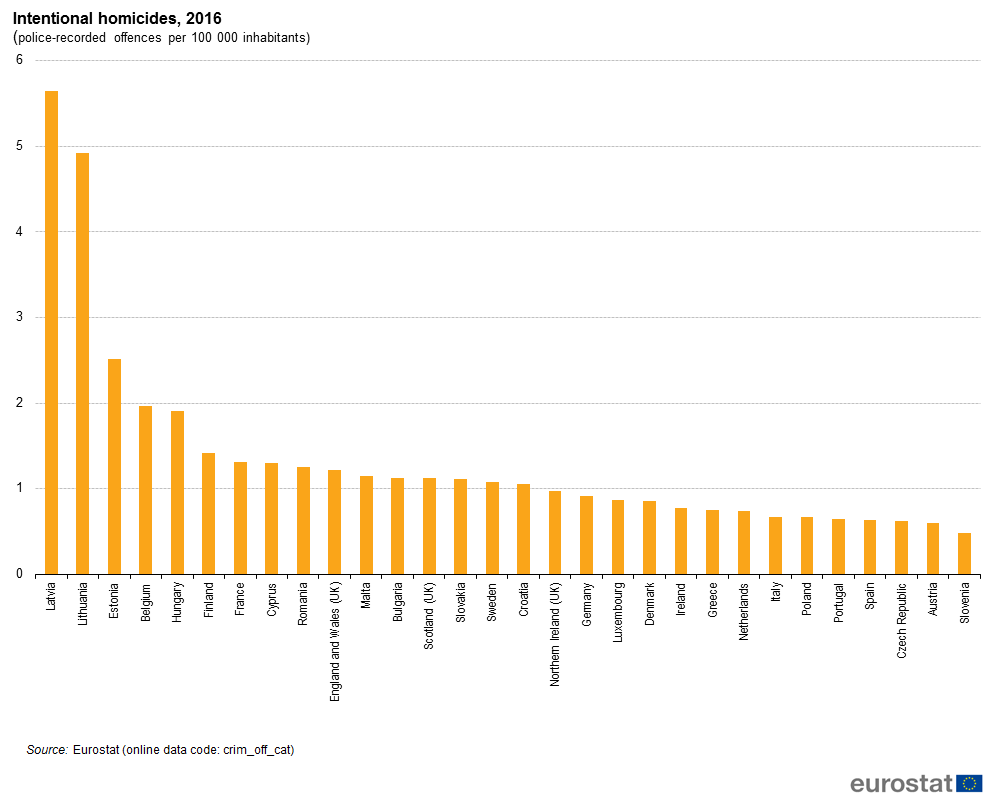

Sources
- Kirby, David (13 July 2006). A Concise History of Finland. Cambridge University Press. ISBN 978-0-521-83225-0.
Further reading
- Insight Guide: Finland (ISBN 981-4120-39-1).
- Jutikkala, Eino; Pirinen, Kauko. A History of Finland (ISBN 0-88029-260-1).
- Klinge, Matti. Let Us Be Finns: Essays on History (ISBN 951-1-11180-9).
- Lavery, Jason. The History of Finland, Greenwood Press, 2006 (ISBN 0-313-32837-4.
- Lewis, Richard D. Finland: Cultural Lone Wolf (ISBN 1-931930-18-X).
- Lonely Planet: Finland (ISBN 1-74059-791-5).
- Partanen, Anu: The Nordic Theory of Everything, 2017 (ISBN 9780715652039).
- Singleton, Fred. A Short History of Finland (ISBN 0-521-64701-0).
- Swallow, Deborah. Culture Shock! Finland: A Guide to Customs and Etiquette (ISBN 1-55868-592-8).
External links
| File:Wikivoyage-Logo-v3-icon.svg | Wikivoyage has travel guides related to Finland |

- Finland at the Encyclopædia Britannica
- Template:Cite CIA World Factbook
- Finland profile from the BBC News
Government
- This is Finland, the official English-language online portal (administered by the Finnish Ministry for Foreign Affairs)
- Statistics Finland
Maps
Travel
- Articles containing Northern Sami-language text
- Articles containing Inari Sami-language text
- Articles containing Skolt Sami-language text
- Pages linking to missing files
- Articles with Finnish-language sources (fi)
- CS1 Finnish-language sources (fi)
- CS1 Swedish-language sources (sv)
- Articles with dead external links from August 2025
- Use Oxford spelling from September 2023
- Use dmy dates from December 2025
- Articles containing Finnish-language text
- Articles needing additional references from April 2025
- All articles containing potentially dated statements
- Wikipedia articles in need of updating from January 2026
- Articles with unsourced statements from September 2025
- Articles containing Swedish-language text
- Articles containing potentially dated statements from 2022
- Articles containing potentially dated statements from 2024
- Articles containing potentially dated statements from February 2022
- Articles containing potentially dated statements from 2025
- Articles containing potentially dated statements from 2019
- Coordinates not on Wikidata
- Finland
- Member states of the United Nations
- Members of the Nordic Council
- Member states of the European Union
- Member states of the Union for the Mediterranean
- Member states of NATO
- Republics
- States and territories established in 1917
- Countries and territories where Swedish is an official language
- Fennoscandia
- Countries in Europe
- Christian states
- OECD members