Deprecated: Use of MediaWiki\Skin\Skin::appendSpecialPagesLinkIfAbsent was deprecated in MediaWiki 1.44. [Called from MediaWiki\Skin\Skin::buildSidebar in /var/www/html/w/includes/skins/Skin.php at line 1639] in /var/www/html/w/includes/debug/MWDebug.php on line 386
There are no reviewed versions of this page, so it may not have been checked for adherence to standards.
"'40s" redirects here. For decades comprising years 40–49 of other centuries, see List of decades.
Error: Image is invalid or non-existent.
Template:Decadebox
The 1940s (pronounced "nineteen-forties" and commonly abbreviated as "the '40s" or "the Forties") was a decade that began on January 1, 1940, and ended on December 31, 1949.
Most of World War II took place in the first half of the decade, which had a profound effect on most countries and people in Europe, Asia, and elsewhere. The consequences of the war lingered well into the second half of the decade, with a war-weary Europe divided between the jostling spheres of influence of the Western world and the Soviet Union, leading to the beginning of the Cold War. To some degree internal and external tensions in the post-war era were managed by new institutions, including the United Nations, the welfare state, and the Bretton Woods system, facilitating the post–World War II economic expansion, which lasted well into the 1970s. The conditions of the post-war world encouraged decolonization and the emergence of new states and governments, with India, Pakistan, Israel, Vietnam, and others declaring independence, although rarely without bloodshed. The decade also witnessed the early beginnings of new technologies (such as computers, nuclear power, and jet propulsion), often first developed in tandem with the war effort, and later adapted and improved upon in the post-war era.
The world population increased from about 2.25 to 2.5 billion over the course of the decade, with about 850 million births and 600 million deaths in total.
Germany faces the United Kingdom in the Battle of Britain (1940). It was the first major campaign to be fought entirely by air forces, and was the largest and most sustained aerial bombing campaign up until that date.
Continuation War (Second Soviet-Finnish War), was a conflict fought by Finland and Nazi Germany against the Soviet Union from 25 June 1941 – 19 September 1944.
Warsaw Uprising against Nazis in 1944 in Poland was the single largest military effort taken by any European resistance movement during World War II. The United States Army Air Forces send support for Poles on September 18, 1944, when flight of 110 B-17s of the 3 division Eighth Air Force airdropped supply for soldiers.
Yalta Conference, wartime meeting from February 4, 1945, to February 11, 1945, among the heads of government of the United States, the United Kingdom, and the Soviet Union—PresidentFranklin D. Roosevelt, Prime MinisterWinston Churchill, and PremierJoseph Stalin, respectively—for the purpose of discussing Europe's postwar reorganization, intended to discuss the re-establishment of the nations of war-torn Europe.
1948 Arab–Israeli War (1948–1949) – The war was fought between the newly declared State of Israel and its Arab neighbours. The war commenced upon the termination of the British Mandate of Palestine in mid-May 1948. After the Arab rejection of the 1947 United Nations Partition Plan for Palestine (UN General Assembly Resolution 181) that would have created an Arab state and a Jewish state side by side, Egypt, Iraq, Jordan, Lebanon and Syria attacked the state of Israel. In its conclusion, Israel managed to defeat the Arab armies.
Postwar occupations of Germany and Japan from 1945.
Workers gather in Plaza de Mayo to demand the liberation of Juan Perón in 1945. This is event is known as the Loyalty Day and is considered the foundational date of Peronism.
Reinhard Heydrich, a high-ranking Nazi official who played a key role in the Holocaust, helping to develop the Final Solution, is assassinated with a converted anti-tank mine in an attack by two British-trained and equipped Czech paratroopers in Prague, dying of his wounds on June 4.
Construction in early 1941 of the Heath RobinsonBombe & the Colossus computer, which was used by British codebreakers at Bletchley Park and satellite stations nearby to read Enigma encrypted German messages during World War II. This was operational until 1946 when it was destroyed under orders from Winston Churchill. This is now widely regarded as the first operational computer which in a model rebuild still today has a remarkable computing speed.
The Z3 as world's first working programmable, fully automatic computing machine was built.
July 16, 1945 - The Manhattan Project - The atomic age begins with the Trinity nuclear test, during which the United States detonates a nuclear bomb based on plutonium at the Trinity Site in New Mexico
Zoot suits became fashionable among some young men, particularly within Latino, African American, and jazz subcultures; their popularity contributed to social tensions that culminated in the Zoot Suit Riots in Los Angeles.
Victory gardens were widely cultivated by civilians to support the war effort by growing their own food, reflecting the era’s patriotism and community spirit.
World War II propaganda posters and patriotic imagery were central to 1940s visual culture, encouraging public support for the war effort and boosting morale on the home front.
Pin-up models became cultural icons, with images of figures such as Betty Grable and Rita Hayworth widely circulated to boost morale among American troops during World War II.
Popular dance styles of the 1940s included energetic swing dances such as the Jitterbug, Lindy Hop, and Jive, which were widely performed in ballrooms and clubs.
The United Service Organizations organized live entertainment for American troops, with performers such as Bob Hope traveling overseas to boost morale through comedy and music.
Although the 1940s was a decade dominated by World War II, important and noteworthy films about a wide variety of subjects were made during that era. Hollywood was instrumental in producing dozens of classic films during the 1940s, several of which were about the war and some are on most lists of all-time great films. European cinema survived although obviously curtailed during wartime and yet many films of high quality were made in the United Kingdom, France, Italy, the Soviet Union and elsewhere in Europe. The cinema of Japan also survived. Akira Kurosawa and other directors managed to produce significant films during the 1940s.
Polish filmmakers in Great Britain created anti-nazi color film Calling Mr. Smith (1943) about current Nazi crimes in occupied Europe during the war and about lies of Nazi propaganda.[6]
Film Noir, a film style that incorporated crime dramas with dark images, became largely prevalent during the decade. Films such as The Maltese Falcon and The Big Sleep are considered classics and helped launch the careers of legendary actors such as Humphrey Bogart and Ava Gardner. The genre has been widely copied since its initial inception.
Bing Crosby was the bestselling pop artist of the 1940s. Crosby was the leading figure of the crooner sound as well as its most iconic, defining artist. By the 1940s, he was an entertainment superstar who mastered all of the major media formats of the day, movies, radio, and recorded music.File:Anibal Troilo 1971.pngAníbal Troilo, one of the most famous Bandoneon players in the Golden Age of Tango
The most popular music style during the 1940s was swing, which prevailed during World War II. In the later periods of the 1940s, less swing was prominent and crooners like Frank Sinatra, along with genres such as bebop and the earliest traces of rock and roll, were the prevalent genre.
Tango remained popular worldwide and several of the most famous tangos were composed in this decade, such as Malena, Garúa, Nada, Naranjo en flor, and many others.
The fashion of the 1940s was defined above all by World War II, which divided the decade into two sharply distinct phases. During the wartime years, scarce resources and government rationing programs transformed clothing across the Allied nations: in Britain, the Utility Clothing Scheme and Austerity directives restricted fabrics, seams, pockets, and embellishments; in the United States, General Limitation Order L-85 capped jacket lengths and banned French cuffs and wool evening dresses; and in France, nearly 100 couture salons remained open under German occupation, evolving in isolation from global trends.[10] The dominant womenswear silhouette of the early 1940s featured square padded shoulders, a belted or tailored waist, and hemlines grazing the knee—a structured, mannish aesthetic born of wartime necessity.[11] With French couture cut off from the international market after the Fall of France in 1940, American ready-to-wear seized the opportunity to forge its own identity, propelled by innovators such as Claire McCardell—whose practical yet feminine sportswear aesthetic defined an emerging "American Look"—and Norman Norell, who applied couture-level standards to ready-to-wear.[10]
The post-war years brought an abrupt reversal. On February 12, 1947, Christian Dior unveiled his debut collection in Paris, instantly dubbed the "New Look" by Harper's Bazaar editor Carmel Snow: softer shoulders, a cinched waist, emphasized hips, and dramatically longer and fuller skirts that represented the very antithesis of wartime austerity.[10] As fashion historian James Laver observed, the New Look "was in fact not new at all, but simply an exaggeration of late 1930s and Occupation styles, yet it was the very antithesis of the clothing produced in both the UK and the United States during the war."[12] The collection provoked widespread protest—in the United States, a "Little Below the Knee Club" spread to all 48 states in opposition—yet women gradually adopted versions of the style at all price levels, and by the decade's end the New Look silhouette had become the dominant global fashion.[10][11]
During the 1940s, sporting events were disrupted and changed by the events that engaged and shaped the entire world. The 1940 and 1944 Olympic Games were cancelled because of World War II. During World War II in the United States Heavyweight Boxing ChampionJoe Louis and numerous stars and performers from American baseball and other sports served in the armed forces until the end of the war. Among the many baseball players (including well known stars) who served during World War II were Moe Berg, Joe DiMaggio, Bob Feller, Hank Greenberg, Stan Musial (in 1945), Warren Spahn, and Ted Williams. They like many others sacrificed their personal and valuable career time for the benefit and well-being of the rest of society. The Summer Olympics were resumed in 1948 in London and the Winter games were held that year in St. Moritz, Switzerland.
During the early 1940s World War II had an enormous impact on Major League Baseball as many players including many of the most successful stars joined the war effort. After the war many players returned to their teams, while the major event of the second half of the 1940s was the 1945 signing of Jackie Robinson to a players contract by Branch Rickey the general manager of the Brooklyn Dodgers. Signing Robinson opened the door to the integration of Major League Baseball finally putting an end to the professional discrimination that had characterized the sport since the 19th century.
During the mid-1930s and throughout the years leading up to the 1940s Joe Louis was an enormously popular Heavyweight boxer. In 1936, he lost an important 12 round fight (his first loss) to the German boxer Max Schmeling and he vowed to meet Schmeling once again in the ring. Louis' comeback bout against Schmeling became an international symbol of the struggle between the US and democracy against Nazism and Fascism. When on June 22, 1938, Louis knocked Schmeling out in the first few seconds of the first round during their rematch at Yankee Stadium, his sensational comeback victory riveted the entire nation. Louis enlisted in the U.S. Army on January 10, 1942, in response to the Japanese attack on Pearl Harbor. Louis' cultural impact was felt well outside the ring. He is widely regarded as the first African American to achieve the status of a nationwide hero within the United States, and was also a focal point of anti-Nazi sentiment leading up to and during World War II.[14]
↑"Holocaust," Encyclopædia Britannica, 2009: "the systematic state-sponsored killing of six million Jewish men, women, and children and millions of others by Nazi Germany and its collaborators during World War II. The Germans called this "the final solution to the Jewish question ..."
↑Niewyk, Donald L. The Columbia Guide to the Holocaust,Columbia University Press, 2000, p. 45: "The Holocaust is commonly defined as the murder of more than 5,000,000 Jews by the Germans in World War II." Also see "The Holocaust", Encyclopædia Britannica, 2007: "the systematic state-sponsored killing of six million Jewish men, women and children, and millions of others, by Nazi Germany and its collaborators during World War II. The Germans called this "the final solution to the Jewish question".
↑Niewyk, Donald L. and Nicosia, Francis R. The Columbia Guide to the Holocaust, Columbia University Press, 2000, pp. 45–52.
↑Donald Niewyk suggests that the broadest definition, including Soviet civilian deaths, would produce a death toll of 17 million. [1] Estimates of the death toll of non-Jewish victims vary by millions, partly because the boundary between death by persecution and death by starvation and other means in a context of Total_war is unclear. Overall, about 5.7 million (78 percent) of the 7.3 million Jews in occupied Europe perished (Gilbert, Martin. Atlas of the Holocaust 1988, pp. 242–244). Compared to five to 11 million (1.4 percent to 3.0 percent) of the 360 million non-Jews in German-dominated Europe. Small, Melvin and J. David Singer. Resort to Arms: International and civil Wars 1816–1980 and Berenbaum, Michael.A Mosaic of Victims: Non-Jews Persecuted and Murdered by the Nazis. New York: New York University Press, 1990
↑"Les Enfants du Paradis". www.eufs.org.uk. Archived from the original on 2009-01-13. Gio MacDonald, Edinburgh University Film Society program notes, 1994–95
![[icon]](/w/index.php?title=File:Wiki_letter_w_cropped.svg)


 Atanasoff–Berry Computer replica at 1st floor of Durham Center, Iowa State University
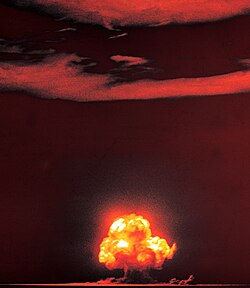 July 16, 1945 - The Manhattan Project - The atomic age begins with the Trinity nuclear test, during which the United States detonates a nuclear bomb based on plutonium at the Trinity Site in New Mexico
.jpg)


 October 24, 1946: V-2 rocket takes first picture of Earth from outer space
 Thor Heyerdahl's raft Kon-Tiki crossed the Pacific Ocean from Peru to Tahiti proving the practical possibility that people from South America could have settled Polynesia in pre-Columbian times
.jpg)
 Classic Hollywood films such as Citizen Kane, Casablanca, The Maltese Falcon, Double Indemnity, The Grapes of Wrath, and It's a Wonderful Life became enduring cinematic classics of the decade.
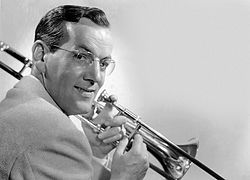 The 1940s marked the golden age of big band and swing music, led by figures such as Glenn Miller, Benny Goodman, Duke Ellington, Count Basie, and Tommy Dorsey.

.png)
.png)
.png)


.svg)


.jpg)
.jpg)


.jpg)


_26.jpg)


.jpg)


 Field Marshal Carl Gustaf Emil Mannerheim
 Field Marshal Harold Alexander
 General Henri Winkelman

.svg)
.svg)
.svg)


.jpg)

_01_Crisco_edit.jpg)

.jpg)
_01.jpg)


_(cropped).jpg)


.jpg)

